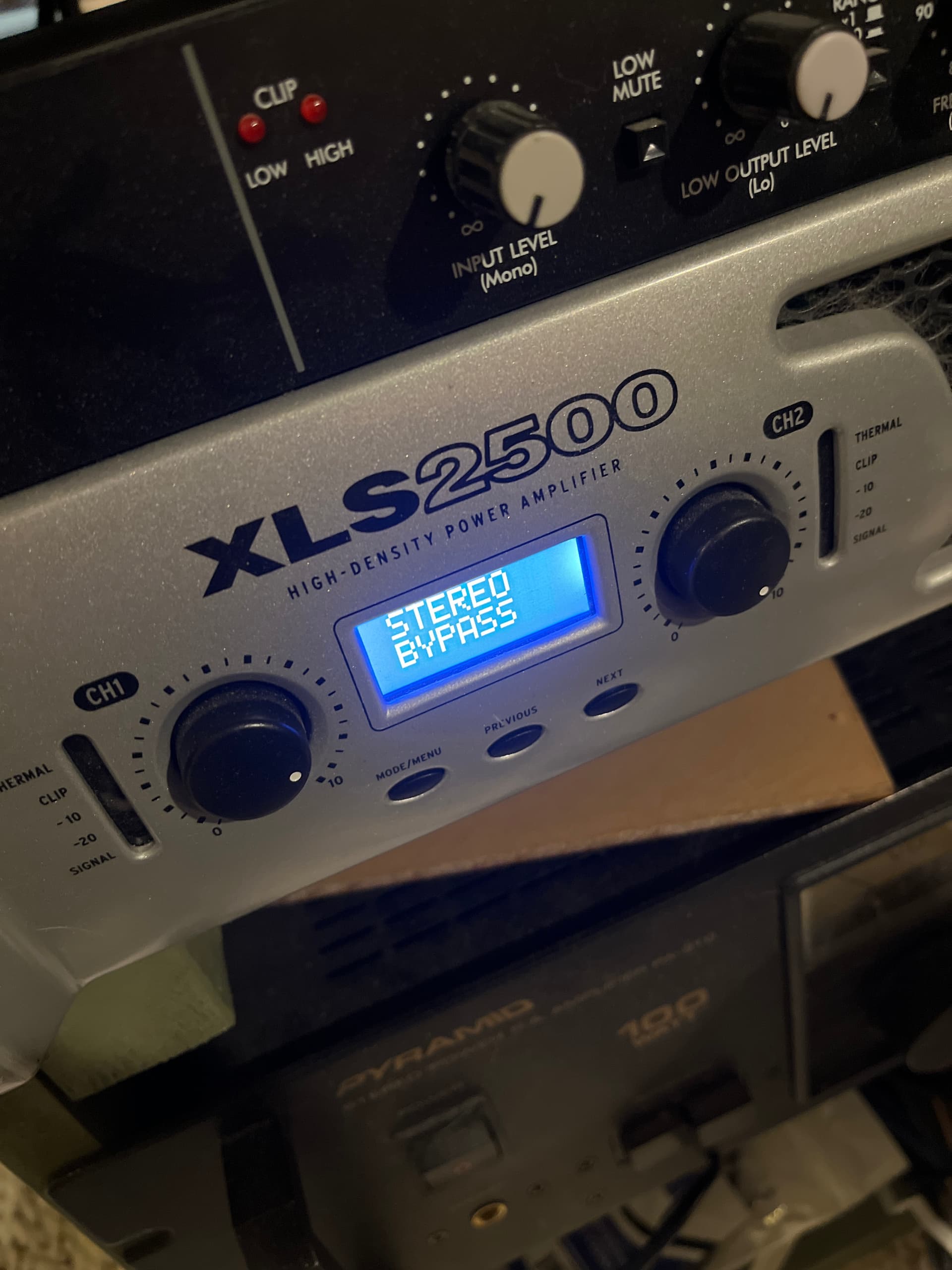
That has never happened at InDIYana, not even EQ’s incorrectly l-padded design. The Crowns we’ve been using since 2011 have never complained or shut down.
We have had venue panel circuit breakers trip for no reason at all, and also trip because of more than moderate output level attempts.
Use a large capacitor between 600uF and 1000uf, and a lowpass of significant inductance and/or higher DCR, and you should be of benign enough load. Solen Litz have inherently higher DCR if that helps.
That’s what I’m going to try with my 3way with the E150HE-44.
I have a bunch of amps that have no trouble with 2 ohms or whatever. When designing speakers, I do tend to avoid anything much below 4 ohms - mostly because I don’t want to be responsible for blowing up someone else’s receiver/amp. I’ve also spent a fair amount of time lurking on Pro Audio forums and tended to side with the “respect your equipment” camp, that avoided 2 ohm loads.
Probably sticking my foot in my mouth:
I figure it would have a good portion to do with current capacity. Though I wonder if there are also limitations on the damping that could push the circuit out of it’s stability range with too low impedance?
There’s a standard for this. IEC60268-5 states that a speaker’s minimum impedance through its operating range may be no less than 80% of the nominal value. There are speaker manufacturers that don’t observe this, and either they are being irresponsible and ignoring standards, or they are deliberately trying to cause problems for ‘lesser’ power amps.
If you have an amplifier that is rated for 4 ohms minimum, it can probably support a lower rated load but that is entirely at your own risk. Amps may go into overcurrent or overtemperature protection, or they may go boom.
At one time, most affordable amps tended to only support 8-ohm minimum loads, then that number dropped to 4 ohms as amps with more current capability became less expensive to build. Nowadays, 4 ohms is high enough nominal impedance to satisfy most beefier solid state amps.