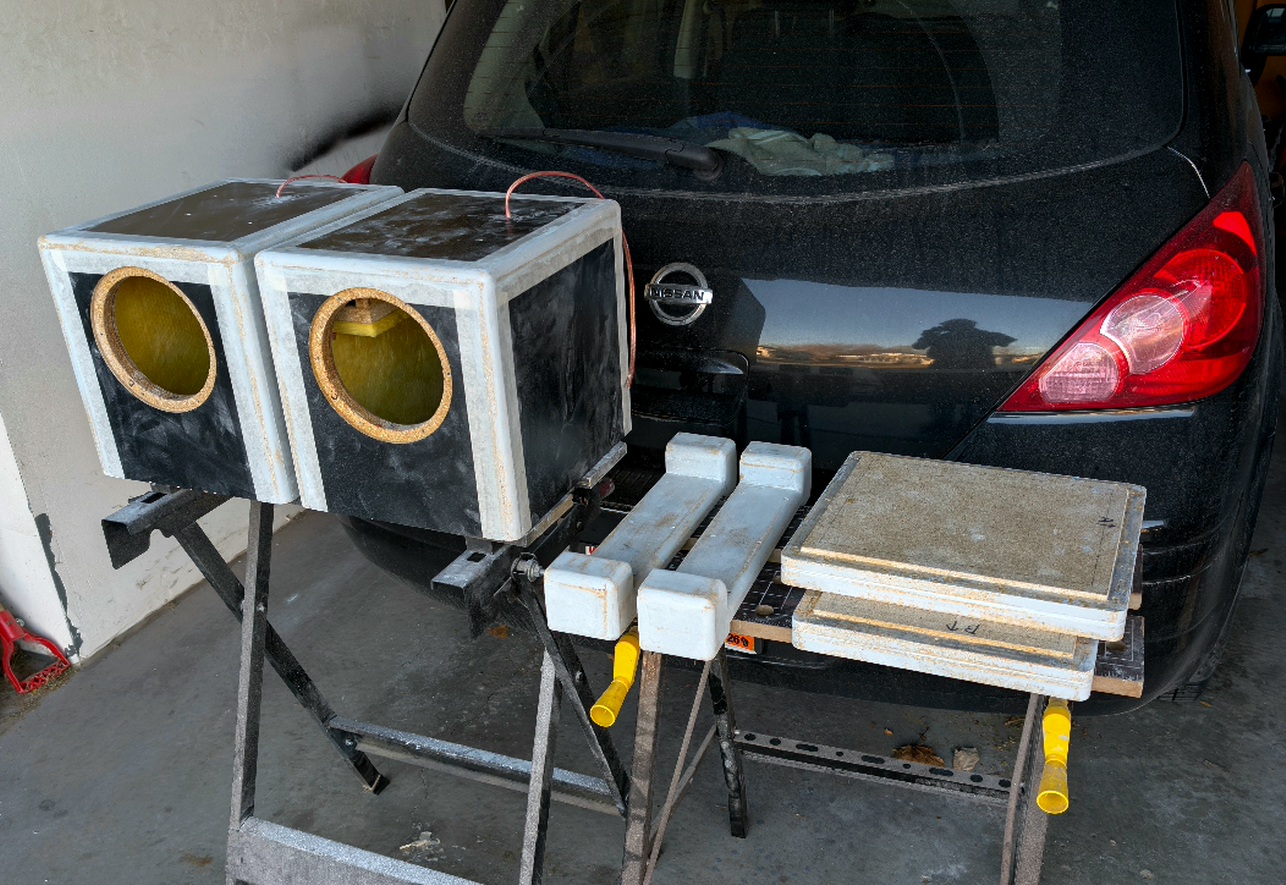
Got up to 70F today. I was able to bondo the bottoms and wheel/caster assemblies, then sand everything smooth. They are almost ready for the first coat of primer. But that will have to wait, as the temperature is expected to drop by 25 degrees tomorrow, then fall even further. Might even get some snow showers mixed in later this week.
1 Like
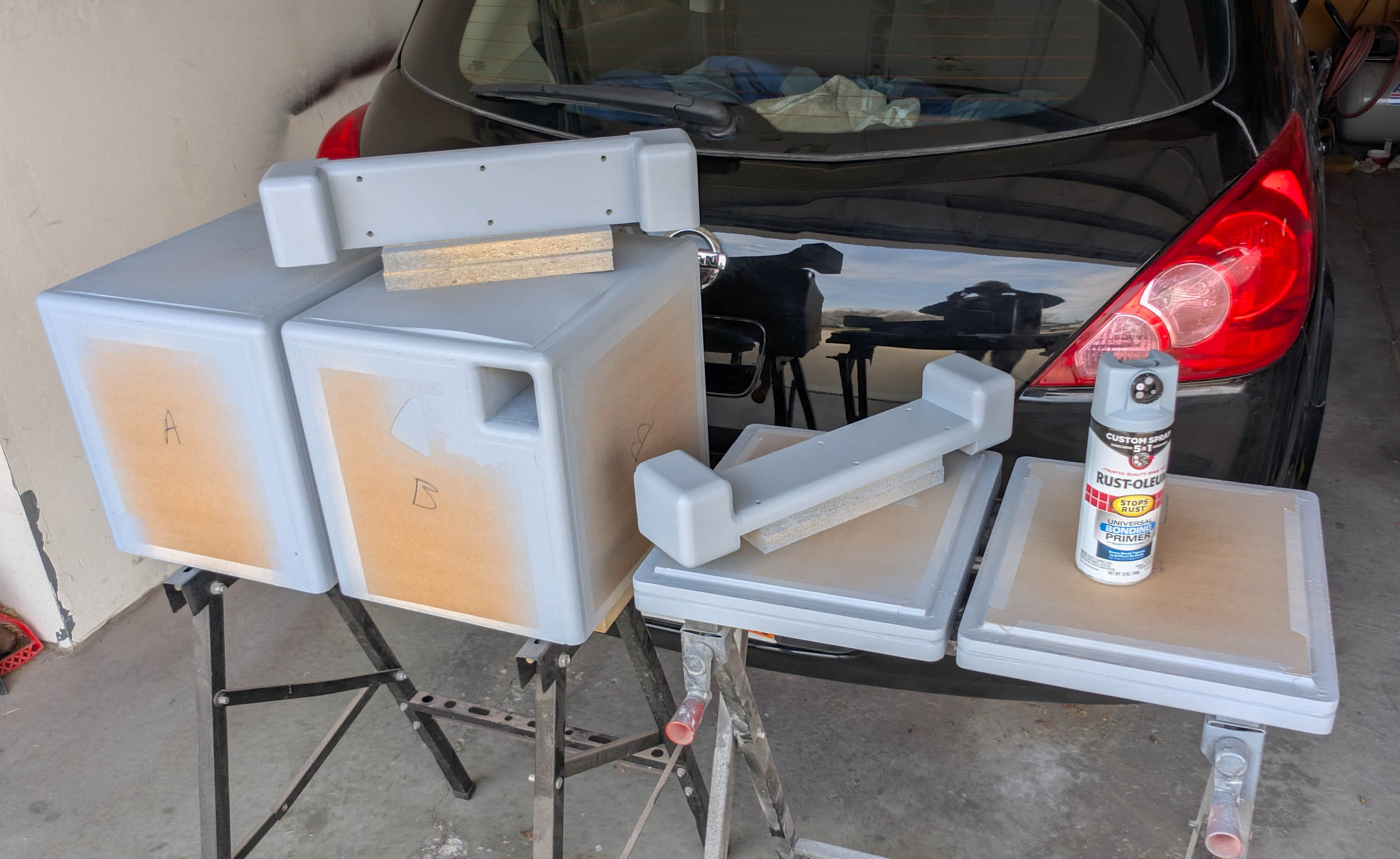
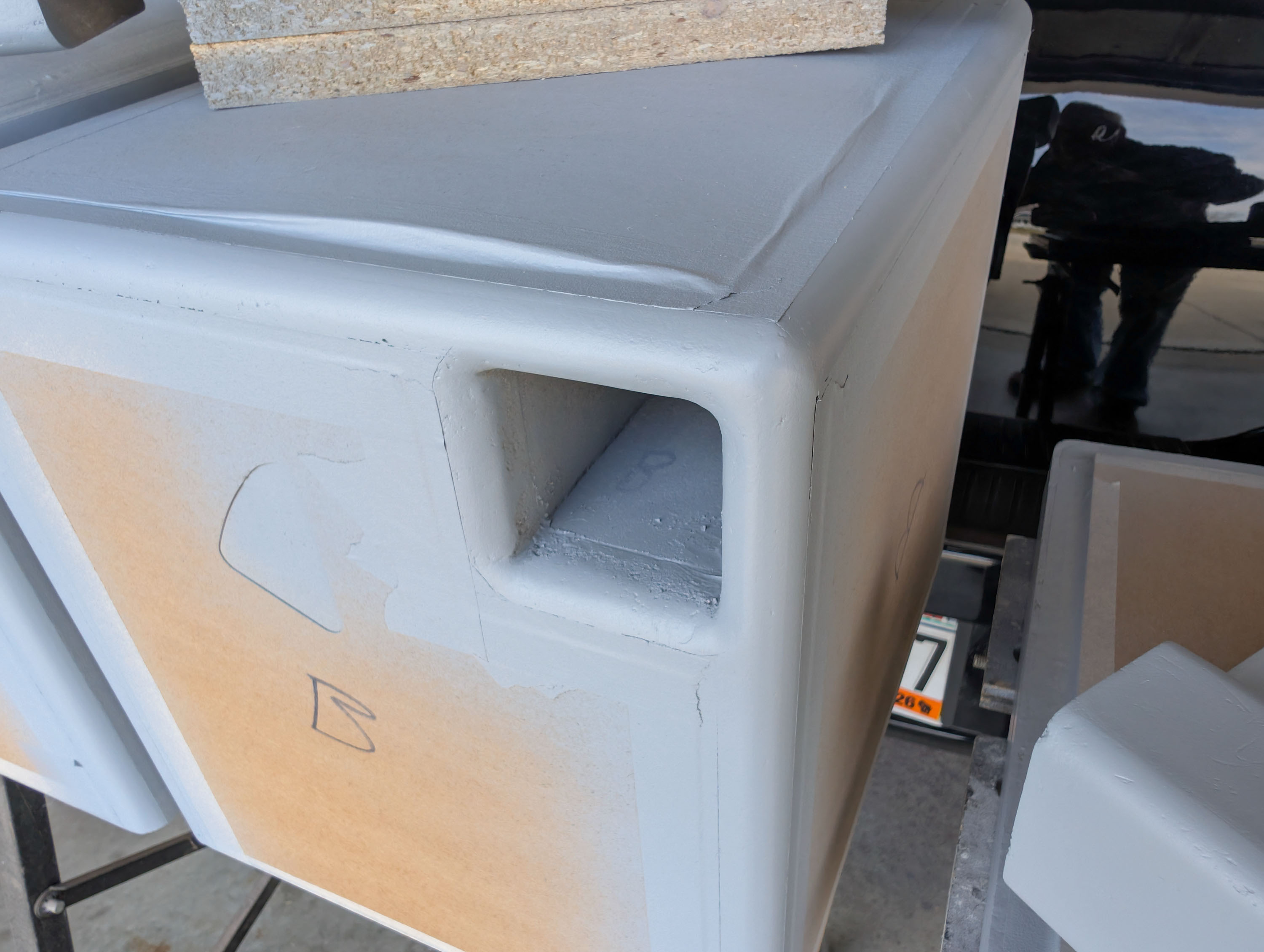
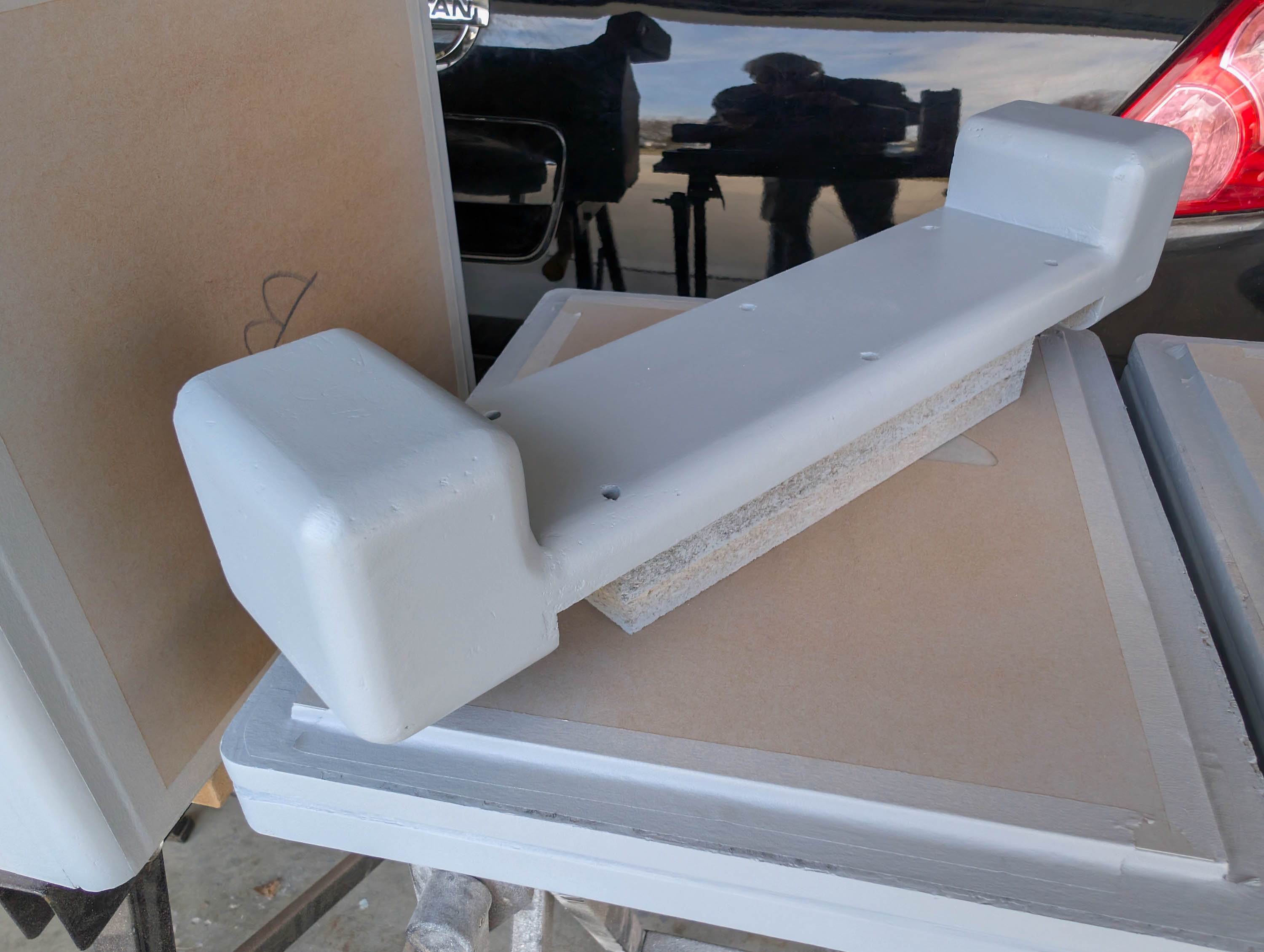
Got up to 67F today, so I masked off and shot 3 coats of primer on all the needed parts. Since the weather forecast is not looking good for the next few days, I’ll use that time to let the primer dry. Then I can fill any imperfections with glazing putty, re-sand, re-mask and wait for another good day to shoot the base coats.
4 Likes
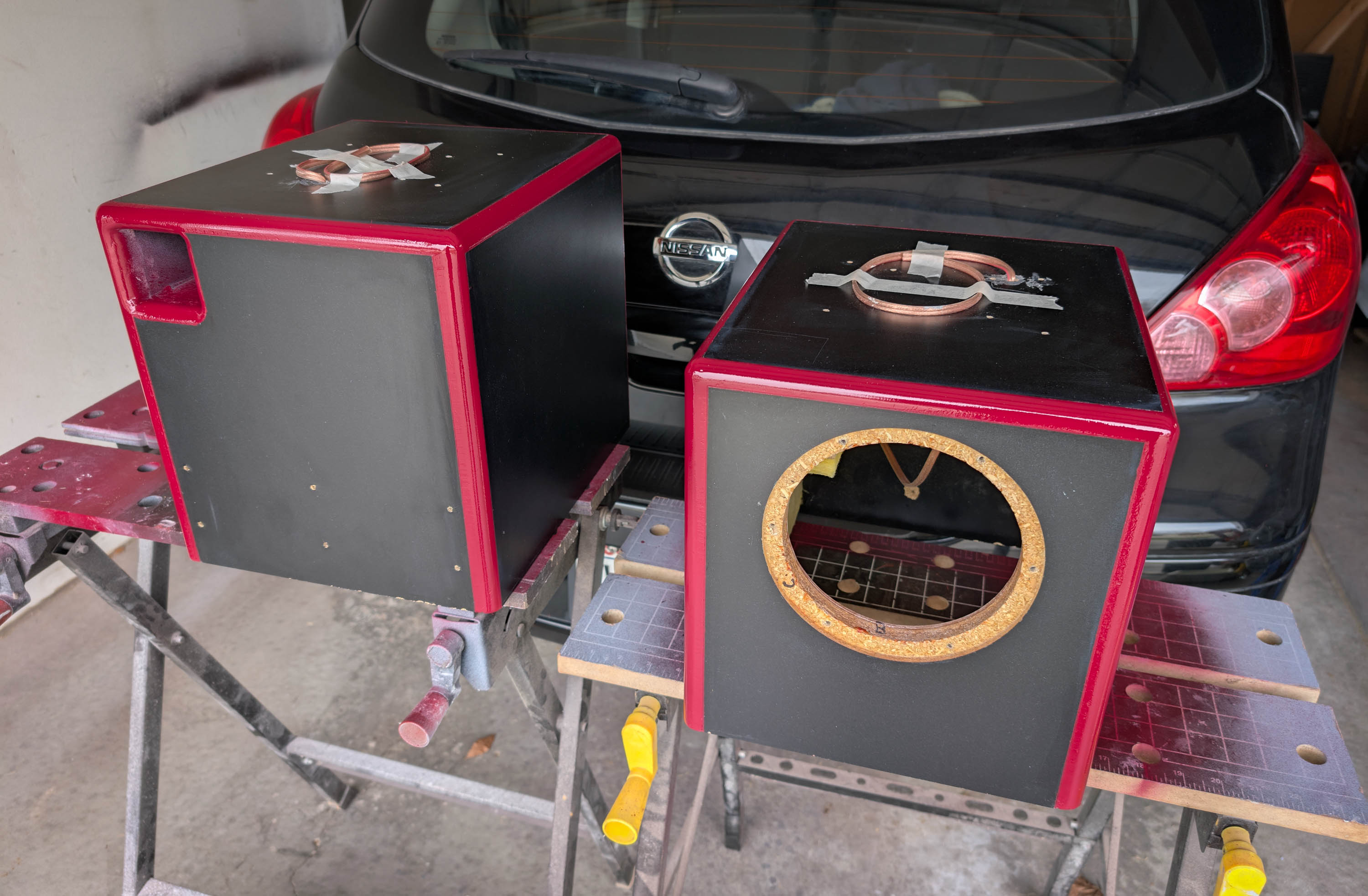
Another nice day (64F), so I sprayed 3 coats of burgundy on the bass bin edges. This color is an exact match to the burgundy on the RD40 cab baffles. Should look nice when I bolt them all together.
3 Likes
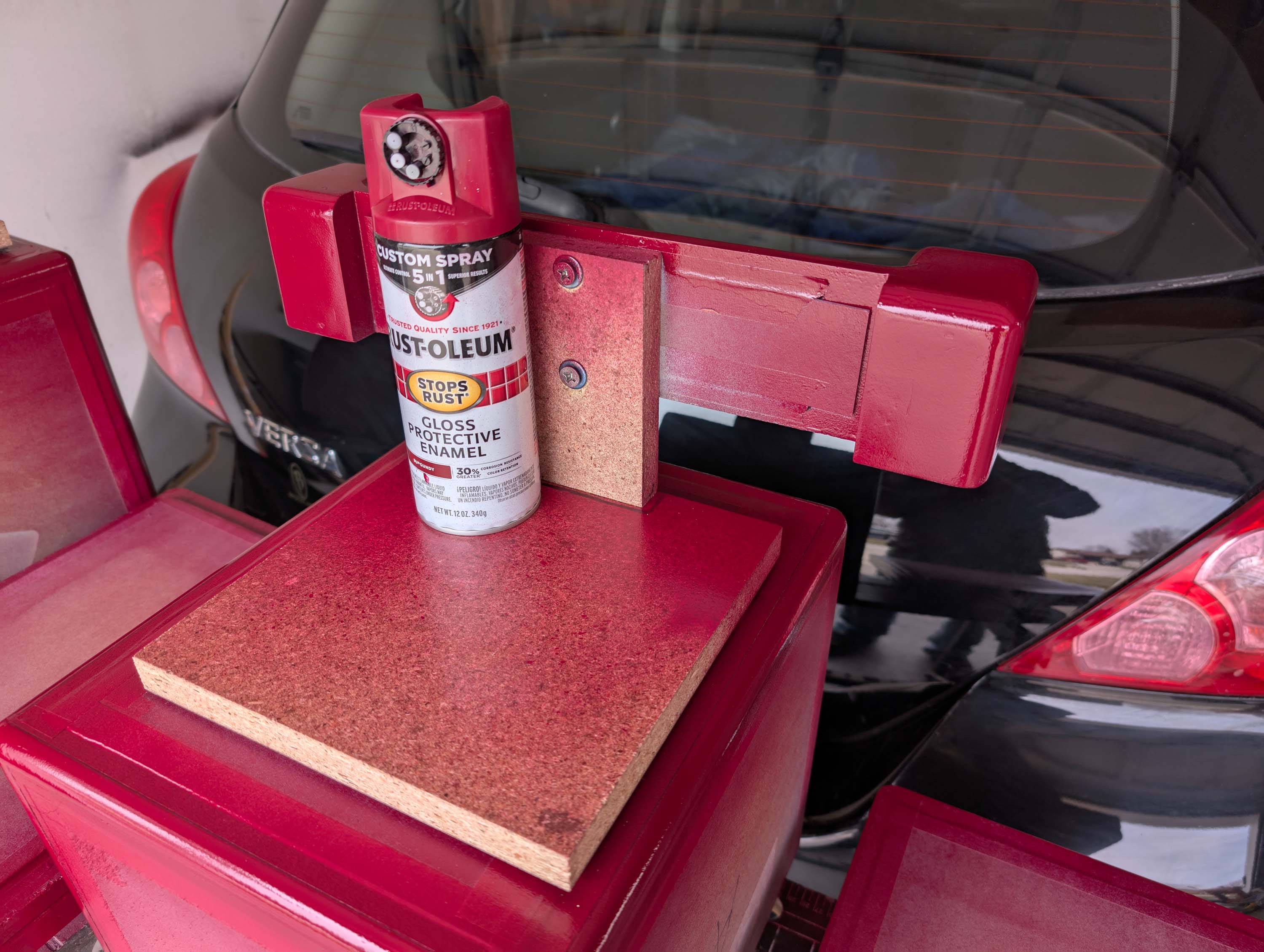
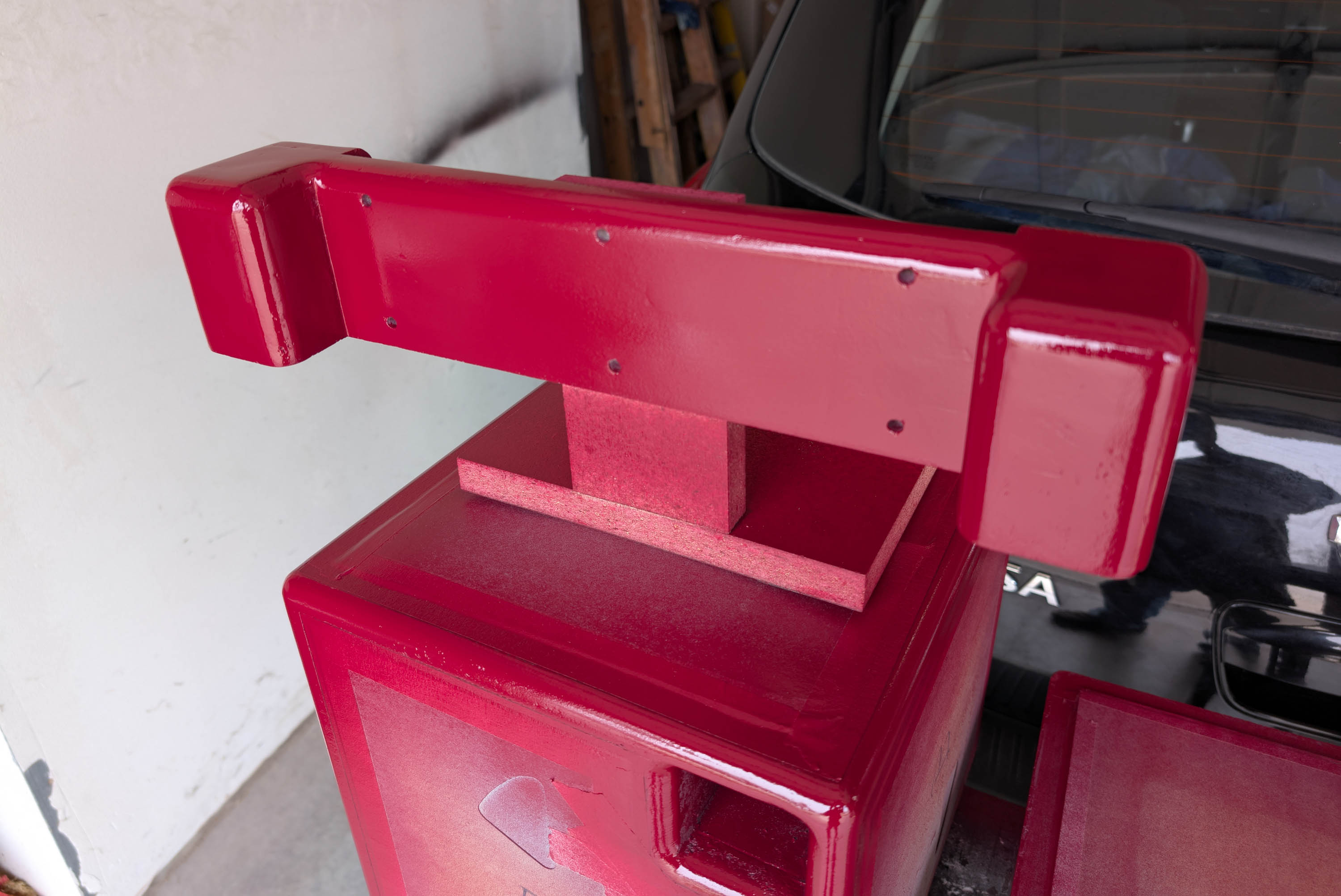
I had a very difficult time spray painting the caster assembly with primer. It was not very stable and would tip over easily. Hanging it on a hook or coat hanger didn’t work either. Not steady enough. So this time around I built a small stand to hold it steady. Worked like a charm.
3 Likes
Nice! Should look really good together.
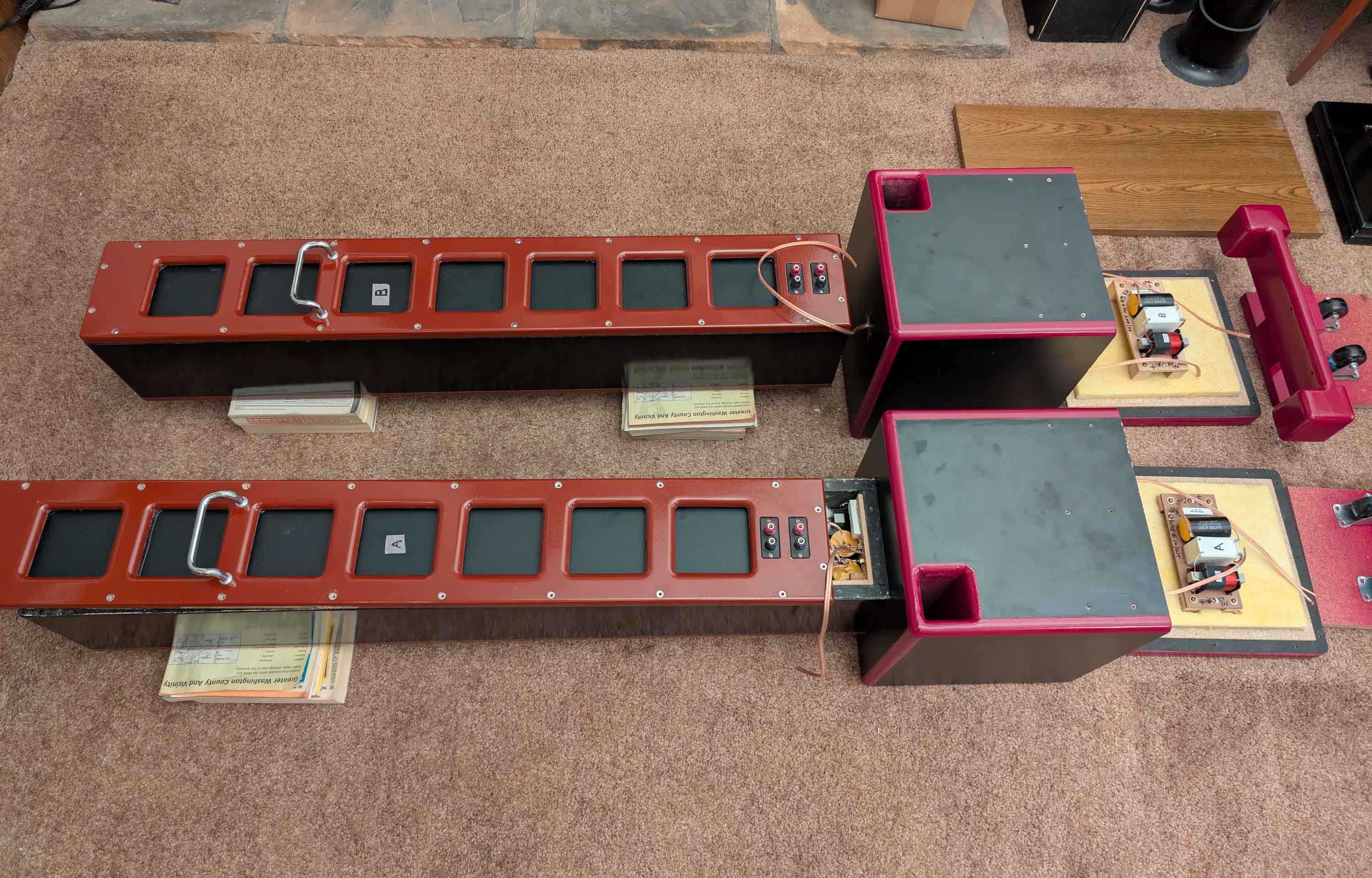
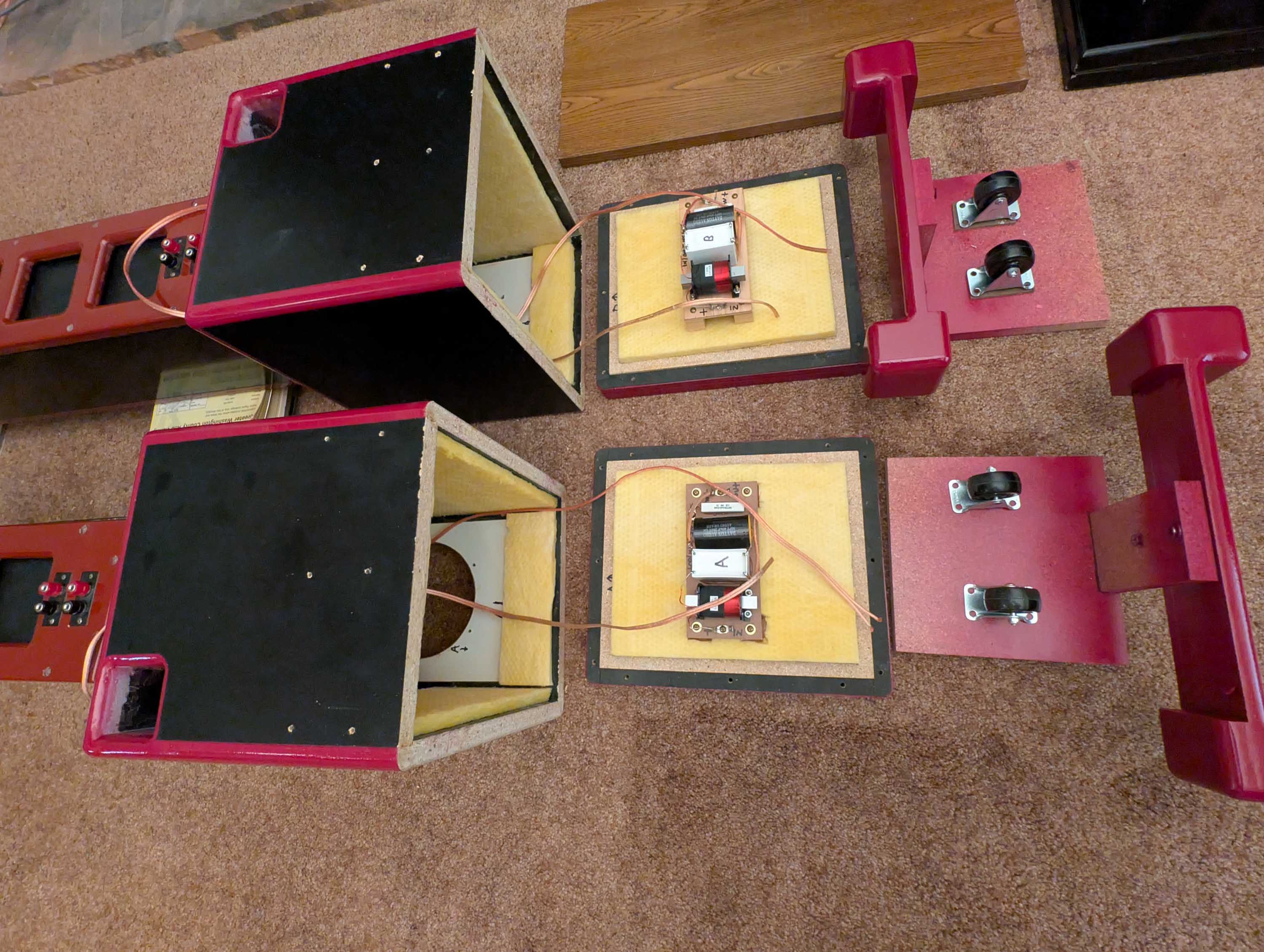
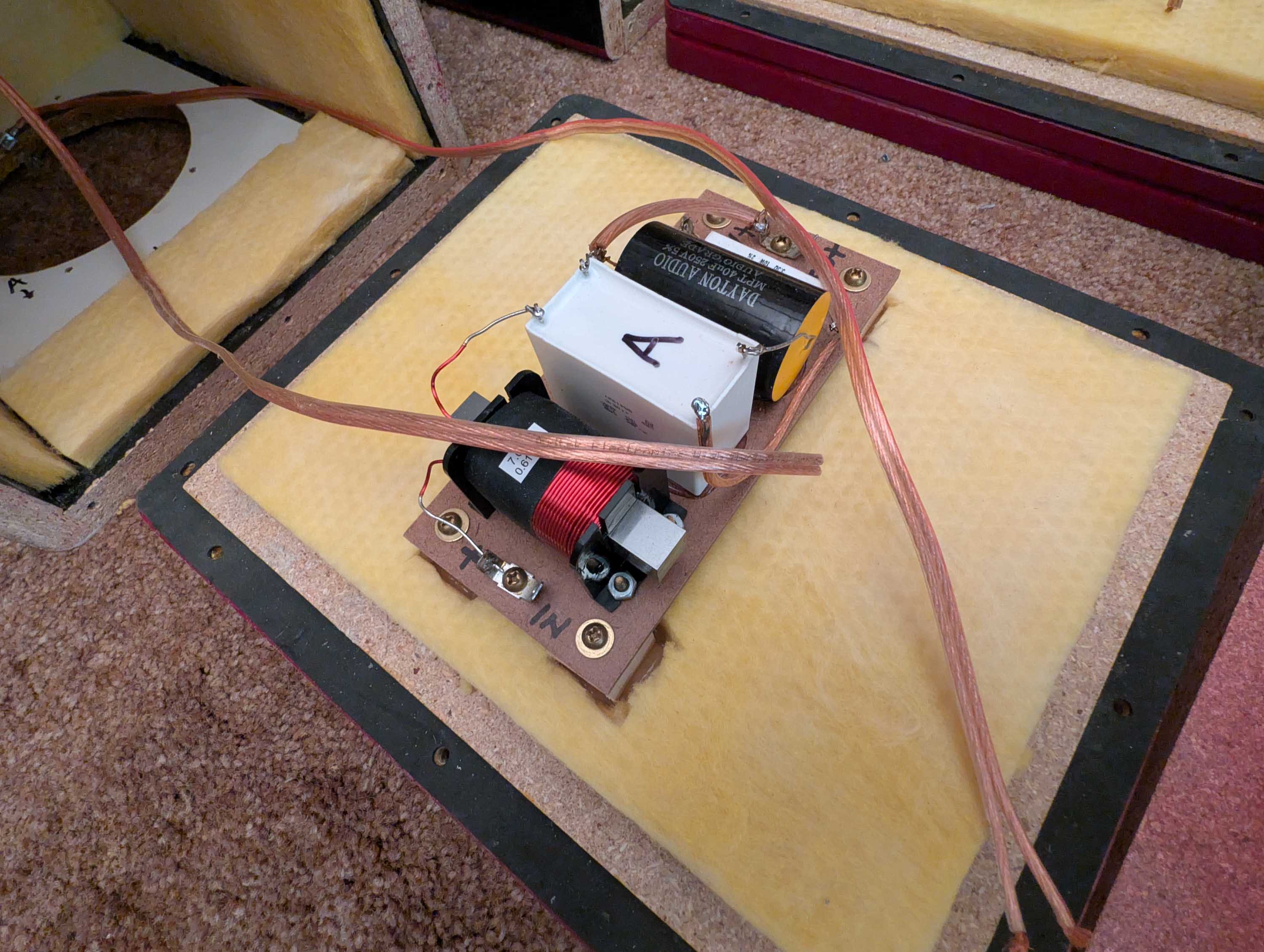
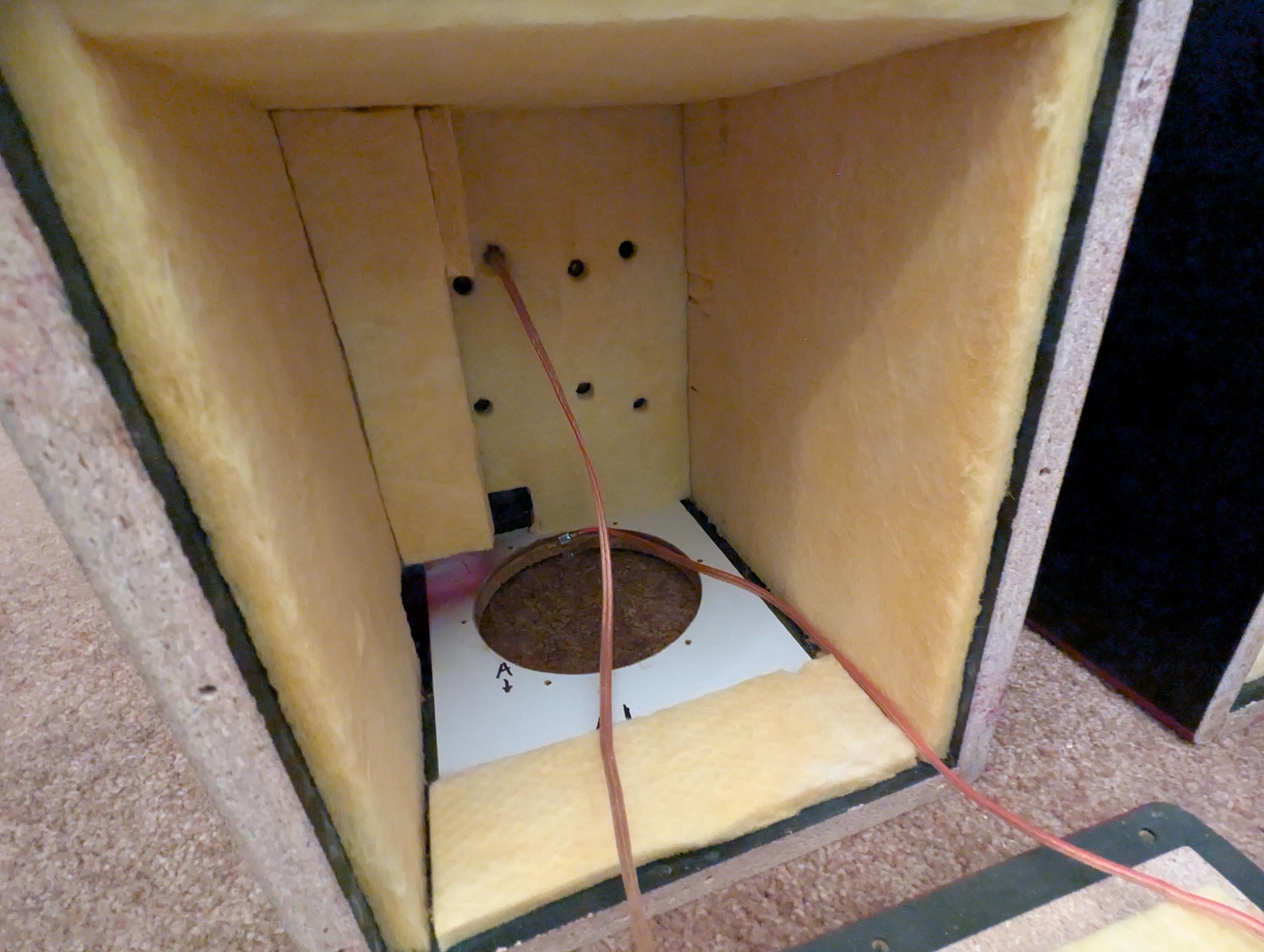
I spy some Menard’s fiberglass ceiling tiles used for damping 
Yup. 1/2" thick Armstrong Pebble fiberglass 2x4 ceiling tiles. My local Menards always breaks open a 12 pack and sells them individually for about $7 each.
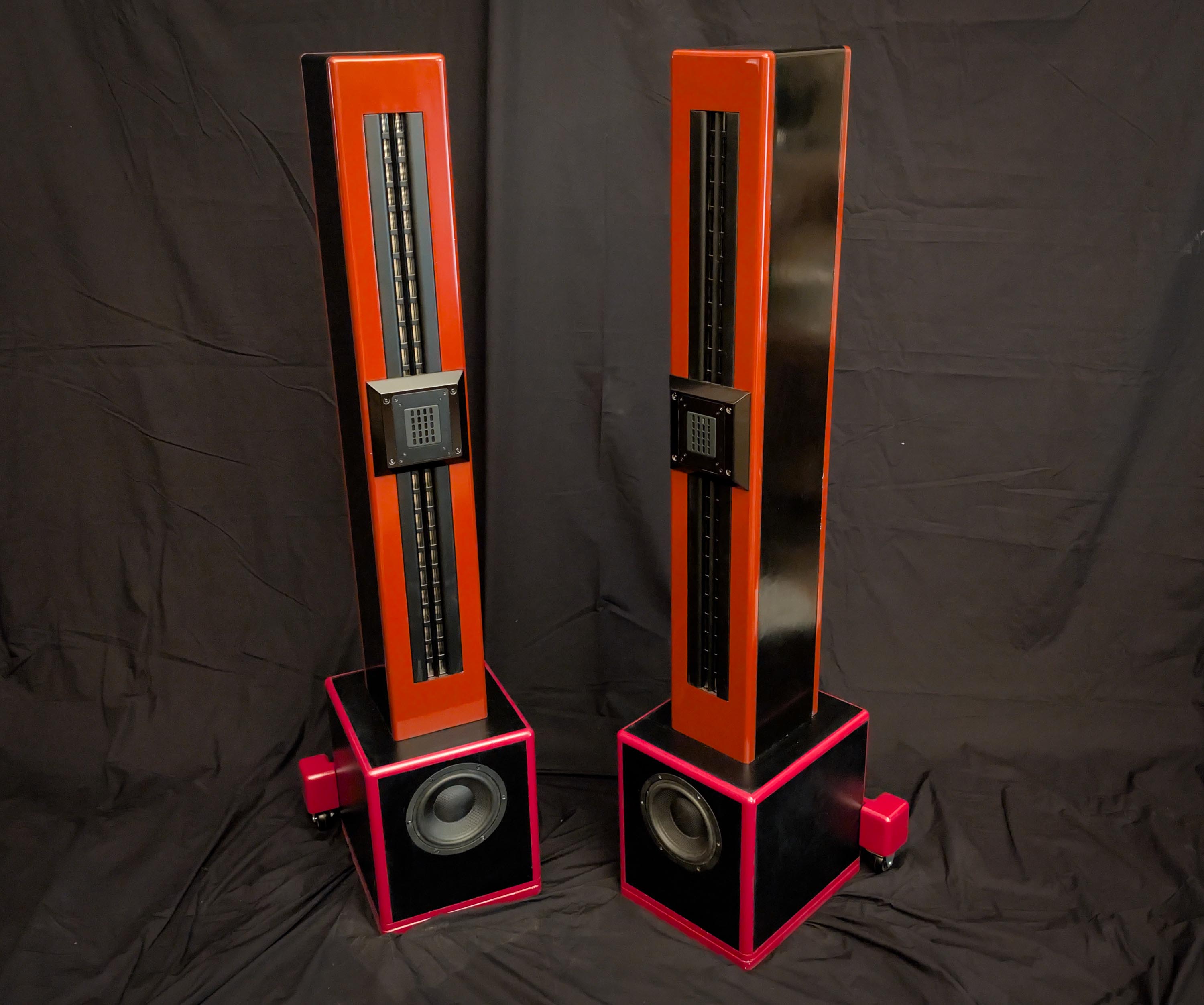
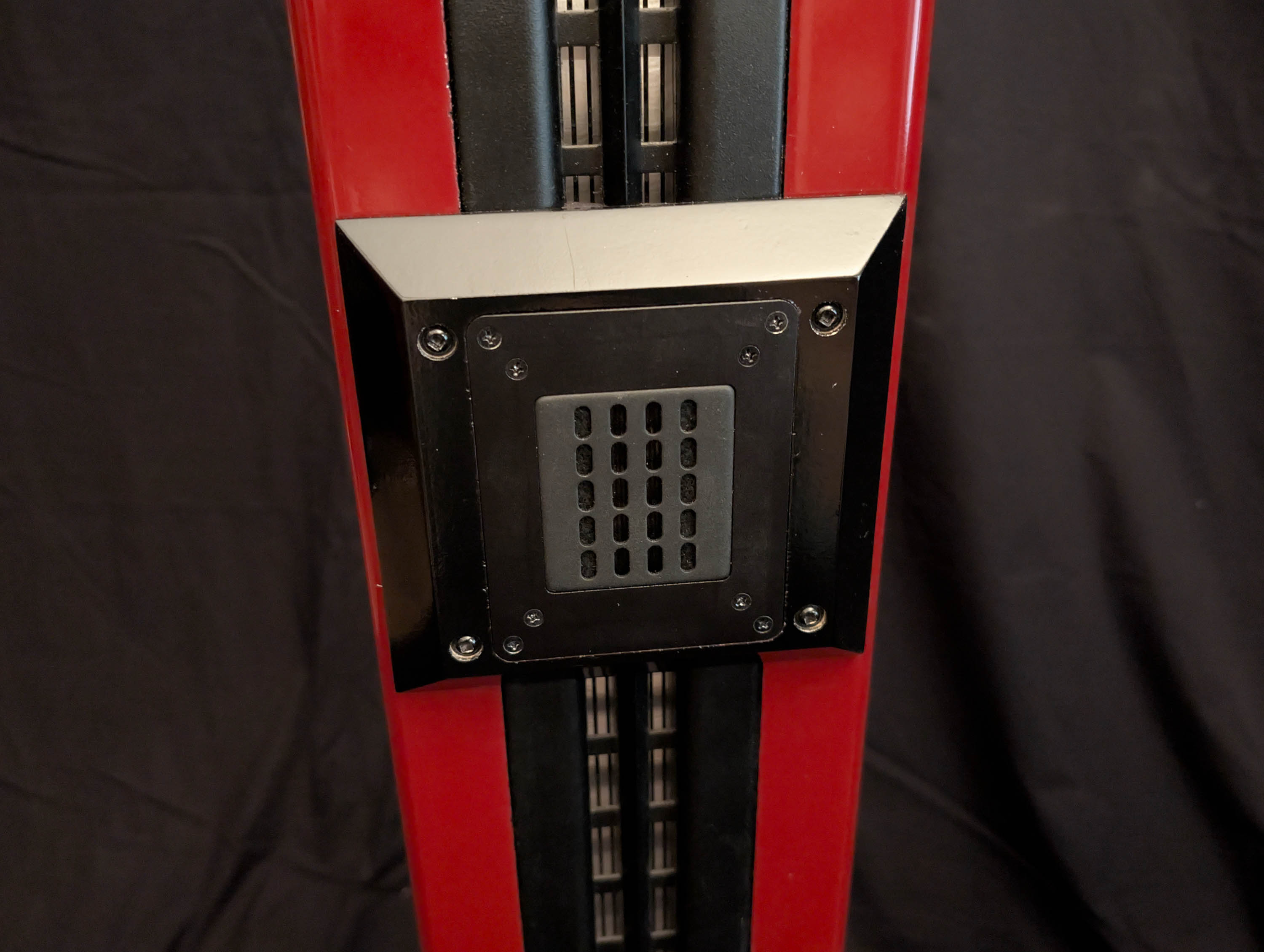
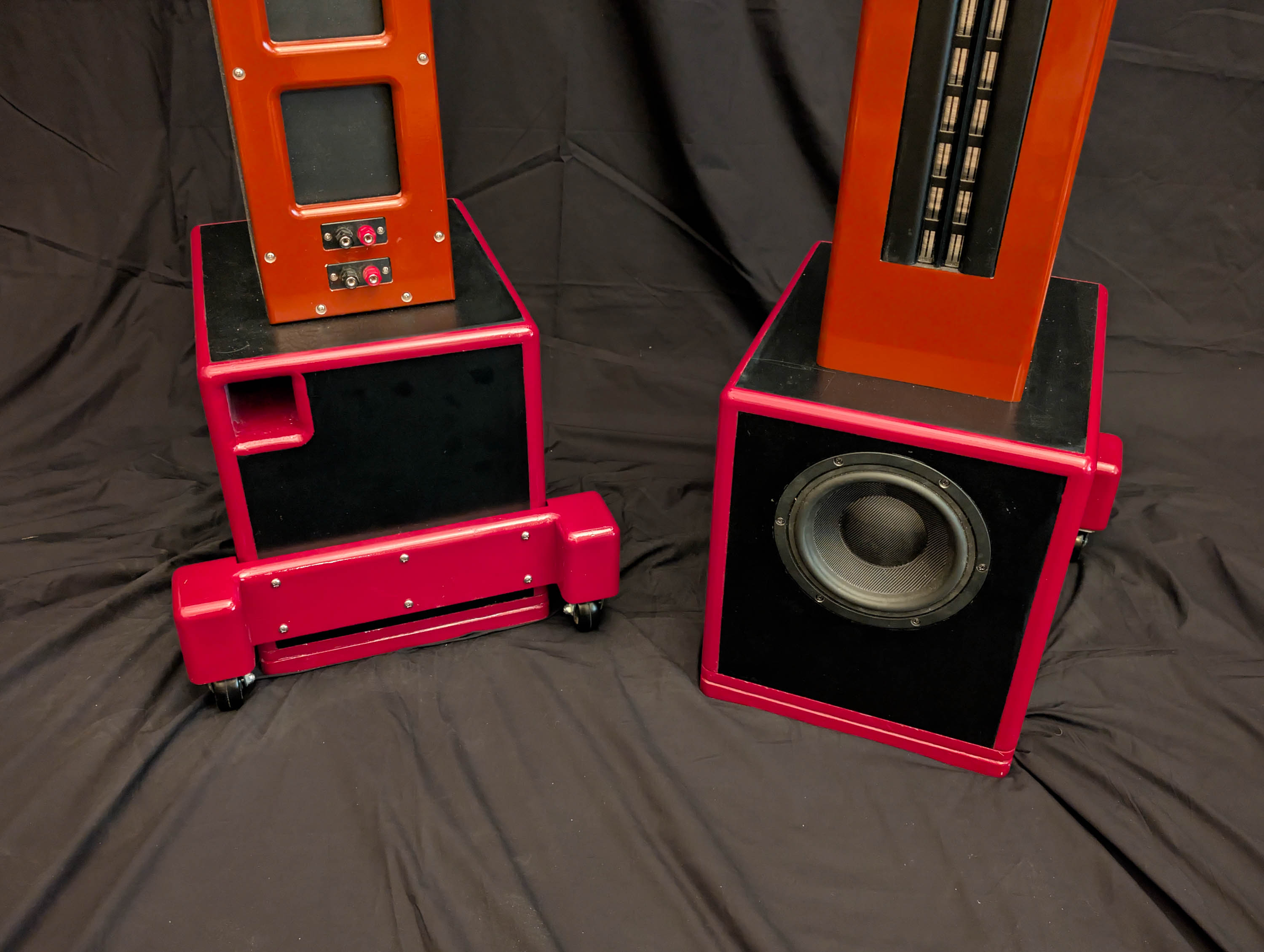
Oh, I thought you were color matching the tops and bases.
Initially, when I looked at the color match in person under indoor lighting, the color match between the bass bins and RD 40 cabs appeared to be perfect. But then, when I rendered the photos in Adobe Lightroom, the color tones came out different on the computer monitor. Kind of like when you take a picture under fluorescent lighting. It will look OK to the human eye in person, but when you take a picture, the software reproduces the scene, on your monitor, with a green cast. This is because the human eye automatically corrects the green cast of a live scene, but does not correct it when you look at a flat, two dimensional picture (or screen).
So now, after having taken pictures and studied the screen shots, when I look at the speakers in person, I can clearly see the color tone difference between the bass bins and the RD40 cabs. My mind no longer color corrects the live scene.
This is probably a form of confirmation bias. Now that the computer screenshot has told my mind that the bass bins have a slight redish tone compared to the slight yellowish tone of the RD40 cabs, my mind, in turn, instead of automatically color correcting the difference, actually sees the underlying color cast. 
2 Likes
Interesting, I have noticed that with taking pics of things and not really capturing the tones I see.
Your bass bins have a Tron thing going on 
1 Like
Having seen the Plantanics, I would not have called that color burgundy; maybe dark red or even dark red orange, but not burgundy. Burgundy always ends up more pink in color than I think it should be.
The Plan-Tanics were a custom mix of red and black, not an off-the-shelf burgundy color from Rustoleum. I thought that they looked like burgundy, but I think you are correct. Maybe I’ll sand them down after Indy and give them a custom re-spray. I just have to remember how much black I mixed with the red when I did this 12 years ago.
@Stearns250 Jeffrey, I’m really liking the sound of the PT2522-4 tweeter (Neo 3 clone) in this build. Time will tell if others like it as well. I think the key to getting good sound from this tweeter has alot to do with the power response.
On this design, I adjusted crossover components to cause a gradual rise in the on-axis response above 10kHz. This helped to flatten out the downward sloping power response curve all the way out to 20kHz. In VCAD, I changed the design axis to 20 degrees horizontal, which represents a very small toe-in of only about 10 degrees. So the listener, at one corner of a 9 foot equilateral triangle, would be positioned 20 degrees off-axis to both tweeters. The result is a tweeter that has more of an “airy” type sound quality without sounding harsh from excessive energy in the 3-5kHz region. If I allow the power response to take a nose dive above 10kHz, I can’t get this tweeter to sound “right” by pounding the on-axis squigglies flat. Does that make sense? When I get time, I’ll post a few screen shots from VCAD to illustrate what I am talking about.
Would you be willing to post the frequency response of the pt2522? I would like to see if they are similar to mine. Im new to taking measurements and would like to see if maybe I did something wrong.
No problem. Would you like me to post the graphs or the FRD files (or both)? I have 0 to180 degree vertical and horizontal spin measurements in 15 degree increments, mounted on my Divide and Conquer speaker baffles.
1 Like
Graphs are fine.  its much appreciated.
@4thtry Is this the dipole or closed back version of the PT2522?
1 Like
The dipole version. They are loaded into a small sealed chamber that I routed into the back side of the tweeter’s 3/4" thick baffle board. Frost King air conditioner weatherseal (1.5" wide by 1/2" thick by 6" long) creates a sealed partition between the tweeter and the RD40 midrange ribbon/planar elements.