I want to use it to power the built-in sub for a set of floor-standers.
Can I run the speaker wire from the amp to the high-level inputs, in parallel with the main floor-standers? I do not want to use the high-level outputs with the built-in high-pass on the sub amp, nor do I want to run separate RCA’s to each speaker to provide the signal for the sub.
If this is possible, what impedance does the amp see?
In this scenario, once the sub level is set to the mains, the main receiver/amp should control volume to both the mains and the sub, right?
I am planning to do the exact same thing for a build. Essentially taking a sealed high F3 2-way and turning it into a 3-way semi-powered tower.
Using the high level outs from the plate should not be necessary, It is only a convenience addition (some dont add em). They are basically just extra connectors added to the same side of the circuit. And thus most don’t have a built-in highpass (I highly doubt the SA100 does). So you could just daisy-chain it from the speaker terminals down to the plate amp high level inputs to get the signal to it. Then dial in the best crossover to the midbass with the frequency knob, phase switch, and your ears. And yes, the plate amp references everything about the signal from the main amp, including amplitude. So it should follow along with volume changes.
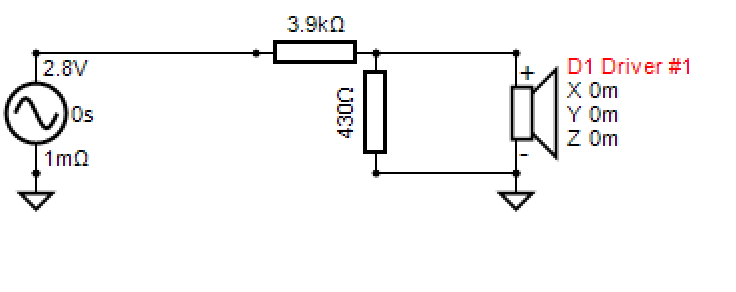
It basically uses a resistor network to drop the high level down to a lower level.. kindof converting it to a preamp signal. The gain knob on the plate amp then fine tunes the volume ratio depending on how sensitive your speakers are that the main amp is powering.
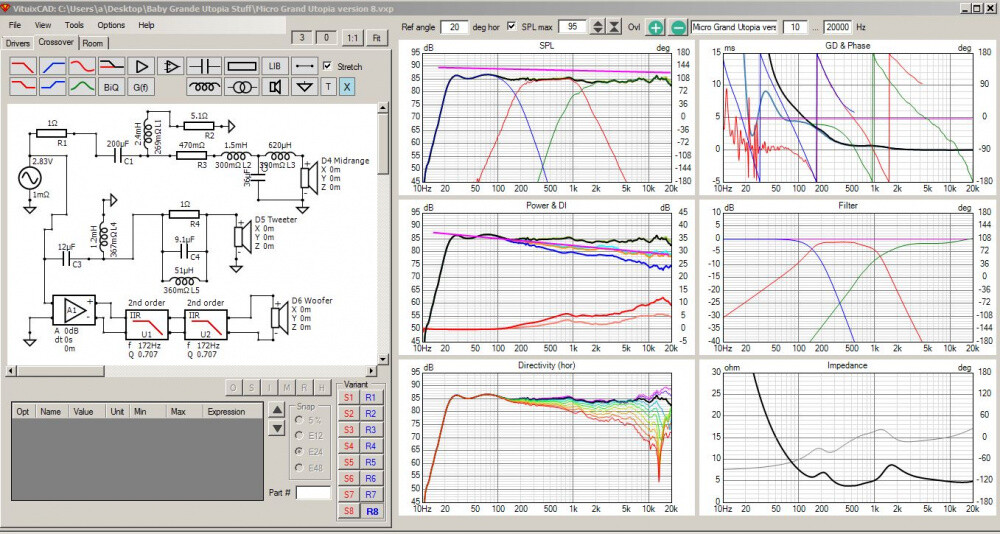
Correct. I used a similar type of setup with my Micro Grand Utopia Speakers. I used two SPA-250 plate amps for the right and left channels. Once the plate amplifier levels were set, the main amplifier that drives the entire system controls the overall volume.
My pair of SPA-250 amps have built-in 6dB/octave filters in series with the high level outputs. I popped the cover and discovered that this was simply a pair of 220uF NPE capacitors in series with the high level outputs. So you may want to double check the manual for the SA100 to see if this feature is listed.
In my Micro Grand Utopia speaker setup, the main amplifier speaker level outputs mainly “see” the impedance of the midrange/tweeter crossover parts. The main amplifier also “sees” the input impedance of the SPA-250 plate amps, but that impedance is very high, as can be seen by the rising impedance curve below 100Hz. The high pass for the midrange drivers consists only of C1/L1/R2. I have the SPA-250 plate amplifier 220uF NPE pass-through capacitors completely by-passed with jumper wires inside the amps.
Interesting. I would not have guessed a plate amp in parallel would manifest as a large impedance. Regardless, I’m happy to hear this should work as I want it to.
Sounds like it is because he put a highpass filter on the mid. If there was no highpass it would follow much more closely with the mid’s natural VC impedance. But yeah the plate amp should have a high impedance so any lower impedance load in parallel is minimally influenced by it.
I run my sub high level inputs in parallel with the mains all the time, no issues. Actually now that I think about, it the amp (yung sd300-6) only has high level inputs, no high level outputs, so it’s the only option, couldn’t pass thru if I wanted to.
Doing some 3D modeling and trying to fit everything together, I’ve run into some problems.
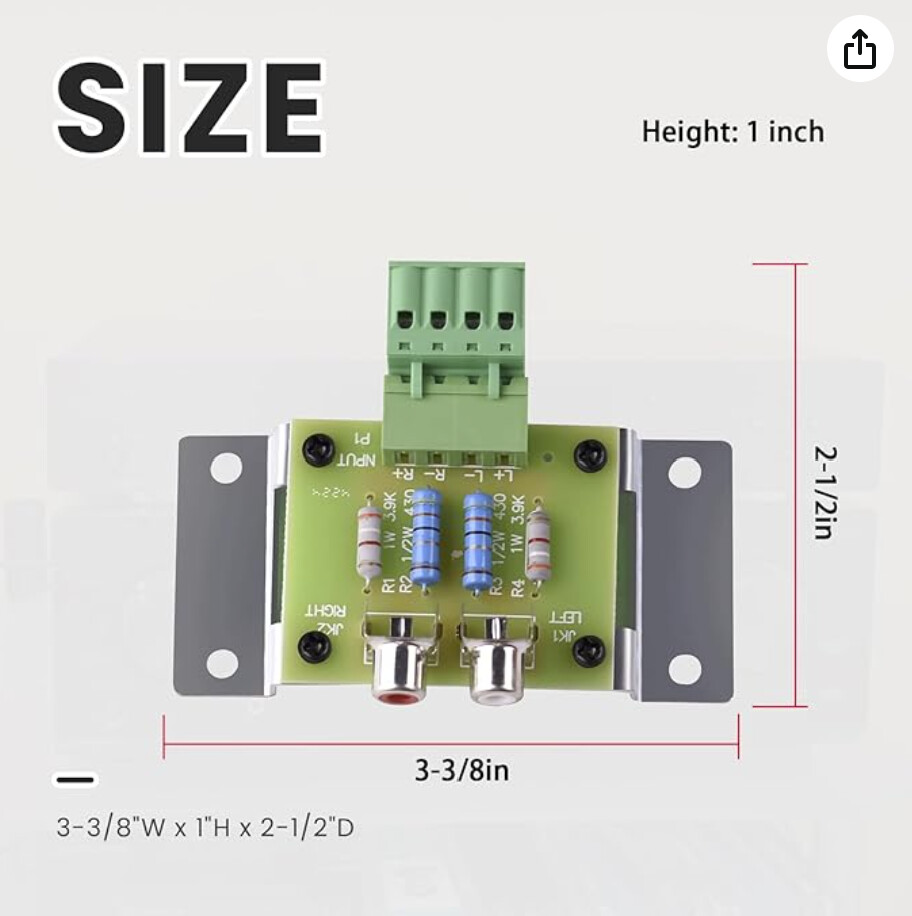
I don’t believe I have enough room to use the class-A Dayton SA100. I think I need a smaller class-D like the SPA-100-D, but this amp doesn’t have high-level inputs. Can I condition a speaker level input down to RCA input voltage range? How does this work/ what does this look like? Since I’m going to have an amp in each speaker, I don’t want to run RCAs to each of them with the high-level inputs. Not even sure I could parallel a pair off a common output…
I could use the Yung SD300, but this is really overpowered for my application. 100W is honestly perfect.
Also, how close to the speaker magnet can I have the amp board? I’m working with some tight spaces.
(In response to JRs link)
I always figured those were just to convert straight from the amp to low level, not intended to have speakers also in-line? I wonder what impedance those transformers show to the amp.
Typical high level input is just a voltage divider, yes. It’s a “probe” connection, like a dual Channel measurement jig, or most measurement equipment uses. It’s important to know that it works perfectly well for unbalanced outputs. Amplifiers with BTL output will not work as you are connecting the speaker negative output to ground, effectively shorting half the amplifier, so the grounds need to be separated for this use case, like through a transformer. Those transformer circuits also include a voltage divider to keep high impedance on the amp side.