I believe the XYZ values are for simulation, not a measured response. There should be a Z offset in the driver set, on the tweeter, for time alignment. But I intend to also make some simple stands to tilt the speakers to the listening ears, so they will be physically time aligned.
Yes, I only measured the tweeter down to 1khz. I blew a previous one during measurement, so limited the low frequency bandwidth to prevent it again.
Well, I thought I was getting somewhere. Then I looked at the impedance, way too low. Still, think I’m getting close! Kind of an odd crossover design; 3rd on the woofer, and 2nd on the tweeter. L-pad on the tweeter, and a notch filter on the woofer. Definitely more complex than I wanted, but trying to hammer it into shape. Guess this is what happens if you use inexpensive drivers lol. The bunch and notch/peak around 1.2k-1.8k hz are baffle issues, I am guessing. Being quite narrow with hard edges.
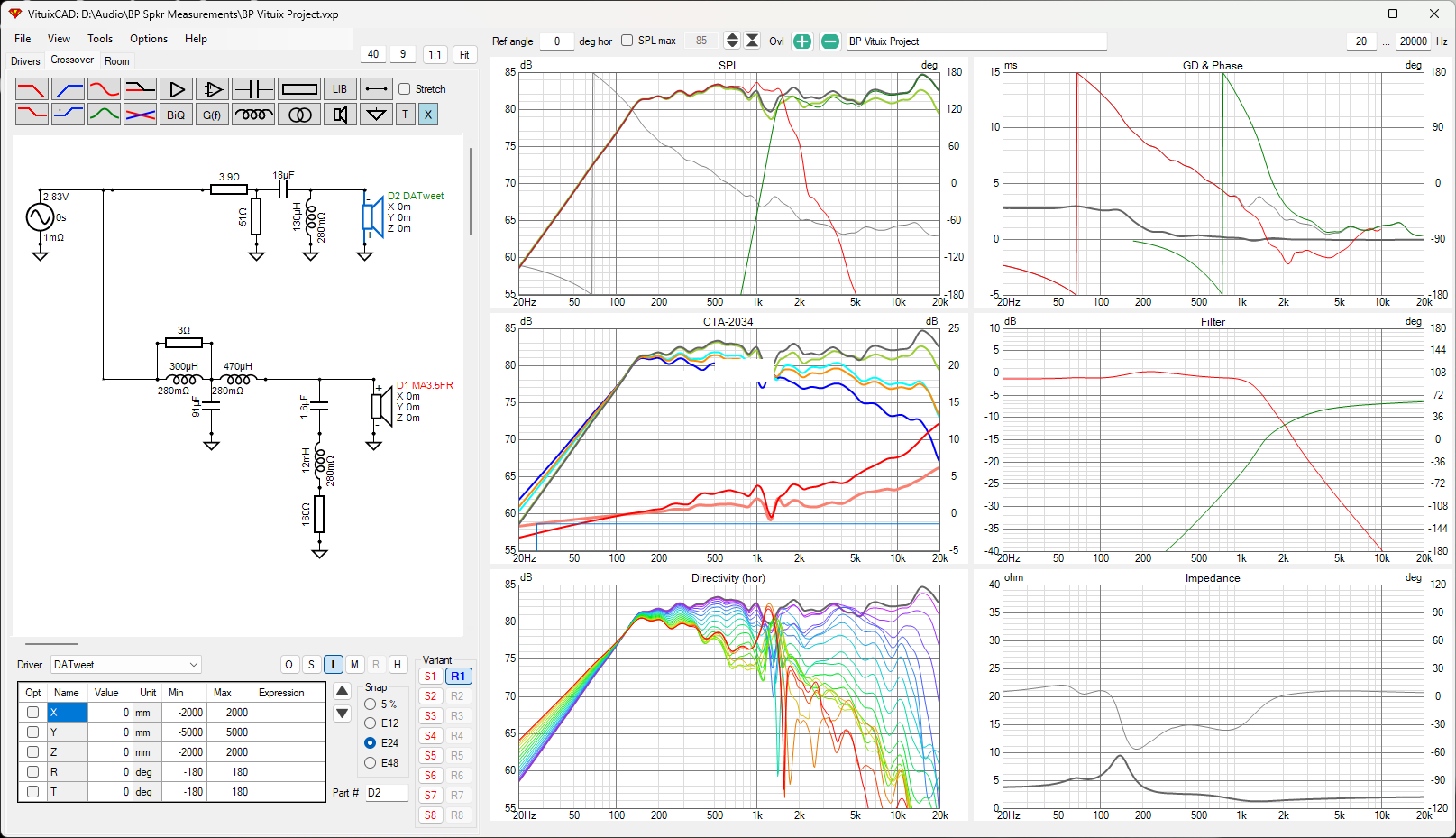
I was referring to the Y offset, not the Z offset. The Z and X values should be zero. The Y offset, however, would be the vertical distance that the mid/woofer is below the tweeter, which in your picture looks to be about 3 inches or so. This would be a physical distance, not a measured value. In any event, the effect on the model is probably very small. My understanding is that VCAD uses this information to triangulate the modelled response out to the 2 or 2.5 meter listening position.
There is a large issue with the Lpad on the tweeter. The parallel resistor needs to go after the xo next to the tweeter. Without this in the correct position, the resistors are directly across the amplifier outputs. This means it is not bandwidth limited by the highpass and will receive full power- making the resistors a possible fire hazard. A series resistor out front by itself is okay, just not the parallel component.
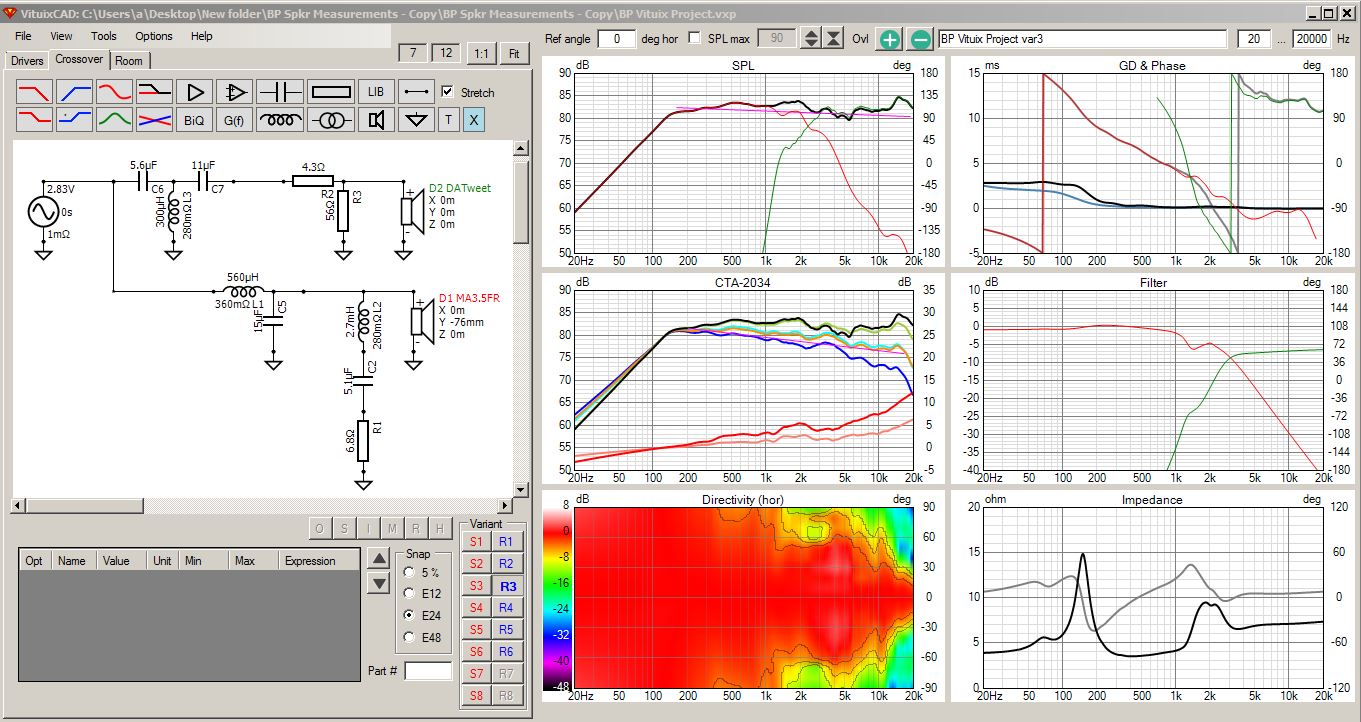
I took your basic topology and tweaked around on it for a while. Here is what I came up with:
- BBC dip used to improve the overall power response curve
- Rising response above 10khz used to improve power response
- Xover of approx 2.4kHz 3rd order electrical on tweeter
- Minimum impedance of 3.5 ohms @ 400Hz
1 Like
Holy shit YUP. I think I started with a series, and wanted a parallel…and I somehow completely forgot to move the resistors. Probably shouldn’t work on crossover design late at night. Possibly after a few beers.
That looks amazing! Thank you lots Bill. I had tried a similar design (3rd order tweeter, 2nd woofer) but never seemed able to get it together like you did. Gonna play with your circuit some tomorrow, but already getting the impression that you may have nailed it…
I think that the XYZ offset can be inputed to adjust the listening axis, if measured from a different axis. From the VituixCAD manual:
“Driver instances
Each driver instance added in the crossover can be provided with location relative to “design origin”. Location is entered to Parameters grid. Design origin is typically perpendicular endpoint of listening axis on front baffle surface. X [mm] is horizontal coordinate of center point; negative to left and positive to right (mic/listener view). Y [mm] is vertical coordinate; negative down and positive up (mic/listener view). Z [mm] is horizontal distance coordinate; negative closer to mic and positive further from mic.
Horizontal rotation R [deg] and vertical inclination T [deg] of drivers are also supported. Rotation R [deg] is positive to counter-clockwise from top view, and inclination T [deg] is positive to up.
Measurement data in Drivers tab is linked to driver instance in crossover network with a list box located below crossover schematic. List box is visible when driver is selected in crossover.
Multiple drivers should be entered as a single driver if they are measured in the prototype cabinet as a package; all connected to power amplifier at the same time. Location is entered as a difference between measurement and design origins.
Example 1: Location (X,Y,Z) = (0,0,0) if multiple driver package is measured on design (listening) axis.
Example 2: Location (X,Y,Z) = (0,-400,0) if multiple driver package is measured 400 mm below design (listening) axis.”
From how I understand it, if the driver/speaker is measured at the right distance and listening axis chosen, XYZ should be zero. It can be adjusted if need be.
Ok, so you took measurements for both drivers with your microphone held in the same position for each measurement, on axis with the tweeter? I thought you were measuring each driver on its own axis. I’ll adjust my XYZ values back to zero. What microphone setup are you using?
Yes, mic did not move during measurements. Pointed at tweeter axis.
Ah so I very luckily work at an audio consulting company, so I have access to our anechoic chamber after work hours. Uses a B&K 4190 mic, going through their Nexus preamp, to an RME and controlled by SoundCheck. And every part is calibrated. The speaker sits on a stand on a turntable, that’s automatically controlled by the acoustic measurement sequence. I don’t have a picture currently, but can take one next time I measure something.
5 Likes
Forgot I took a video for my friend while measuring them. it doesn’t seem like this forum allows for uploading of videos (unless I missed it?) so here is a link to the video on my google drive.
You need to go under “Manage Access” and change to “Anyone with the link” so we can see it.
1 Like
Take two…
4 Likes
So jealous!!!
Valid, I am lucky as heck! I wrote the sequence for SoundCheck to automatically measure the off axis/polr response of a speaker. Was a learning exercise for me at work. I just set it all up, start it, and everything is done automatically. The frequency sweeps, and rotating the turntable by 10 degrees. Makes measurements for speaker design a breeze.
3 Likes
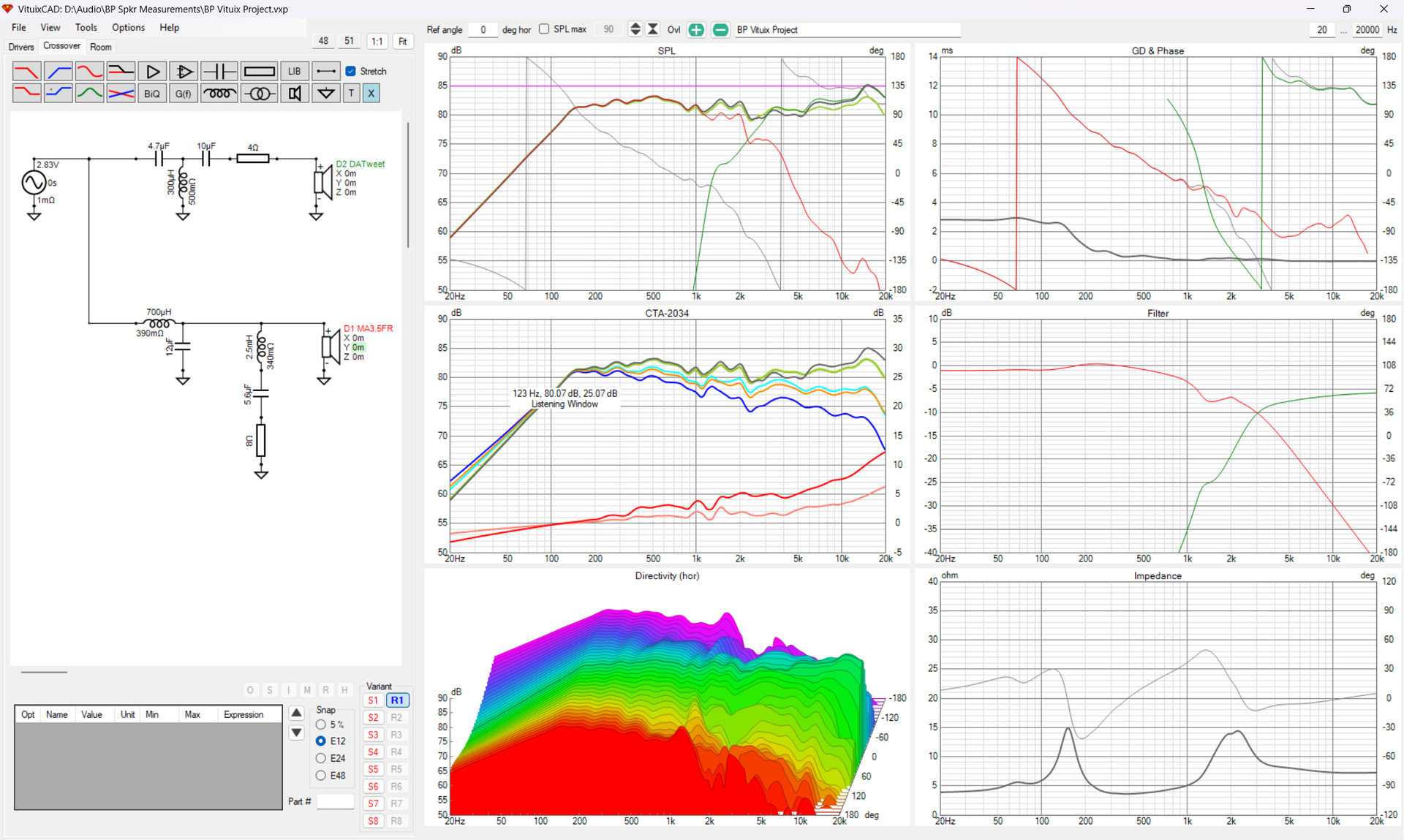
Played with the crossover that you designed a bit more, and settled on what I hope will be a good design! Thanks again Bill. I also adjust parts for items you can actually purchase; which I just did from Jule Fidelity. On vacation next week, but will get it assembled the week after.
1 Like
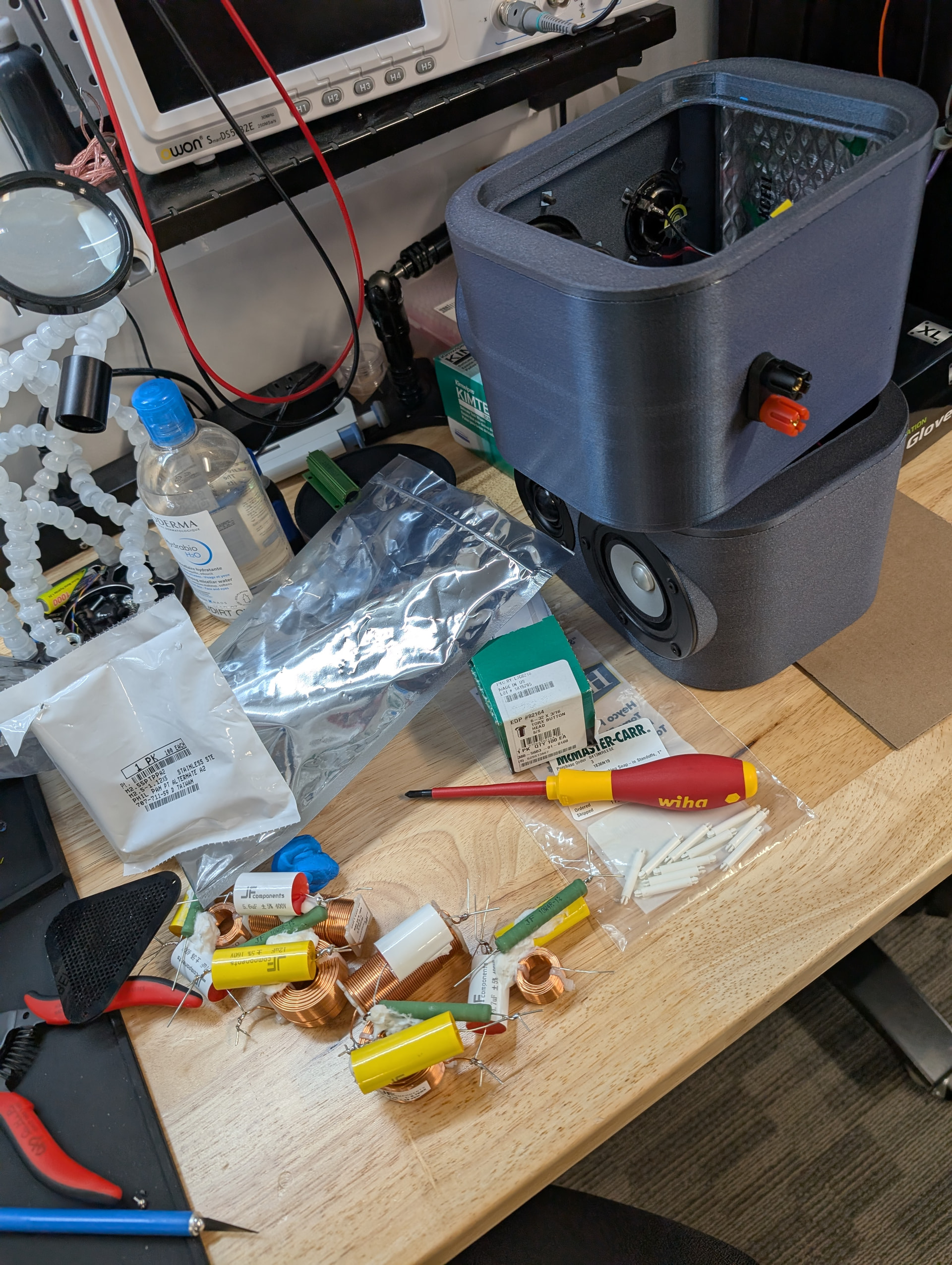
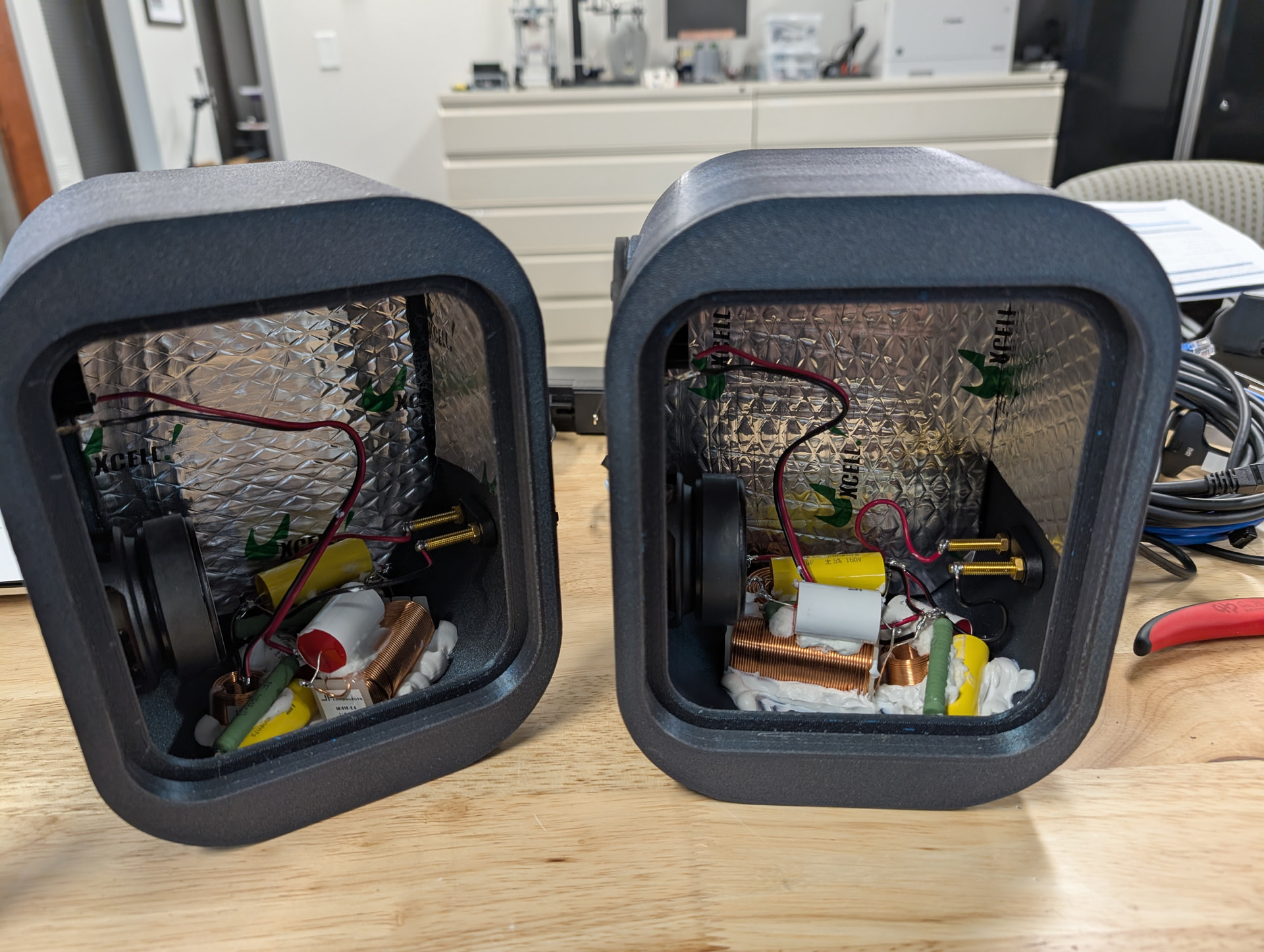
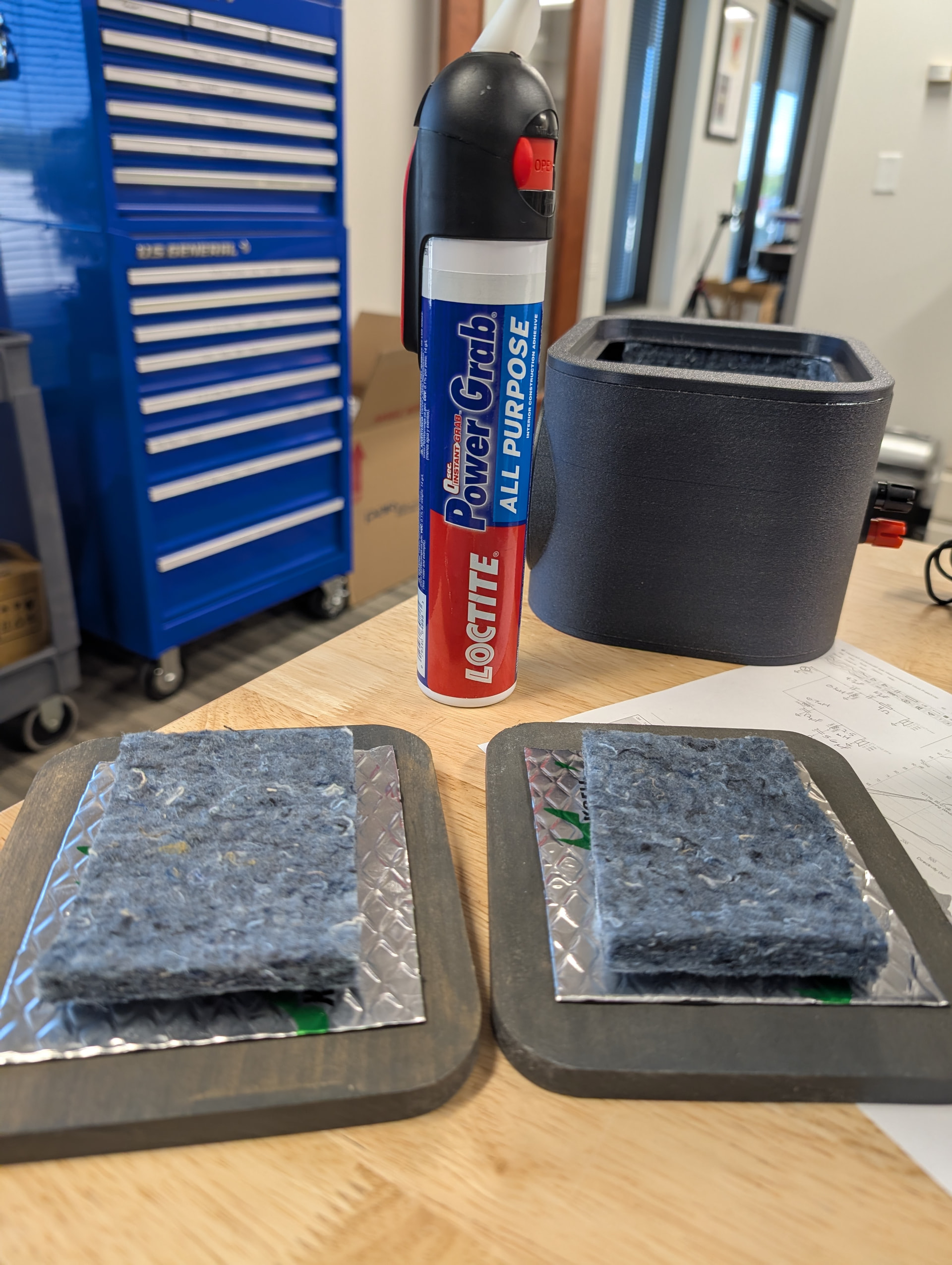
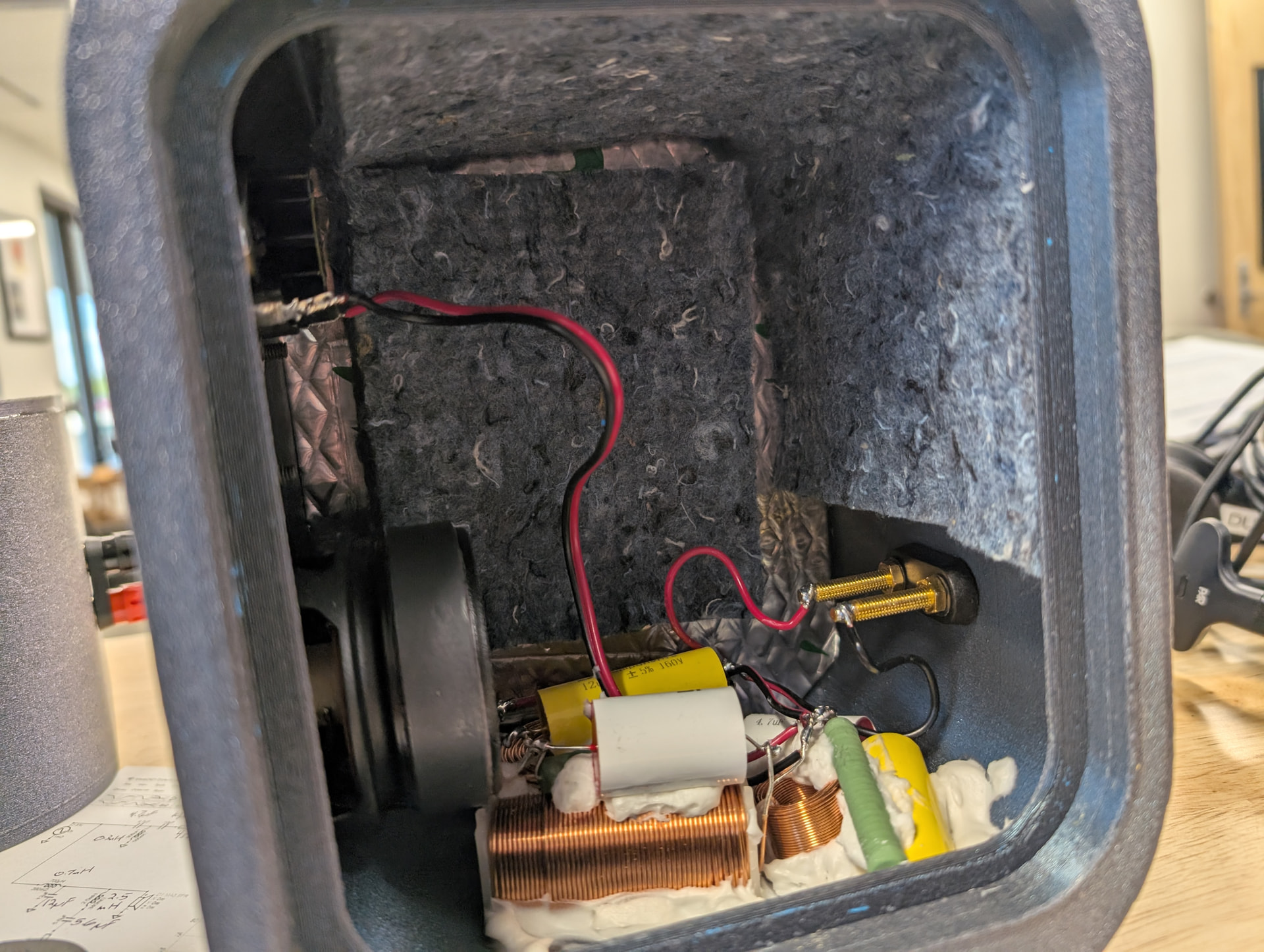
Another update. Crossover parts arrived, and were soldered together. Was a tight fit! Tested it via an impedance measurement, and I managed to wire everything correctly. Was mounted in the enclosure with construction adhesive (I quite like this pump bottle), and some denim insulation was placed along the walls. Last steps are adhering the wood size panel via epoxy, and doing a quick measurement.
8 Likes
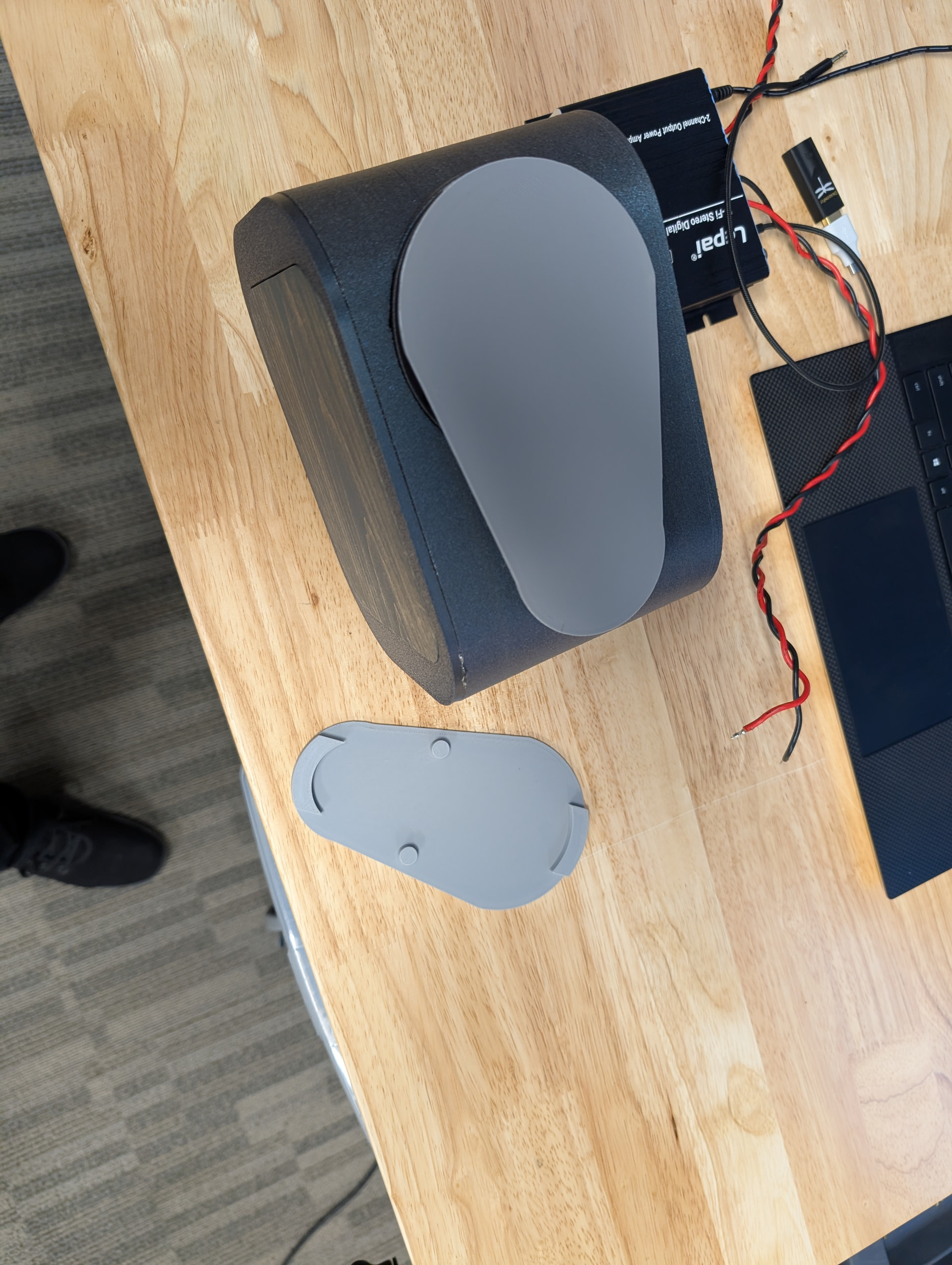
Realized while I was packing up the speakers to ship them, that I needed some sort of protection for the drivers! Made a quick cover that sits over them with some standoffs. They sounded quite nice, very clear midrange/vocals, and no real distortion even when pushed fairly loud. Just waiting for my video to upload, and I’ll link that shortly.
6 Likes
2 Likes