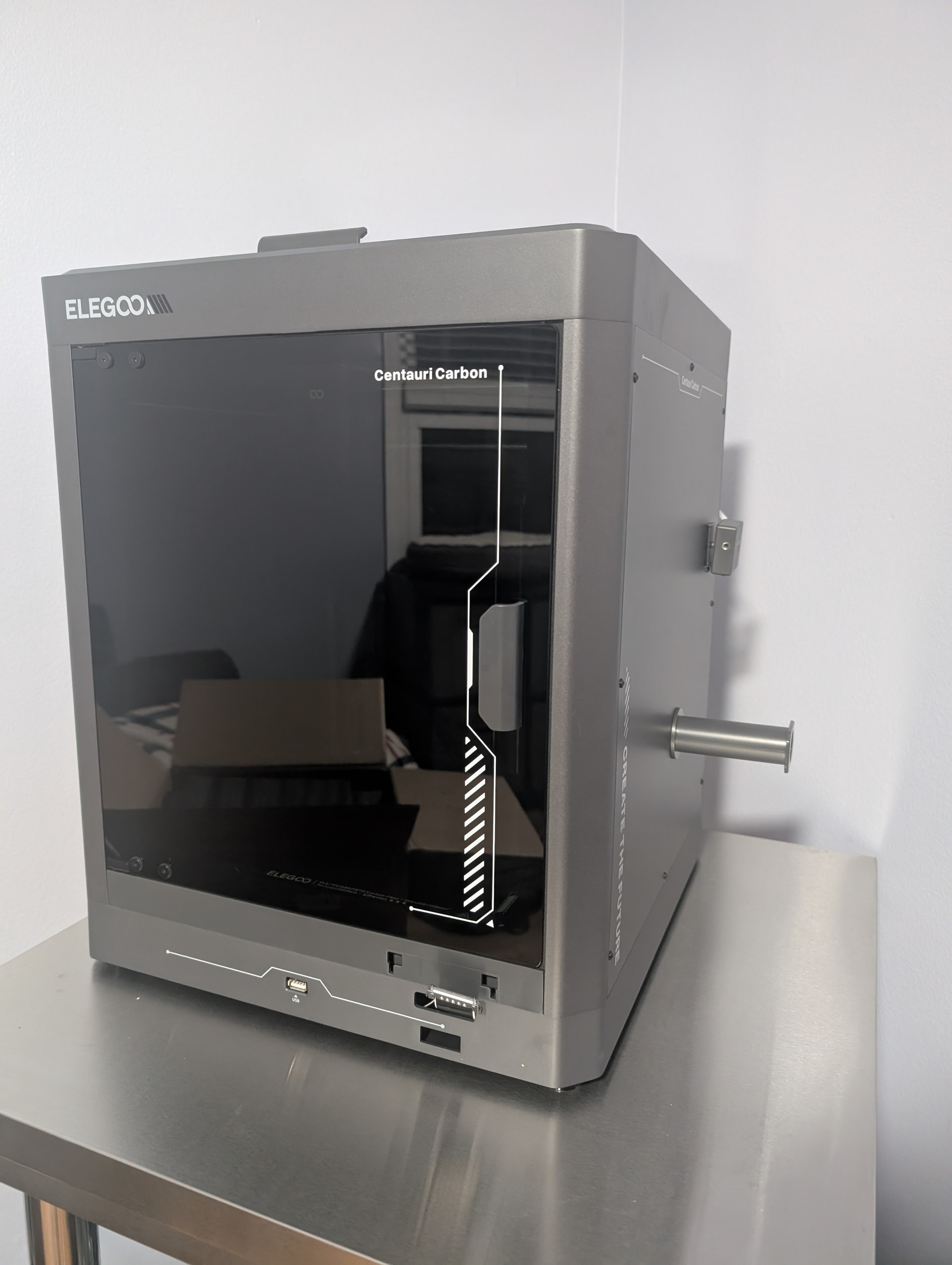
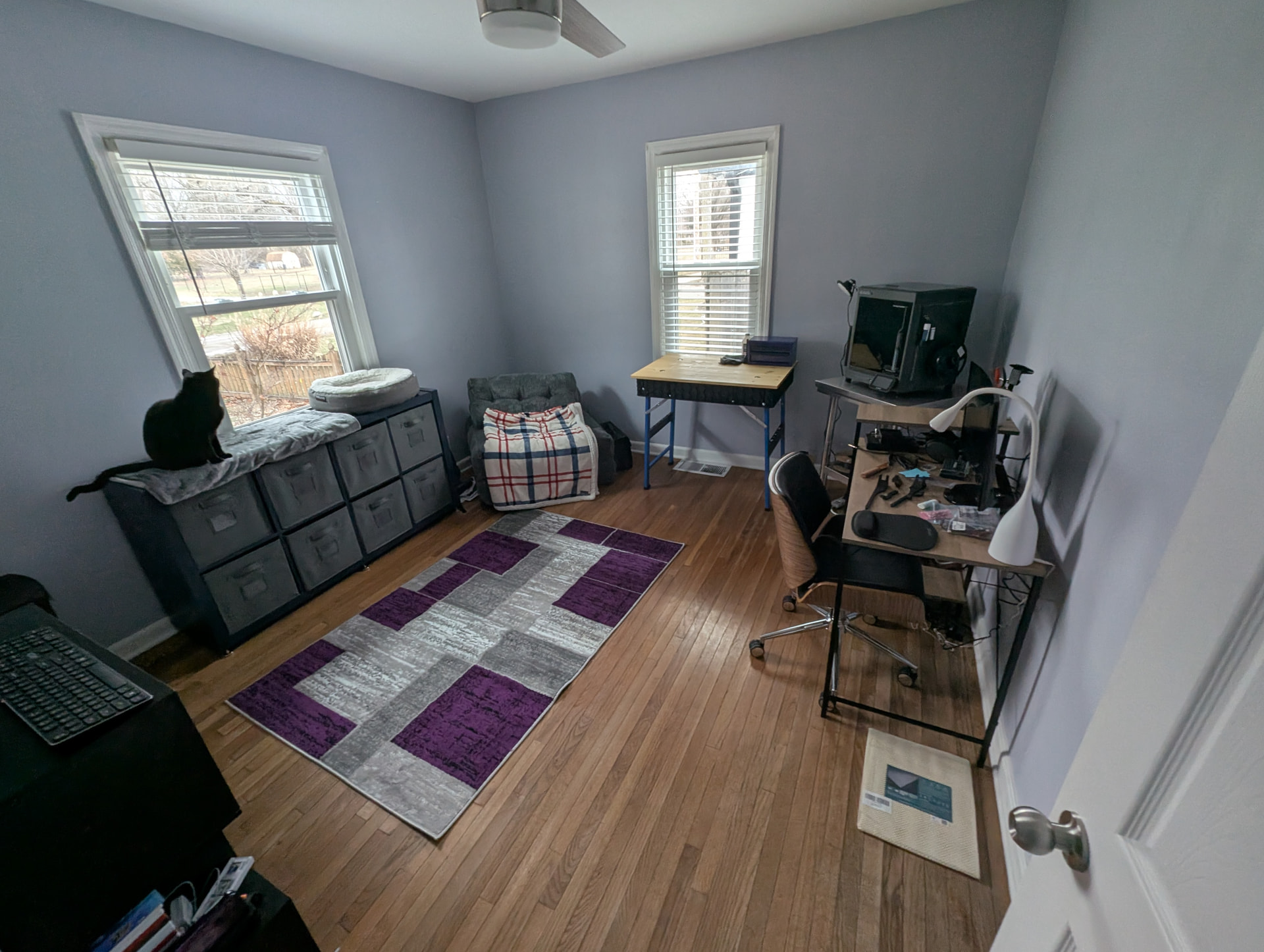
This speaker has been in the works for a long time. I wanted to print it out of ASA, for strength and longevity. But my previous printer, an inexpensive open frame bedslinger (Sovol SV07) wasn’t up to the task. After making a slightly bad decision on black friday, I purchased the Elegoo Carbon Centauri. Fully enclosed core XY printer. And it prints ASA beautifully! Bonus picture of my “creation/craft/hobby” room
3 Likes
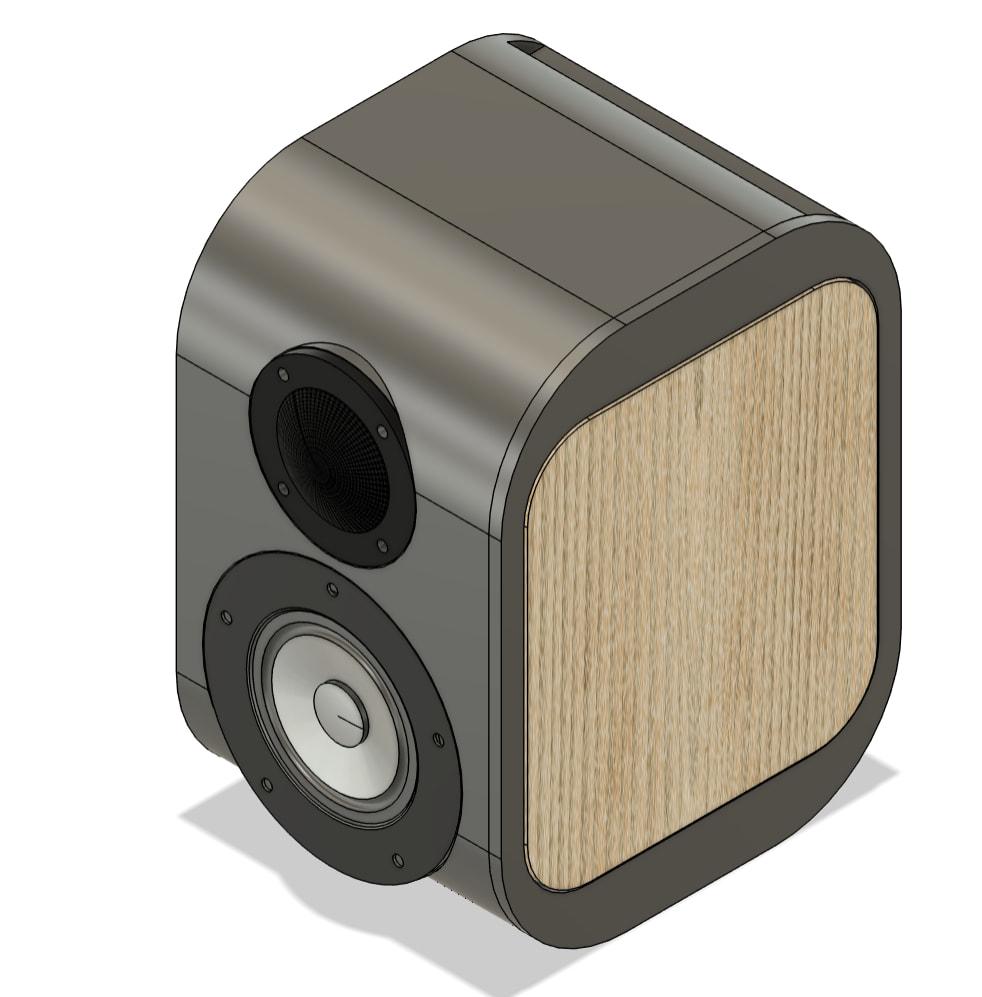
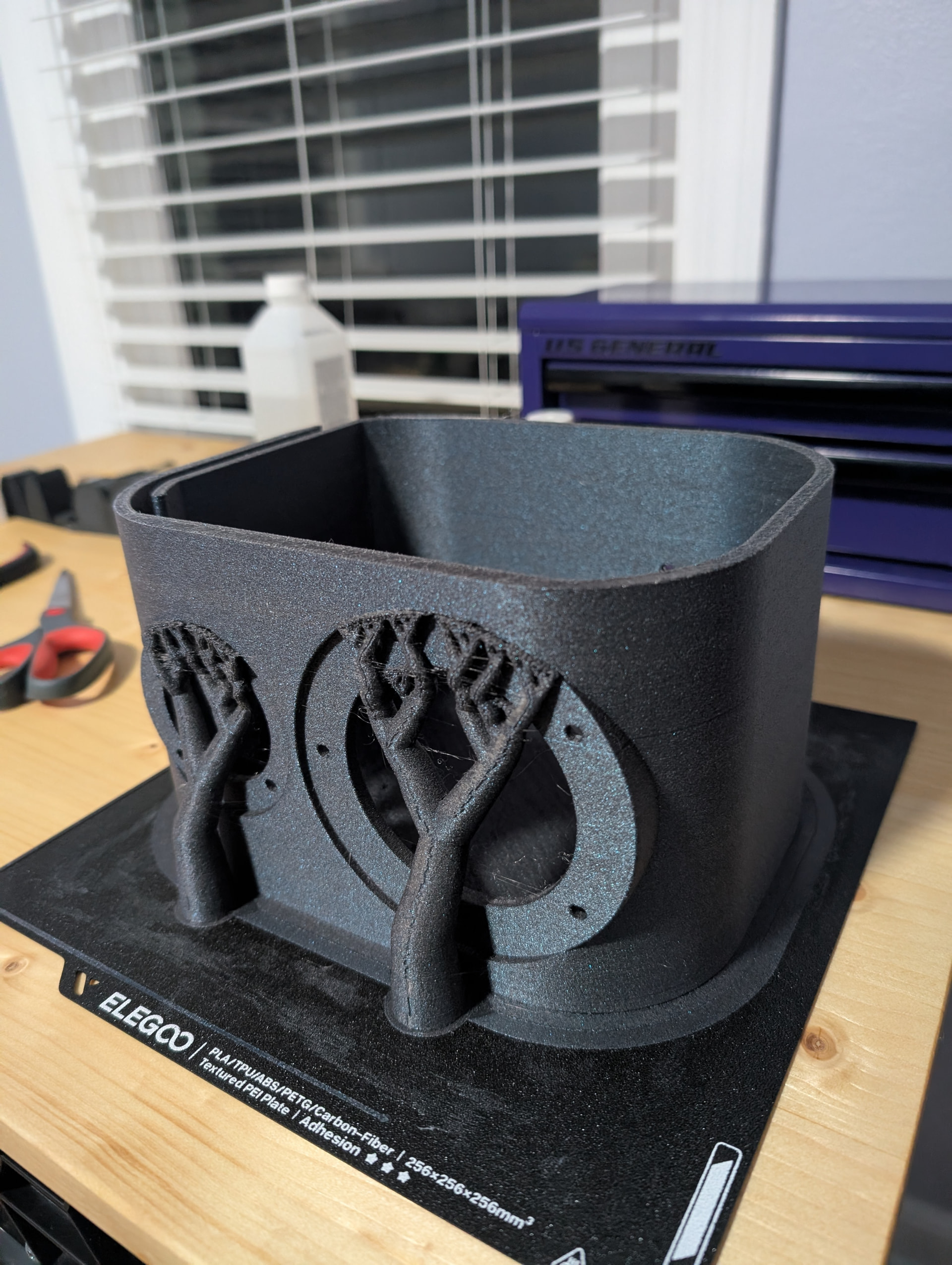
I went through a few CAD designs, but ended up on a design with very rounded corners. This helps prevent the edges from lifting up during 3D printing; sharp edges have a much higher chance of detaching from the build plate and causing the print to fail.
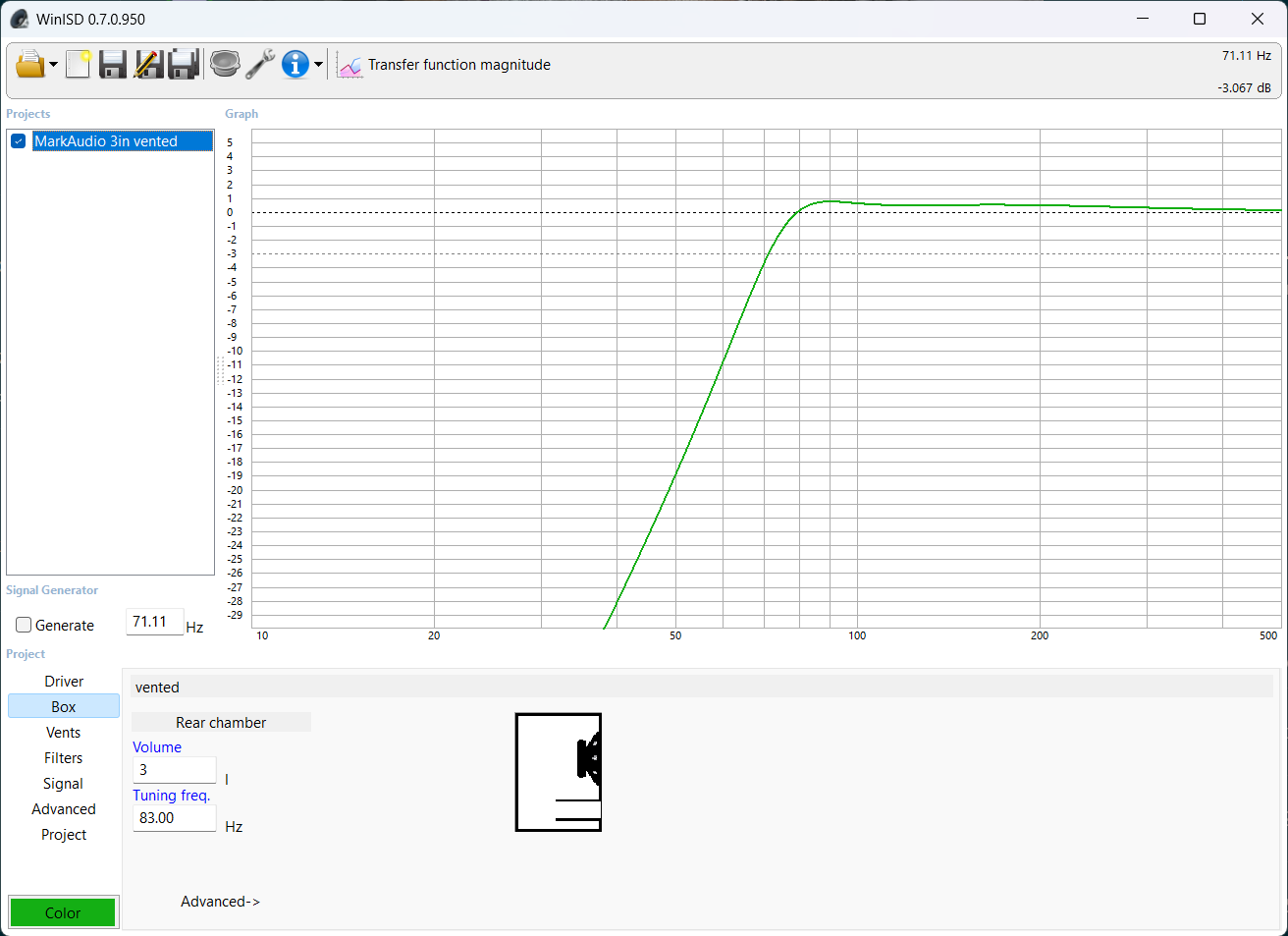
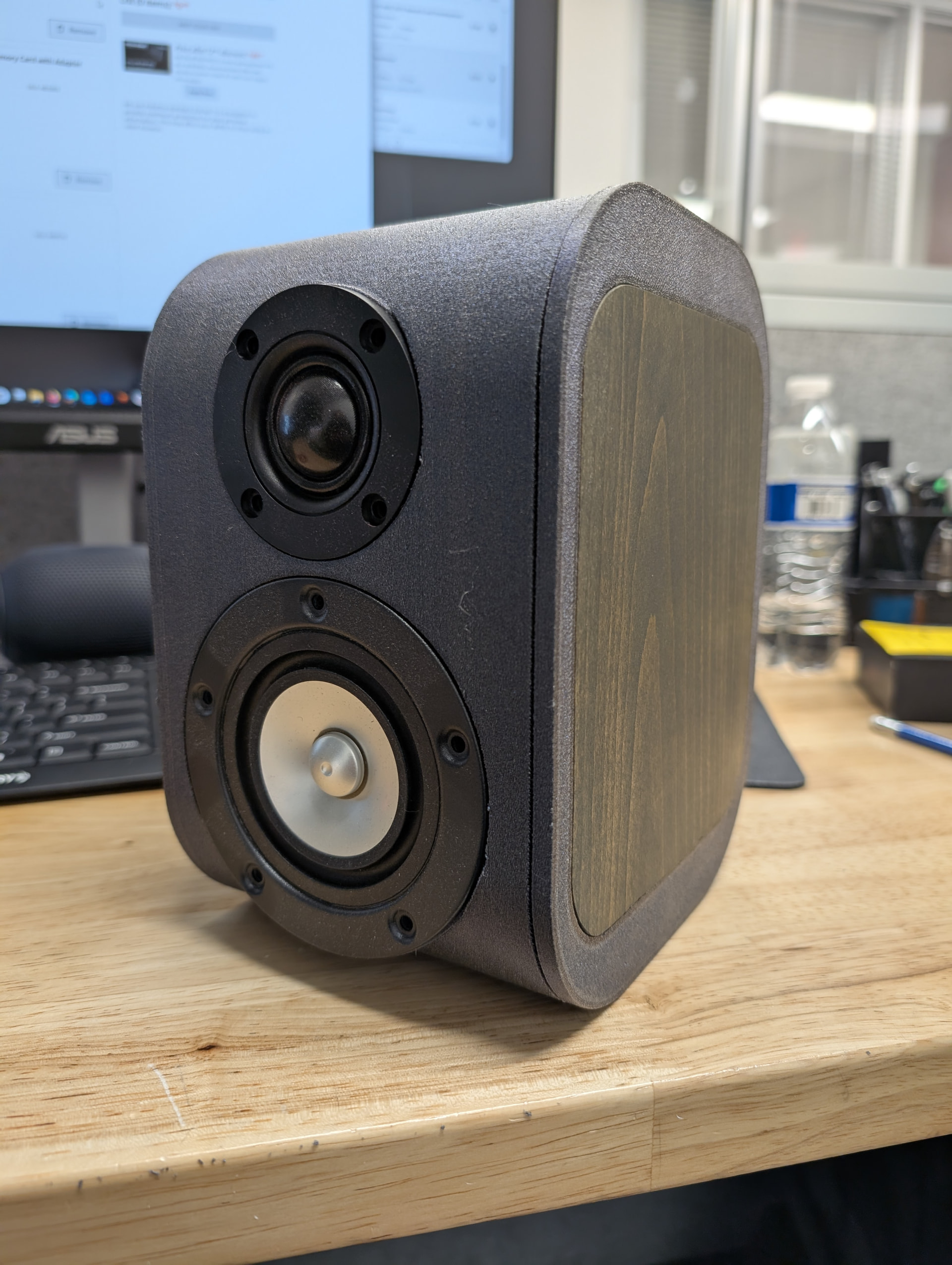
This is a more budget build, so I choose the drivers accordingly. For the woofer, the Mark Audio CHN-50 was used. It models very nicely in a 3 liter cabinet, tuned to 83hz via a slot port. A slight rise in the low end to help it have a full sound. ~70hz F3; perfect for mating to a subwoofer. Max power is about 15W.
Tweeter is the Dayton Audio ND25FA-4. Small face plate was the primary need.
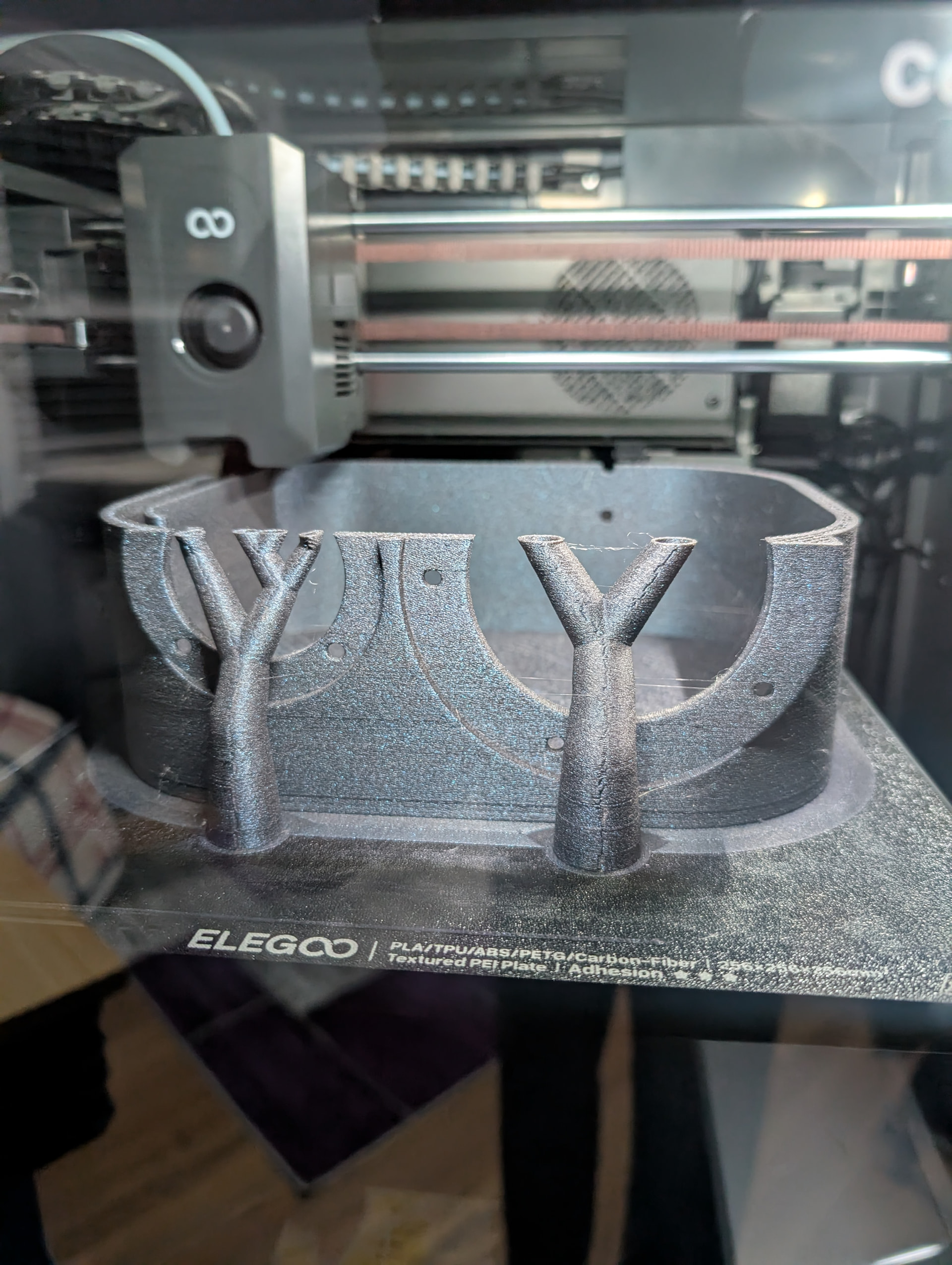
And printed! I used Flashforge Burnt Titanium ASA filament. 4 perimeters, 20% grid infill. Some supports around the driver hole. The side piece is made of wood; to add a nice accent. Aspen, finished with a gray charcoal danish oil. And the current mock up. Next step is finishing the cabinet, and mounting the drivers for measurement.
7 Likes
That’s a really cool design and build. I like the recess for the wood accents too. Nice work. I haven’t gotten around to do a lot with my printer .
I recently switched to Orca slicer for my Elegoo Neptune printer. It adds some great options that will help you make the most of the new printer. I have looked at the carbon a few times but havent pulled the trigger yet.
Yup, I use the same; Orcaslicer. Elegoo Spicer is just a reskinned (and older version) of Orcaslicer anywho. I didn’t have to do much tuning; just a quick flow test for the best outer wall speed, and a pressure advance test.
I’m planning on also flashing the firmware with OpenCentauri soon. And I have a few fans on order to replace the quite noisy case fans.
1 Like
Please keep me posted on the upgrades, it looks like an exeptional value.
I became a Elegoo fan when I was working with students in robotics. Elegoo was very helpfull.
What type of adhesive did you use to secure the wood sides to the 3D printed enclosure ?
It is currently just held in via friction, as I was mocking up the speaker to send a picture to my friend. But I will be using E6000 Premium. I’m contemplating using an epoxy with an instant mix nozzle instead, as the E6000 can be quite stringy/messy.
1 Like
Love the design. Print looks great. I am curious how/why you decided on ASA?.
1 Like
A few reasons. PLA can actually soften if left in direct sunlight with a hot room; as it has a very low glass transition temp. Also cause I know my friend likes to use a space heater often in the winter lol. PLA also deforms under stress over time; and as a speaker enclosure is sealed and has drivers bolted to it; I didn’t want it to fail over time.
Overall, ABS is just stronger and stiffer. And ASA being an analogue of ABS; adds UV resistance to the mix. So a better long term filament. With the downside of possibly having some printing difficulties.
Did you face any of the said printing difficulties or what or any additional steps to be taken? PLA is sort of the default since usually the printers come with a spool of it and is more readiliy avaialbe in multitude of colors, etc.
1st I have nothing against ASA or PLA but after tons of prints I have hapily setteled on PETG. If you haven’t give it a shot. The “worst” part about PETG is the stringing. Any good slicer can deal with this in the print settings. Many people talk about the UV degridation-It is a thing but not nearly the problem many assume it is when they hear about it. PETG is what they make pop bottles out of, yes if you find a bottle that has been on the side of the road it will be crunchy and possibly foggy from the UV but thats because its clear plastic, the opaque plastics will take MUCH longer to degrade.
If you are worried about losing the file you can buy a cheap usb drive and put it in the speakers then anyone that might be in the speakers can get the files I do this on a lot of my builds.
Not with my current printer. I previously had a Sovol SV07, in an enclosure, and it was difficult. Especially as the printer needed a lot of tuning and tweaking. Had no problems with this Elegoo. Preheat the printer for 10-15mins, and I usually print at a bed temp of 105 and nozzle temp at 260-270. Been quite flawless. Have a few other larger prints (speaker based!) that I’m working on too.
PETG is great! And I have used it often. I actually find it warps easier than ABS/ASA, especially as it doesn’t want a warmed enclosure. And I haven’t played enough with it to reduce stringing. But I have been using a carbon fiber enforced PETG for functional prints for printer accessories. Have quite liked it. I am planning on using a clear PETG to make some lamp shades soon though.
Good thoughts! I’ll send a copy of the files to my friend; just in case.
…finally have an update. Work, life, and our anechoic chamber was quite busy! But got the speakers measured last week. Currently working on the crossover, attached is what I have so far. Also included is the VituixCAD files and data. Any thoughts?
BP Spkr Measurements - Copy.zip (2.7 MB)
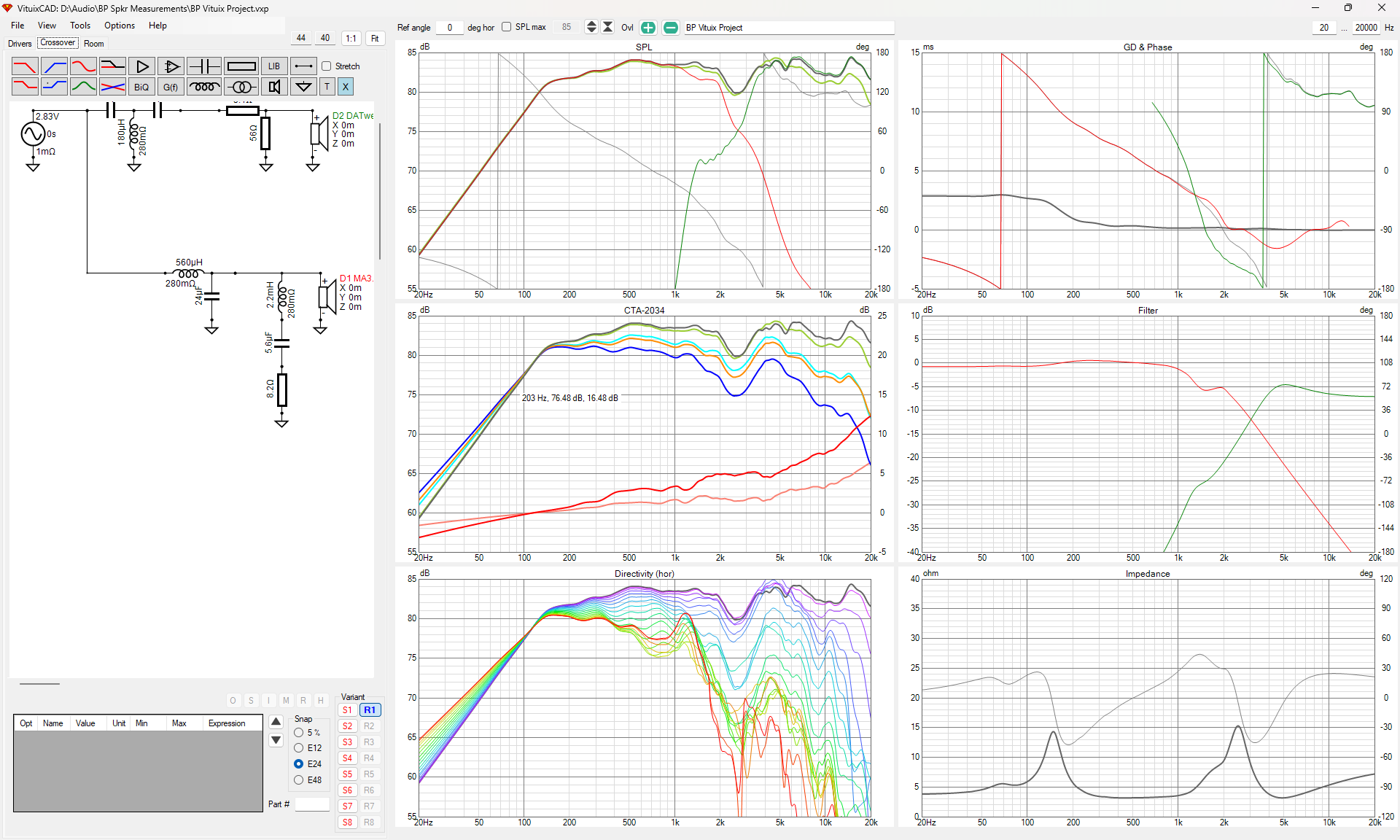
Looks like you may not have near enough baffle step loss compensation, unless they are up against a wall they will likely sound fairly lean. If you look at your transfer function you can see you have very little there.
Absolutely! I was just getting something thrown together to start. They will be near wall and on desk, so was thinking of not doing a full 6dB bafflle step, maybe 3dB or so?
On your VituixCAD xover screen, I noticed that the X,Y,Z values are all zeros for both the ND25FA and CHN-50. Since the CHN-50 is about 3 inches below the ND25FA, shouldn’t there be a Y offset of about 76mm or so? Just asking because I am attempting to set up a VCAD model to play along.
EDIT: Also, on the tweeter frequency response measurement files, the data only goes down to 1000Hz. On the woofer files, it goes down to 100Hz.
3db would be adequate if up against a wall IMHO. However, wall placement has it’s own issues. It can be eye opening measuring a speaker placed up against a wall.