I have an idea for a little 3 way speaker for messing around with, but will mostly use parts on hand. In terms of a mid (the only driver I’d need to buy), I was looking at the TC9 8 ohm version, but at an alleged 83.5dB, it’s not efficient enough.
After some searching, I found a four ohm version with stated 87dB, which is more like it:
I thought of the fibreglass TG9 which s about 86dB, but it’s n/a here.
I know the 8 ohm TC9 is widely used and is well regarded, but has anyone used this one or know anything about it? There’s one review on PE which say in effect ‘buy something else’, but no specifics about what’s wrong with it.
What I’m thinking of - and it’s just for fun and learning - is a three way with Peerless 830656 and TC9 on the baffle, providing most of the music, and the tweeter on the top, sort of like an old Sonab speaker, to give some sort of ‘omni’ sound. It could all be a waste of time and MDF but it might be interesting - or not!
Edit: I think that once I apply BSC, the lower sensitivity of the TC9 8 ohm version doesn’t really matter, so please ignore this post. The TC-7 will probably be a more sensible option anyway.
I’d consider the TC9FD00-04 a completely different driver to the TC9FD18-08. Pretty much everything seems to be different. Different cone, surround and frame materials. The spider and magnet appear to be different also. Not that TC9FD00-04 would be a bad driver. It probably does a good job too, but it looks to have a more pronounced response bump that may be anoying to deal with.
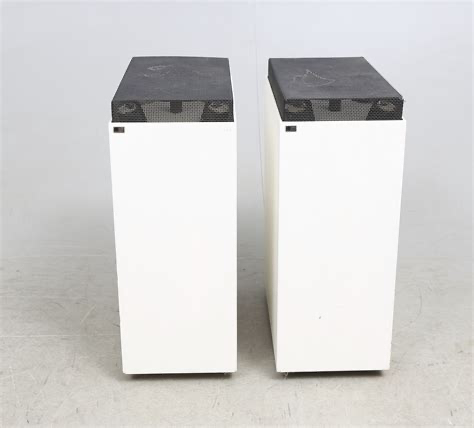
I own a pair of Sonab speakers. Those multiple tweeters are crazy, as is the downfiring midwoof. There’s something wrong with mine, but the XO is insane, and I’m not about to try and dig into them.
One issue might be that the Sonab omni speakers were apparently designed to be used with Sonab’s own brand amplifier, plus the listening room needed to be within a certain size range.
I was going to buy a s/h pair but didn’t after the honest sales person provided that caveat.
This links to the Sonab amp I was thinking of: A$420, not cheap but not too bad given it’s vintage gear.
There’s a feature on Troels’ website about the Sonabs, the main theme of which is ‘how on earth do you measure them’, a very good question!
The speakers he was looking at had four tweeters, all firing in different directions. XO was a first order on the woofer with no BSC and second order on the tweeters, whose wiring completely confused me. Troels thought it may have been a kit version.
That’s why I’m thinking of something much simpler: not an ‘omni’ but a three way with most of the music coming from the full range and mid woofer, with the tweeter on top, crossing above, say, 4kHz.
I’ve never built, let alone designed a three way, so this will be a rather challenging project but I hope to at least have fun and learn something.
Those are the speakers that I have. Crazy stuff. And just to add to the crazy fun, they have hard metal jumpers that are supposed to change the response. I never heard a difference, but perhaps that’s due to driving them with a regular amp, as opposed to their proprietary one. I’ll never know, as I have no interest or funds to buy their amp. They’re just room candy at the moment.
Edit: No. Those are decidedly NOT the speakers that I have. The tweeters are arranged similarly for omni response, but the woofers are down firing, and the XO is anything but simple.
Several different models of Sonabs were sold here, including some relatively conventional designs. I didn’t have the budget to afford any of them so I didn’t take much notice of the model range.
I thought my cheap SEAS 8" twin cones were much more impressive!
Thinking a ~Sonabs OA-5 design might be a fun little project (not so much for a main listening room, but for a room fill). Thinking a good use of a couple of Tectonic BMRs per side with an 8in…
Thinking about either full or partial omni-directional speakers, their successful use might also be recording dependent.
If the idea is to have the sound bouncing off surfaces on its way to your ears, as might happen in a concert venue, some of that may well already be present in the recording and be noticeable through conventional speakers.
Listen to a recording of the Chicago Symphony Orchestra playing ‘William Tell’ by Fritz Reiner and you really hear the echo and reverberation of its great brass section. Likewise, a bootleg audience recording of the 1970 LA Forum Hendrix show (great concert) already has that ambience built in to the sound, so you don’t really want to add more reverb etc.
However, play a close miked rock record and a bit of extra ambience and character might be a good thing.