Jaekels, Itasca, and Wanlü; VersaBox #4A, #4B, and #4C continued

Okay, wow- what a lot of things I did today to try and isolate or find the sibilance issue for these tweeters. I even mocked up a secondary circuit to mimic the xover on the tweeter and measure various things to see if they were the cause.

Here’s whare I started….

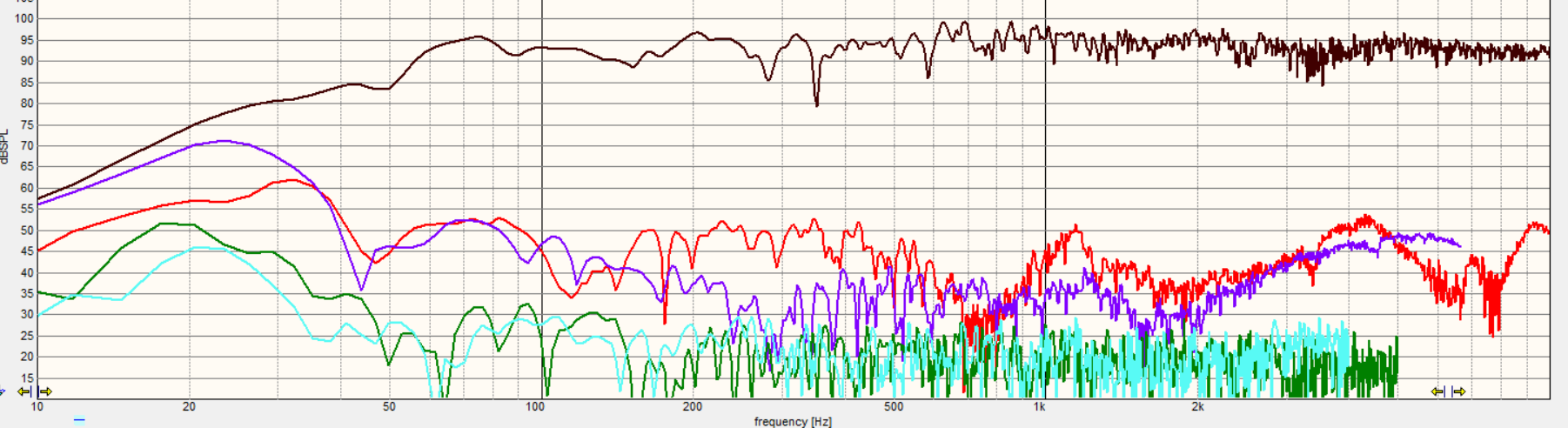
I first measured the system as a whole to get the followup HD/FR verification the simulation worked as planned. No concerns were found here. Then I tried various things to track down what was causing the HD curves.

I had a hunch the 6.2 ohm Lynk MOX resistor across the tweeter for both level and Fs compensation might be the culprit. I measured the Lynk and 2 other resistors for comparison, but none showed any discrepancies far enough departed from the others in terms of FR or HD. I still think the Lynk could at least partially be the culprit, as I could not measure the difference in the Drottnar project either via HD/FR means, however, by ear it was very apparent to me.

I tried the different caps on the installed switch in the xover as intended, and I could not get any caps to measure differently. I’m not surprised, as I have not yet been able to measure differences even though I feel they have audible differences.

I then noticed the already seen HD signature of the tweeter. I measured it alone, and I feel for the most part that the tweeter is the main cause of the HD signature. The curves are -45dB or lower, so below 1%. However, the 3rd order rises above the 2nd order at one point where the 2nd order takes a large nose dive and then rebounds.

No changing of the above checks or tests affected the overall HD curves much if at all, but I think that and the possible Lynk issue is my next step. So, I will replace the 6.2 ohm Lynk resistors with as close as possible other type resistors just to see if that helps. If it does not, then I have to tailor the upper treble response of the tweeters to suit me.

2 Likes

Update from this afternoon, I swapped the green Lynks for some Dayton sandcast equivalents, and the sibilance went away.

Then I was able to try other caps sans the sibilance. After trying several paralleled for value, I found a good mix that sounded quite good. Larger cap value approached the bloom sector and became shouty on the lower treble. Smaller made the TM transition considerably more blurry or like that of a hole in response. 8.8-9.0uF really seems to be the sweet spot.

I’ve been scavenging caps for a number of years for good deals. Lately, ebay has been showing me higher voltage caps from Electronic Concepts, ASC, and Arcotronics/Kemet. I had an ASC included initially, but the Arco sounded better in this instance. Paralleled further with an Audyn Tri-Reference and an Audyn True Copper. The funny thing is, I’ve tried the TriRef with several different builds, and it never sounds as good as another part I try - until now.

2 Likes

Wow, a shunt resistor brand change? So kinda justifies shunt components matter too, ehh?

I never said they didn’t. :grin:

1 Like

Tried more and different caps today, just because I like options…

-The Silver Audyn/Bevenbi combo is really pretty good. As Silver does sound different, not unlike silver-mica, there seems to be a tiny emphasis in the upper treble.

-The Arco/True copper/Tri-Ref reveal a lot of background details like backup vox, French horns, etc. But it almost seems a little reserved in character.

-I tried a tried and true today, the venerable IMB/Hovland line of caps. IMB closed up shop a while ago, so these are only available as NOS in general, ebay likely. These things are STILL awesome sounding, and their reputation precedes them. Openness in spades, and transient plucks sound great. In some cases, these can sound a touch forward, but not here.

-SoniCaps, hmmm… It seems they are not made the same way as when introduced to the market, because they don’t physically look the same anymore. They also did not sound as good as the IMB in this case to me.

-I tried some WonderCaps, and they were fine, but nothing special, IMO.

-I tried an Electrocube/Arcotronics(Kemet, GE(?)) combo, which were pretty good too. Arco sound open and clean, but a minor step down from the IMB. These really are a cost effective mfr.

I have more I can try, we’ll see what I think of trying. The first 3 listed really do a lot so well. Why the combos? Well, you can’t really readily purchase an 8.8-9uF cap. I don’t normally mix and match, but this is an unusual occurrence where I have to. If I don’t have more than one value in a “family”, I have to substitute.

Thanks for reading my ramblings…

2 Likes

I have just recently been trying different caps in my reference system. It is pretty eye opening. Those Alumen Z caps are pretty amazing but the Superior Z caps are as good, just different. Didn’t really like the Silver ones.

1 Like

I have not tried the Alumen, but the Sup and Silver are nice.

1 Like

Preferences for ‘Capacitor Rolling’ can be tweeter dependent (ie metal / soft dome / compression…).

I appreciate your findings and comments here, relying a bit more on your younger ears. Thx

1 Like

Agreed, yes it can be tweeter dependant.

1 Like

I was quite pleased with my ears recently when I could hear how bad a 150 uf electrolytic sounded on a midrange compared to a poly. I doubt that I will ever hear differences in poly types.

3 Likes

Did some more playing around today with caps for Wanlu and tried another combo that I’ve not tried on anything before this pair. I really think I found a winner this time! This has more resolution on these tweeters than anything else I’ve tried, and I’m absolutely blown away by the performance they provide. It consists of an Electronic Concepts (EC) MP80 6uF 600VDC and a 2.7uF IMB chaser for value. The EC is a patented extended metallized polypropylene IGBT snubber capacitor, built differently to minimize inductance. They are a potted black block style with through holes for direct mounting.

MP80CK605

ESR = 0.004 ohms

Le = 23 nH

I found these on ebay at a really good price and bought several in the 6uF and 20uF value. I’m thoroughly impressed!!

2 Likes

Just bought more of those MP80 on ebay, some 6.8uF and 5.6uF.

When I hear this much “excitement “ around anything audio I instantly become sceptical, if it is real I want to know why and I wan’t to see the data.

From what I can see the reduced inductance is only in comparison to other IGBT tab mounded capacitors. The pattent for manufacturing has expired, making me think they let it laps because it has since been replaced by newer better processes, otherwise they would have defended the pattent for longer.

I struggle to see why this would outperform any other well made capacitor.

Also inductance is not an issue with propper crossover component placement.

1 Like

I don’t blame you for being skeptical. I just reported my thoughts.

The only reason I posted the info on the MP80 caps was to state what they were and not to exclaim that the info was why.

Just because the patent is expired doesn’t mean they no longer make them.

I always thought caps did not make a difference. After many different and very expensive cap comparisions, there is a difference. Sometimes a very big difference. Sometime very minor.

To me, it is worth exploring. Combinations I have not yet tried but, I am sure, at this point, they may bring different results.

I would just like to add a test I did with a Bliesma T25B . I tried many caps and for me the most expensive one was not the best to me. Ofcourse, extended listening has to be done.

Sorry Ben.

Not sure what you are sorry for, unless it’s a small thread hijack. However, I agree that the most expensive is not always the best for an application.

1 Like

Yeah, for the hijack.

It’s on topic and I just wanted to support your findings.

1 Like

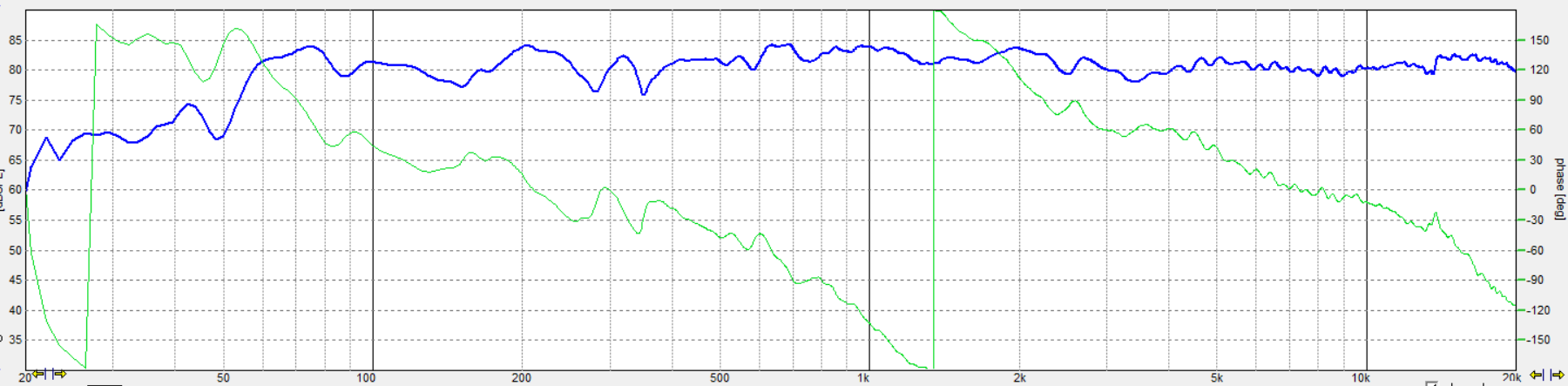
Measured Wanlu today as a system:

+/-3dB is not bad…

1 Like

Looks good, Ben.

1 Like

Okay, network schematic has not changed for Wanlu. Any series tweeter cap value from 8.7 to 9.0 works well. Tweeter level is good and spectral balance is good.

I have some Wavecor WA22 Graphene tweeters coming, because I can’t leave well enough alone yet.

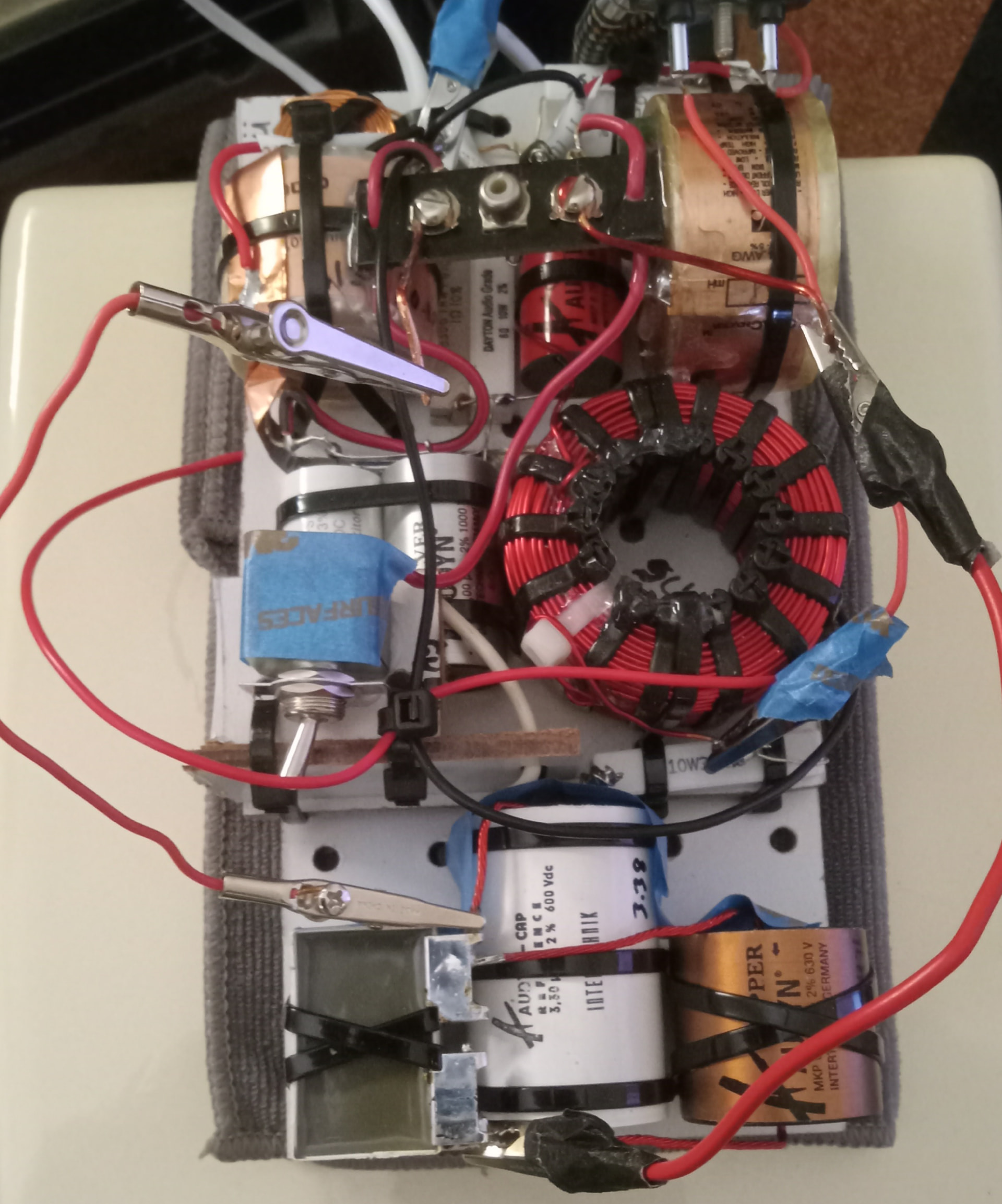
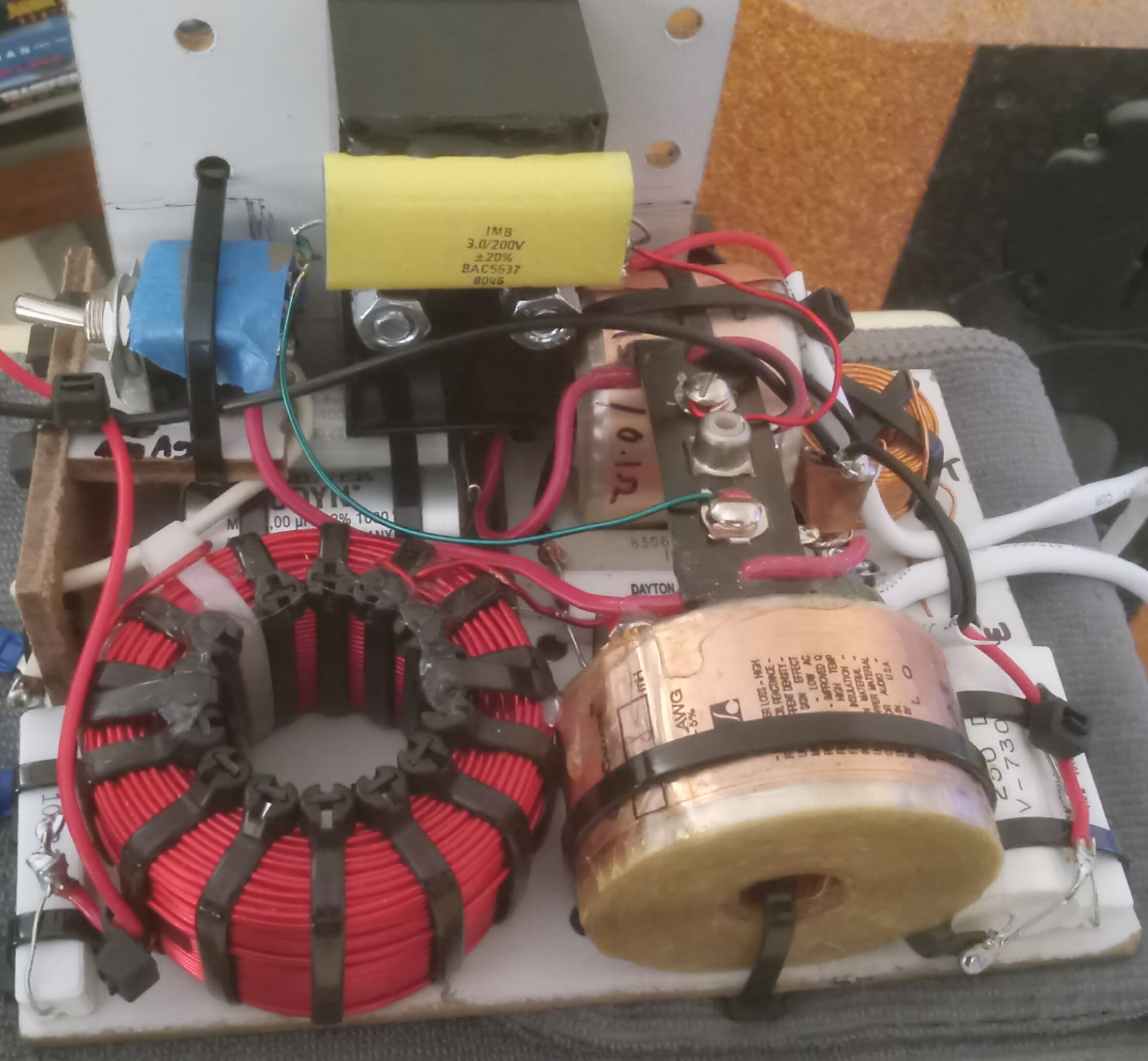
Pictures of the networks, one with the Arco/TriRef/Cu outboard, and the other with the MP80/IMP combo attached and wired.

The Audyn/Arco 3fer would also fit where the other combo has been attached had it been a favorite.

I know someone will ask, the wired terminal strip is something my mother found a bag of at a garage sale, and the RCA jack is not connected to anything. It was only used as the secondary cap connection point, soldered to the switch.

3 Likes