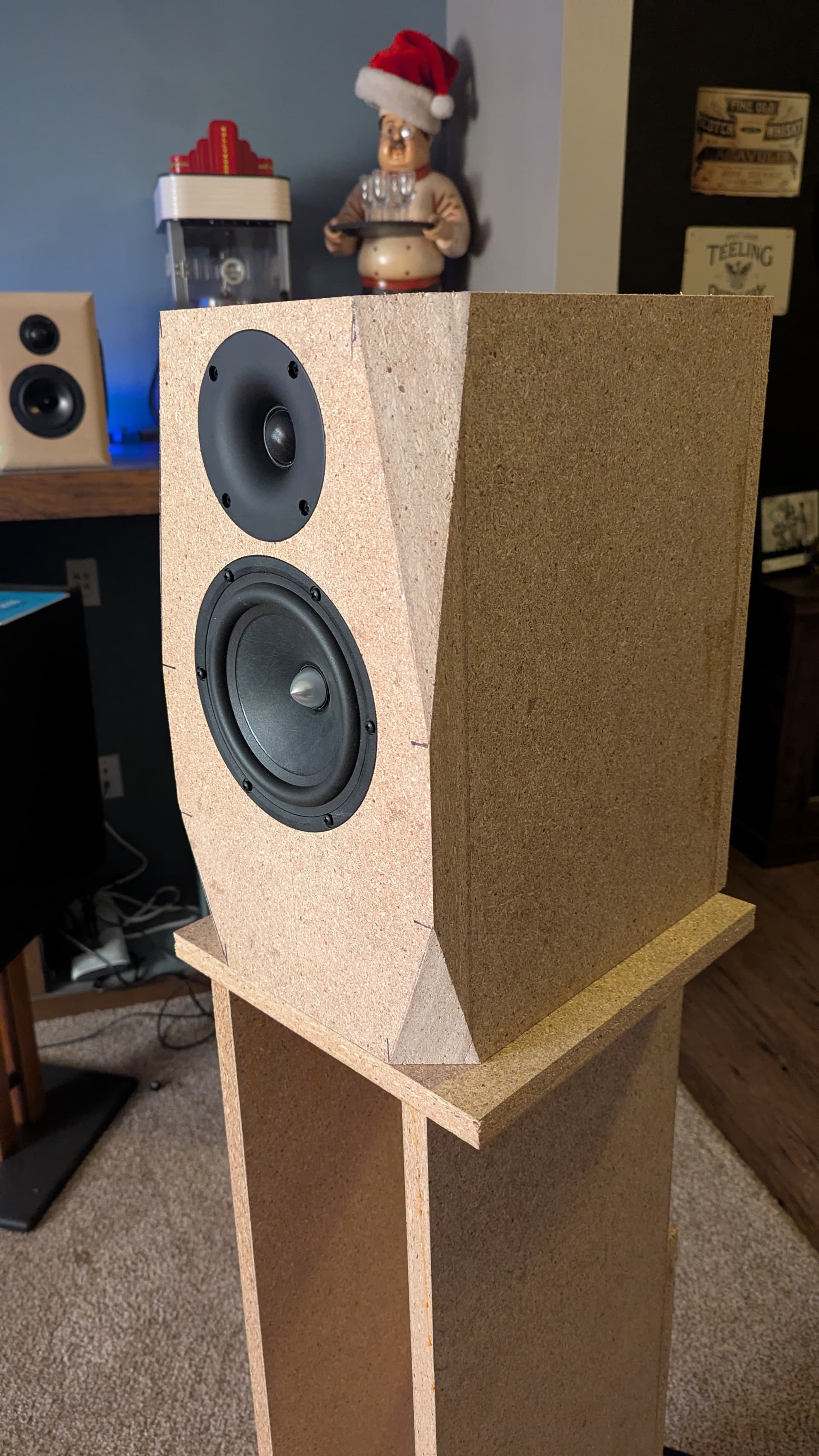
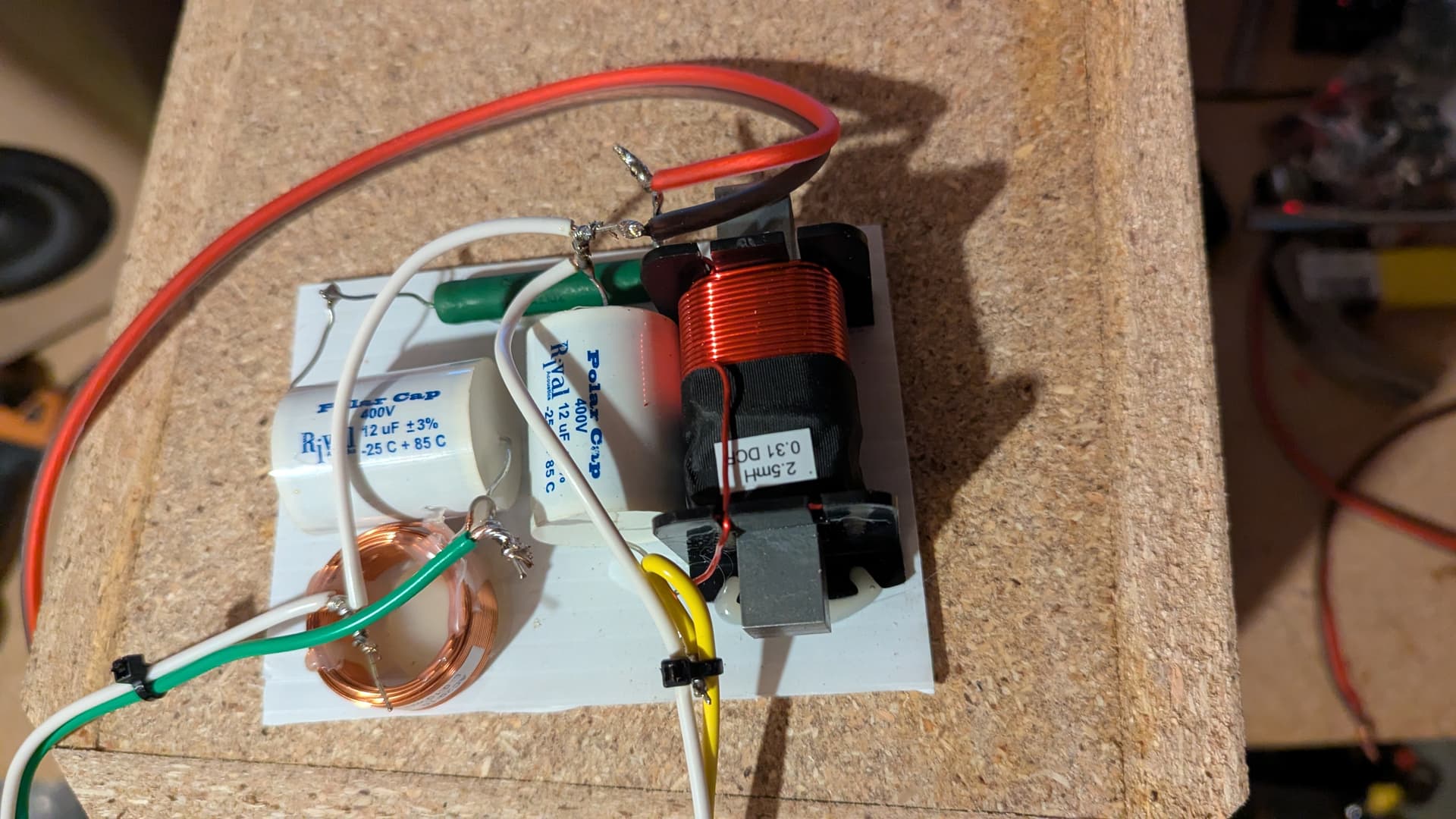
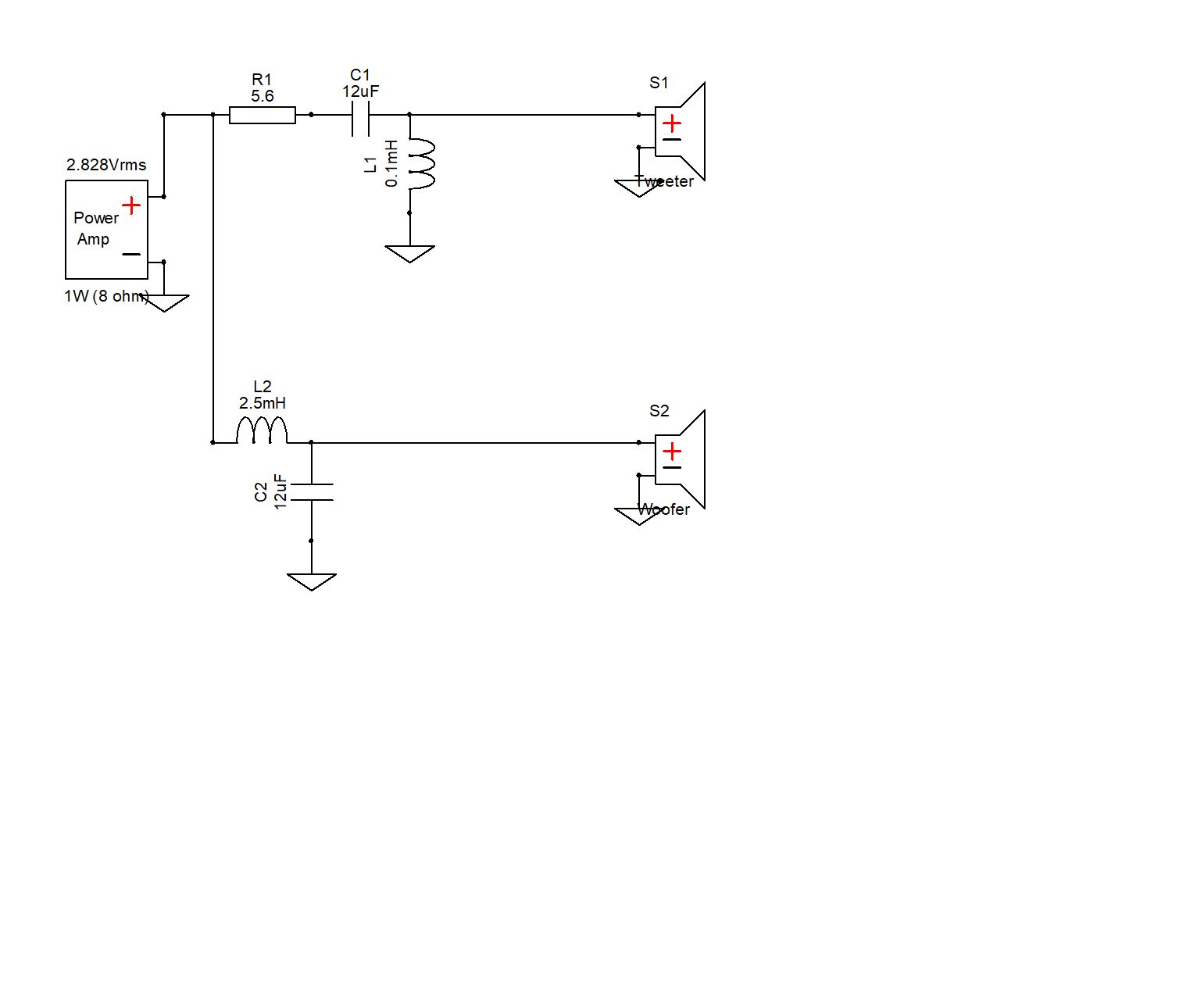
So this is a simple little project, the most complex aspect of the build was cutting the facets on the baffle. That is in itself nothing inherently complex depending on how comfy one is with a circular saw.
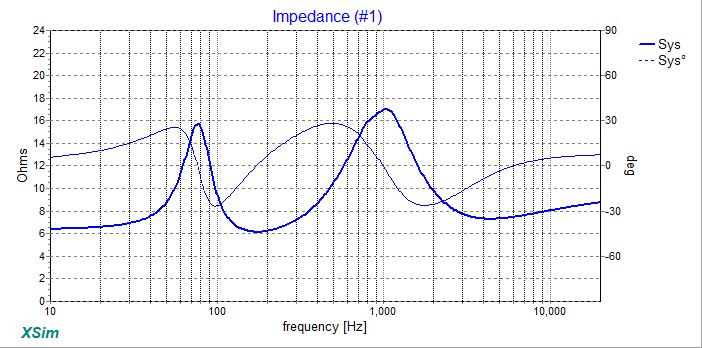
Impedance is benign with impedance minima being around 6 ohms, and phase stays within +/-30 degrees across the entire spectrum. This should be easy for any amplifier to drive.
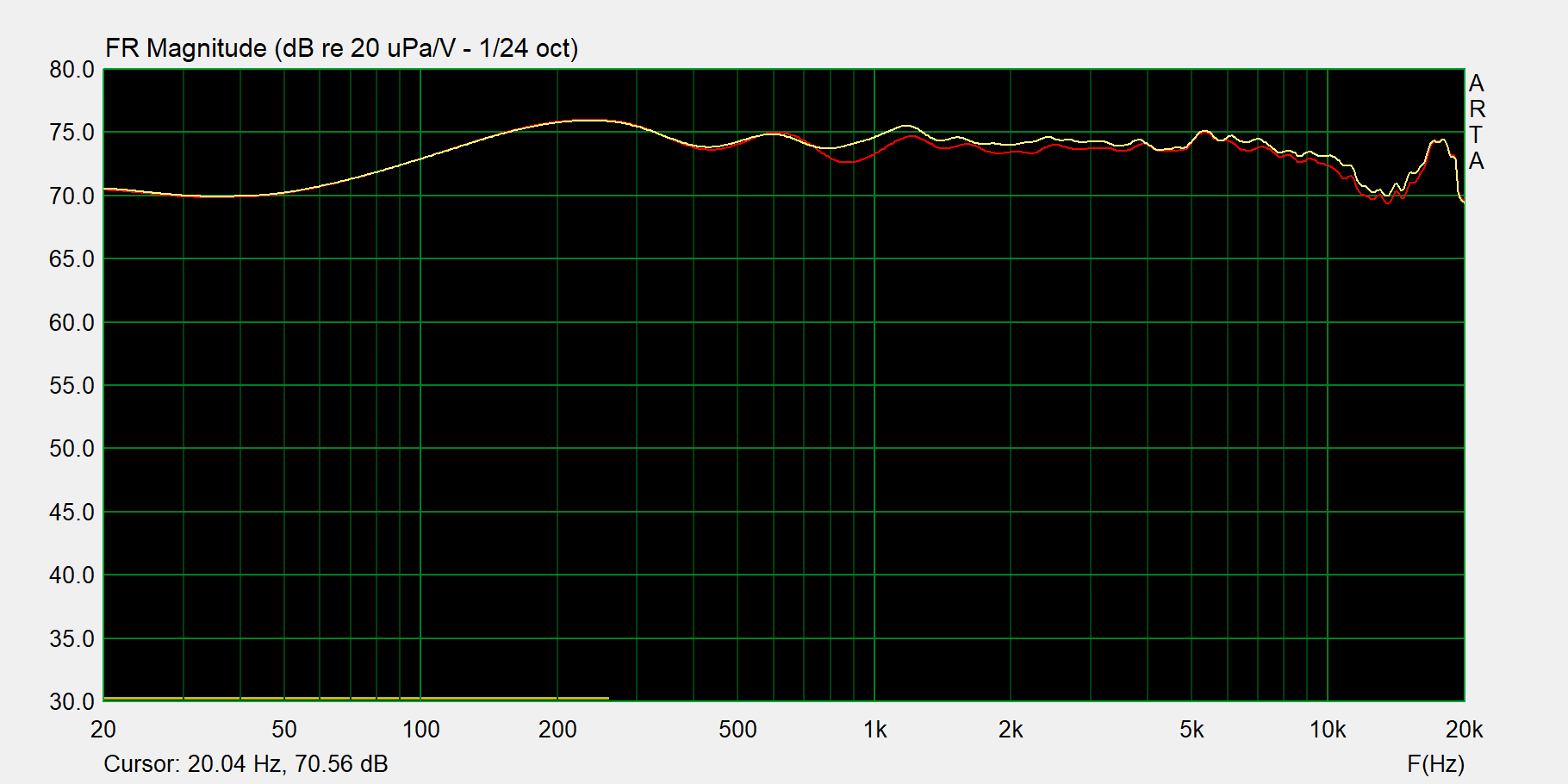
Response on-axis is relatively flat up to around the area where the waveguide kicks the shit out of the response. SB could have done better with this tweeter IMHO. Both samples are within 1db or so of each other.
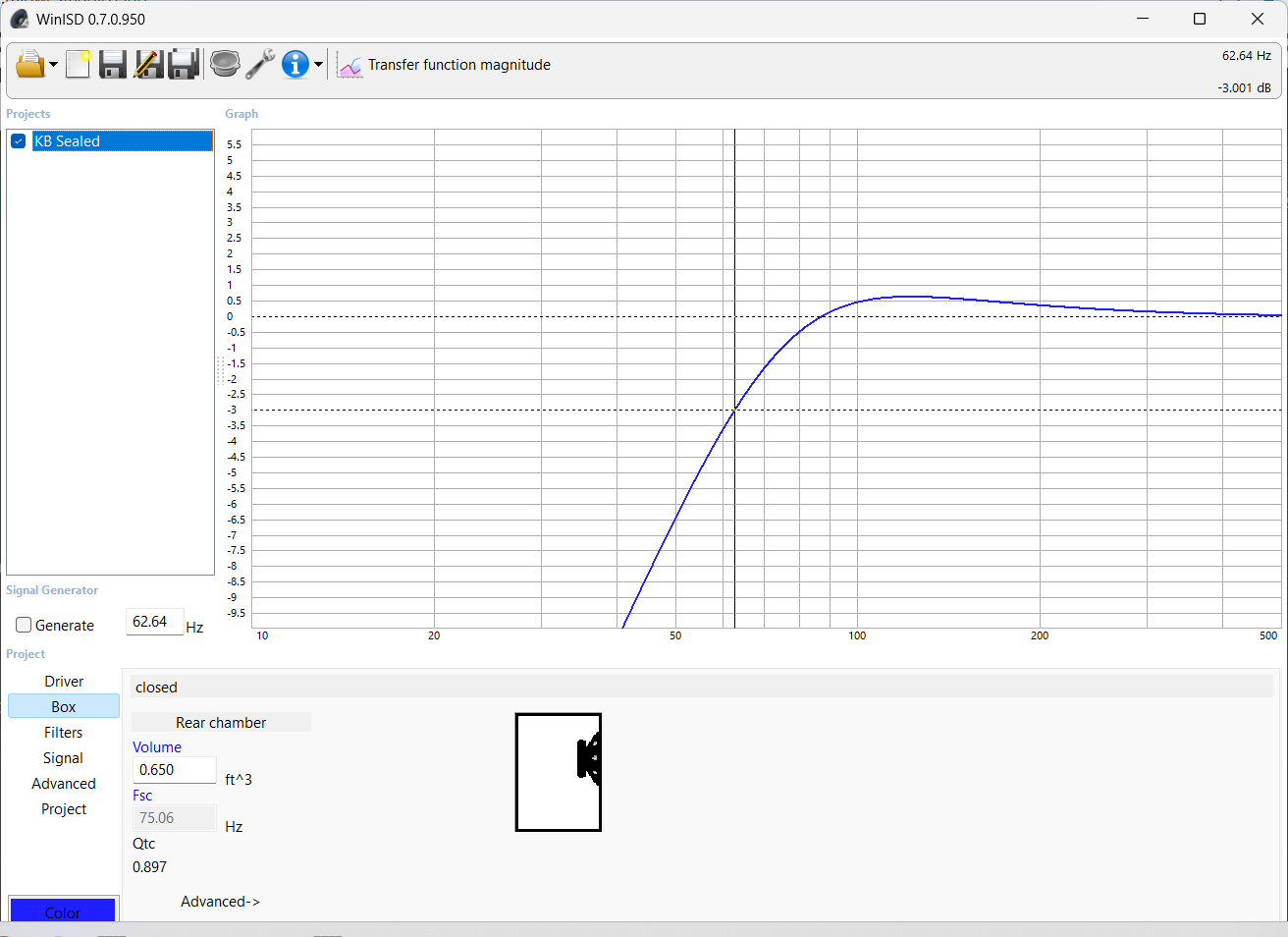
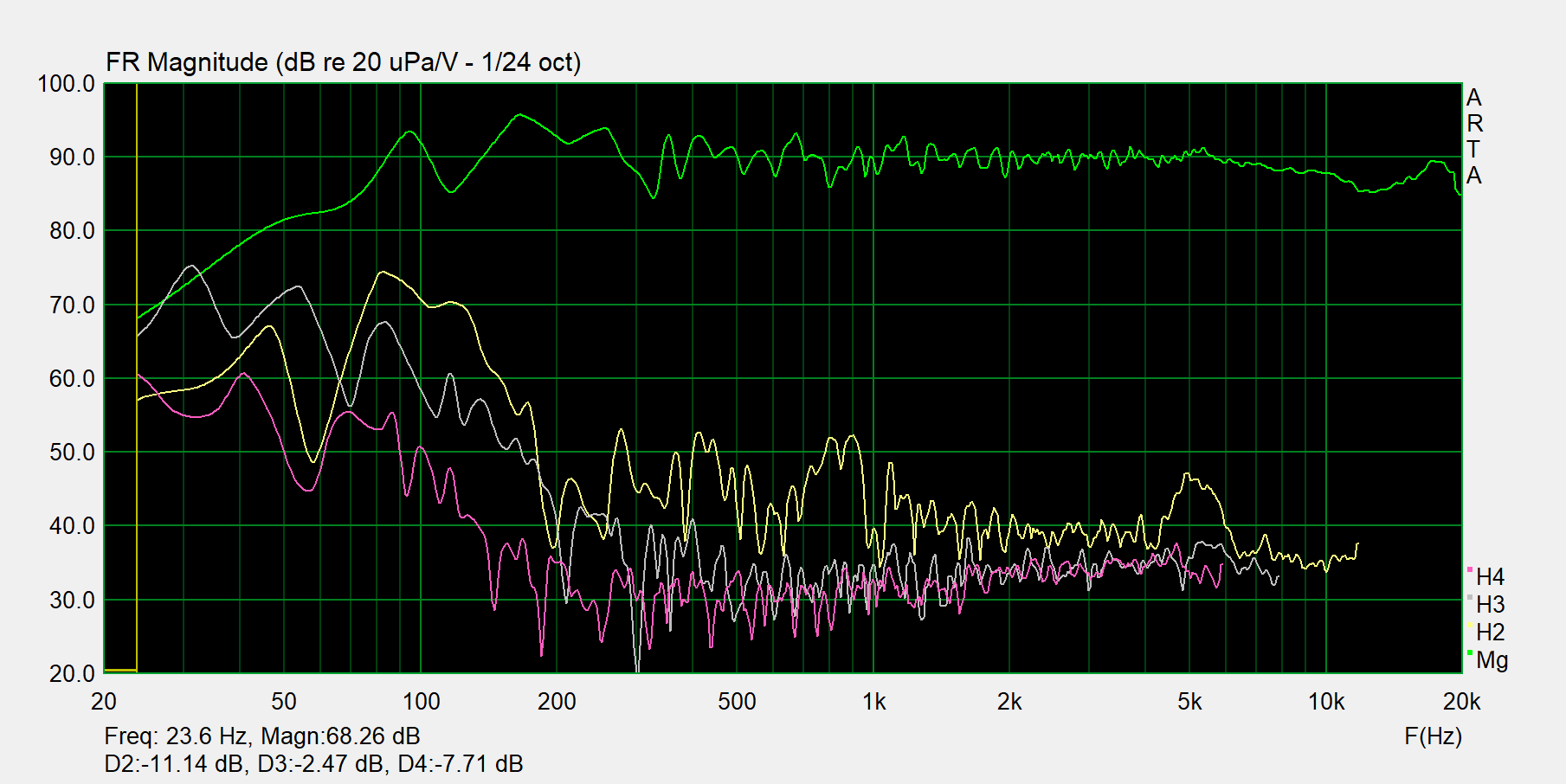
If you have a pair, ya’ll are sleeping on these MCM mids. Not a bass monster by any stretch, but super clean and flat through the midrange. I’ll pair these with a subwoofer when I listen to them.
Overall these turned out pretty good, and considering I spent about $30 shipped for the woofers and bought the tweeters when they were half price at Mad for around $100/pr I really do not have a whole hell of a lot of coin invested in these. Maybe my little brother needs a pair of monitors.
Now, soon as the cabinets are done for the 10” 3-way monitor I am in the process of doing I will have no distractions and will take my sweet time on them.
I got my hands on a few of these drivers. I had flagged them for midrange use in a three-way speaker because of the excursion and underhung design. How do you feel about the sound of the cone - does it have a lot of its own character or is it able to be transparent sounding?
… Did you maybe compare the beveled baffle to the sharp edged baffle subjectively or objectively?
Some years ago a 3/4” round over sounded identical to a sharp edged baffle, but the sharp edged baffle objectively had a ripple around 8khz.
Also, a 1 1/2” round over sounded much better but I didn’t really measure anything notably different between the large radius roundover and a 3/4” roundover.
I have always wondered about if a large bevel would have a very positive impact. Some fancy manufacturers use a large bevel - maybe mostly for marketing ?
It looks like you did solid work with the circular saw !
Did you measure On and OFF-axis? In my experience, the difference between the 3/4” and 1-1/2” looks pretty minor on-axis, but also effects all of the off-axis measurements quite a bit, so if you look at some illustration of polars it is more obvious.
I did do off axis measurements, but not “scientifically”.
Full caveat…. I fully realize that most of what we do is completely not science, but my only objective measurements are a loose observation at best. A good observation might be measurements of both speakers / cabinets at the same microphone measurement position / positions.
My “bad” observation would be that the 1 1/2” round over cabinet baffle was shockingly flat about 60 degrees off axis. I had never seen this previously and was very surprised. I don’t often measure way off axis, but I did in this instance and it was very good / flat. The speaker actually measured better / flatter at 60 degrees off axis than it did on axis or slightly off axis.
Thanks for asking this question. I am glad that I had a partial answer for you.
Also, some years ago Dave Elledge conveyed that a very large 1 1/2” roundover would be subjectively audible and positive. This was the impetus for my implementation.
Have you also found that a larger diameter roundover was subjectively audible and positive?
I have only gone to 1 1/2” radius.
Have you gone bigger ? And, have you found that bigger is indeed better ?
I have done bigger roundovers several times. 5.25” diameter cardboard tubes cut in half so 2.625” radius. Definitely measured way better objectively on and off axis and sounded better subjectively. I gave some of those cardboard tubes away a few years ago in Iowa. I think Bill S. (4thtry) did something with them. Maybe he can add what his results and impressions are.
I concur that the larger radii made a huge difference in my Attitudes build. I used 3/4” thick walled 3” ID cardboard tube cut longitudinally in half for this build, netting a 2.25” radius half-round applied to either side panel. I used glue, long screws, and biscuits for attachment, and filled the empty columns with dry clay kitty litter.
I’ve done large facets, like JR’s current build. I’ve also done a number of small (3/4" radius), medium (2" radius), and large (5.75" to 6.00" radius) roundover type speaker builds. And I have done extensive measurements, both on and off axis, on all of them. The sweet spot seems to be the 2" radius roundover.
When you get out to the 5" to 6" roundover types, the diffraction ripple improvment is small compared to the 2" radius. The huge 6" radius forces the baffle to become very wide and you can hear this as a splattering type “horn” coloration. As a result, I found myself putting felt and foam damping material on the baffle on one of my larger baffle speakers to compensate (Radiusaurus). So, I would recommend limiting the radius to about 2 inches or so, as Craig and Wolf have done. This seems to be the best overall compromise.