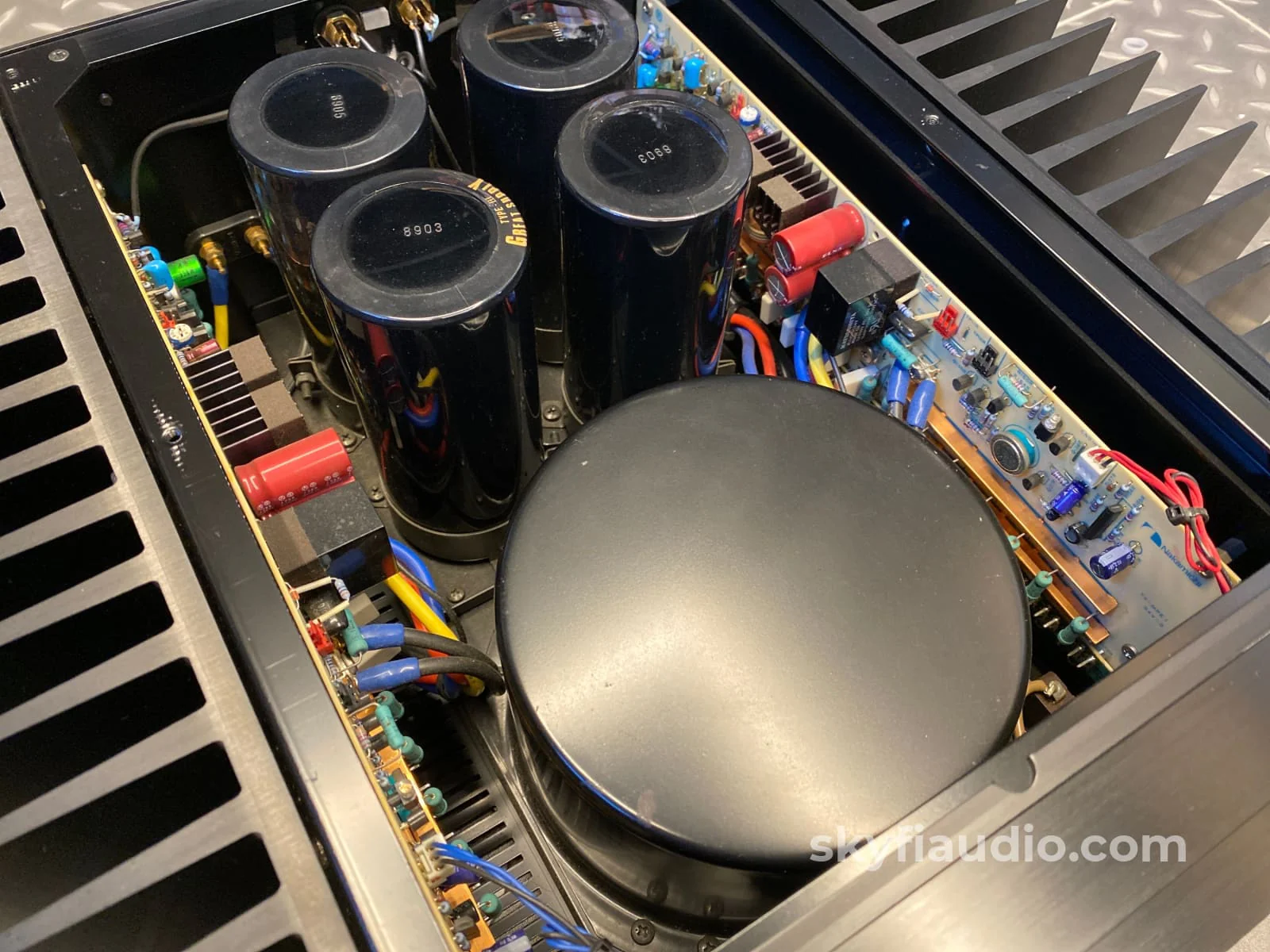
So, I was trying to build a list of caps for this amp and I am finding a hard time finding the caps needed. Most caps are Elna but it does have Nichicon Muse caps in one spot on the amp board and Great Supply Nichicon for the power supply.
I don’t mind an upgrade if the caps fit.
The Elna caps that are in it are 100v 330uf Cerafine, and 35v 10uf Tonerex.
Can not find these. What should I use to replace them?
Also I have these blue caps, not sure what they are, but they have numbers like 331J, 100J, 472J.
Sadly, cap selection at Mouser & Digikey is getting tougher these days. There has been a lot of discussion lately about alternatives to some lines being deemed End Of Life. I’ve never used any of the Elnas myself and I know they discontinued the Silmic(?) series that many HiFi guys seemed to like in 2022. We are a tiny fraction of their sales…unfortunately.
You might see if anyone on AudioKarma.org has restored the same amp. I’m just an semi-advanced hobbyist, not an EE, so there are many folks over on that forum with a huge depth of knowledge and years of experience that I just don’t have at this point.
You can get low ESR/higher temp caps for power supply & related areas. Nichicon UPW or UPM series or Panasonic FC series (and FM maybe?) are usually recommended on AudioKarma. My go-to for the audio path are the low leakage Nichicon UKL for polarized and UES for non-polars over 3.3uf. The UES are getting harder to find in some values and they may have actually discontinued that series now. Anything 3.3uf and lower is usually a good place for a film cap - like a Wima or Kemet. But…I have read there are some specific instances where a film cap is the wrong cap for a particular circuit. That’s when I do a deep dive in the AK archives to see what the experts have to say.
Also - the blue caps sound like they are film caps. That’s typically how they are marked for values. They should still be fine unless they were running up to or above their rated voltage.
found a photo on the web and those do look like a type of dipped poly cap. I wouldn’t worry about those.
Yes, I was doing tons of research and there was alot of people saying one thing and then the same amount of people saying the opposite.
I am a newbie to amplifiers so I was just going to replace what they had in it.
Good to know the blue caps are not a problem.
My concern with the amp is , it is 40 years old. It also does not sound good. It seems to have a boost from 3-8khz or a cut below and above that range.
I thought if I recap it, it may correct the problem.
Certainly the caps I HAVE found are very low cost. No skin off my back if it doesn’t fix it.
Like most cap threads, that quickly turned contentious.
I found a partial schematic of the output section and these amps are very different compared to the Pioneer/Marantz/Sansui pieces I work on. It doesn’t use a typical feedback path taken from the outputs and brought back in at the input differential pair. I would need an in-depth explainer video to comprehend what’s going on with this topology.
DIYAudio.com seems to be the place to look for answers on these amps since Nelson Pass will chime in on occasion.
Yeah, I have been doing alot of research and knew that it has a different design. As you say, no feedback. I saw a video explaining how it worked.
I finally found all the caps needed except the PS caps. Not all of them are exact replacements but the values are the same. Most of them are Cerafine Elna caps with two of them being Nichicon. About 25 bucks for all of them. The PS caps are probably going to cost 400 or more. Four 33000uf 100v caps.
This thing will put out 650 watts per channel into 4 ohms.
I know the build will be different but this is my Sansui recap write up on git. There may be some general items in there that are useful. I also second the audiokarma suggestion.
Dow 340 thermal paste is what I see recommended most often on AK. It’s not cheap and hard to find smaller amounts. Just don’t use the stuff for CPUs. Some of those are electrically conductive.
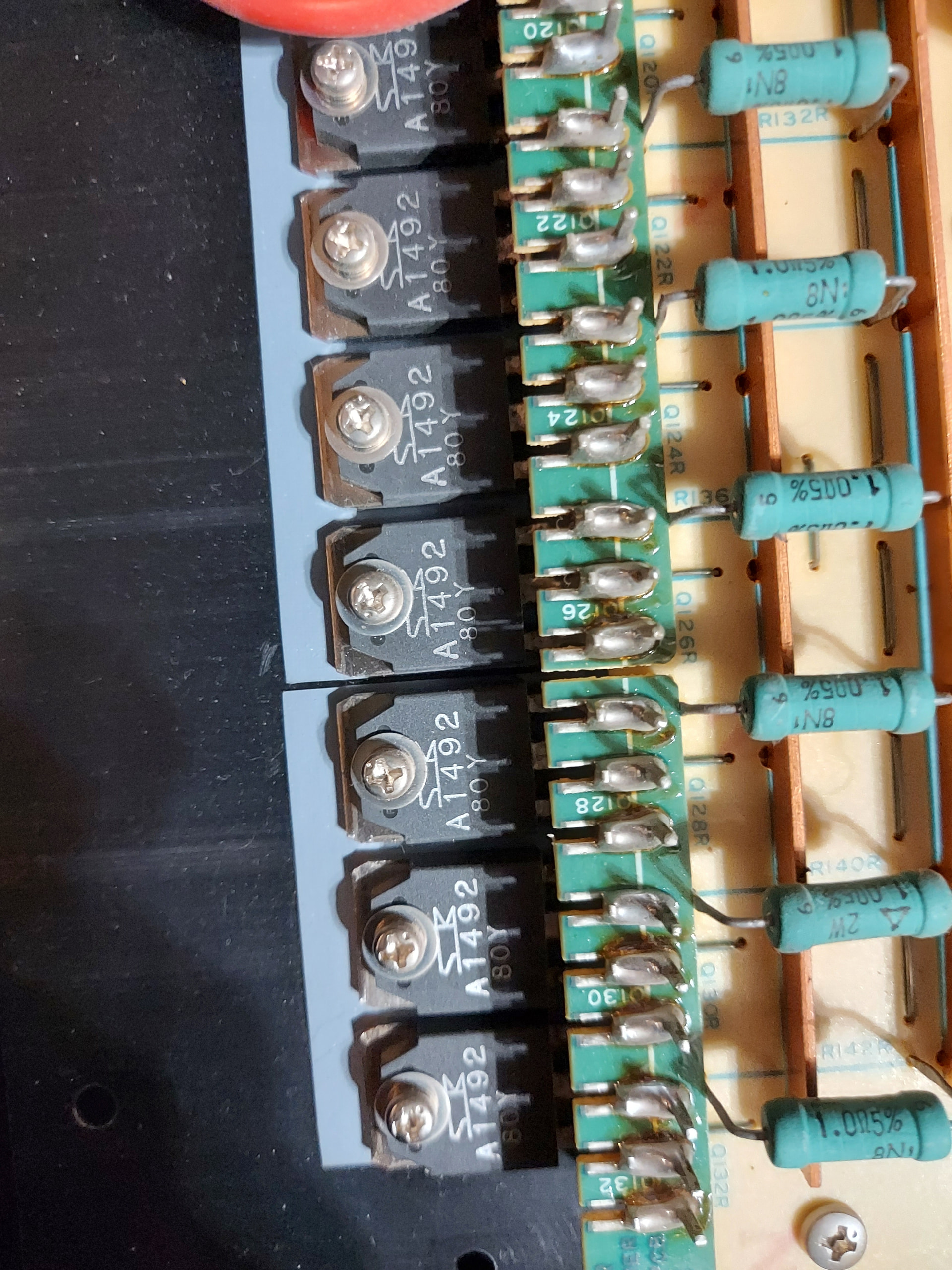
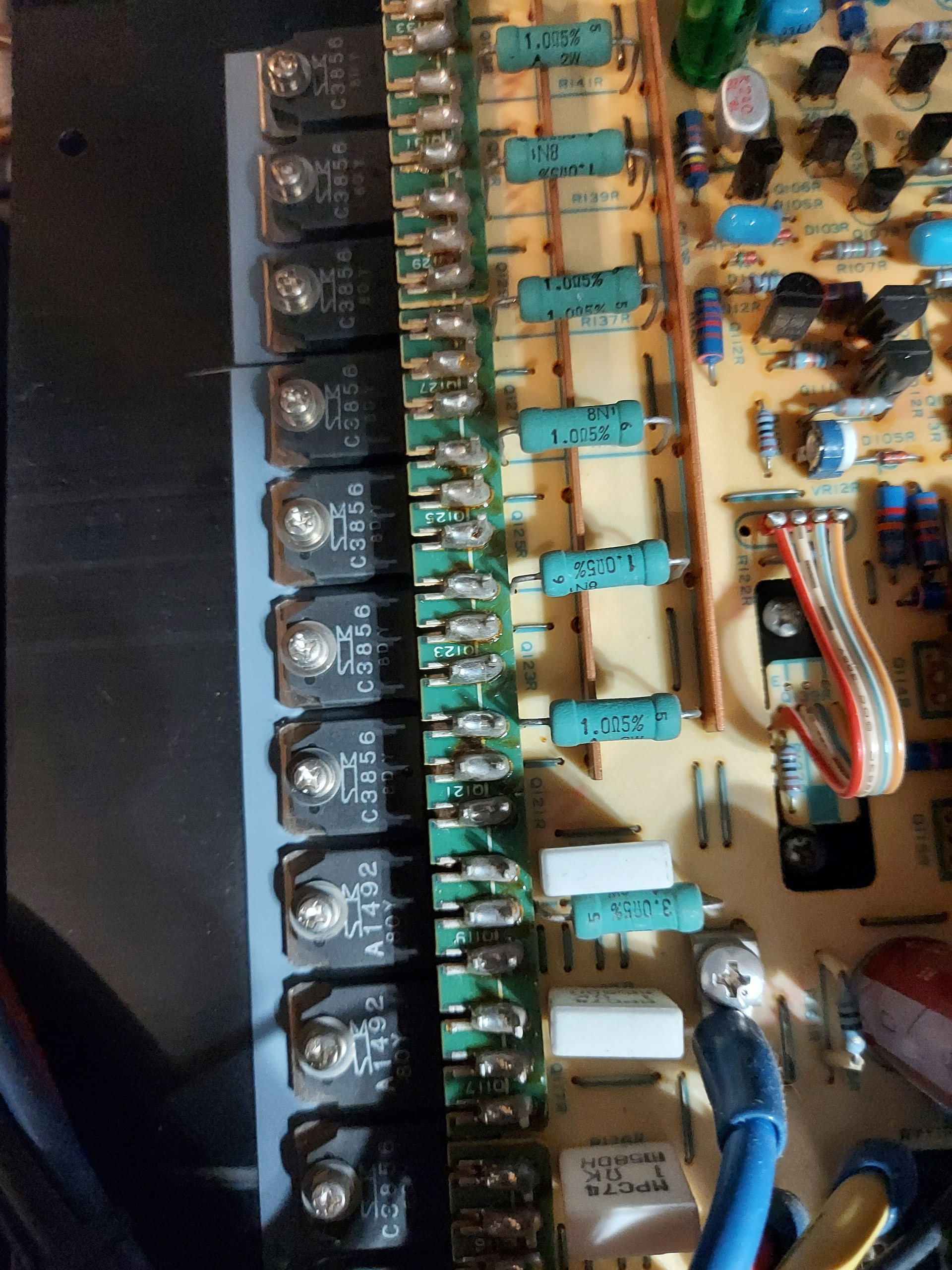
T03 mica insulators - search for 534-4662 on Mouser.
Those are listed as a TO-3P-3 case style. I know most will say those thermal pads are not supposed to used after you unbolt the transistor, but I’ve done it and not had any issues. Just check to see if you have any shorts from the heatsink to the tabs once you bolt them back in. No thermal paste needed with the pads.
I was wondering about the paste. Didn’t seem like people were using it with the isolators after watching some videos. Also, should I get the ceramic coated ones or what? If I have to replace them…
If you want to you can use thermal paste. The flexible pads do ok at thermal contact, but a slight bit of paste can finish the job. Talking like just staining the surface of the aluminum by rubbing a small amount on with your finger. Such a small amount that it feels more dry than wet. That fills in the surface a bit without being an extra barrier layer.