Q regarding N. Pass Amp Camp Amp

Way out of my league here, but thought I’d ask…

These look to put out about 15 watts in bridged balanced mode.

I’m considering moving to an all balanced system (say bye to my tube buffer/pre :joy: ), and was wondering if its possible to bias (probably not the correct terminology for a non-tube design) these down to maybe 4-6 watts in class A (the ESS Heils deserve class A). As they idle/run very, very hot, and for bi-amping the tweeters probably don’t need more than a couple (and hoping to cool it down).

Feed it less Volts? They use 24v supplies. Maybe 12v instead? Don’t know if that would affect the biasing otherwise. They are a simple circuit so I bet it is probably just some resistor value changes at most. But looks like you can buy the parts kits and enclosures without the power supply.

I’m reading “for advanced users, the XLR hole gives the possibility to create monoblocks with over 20 watts per channel”

Maybe CraigS will chime in, he knows how these tubez work.

Interesting. Possibly use the single 24 volt split for both sides (and put the parts in a single bigger enclosure)? I.e. buy an old Hafler amp and use its chassis?

If looking to BTL amp camps, likely better off to go with F5m. Also, if strive for that class A single ended sound, the ZenMod AlephJzm project is fantastic (which has native balanced input option) - maybe build self another when winter sets in. When BTL’ing a class A single ended, by nature cancelling out some of the 2nd harmonic charm. F5m is great sounding, punchy, detailed and has intrinsic 2nd order in how the P channel jfet (2sj74) kicks in.

Black sinks work better than raw aluminum ones - though that is where the rub is in with diy amps nowadays, chassis prefab expensive, even sinks pricey scouring surplus on fleabay.

Thx, I’ll take a look.

I think the Amp Camp kit is a great value since you get everything you need. I spent about that much on just the chassis for my F6 build. Since you only need a few watts, I would just buy one ACA kit and add input balancing transformers. Edcor has quite a few options or you could go whole hog and buy some nice Jensens.

This could be a fun winter project for me, but I’m needing ‘tutoring’ as I wouldn’t have a clue how to implement (or which) transformers to buy. It would be great if the transformers would fit within the box? If you link me to a couple suggestions that would be great. Thinking clean high extension (would be for tweeter) would be the way to go.

Up for a challenge?

I do have your Matchbox (thx !), but if using a transformer would be cleaner ???

I did find reducing the bias can bring down the temp from ~ 122-131 degrees towards 104- 113 (per Grok inquiry) by adjusting R7 potentiometer when targeting a 4W output. ~1amp vs 1.6-1.7 default bias.

I think I would start with that Matchbox and see how it sounds. That even has a gain control, from what I remember.

Since this is a simple single ended circuit, I wonder how much bias impacts tonality? That would be fun to play around with. I don’t need another project, but those boards are only $10…and I already have most of the parts…:smirking_face:

I had a pair of the original ACA and they did sound nice. They sound better than a PS Audio S300 amp I have.

1 Like

These suckers, even at 5w (4ohm) / 9w (8ohm), run / idle very hot (I see ‘bout 132 degrees). I may look to bias down a tad, as plenty of head-room to run the Heils (4ohm). I’ve been running both the Heils and the sealed 1.5 way 8 inch woofers, biamped with a Legacy 4bloc. While 650 watts into 4ohms are a great fit for the woofers, I’m looking to provide a more delicate amp for the Heils. And I’m kinda pumped with going with a Nelson Pass camp amp / single ended class A (even if it is a little toaster oven).

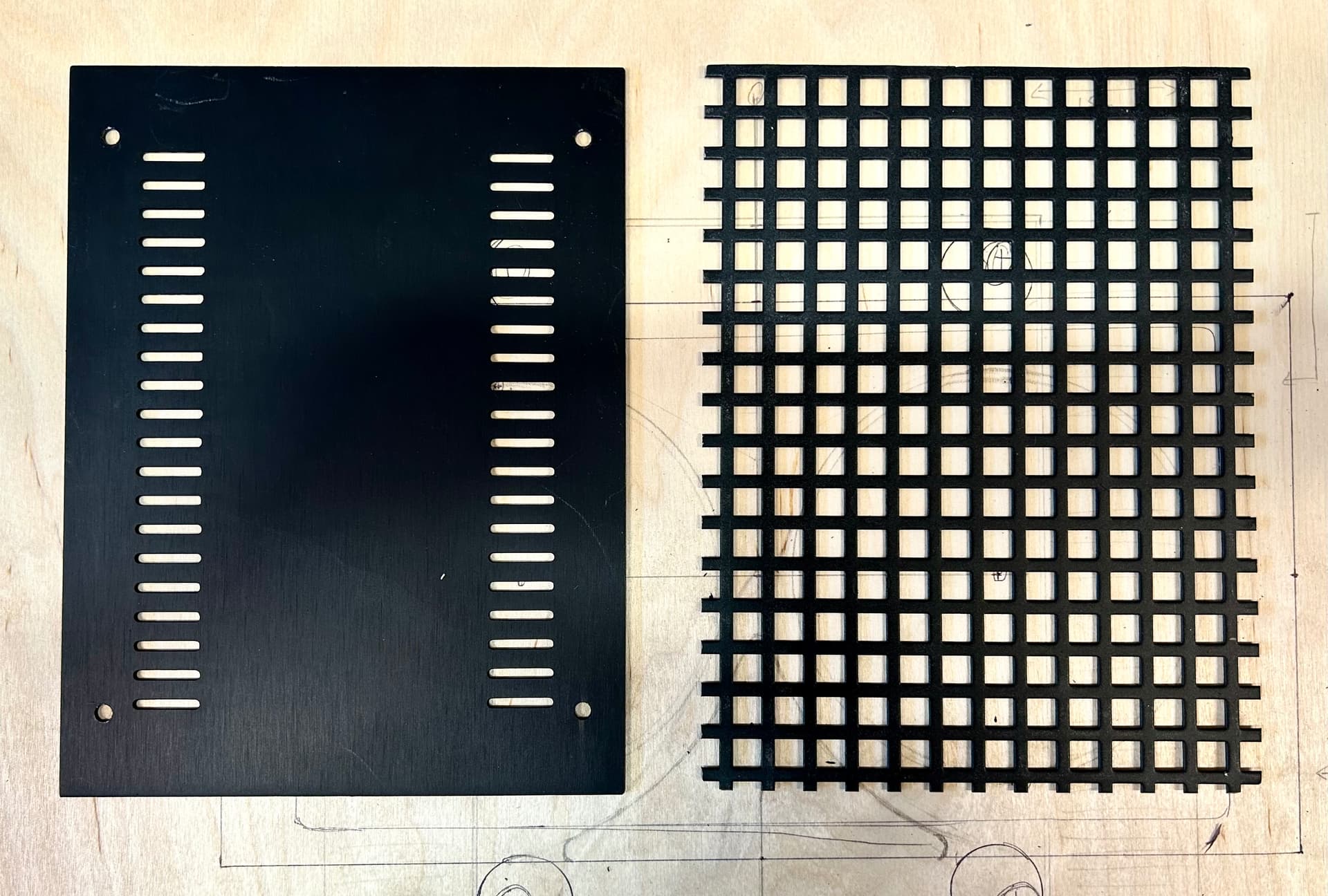
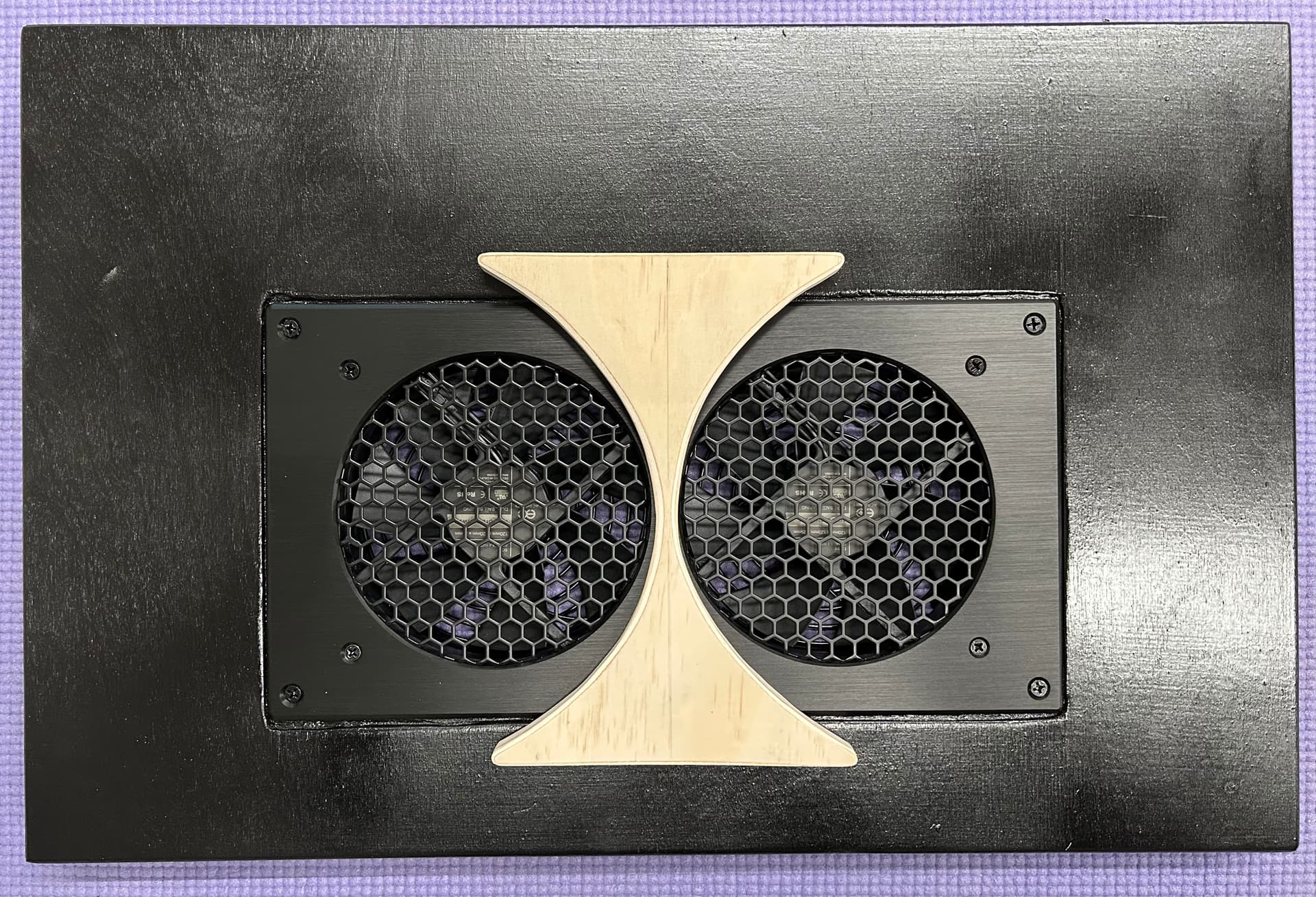
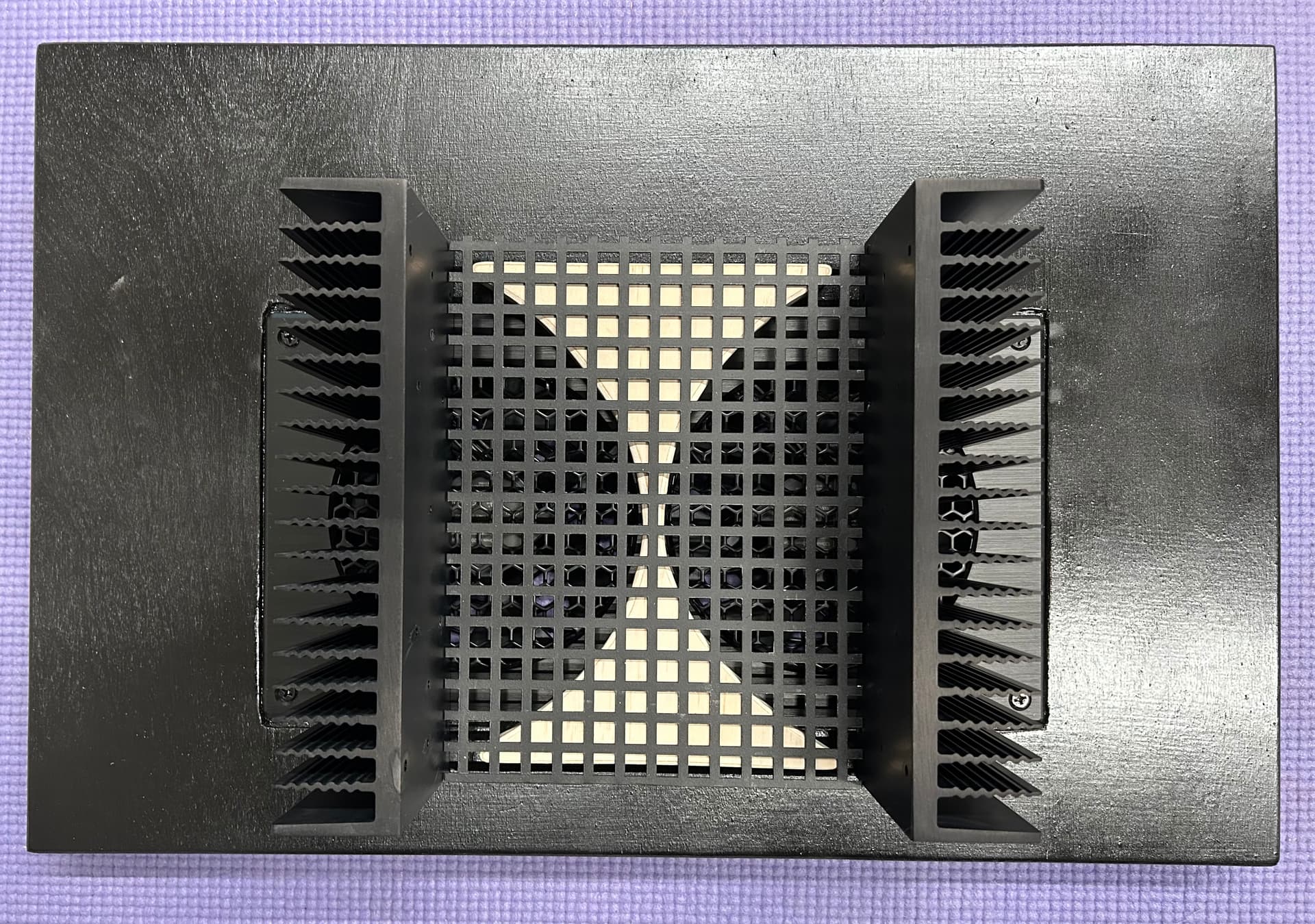
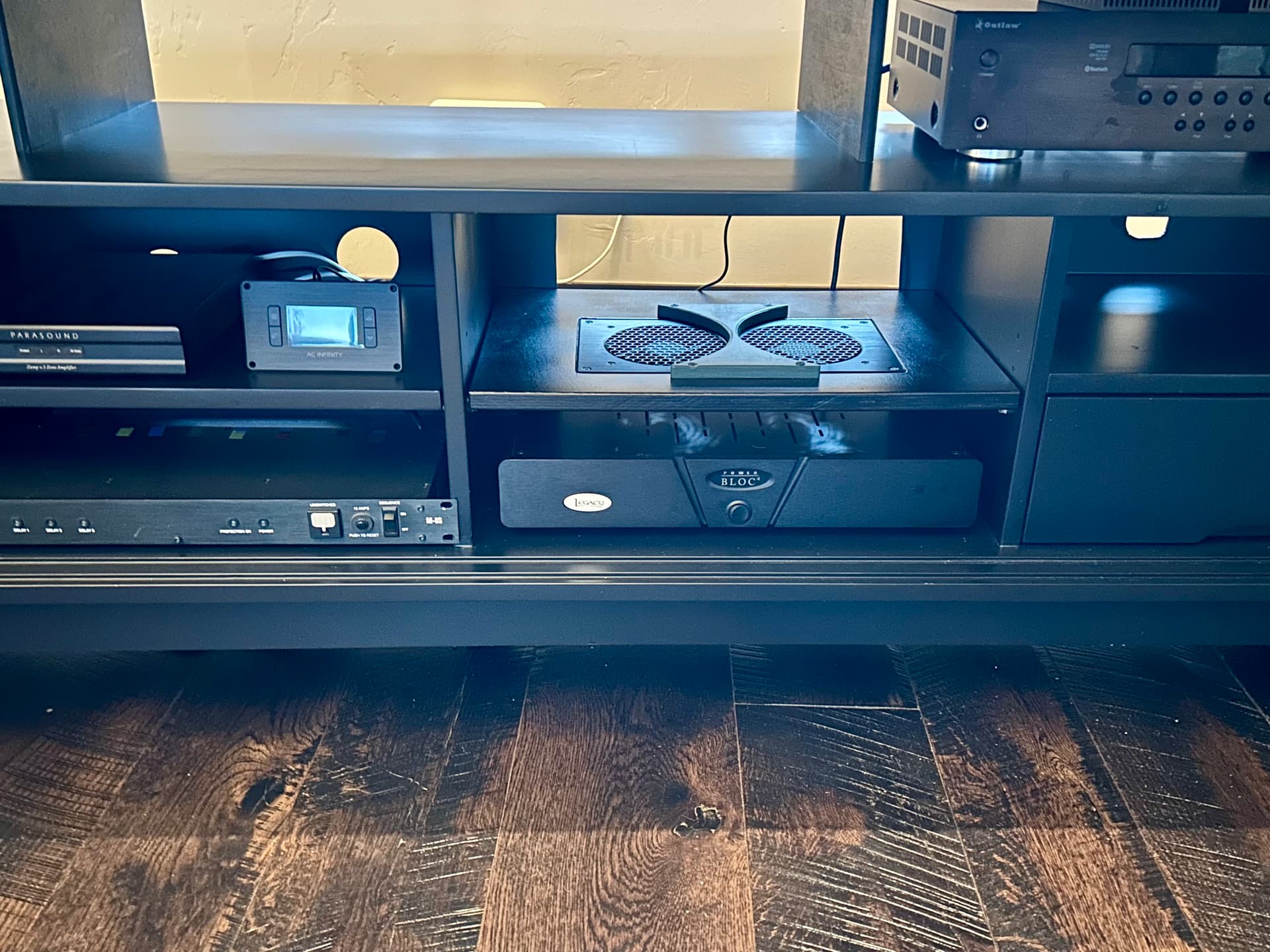
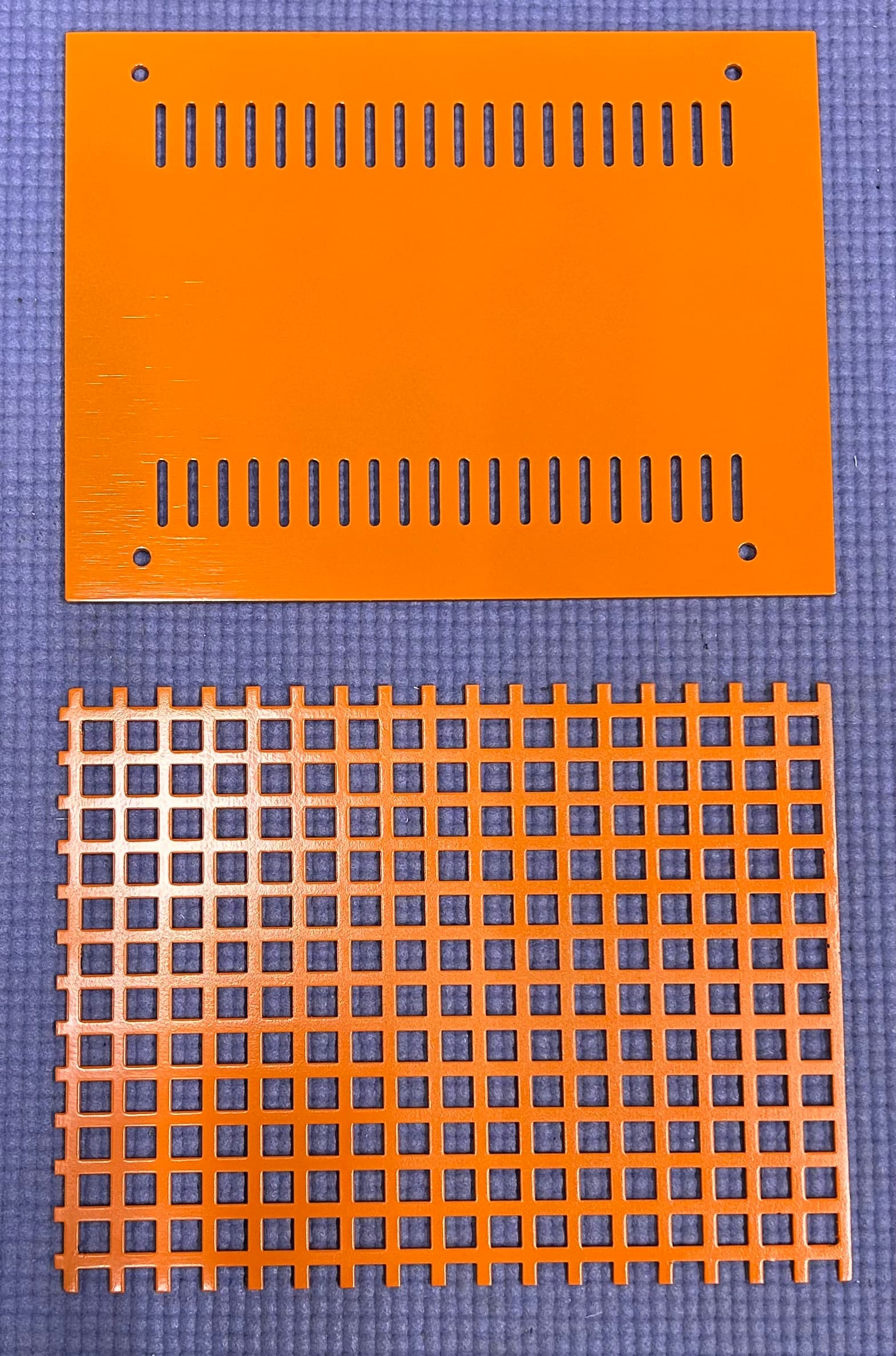
I’ll be needing to open up the backside of my equipment cabinet, and built a new shelf with (thermostat controlled) dual fans flush mounted for the amp, as I won’t have the suggested space above for needed air flow. I expect to run the fans very low and went with the duals to create airflow widthwise under the amp. Keeping with the kit’s vented top (left side in pic) but replacing the bottom with a more open metal grill (yes, fortunately the screw holes line up), and placing an air guide (not yet painted in pic) to push what air doesn’t go directly in through the amp / up through the heatsinks, to the heatsink sides (vs out the front and back).

5 Likes

I had the 1st generation monoblocks and they did get hot. But so does my pioneer M-22 (just not Pass hot).

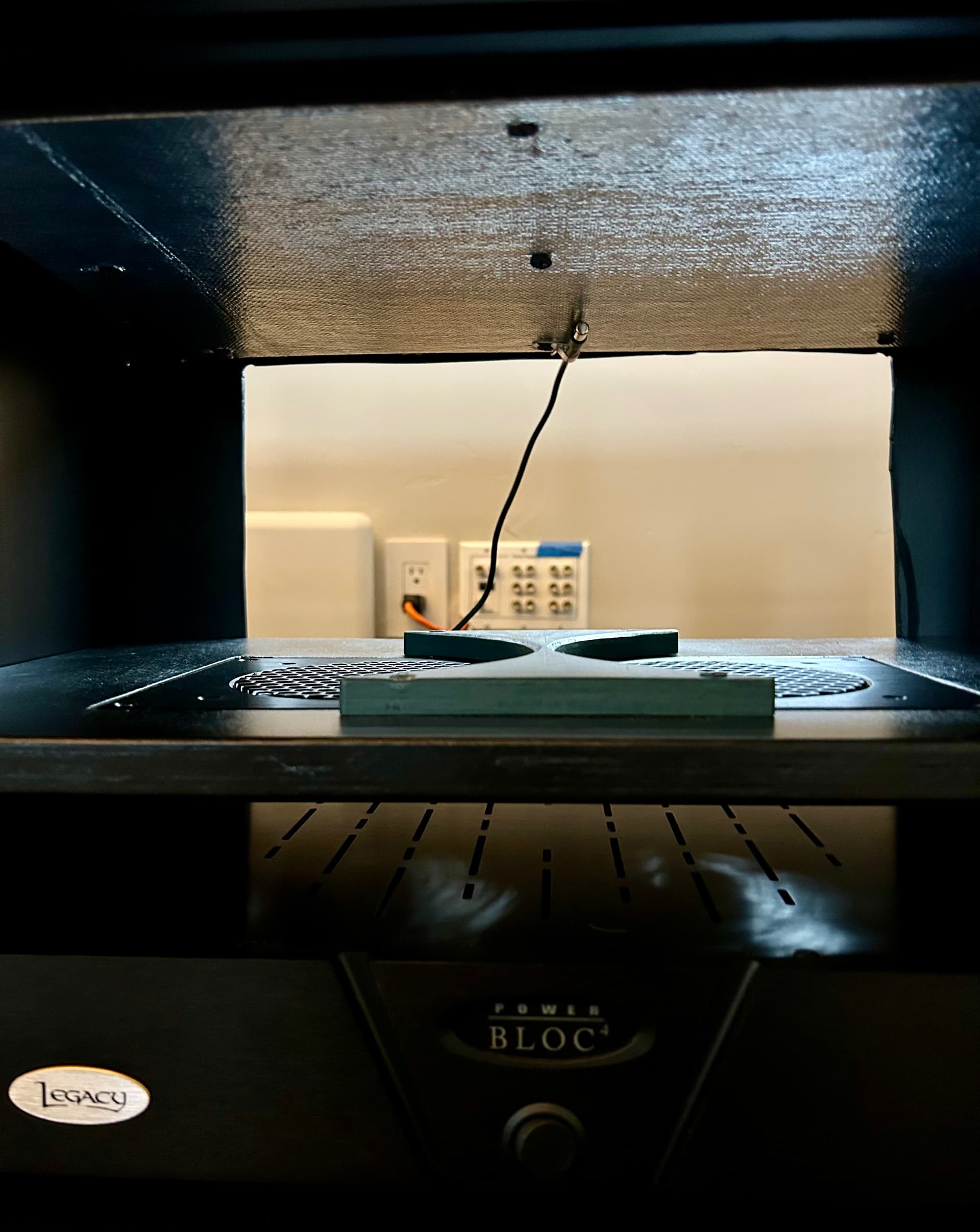
Took everything out of the cabinet and cut out the back side of center shelf (where the ACAmp will be going). Fan shelf is in, and maybe overkill (and not easy to see in the picture) but I made a shelf heat deflector plate for above the amp; ⅛ in ply with a self adhesive heat shield material attached (generally used for under kitchen cabinets for deflecting heat from toasters or hot plates, etc). Suspended ⅛ inch along front to ½ inch along back for a little air space / ventilation. Thats the temperature probe in the picture (hanging down) that will control the fans. There will only be about 3 to 3 ½ inches above the amp to the shelf above, but should be fine with the fans and open front and back. And, gives me a chance to do a better job routing the power cords / interconnects / speaker wires to avoid interference/ hum this time around.

3 Likes

As a slight aside- got the system all set up for when the ACamp Amp gets completed. Went from having the passive component for the high pass (in combo with an active LR 2nd) from in front of the amp to now just after the amp- two 25uf Clarity caps in parallel (attached to back of equipment cab). I had targeted a crossover frequency of 850Hz, but the driver’s measured response dictated a best fit response at ~910Hz.

Working with Grok to evaluate the phasing (and previously the high and low pass filters) the suggestions were either an all pass filter or a time delay. The time delay ~0.38ms will work to get phase at the crossover perfectly in line.

I may have mentioned previously, but the evaluation/ calculations done through Grok are very interesting and provide at a minimum ‘food for thought’. i.e. I wanted the final high pass filter to provide at a minimum slightly better protection for the ESS Heil than what ESS uses in its completed speakers - 800 Hz 2nd order, and it showed the results and the calculations.

First off: Kudos Tom !

Amp build update: I ‘ve really gotten pumped (carried away?) with getting a class-A Nelson Pass amp design into my bi-amped system. I’ve done a bit of research and there has been several ‘recommended’ modifications to the build, a few capacitor improvements, adding bypass resistors in view of reducing feedback… I ran a few Grok inquiries to review and sort the tweaks / improvements by sonic improvements / modifications. And, quickly realized my capabilities and tools are limited. OK, I could use a multimeter to set the final bias, but no tools or experience to evaluate the feedback / bypass caps changes, and effects…

Step up Tom. The perfect and needed eyes, experience, and capabilities to look at these recommendations, sort, build the boards, and test. So, I’ve sent the boards, related parts / heat sinks and he has skillfully built the boards with updated parts. Testing in progress.

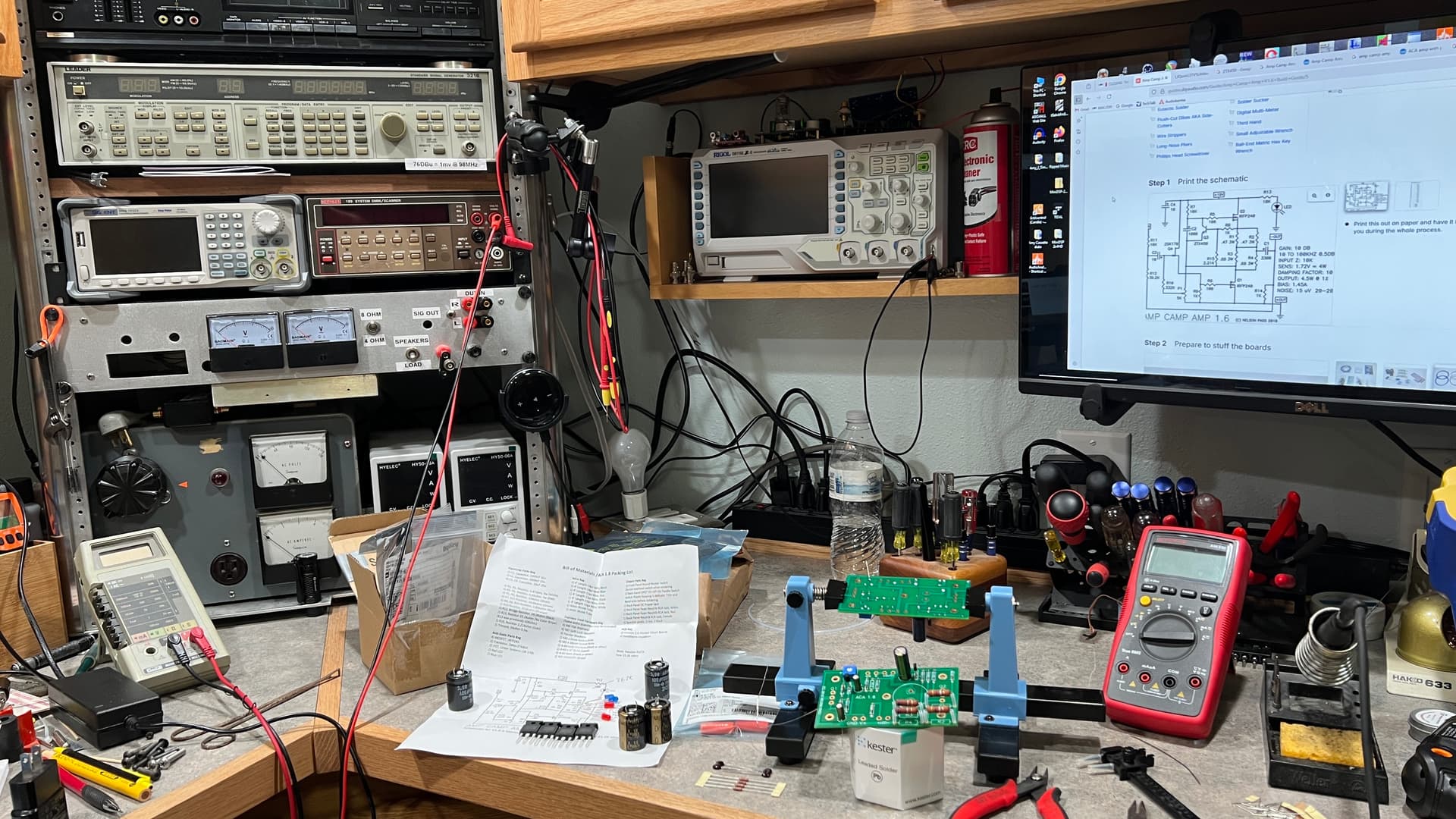
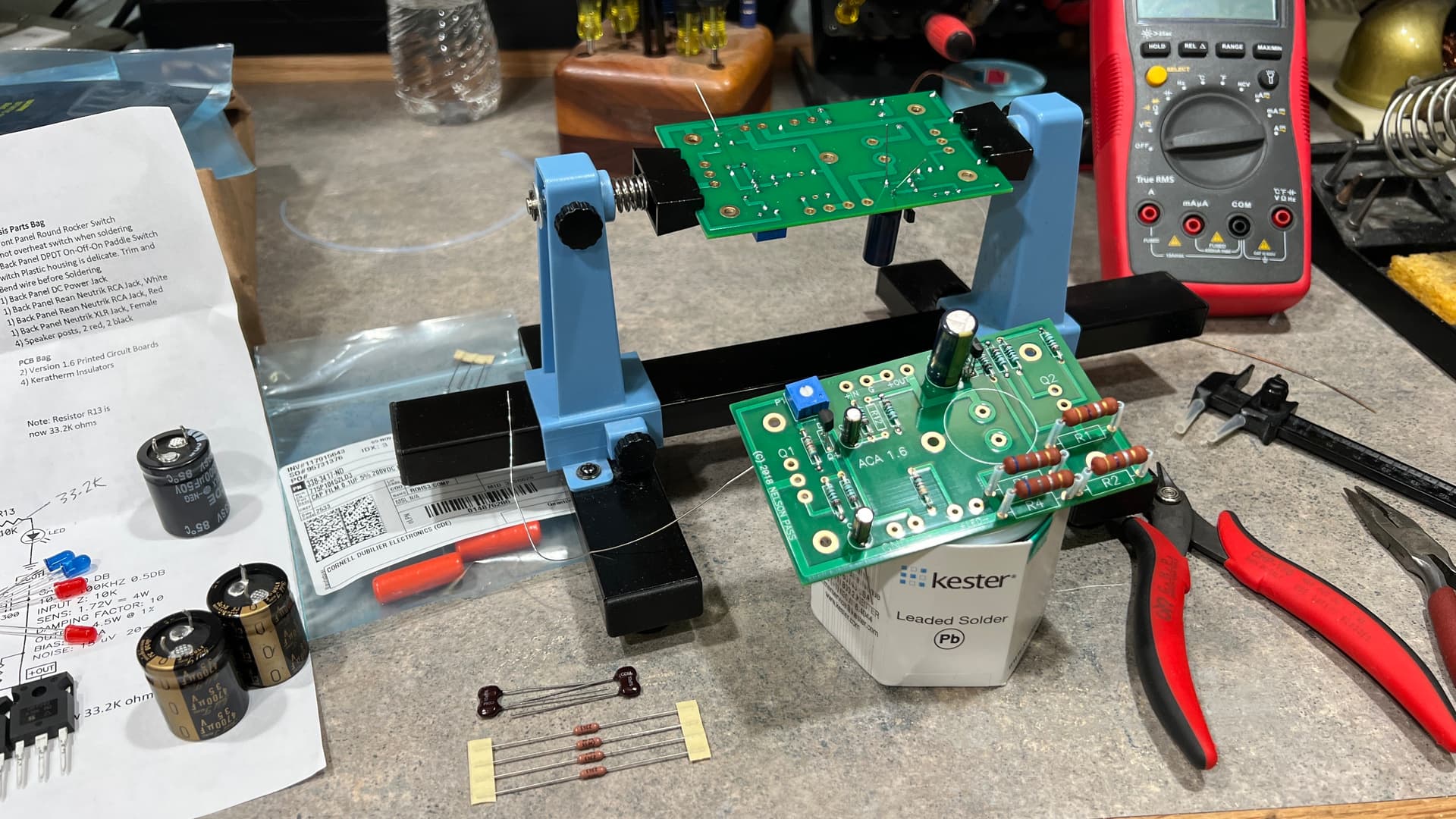
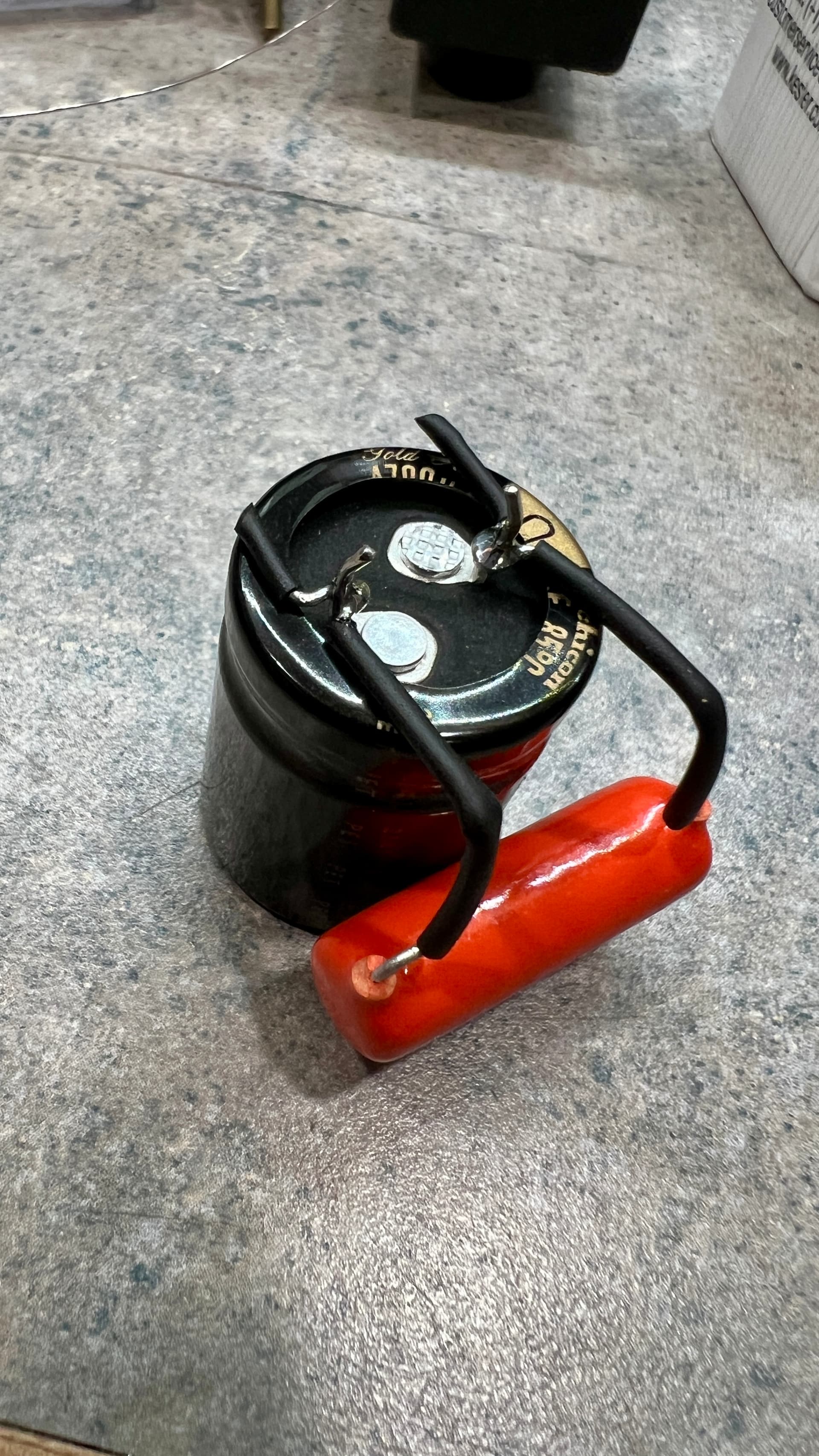
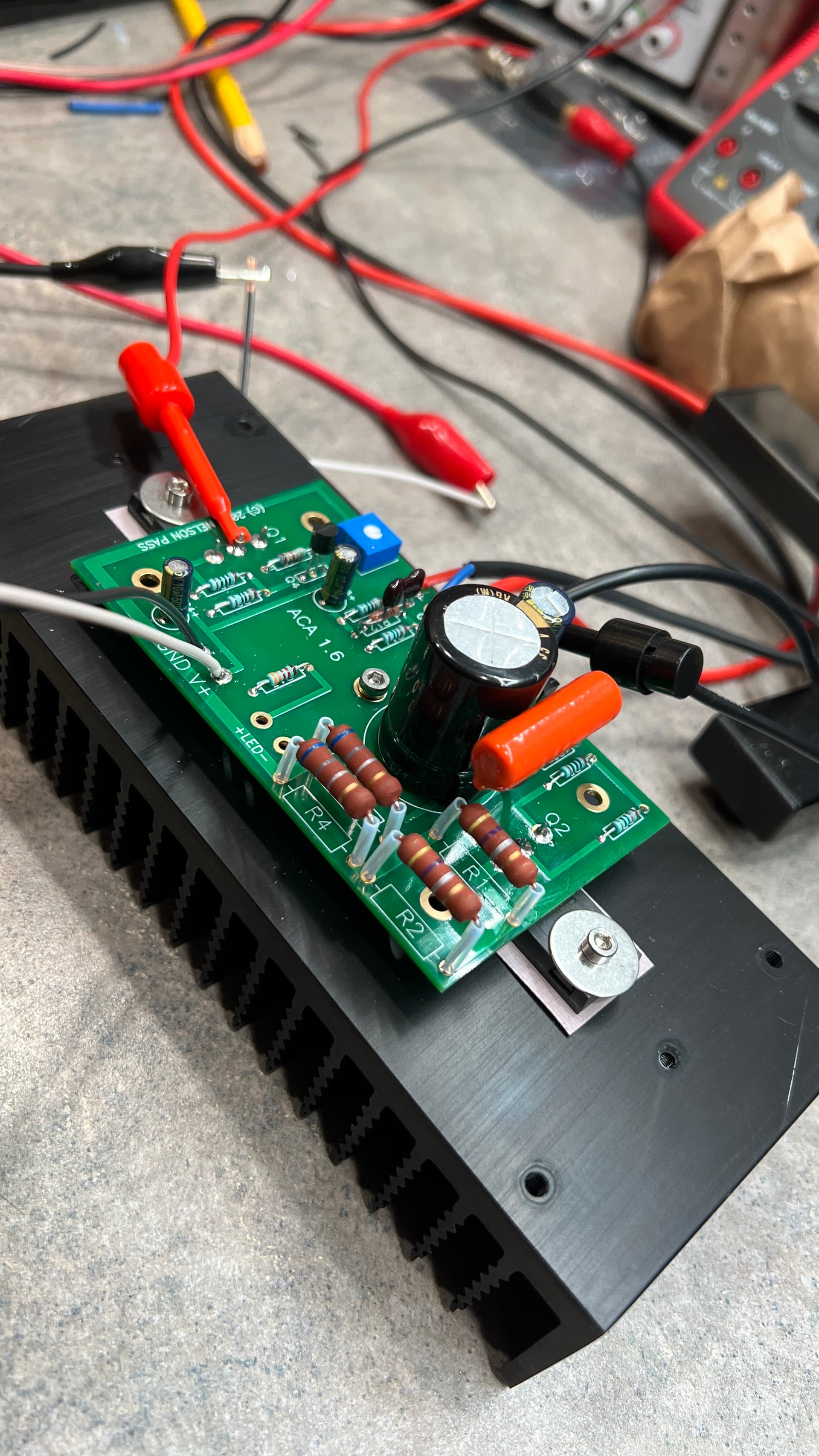
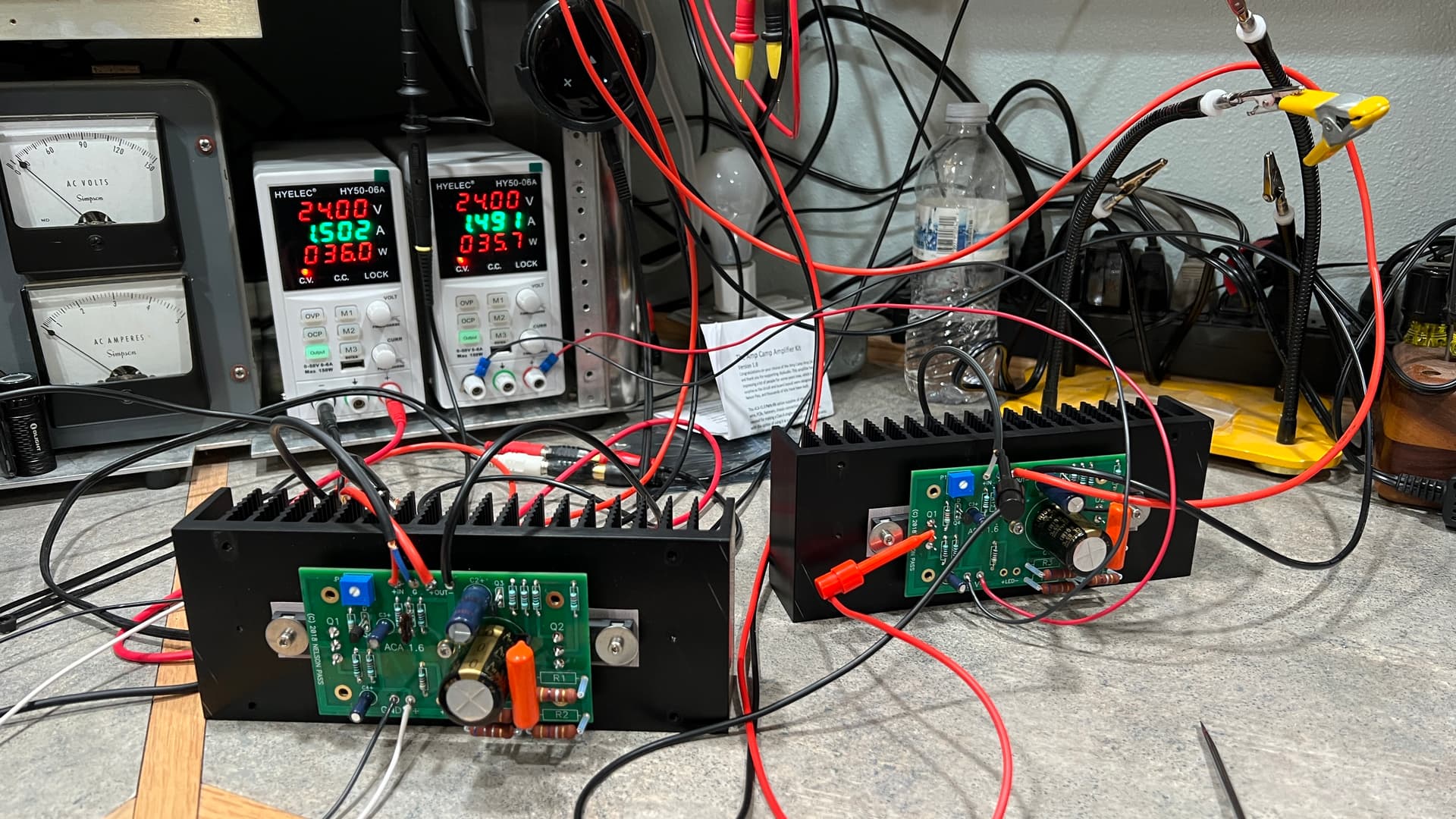
I’ve attached a few pictures of his build and testing equipment- impressive. You’ll notice there are 4 resistors which get quite hot, and he has elevated these from the boards, protected and supported with tubing, to provide improved heat dissipation.

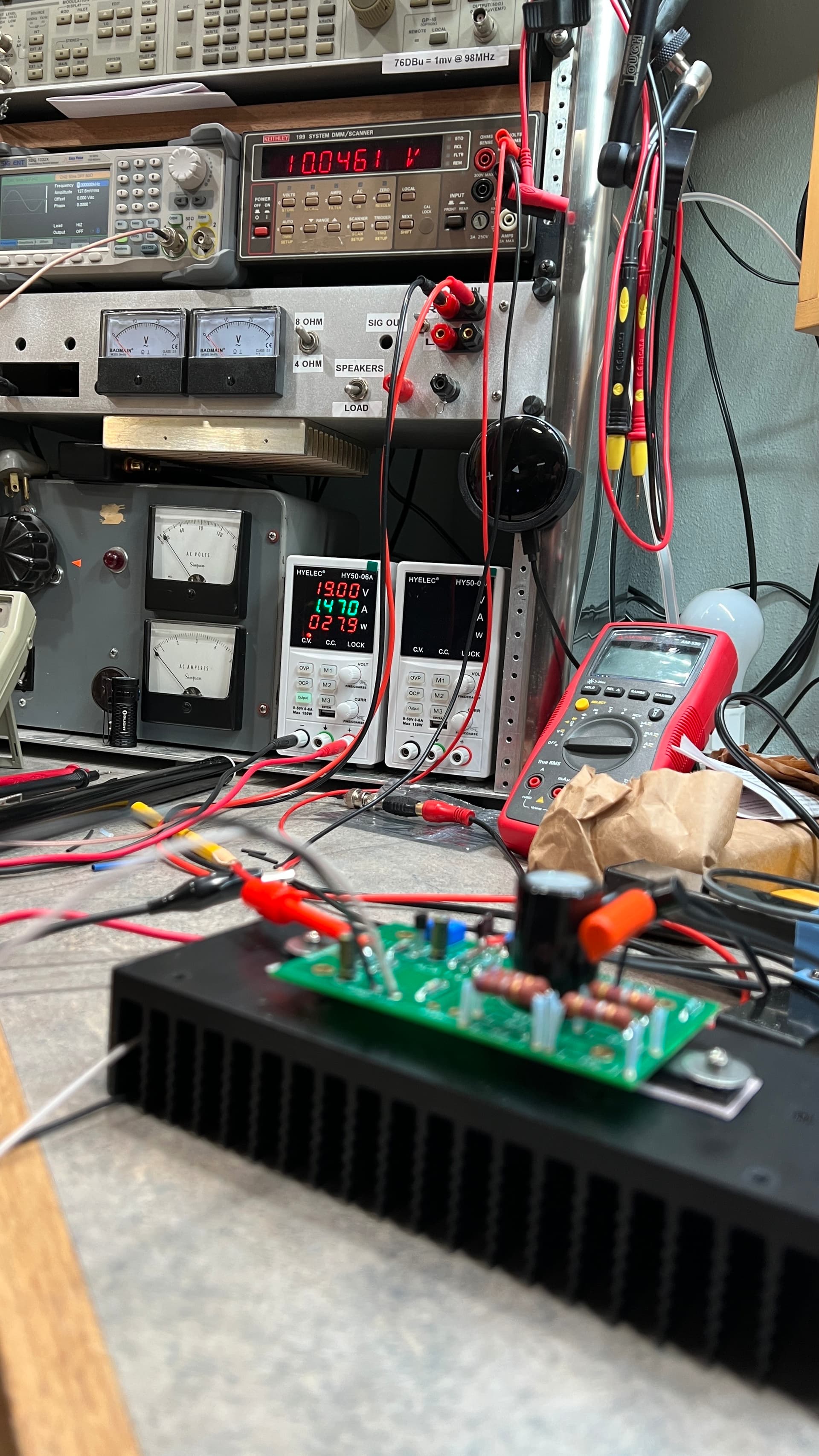
The next pics shows his build, attached board onto the heatsink with two bypass caps added, including the Orange Cap, and how he set this up to support the upgraded caps on the board. I wanted to go with Orange Caps (as a sentimental nod to tube/guitar equipment) and Tom skillfully found a way to get them into the build.

I’ll leave testing and commentary to Tom to jump in here.

I’m looking forward to putting the pieces together, doing the final wiring. While I could have gone with / built a stock ACA build, getting a tweaked and modified ACA is all thanks to Tom. I of course, for a modified ACA / orange cap nod, couldn’t go with the standard top and bottom black, I’ve painted the bottom open grill and the top piece. Won’t really see them when the amp in the cabinet (black front plate), but more like having fun socks at a business dressed event.

5 Likes

I currently have one board running, powered by a bench supply. It runs around ~104 degrees F at idle on 19v, and noticeably hotter ~124 F at 24v. Bias is surprisingly stable, even with music playing. I took a quick look at some square waves on the scope and notice a little rounding of the leading edge as frequency increases, but it sounds very good. It could be the added bypass cap in the feedback circuit limiting the bandwidth in the top octave slightly.

2 Likes

Damn - these little amps sound great!

As I understood it. There realy isn’t “idle” on a class A amp. It is pretty much running “full throttle” all the time and the signal just varies the clutch… in a way.

Actually it runs at approximately 50% “throttle” when idling. Then the drive signal forces it to swing above and below that “Bias” point (full throttle to completely off the gas pedal). That’s why Class A is so inefficient. It consumes power and generates heat even when it is doing nothing at the output.

2 Likes