He’s on ebay too, just made an offer. Sucks they’re a month out.
Would think if ESR like resistance, that have paralleled caps like paralleled resistors thus lower ESR. But I could be missing a piece of puzzle, though also familiar with using many smaller caps in power supplies touting lowered ESR making easier for load to pull current out through PS.
The PSU application reduces inductance of the larger caps.
MultiCap does this in their products, either 2 or 10 sections in parallel.
A while back, I picked up some 55uF 630V rectangular polyproplene caps during a closeout sale at Newark (about $2.85 each). (@ugly_woofer originally spotting the sale and posted info about them, as I recall). I re-calibrated my DATS V2 to make sure I was getting accurate readings and then tested a bunch of them yesterday. Hooked 3 up at a time in parallel for 165uF. Best I could do was about 0.47 ohms ESR at 120Hz.
I also have a big stack of NPE 150uF caps that I picked up several years ago for $0.50 each at a MWAF warehouse red tag sale. They are even worse, running about 0.70 ohms ESR at 120Hz for a large batch of them.
Sorry I can’t be of more help. 
Yes paralleling caps will reduce ESR, just like resistors, as I showed above, better, but hoping for even better. It’s a rabbit hole at this point. The speakers sound great, will any of this make any difference.. This is for DIY fun at this point, maybe learn something.
Bill, what does one of those 55’s read by themselves? Your series stack should be triple that, possibility plus the connections between them.
I should add, paralleling doesn’t work exactly like resistors, but does help.
I just tested three of the 55’s alone. Get 0.42 ohms ESR at 120Hz for each one. So, a little bit better than the 0.47 ohms I get with the three connected in parallel, but not much better.
Why would you connect them in series? That only yields ~18 uF
True. I overlooked as inductors series’d.
Brain fart. I meant parallel.
So they got worse in parallel? Huh, I need to go back and check what I have.
Yeah that doesn’t make sense based on my transmission line 300 level course. But that was way over 3 decades ago…
Let me re-run the test to verify
I stand corrected. After checking a bunch of my poly caps, the ESR definitely goes up when paralleling caps. But ESR dropped on several combos of electrolytics.
Most of my polys were higher than I expected at the 120Hz range. Surprisingly I have a couple Jantzen Standard Z 18uF that were fairly low compared to the Audyn and Dayton equivalent.
Now I will be going through every component in my current crossover so ESR is also taken into consideration in VCad.
I re-ran my tests and this time I got the opposite results.  Must be due to lead and/or alligator clip contact resistance or something like that.
This time, to eliminate contact and lead resistance as much as possible, I tack soldered the three 55uF caps together in parallel with very short runs of solid copper wire:
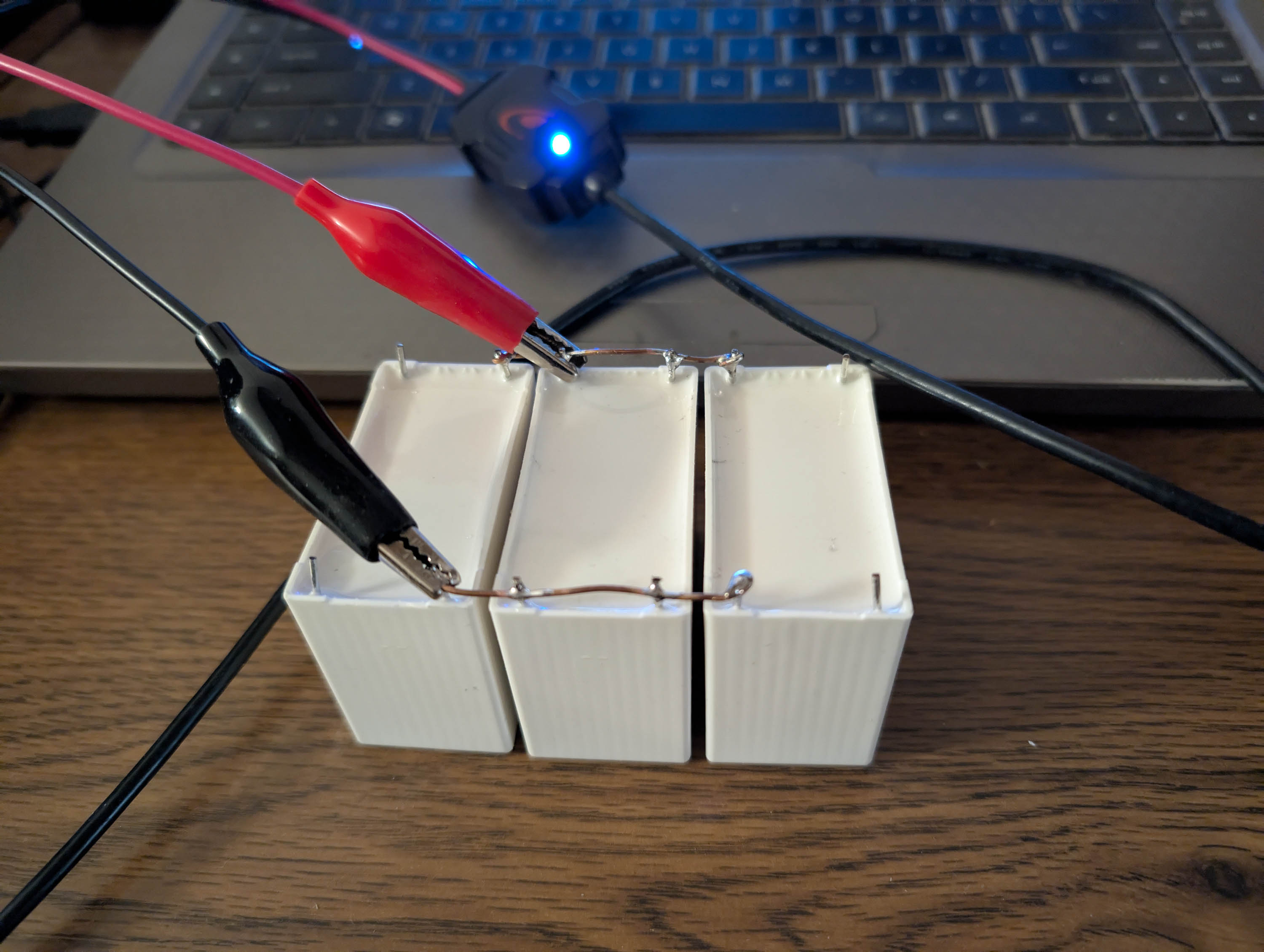
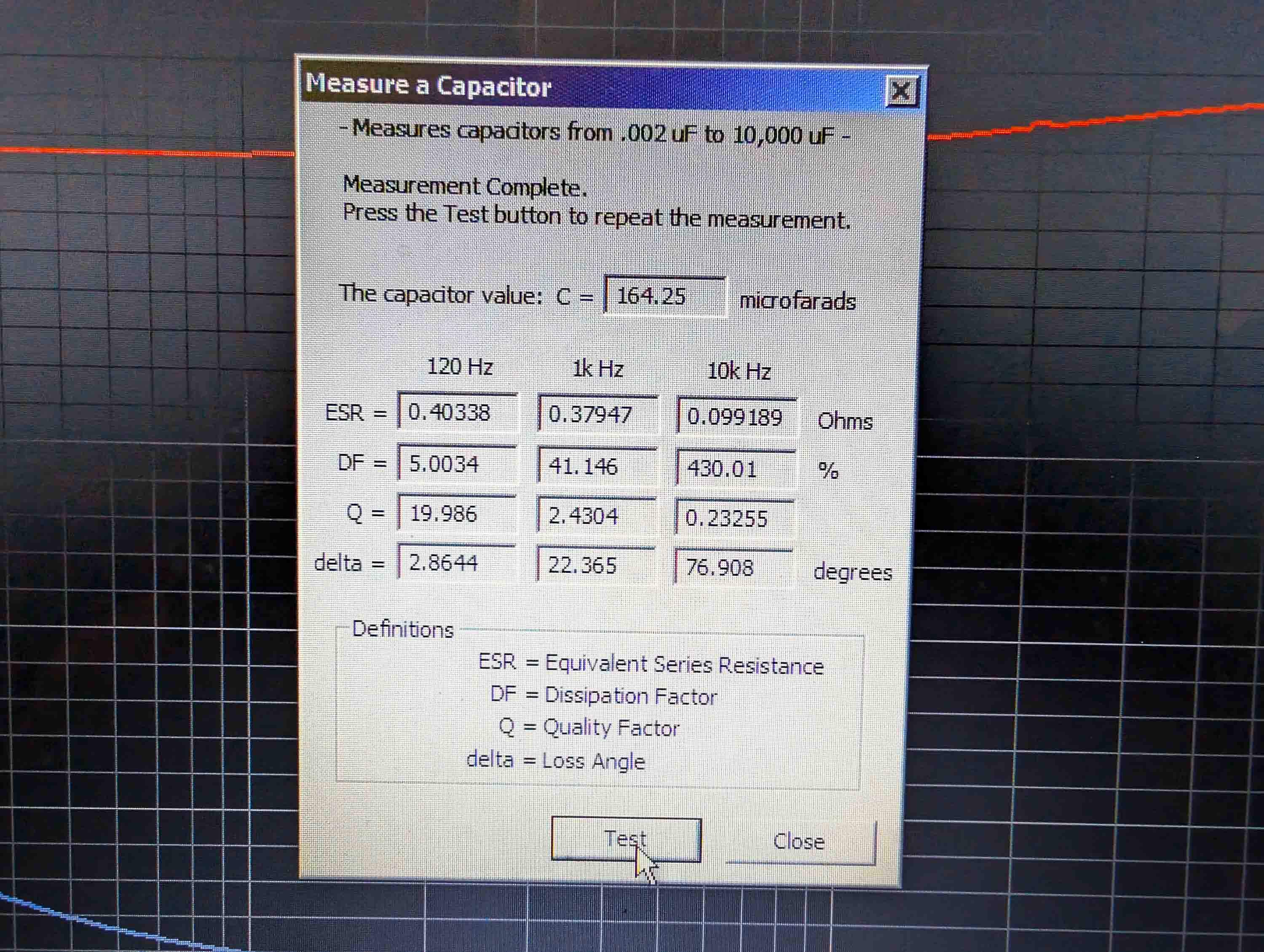
Then I measured 164uF with an ESR of .403 ohms at 120Hz. Note that my previous test was .47 ohms for the paralleled caps, so this is a significant change.
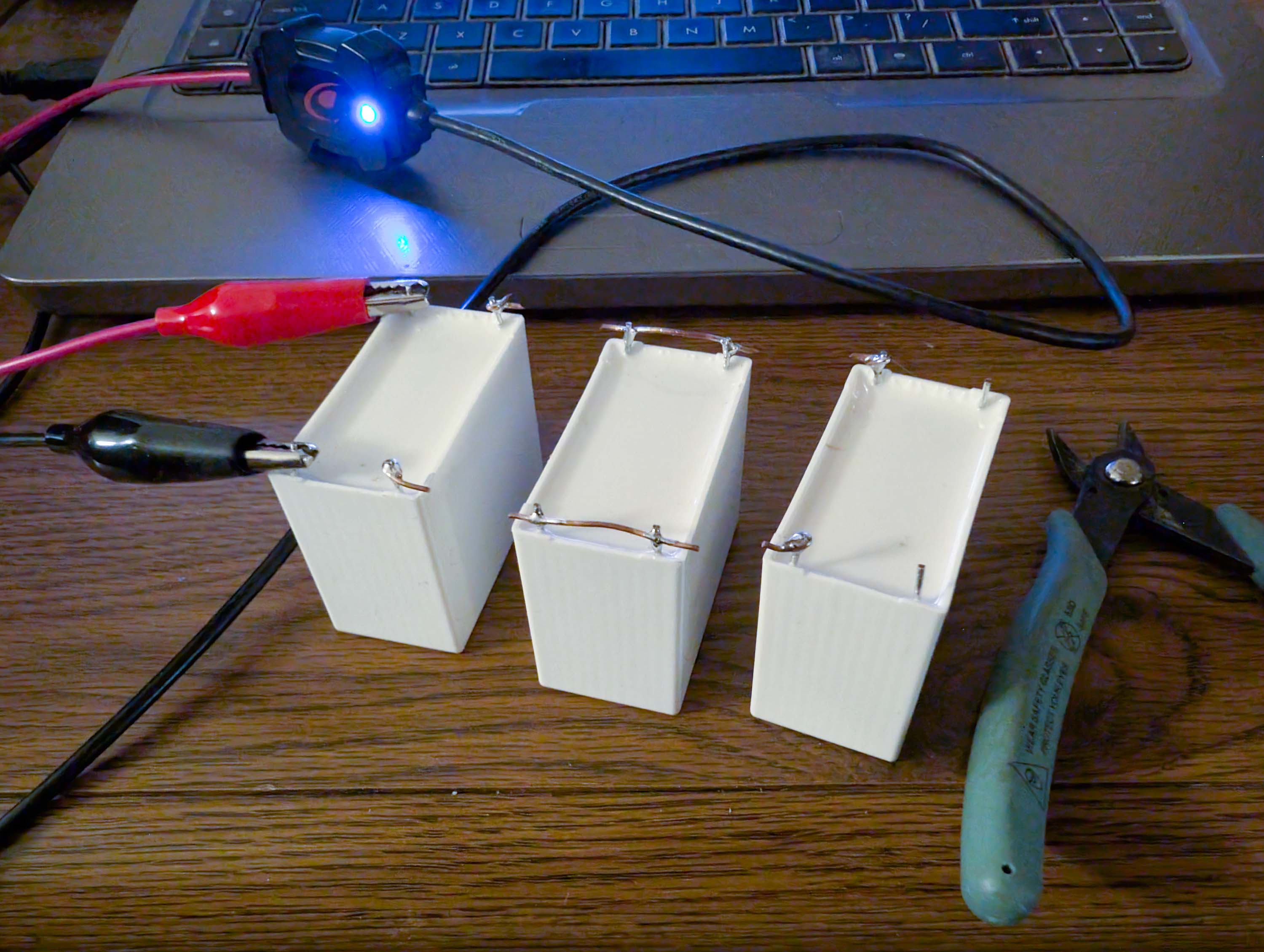
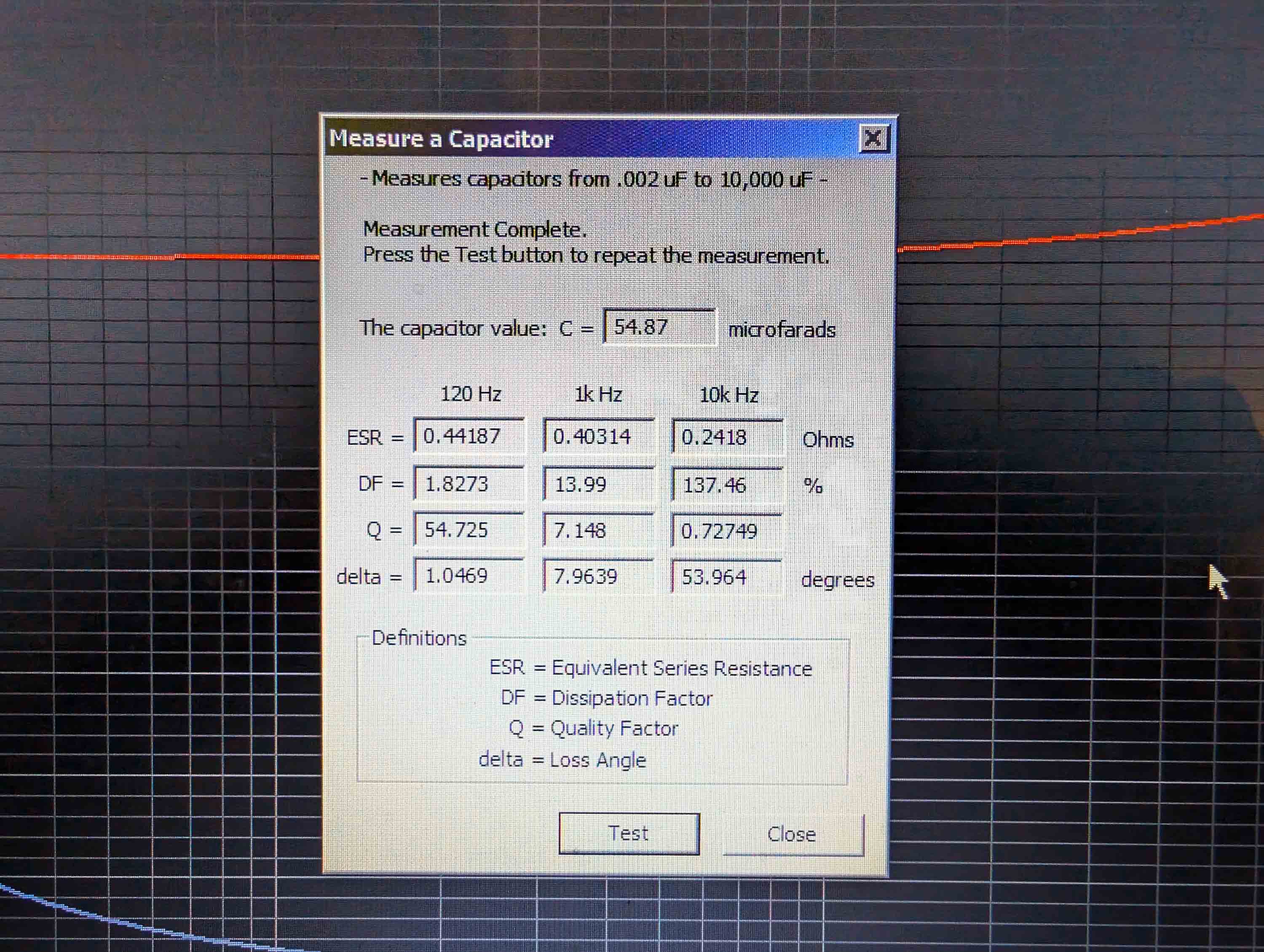
Then I cut the wires and measured each cap alone. This time I got approx 55uF each with an ESR of about .44 ohms. (previously .42 ohms).
Must be due to a change in hook up wire lead resistance or alligator clip tension from the 1st to 2nd test.
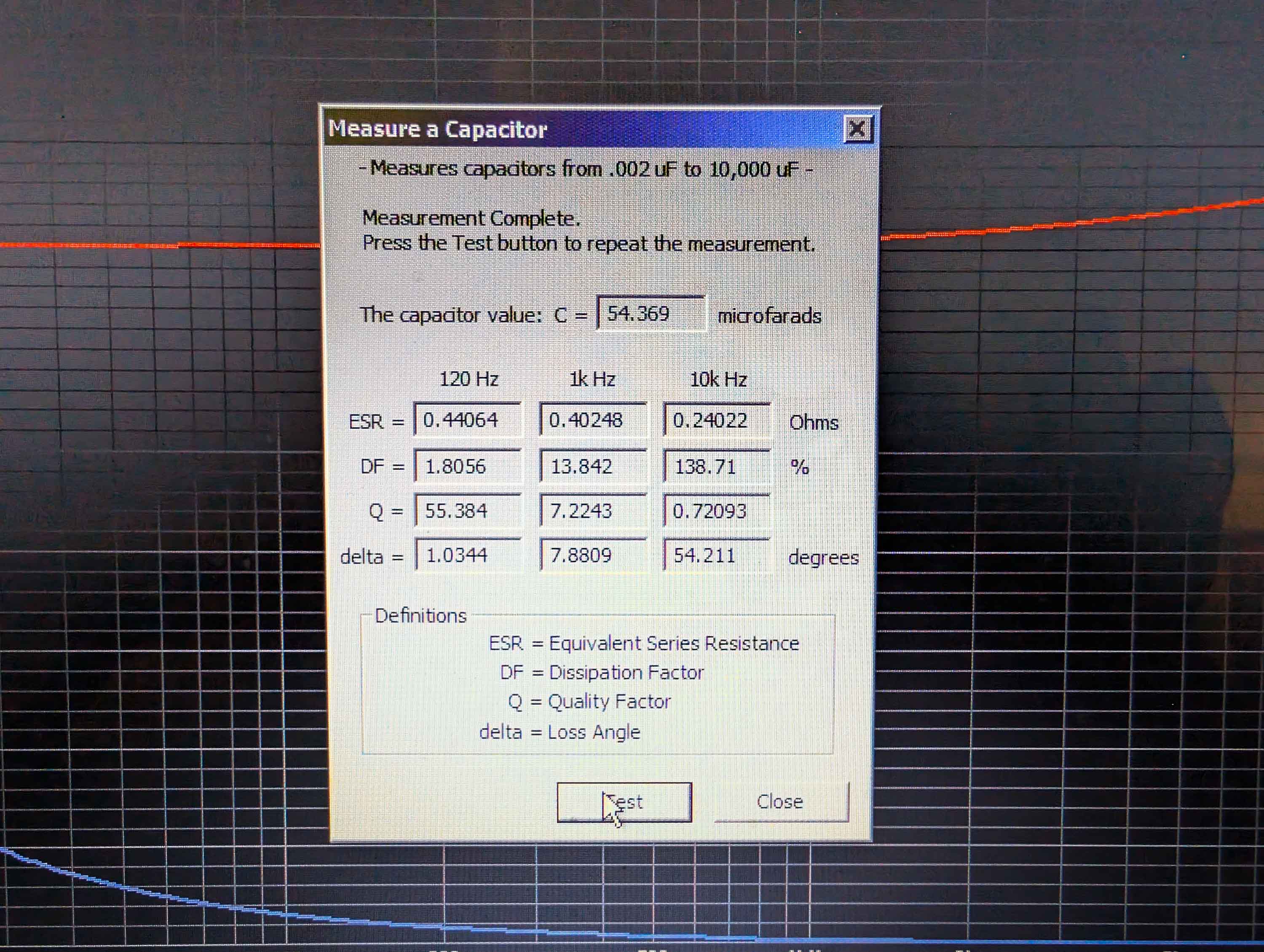
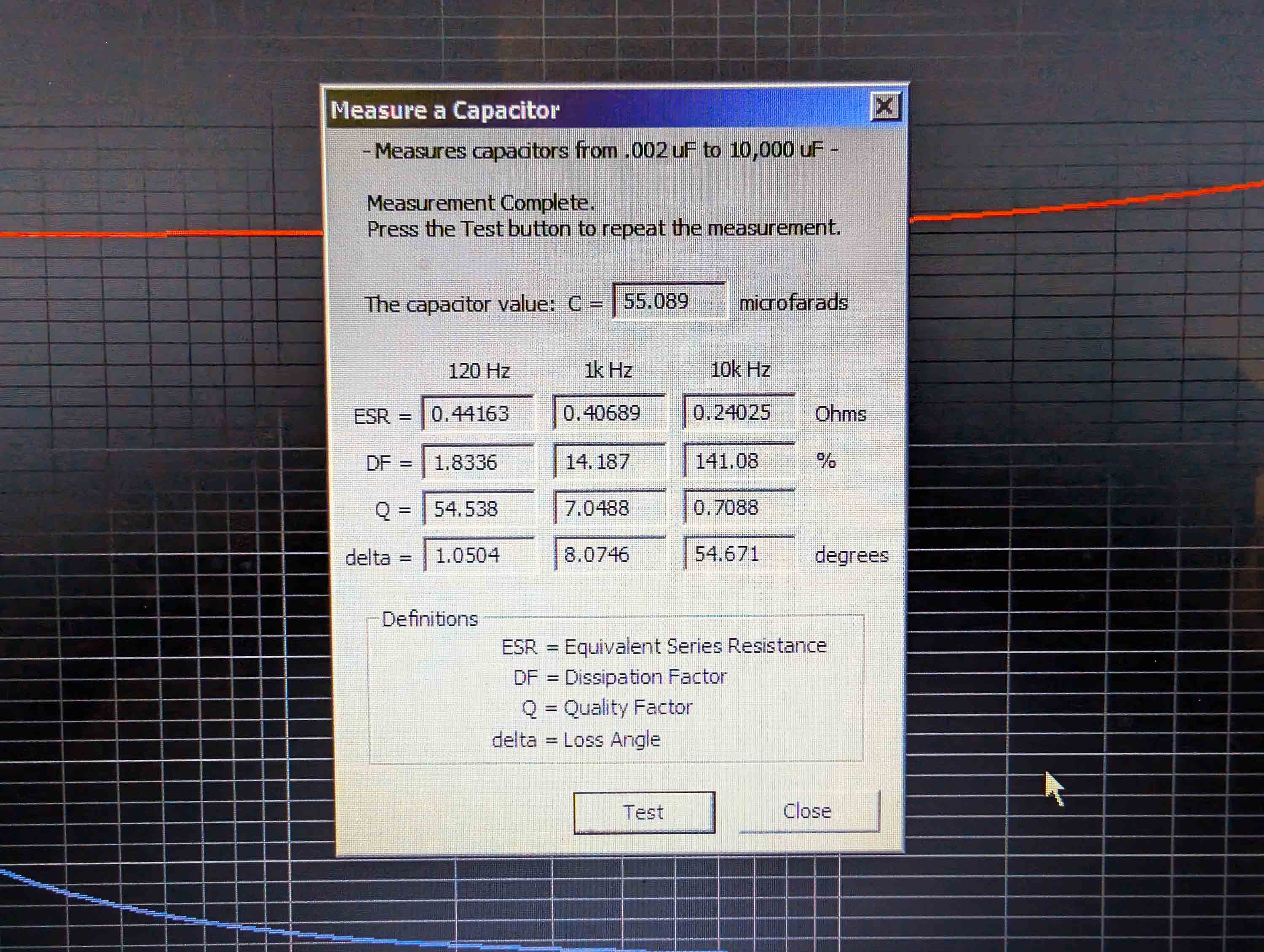
Definitely an eye opener about ESR of caps, especially different polys.
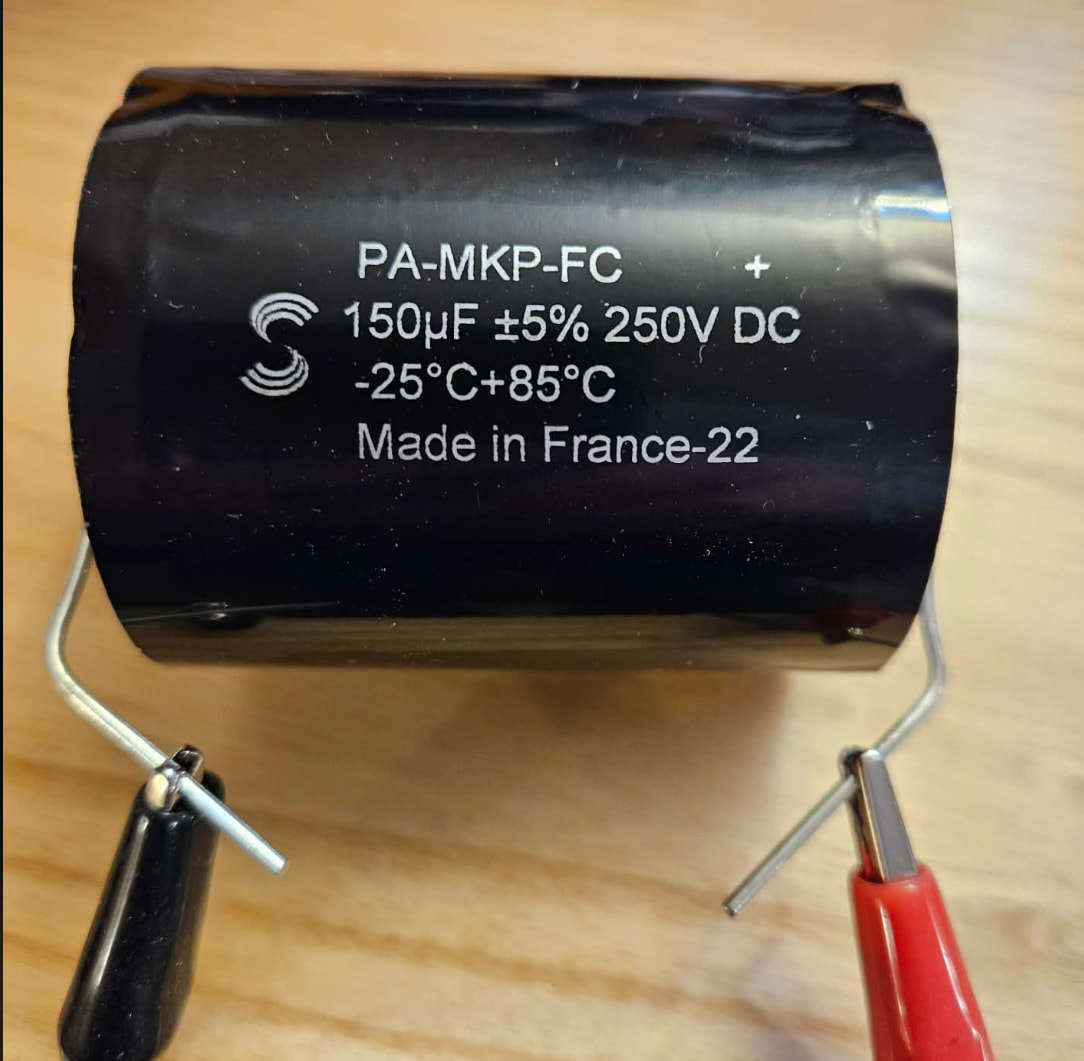
Here is a Solen 150uf 250v cap,
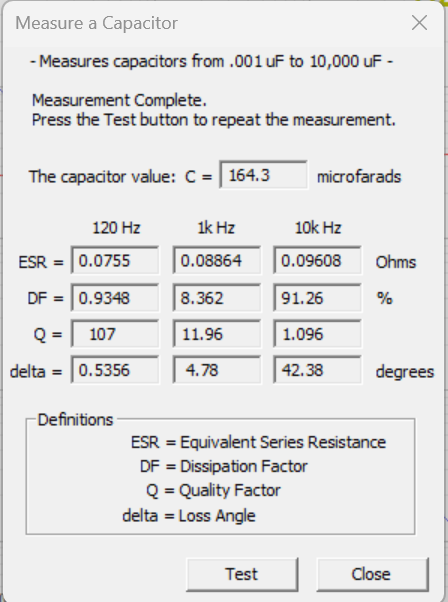
This multimeter has “kelvin” leads, so the ESR might be more accurate for reading low numbers.
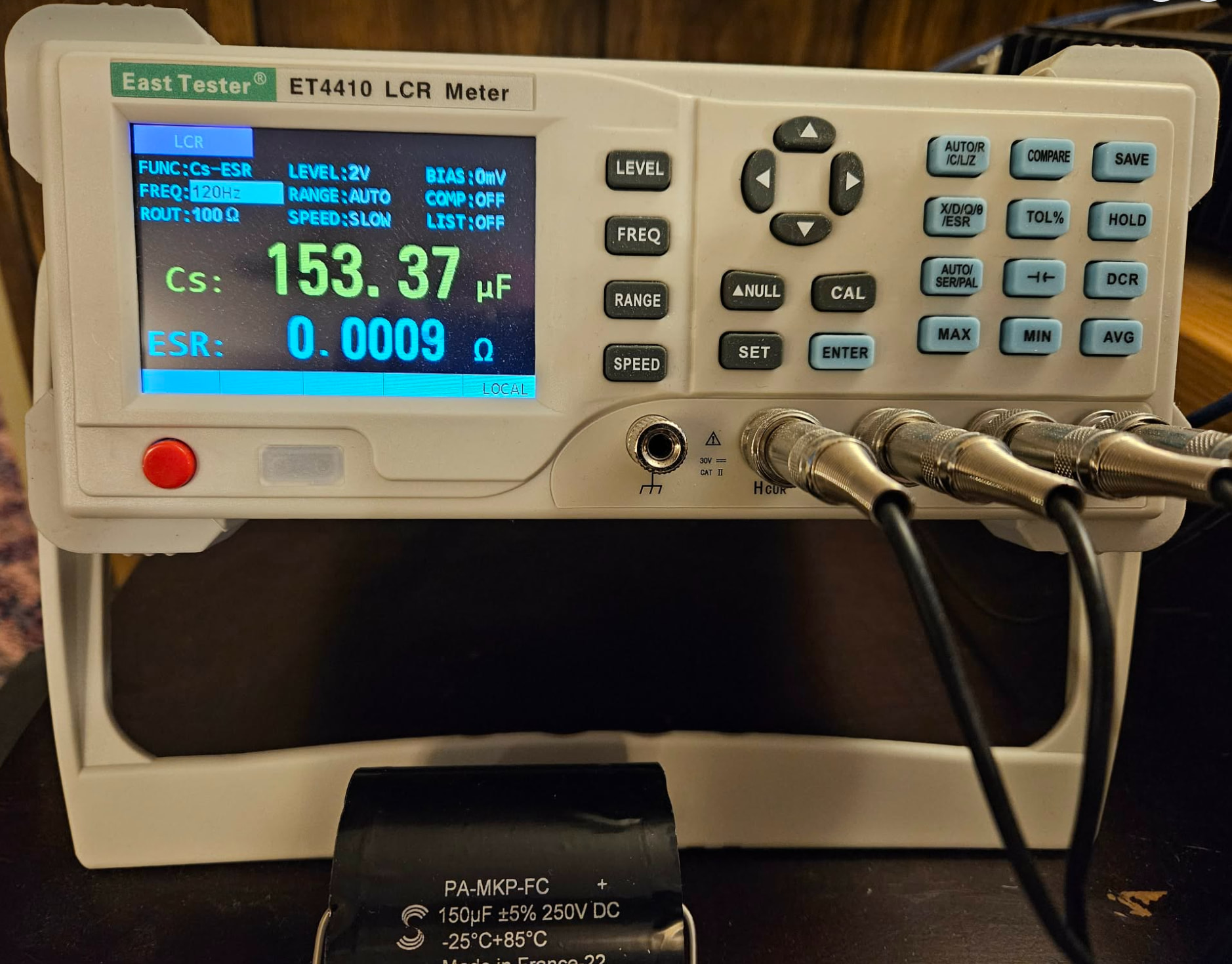
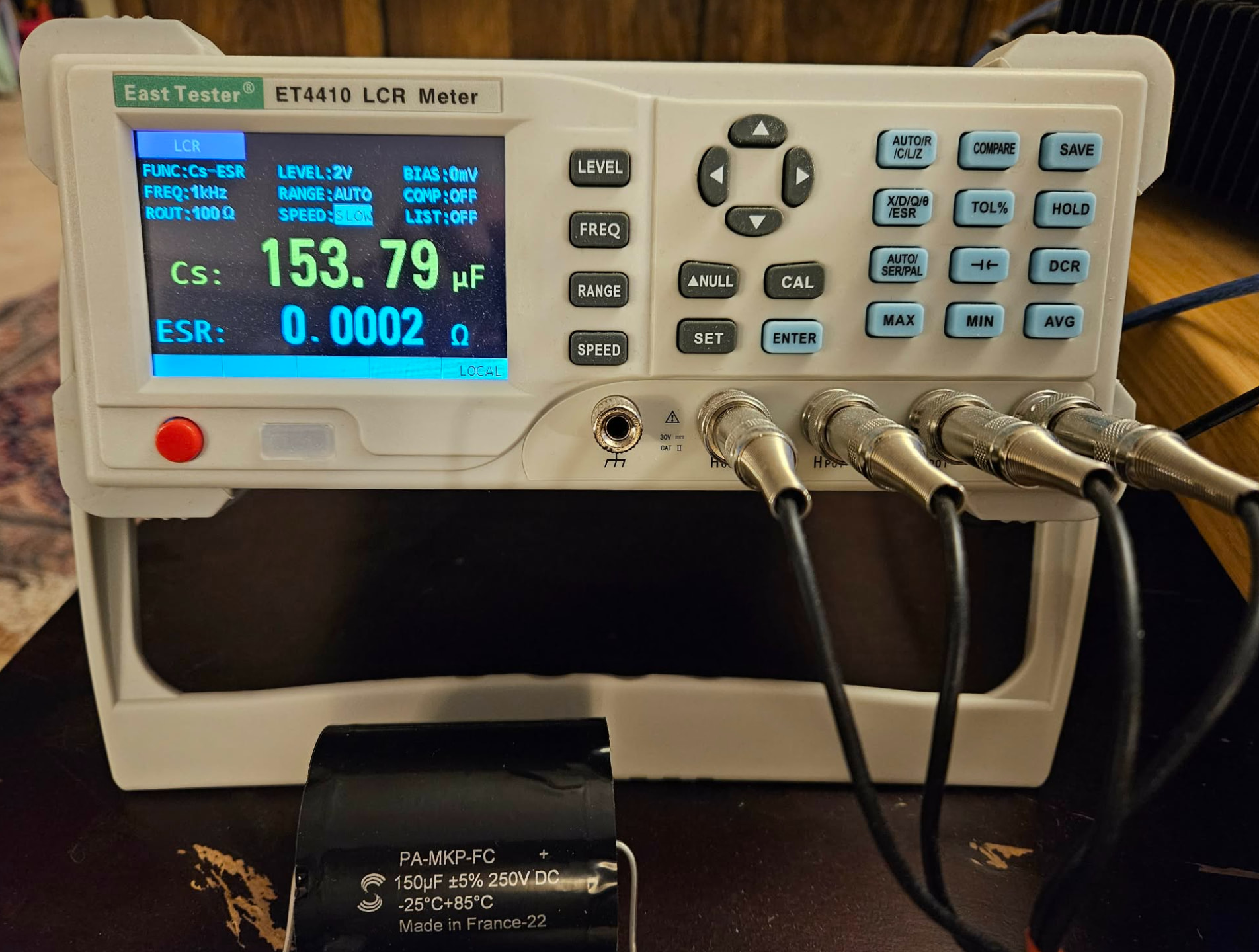
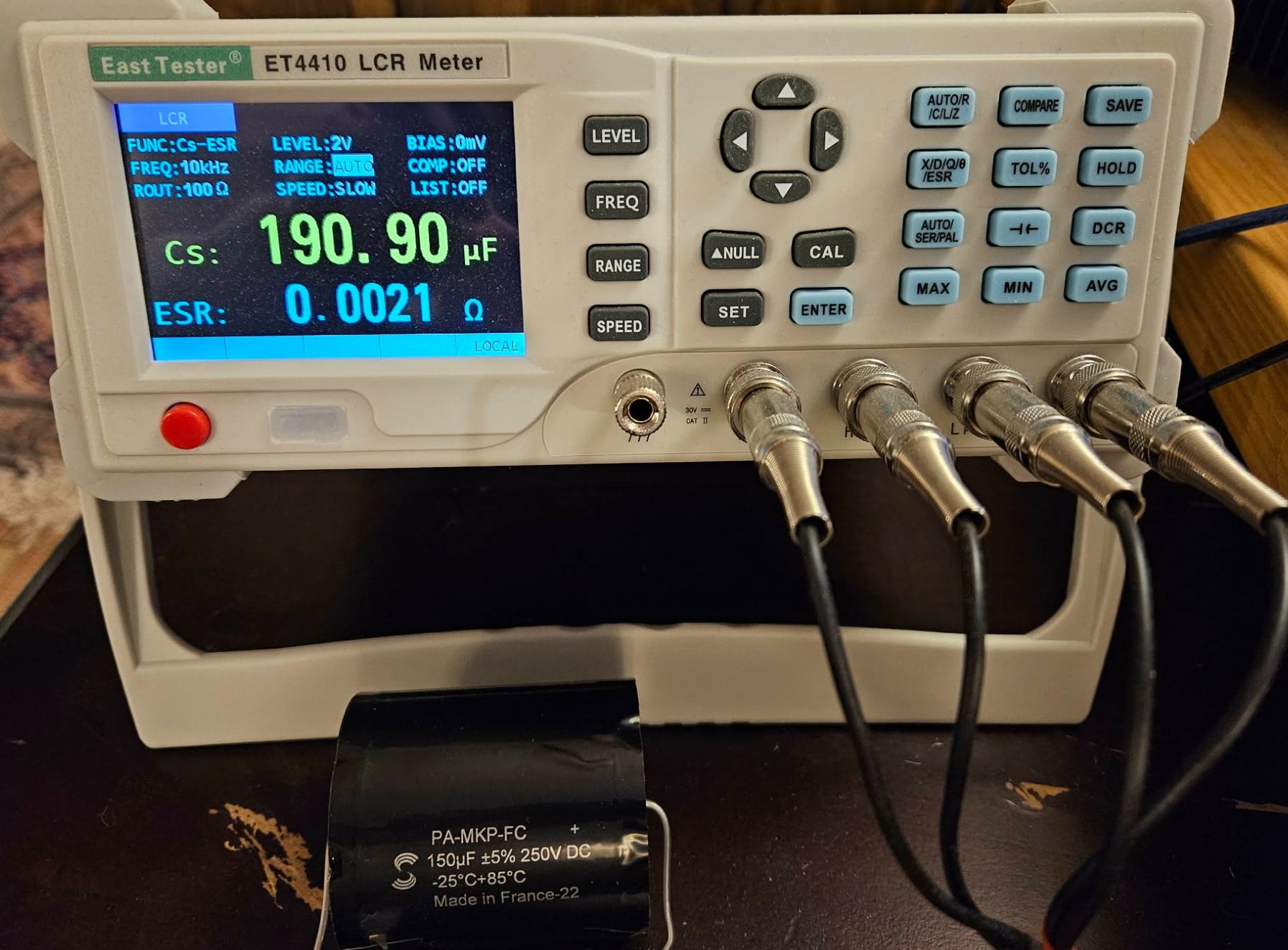
I am just learning how this multimeter works, so if you see that a setting is wrong, or want a setting changed for a different reading, let me know.
David.
Nice! That’s promising.
Do you have two of them and want to sell?
Unfortunately not for sale.