Something Silly

First topic started here so I hope I’m doing this right! I had a conversation at Iowa this year with a couple guys about how many of the speakers present - mine included - were essentially rectangular boxes. Not that there is anything wrong with that, I love my rectangles as much as the next guy and if you’re ripping out several designs a year it makes sense to go with something a bit easier to manufacture. However, it got me thinking about doing something a little different.

Goals:

  1. Make something not a rectangle.
  2. Use parts I already have wherever possible to minimize expense.
  3. Complete the project for IowaDIY 2026.
  4. Go nuts.

My original idea stemmed from the shape of a flower, using either a tweeter in a large waveguide or a coaxial in the center surrounded by around six smallish woofers. I had planned on going the Anarchy route again but using the 558, but then discovered the Tang Band W5-1138SMF modeled a bit better on the low end. I kept looking to see what was out there and remembered the eight Dayton RC180s I grabbed on super sale last year.

That’s when this little project took a turn.

According to VituixCAD, the RC180 models really quite well when open back (or in a closed box with basically infinite volume). Of course, it has terrible efficiency so we’d need a lot of them to bring up the sensitivity to something reasonable. In this case, nine per side.
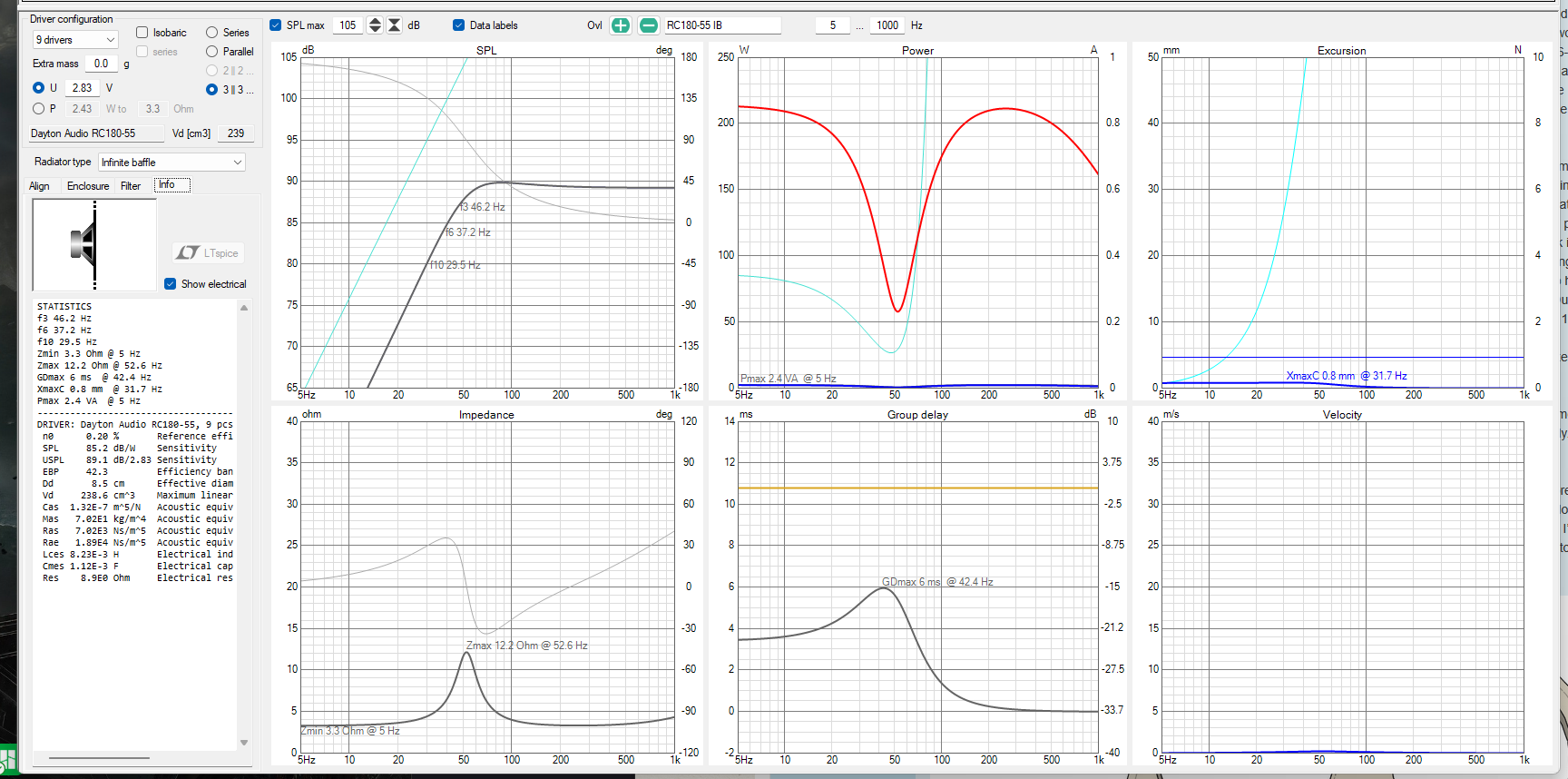
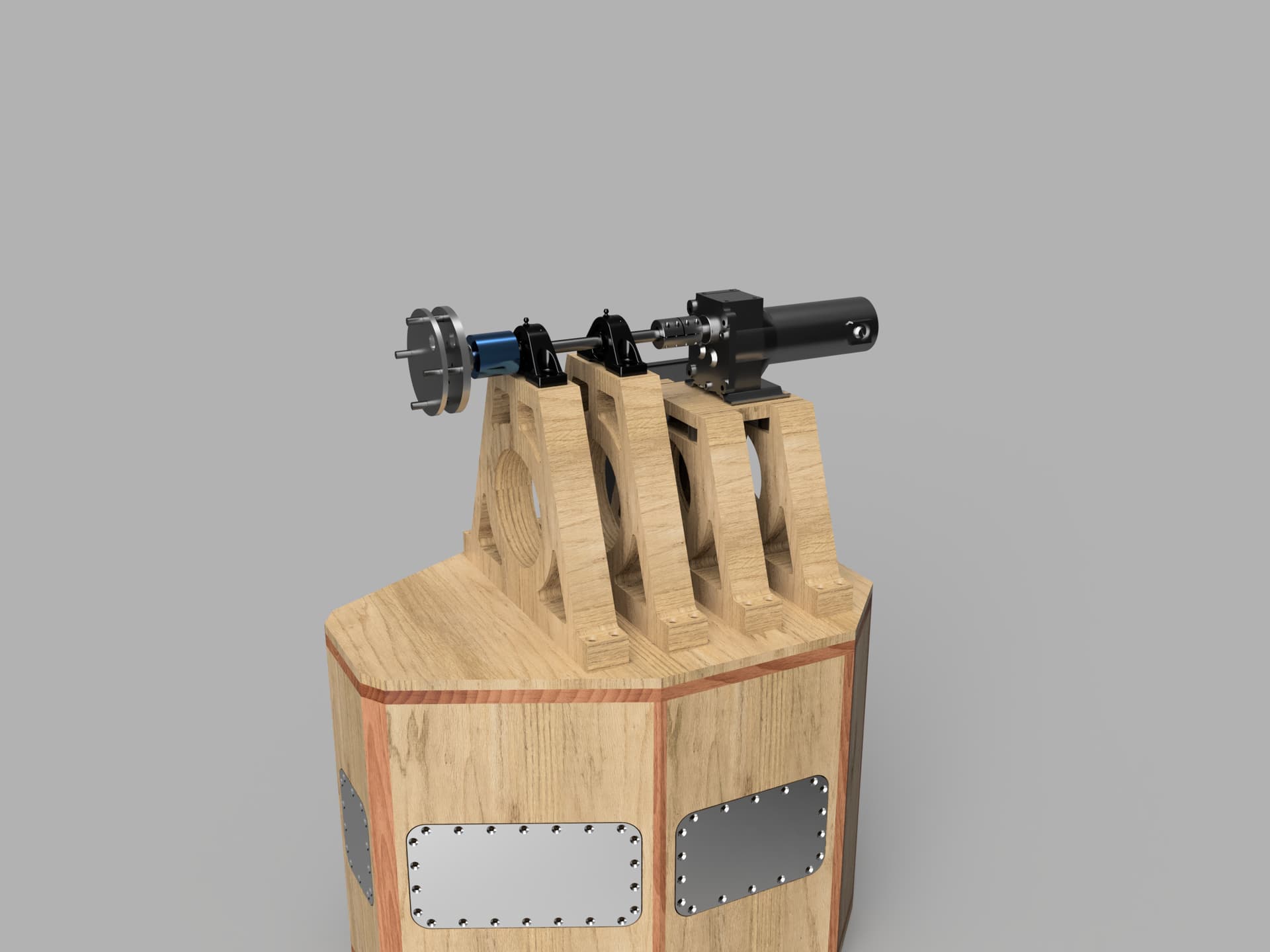
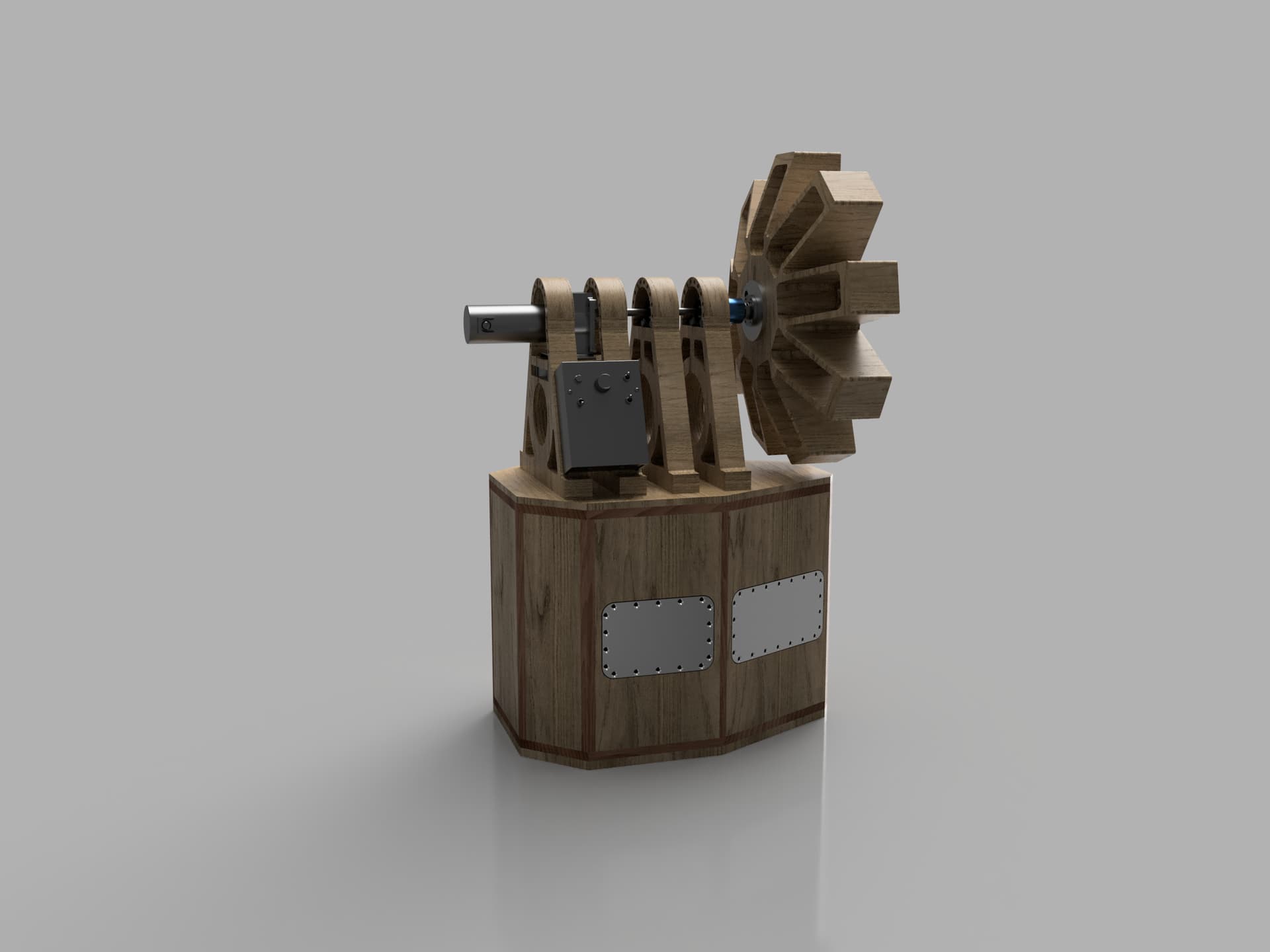
I couldn’t let this idea go so I started planning out what I have and what I’d need. Coaxials? Check, I have several pairs - but I’m a bit set on the Tang Band W6-2313. Woofers? I’d need 10 more RC180s (or at least one more for a test baffle)…and they just went off sale (crap) but I’m sure they’ll be that price again come Black Friday. The flower baffle could be heavy, something like 40 pounds, and we don’t want it tipping over. We’ll need a base that is heavy…and maybe does something too. Checking…oh, how about using a pair of Peerless STW-350s I have sitting in storage collecting dust? They certainly meet the weight requirement, and don’t require much volume to work well. They seem to work in a downfiring alignment too, which would lower the center of gravity as much as possible.

So I sent out some renders to a few folks to get some input. That’s when the project took another turn when a friend challenged me to make this thing ‘literally’ turn.

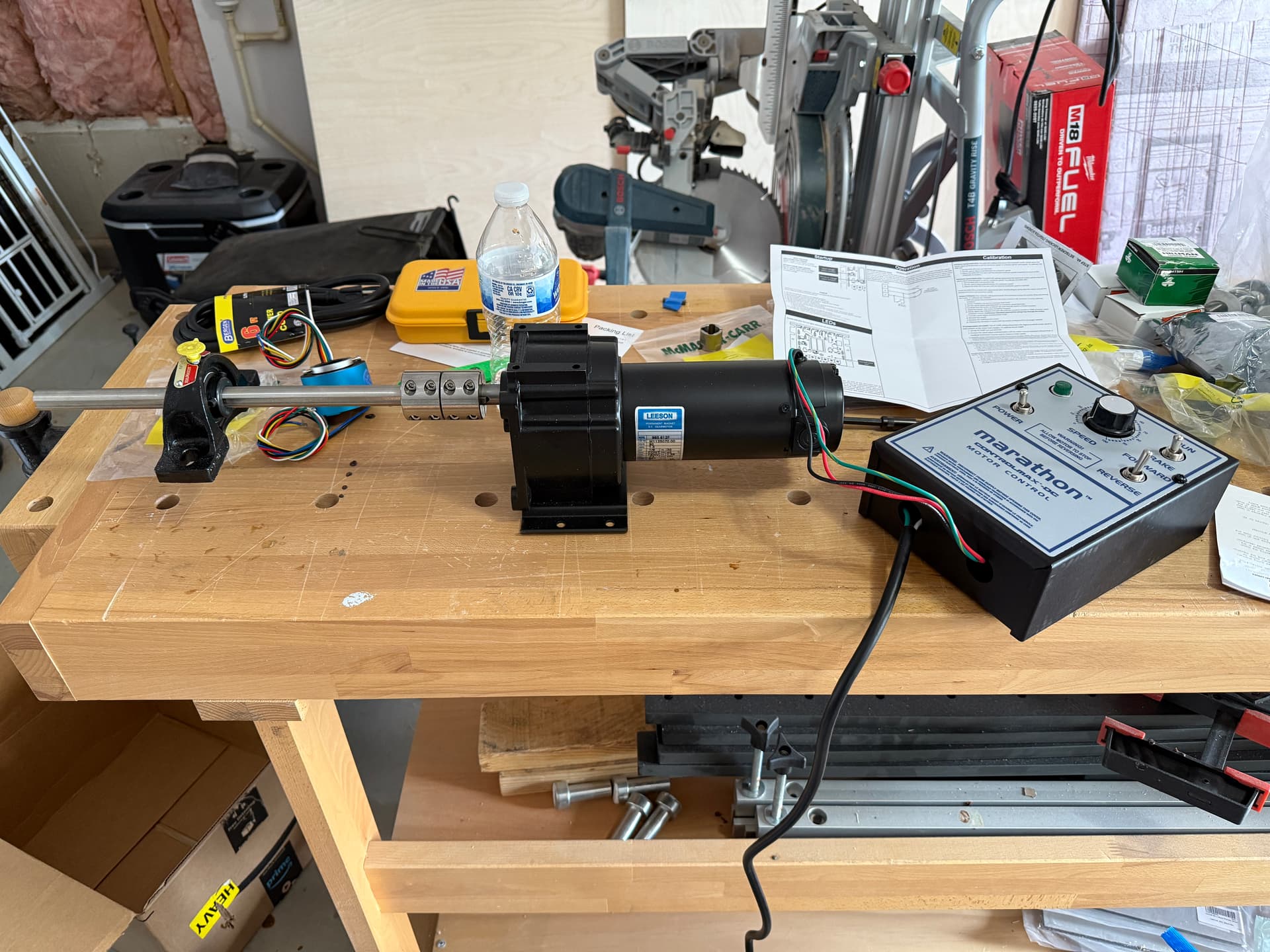
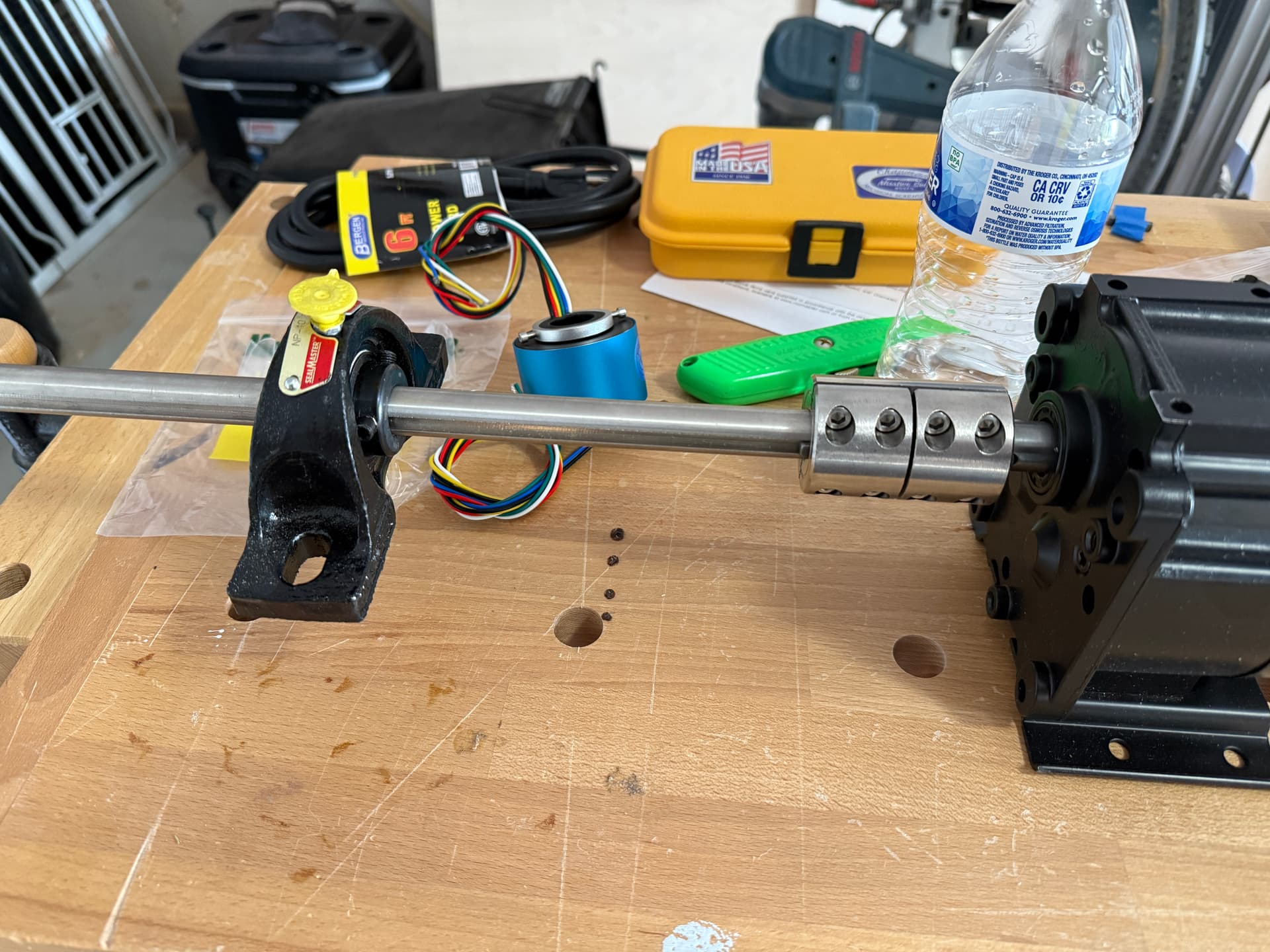
I drew up what I’d need and initially decided that was too silly. There are already some known downsides of this design, why implement something else that would introduce noise, if nothing else? Well I couldn’t let that go either and I ordered some parts for evaluation. DC motor, AC-DC speed controller, bearings, driveshaft, and a slip ring. That’s all in my garage right now waiting to be assembled to see how much noise is generated - both audible noise (from the motor) and electrical noise (induced by the motor and through the slip ring).

That last parts arrived yesterday so I’ll hopefully get to that this week. In the meantime, I completed new renders and started reaching out to some contacts with CNCs - absolutely required for the baffle to ensure it is reasonably balanced. Even at low RPM I don’t want to stress any of the components too much.

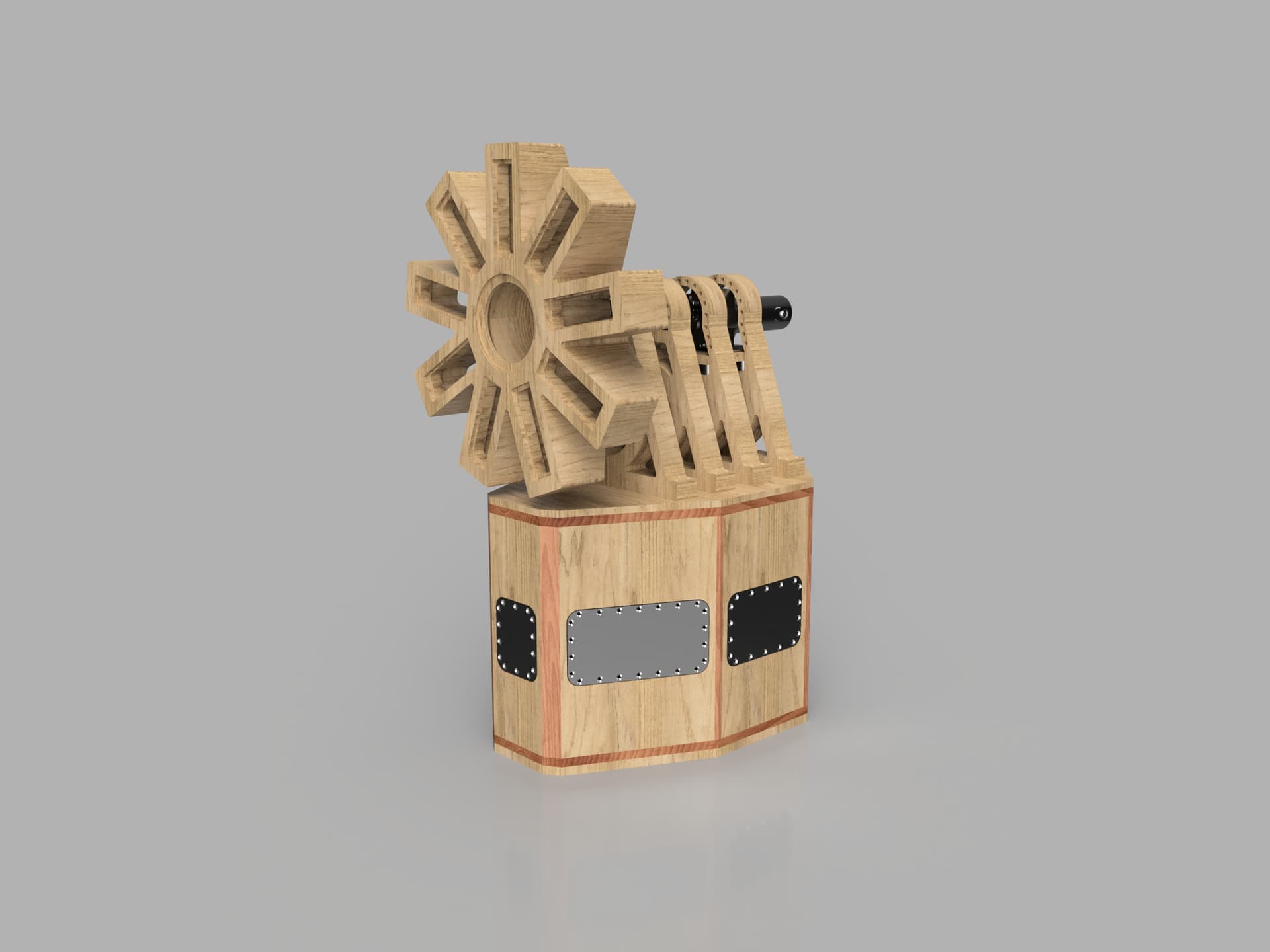
Renders below, looking for input on this project. Pretty sure I’m doing it regardless because it just seems like a lot of fun to figure out. That said, I would like to make this sound as good as possible, so I’m hoping the brain trust here will have some thoughts!
4 Likes

Interesting concept. Wasn’t aware of the Rc180 - certainly an interesting driver. The coaxial concept should work, though haven’t tried it but have something similar in plans with regular drivers.

1 Like

I’ve often thought of building something un-box like, such as Ikea bowl speakers or something like this:

I think he also made a speaker as a V8 engine, cool!

Geoff

2 Likes

You should hook up with Meredith. The sky is the limit!

3 Likes

So true!
My RSRs were about as non rectangular as I have been. Pretty much all the others fall suit.
I hope your plans come together!

1 Like

Might want to check-in with 4thtry (Bill) as well for mounting those encircled enclosures . . .

1 Like

What is the target RPM range? Some of the old Leslie woofer deflectors spun in the range of 40 to 340 RPM. And the treble horns ranged from 50 to 400 RPM. Be interesting to hear what “80 grit down” sounds like on these speakers!! :upside_down_face:

2 Likes

I’m pretty sure that there was a home hi-fi version of the Leslie. It’s claim to fame was that it got rid of standing waves. It was here and gone in a flash. It’s impossible to find anything on the web about it.

Ron

2 Likes

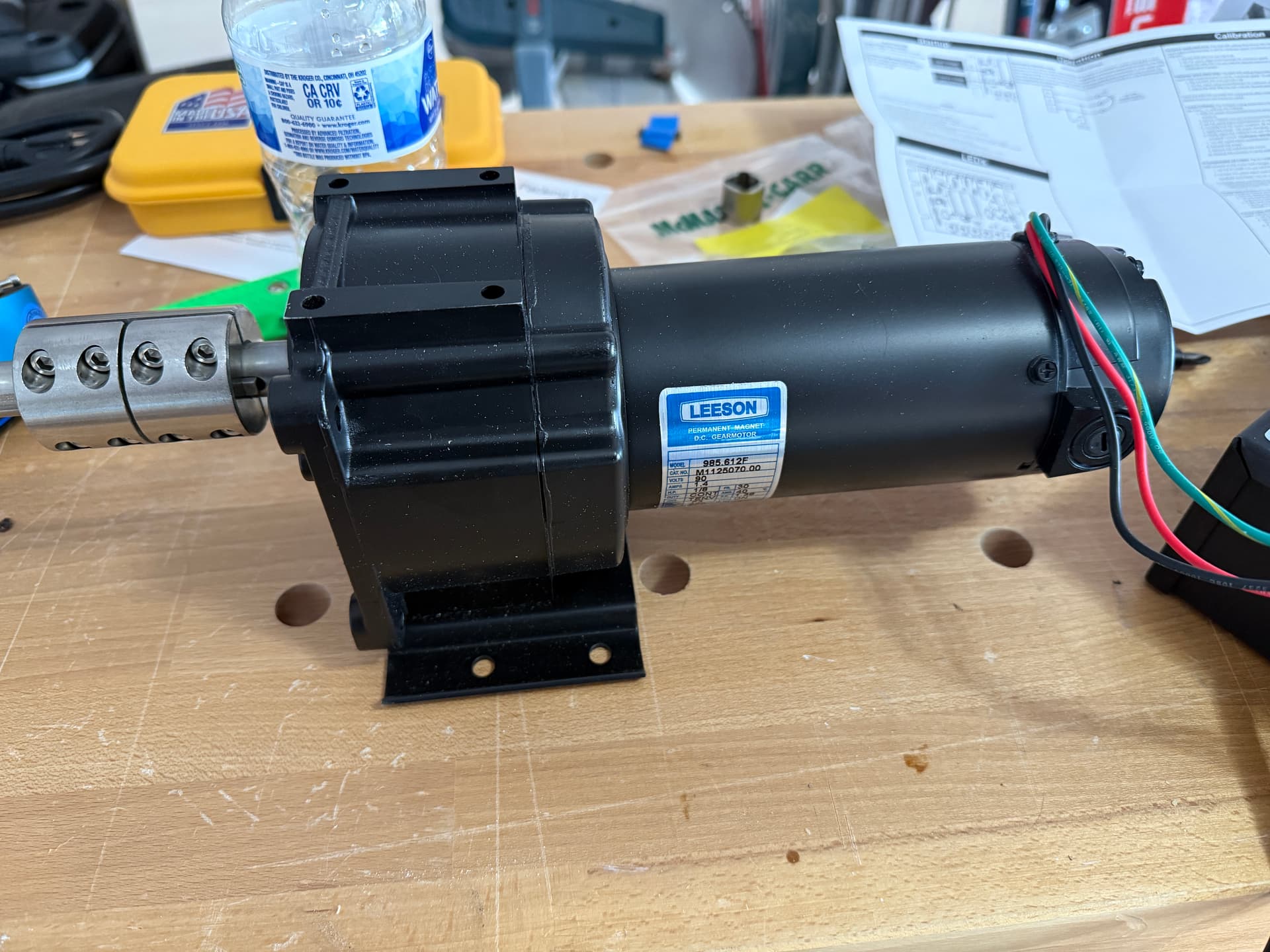
Hey Bill, I did a little research and thought about this for a while before selecting a motor. I ended up with a DC gearmotor with a maximum output speed of 31 RPM. A lot of this was due to safety; as modeled the baffle would be pretty beefy, and that spinning mass could really hurt someone if something failed (or someone got too close). Safety is one of the worlds I live in professionally so I’m trying to design something overbuilt to remove the ‘failure’ aspect. I will not, however, be putting guards in place around the wheel, so the human factor will unfortunately remain.

Noise was also a concern. The gearmotor step down the internal RPM at a 58:1 ratio, so the maximum internal speed would only be ~1800 RPM. I’m hoping this will keep things reasonably quiet. It’s not too late to change the motor and assembly of course, so the evaluation must be done soon.

Torque was also something I considered. To get a motor that would spin fast (say a few hundred RPM) and have a fair amount of torque to start the wheel turning may have been cost prohibitive. Of course, AFTER I selected a motor I consulted with a mechanical engineer buddy. He said the motor I got is far and away more powerful than we’d need. Oh well!

In my research I of course came across the Leslie - quite an interesting speaker, and seemingly still quite popular in its field. However, the Leslie clearly had a sort of Doppler effect that I’m not certain my project would exhibit as all drivers would remain forward facing during operation. I’m honestly quite curious what we would hear. If we only had three or four woofers I would think that might have more of an audible impact due to wider spacing than what a nine driver affair would have.

Edit: I should have mentioned the 31 RPM is the maximum, but I have a DC speed controller as well so that would not necessarily be where we actually operate them. I am curious what different audible effects would be noticed between, say, 5 RPM and 30 RPM.

3 Likes

Thanks Ani, the RC180 caught my eye when it debuted a while back. Clearly intended for soundbar duty but its characteristics make it an interesting little driver. Based on SD, each one is approximately equivalent to a 4” diameter woofer but has around 5mm of xmax and nearly an inch of p-p xmech (or so they claim). With nine of them we’re talking the surface area of about an 11” woofer. Should be sufficient to bridge the sub to the mid, I think!

These also sound surprisingly good. Running them full range and OB to get a feel for their capabilities, the bass was quite solid and even vocals sounded pretty darn good.

I had originally intended to use these in a tall, slender speaker…but you know how projects go and how things change!

Edit: BTW, apologies for not listing the product pages originally. Here are the three drivers in question. The TB is sadly NLA in small quantities, but was acquired for less than half the current price. Likewise, the RC180 was also about half the current price with sales and codes and such. I honestly don’t remember what the Peerless subwoofer cost when I got it a few years back, but I grabbed four so it must have been pretty friendly.

2 Likes

Looking forward to hearing these. My obvious choice would have been the GRS planars, but these have the same form factor and healthy xmax a low fs. Crossing to the sub should be no issue. Though the top end starts dropping, so needs to crossed lower to the tweeter than the planars need to.

More choice is always good!

I’m just going to say this is a fantastic build, if for no other reason than the originality.

2 Likes

I like how the sunflower speaker looked from the PE speaker competition!

Wow! Super creative concept. I’ve not seen those woofers before but I’m intrigued to see how they turn out.

I don’t recall that one, do you know of anywhere there might be some photos? Maybe the old site?

I’ve seen them used in small projects on the DIY Audio subreddit, but I haven’t seen anything larger scale - presumably because their value is kinda low considering the sensitivity. By the time you have enough to be worthwhile you could just get a couple REALLY NICE traditional woofers…or just save a bundle.

The last photo in the 10th batch - the speakers look like giant sunflowers - scroll about 3/4 down the page. Thanks Bill for the images! I wasn’t there this year, but some interesting speakers.

1 Like

More Details from the PE thread:

https://techtalk.parts-express.com/forum/tech-talk-forum/1508792-speaker-design-competition?p=1508946#post1508946

Wow, that is way more complicated than I thought from first glance. Very impressive, wish I could have heard them.

​Today I had a chance to put together the test motor and see what we had. To quote that Russian dude from HBO’s Chernobyl miniseries: “Not great, not terrible”.

The test setup - one motor, one speed controller, a coupling, and a 12" driveshaft with a bearing hanging off of it as a counterweight as the motor center of gravity caused it to tip otherwise. I did not screw down the motor for this test as this is just an initial view to see if I want to keep going further with this particular model.

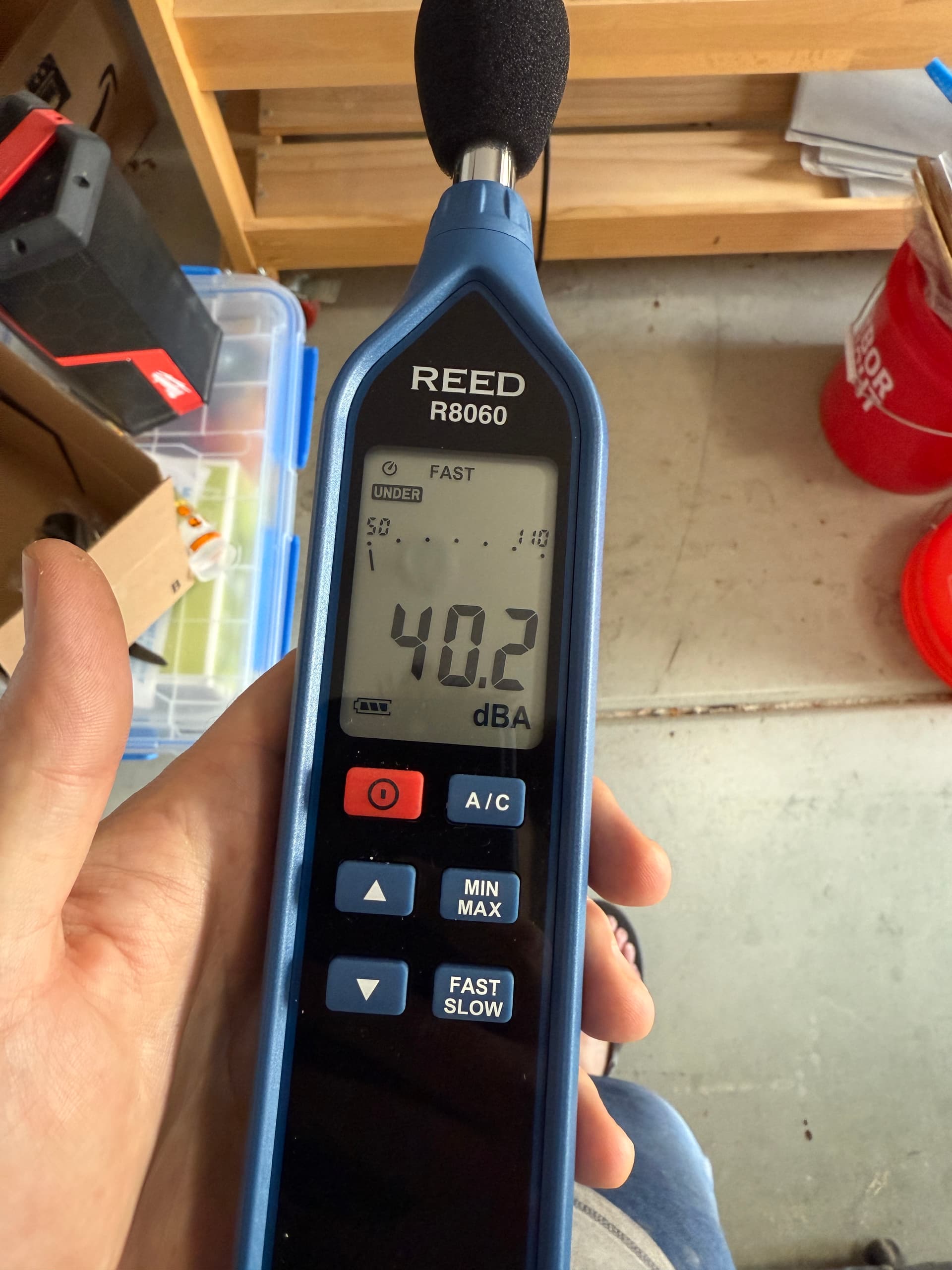
Initial conditions in my garage were technically below what my SPL meter was rated at, though it showed low 40s.

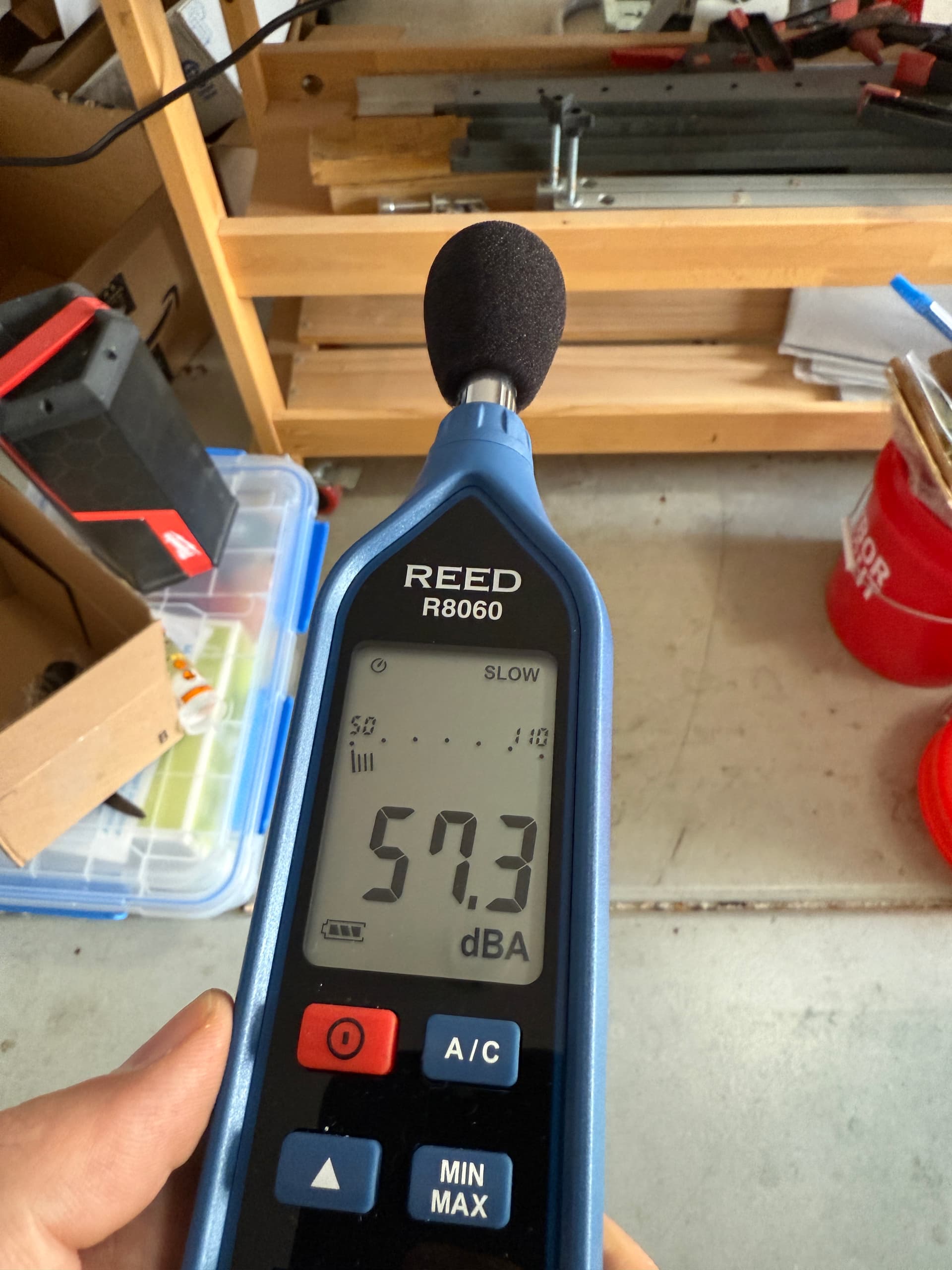
With the motor on, noise was obvious. Standing roughly a meter away (same as with the baseline condition) we hit 57 dBA. Frankly, the noise was also of a pitch to be particularly annoying. So I’m going to rig up a box with some insulation to see how much that helps.

As a subjective test (as I did not have a tripod or any means to look at the SPL meter while doing so), I manually held the motor firmly against the bench to see if the noise changed. It did not. I also threw on a glove with anti-slip grip and held the coupling while cranking up the speed, putting a load on it. First, I could not stop the motor, turns out 400 in-lbs is a lot. Second, the noise did not change despite my best efforts.

Quantitative measurement was taken at maximum speed by the way, it’s a bit quieter when run slower but it is not a significant change.​

2 Likes