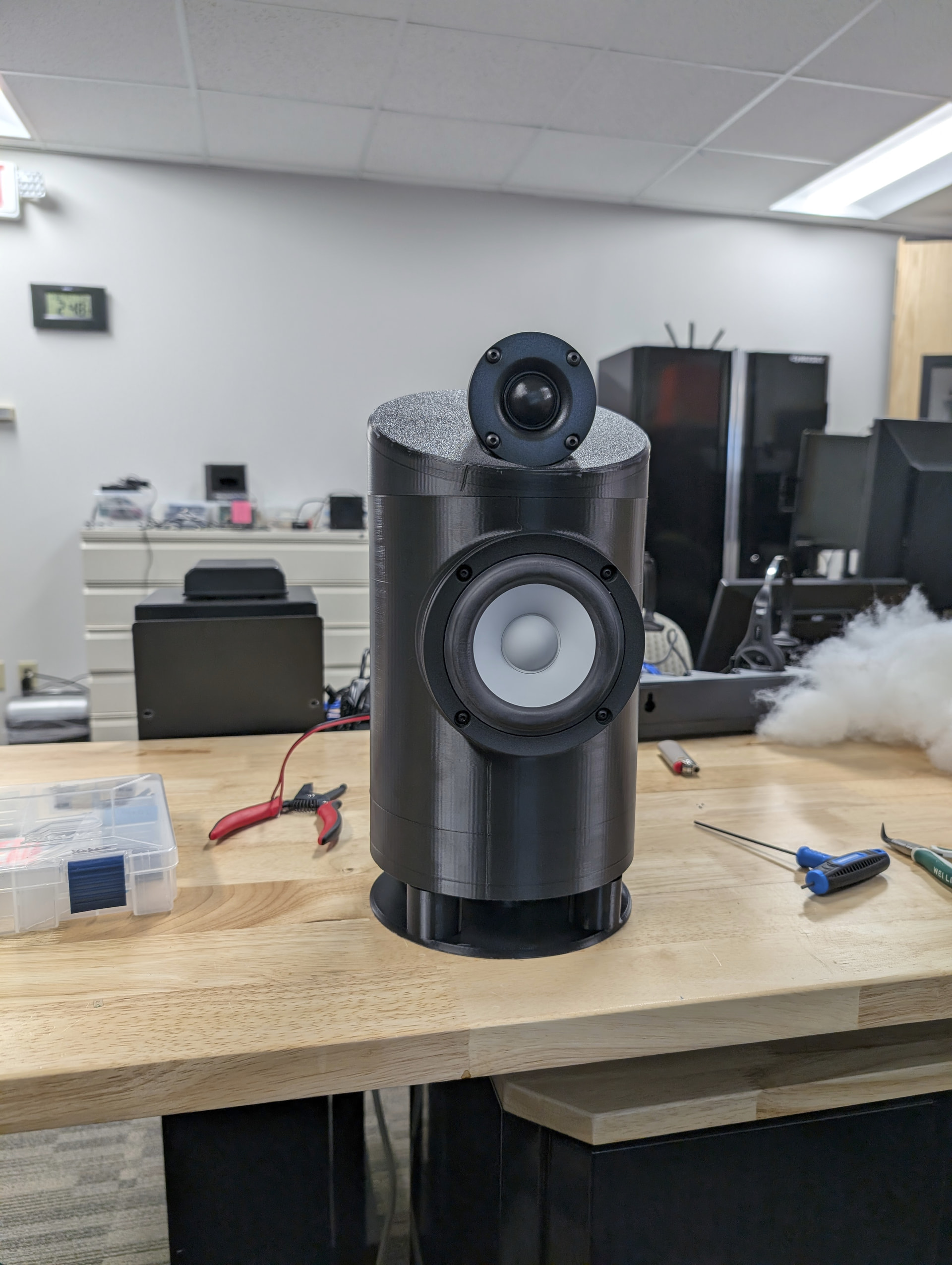
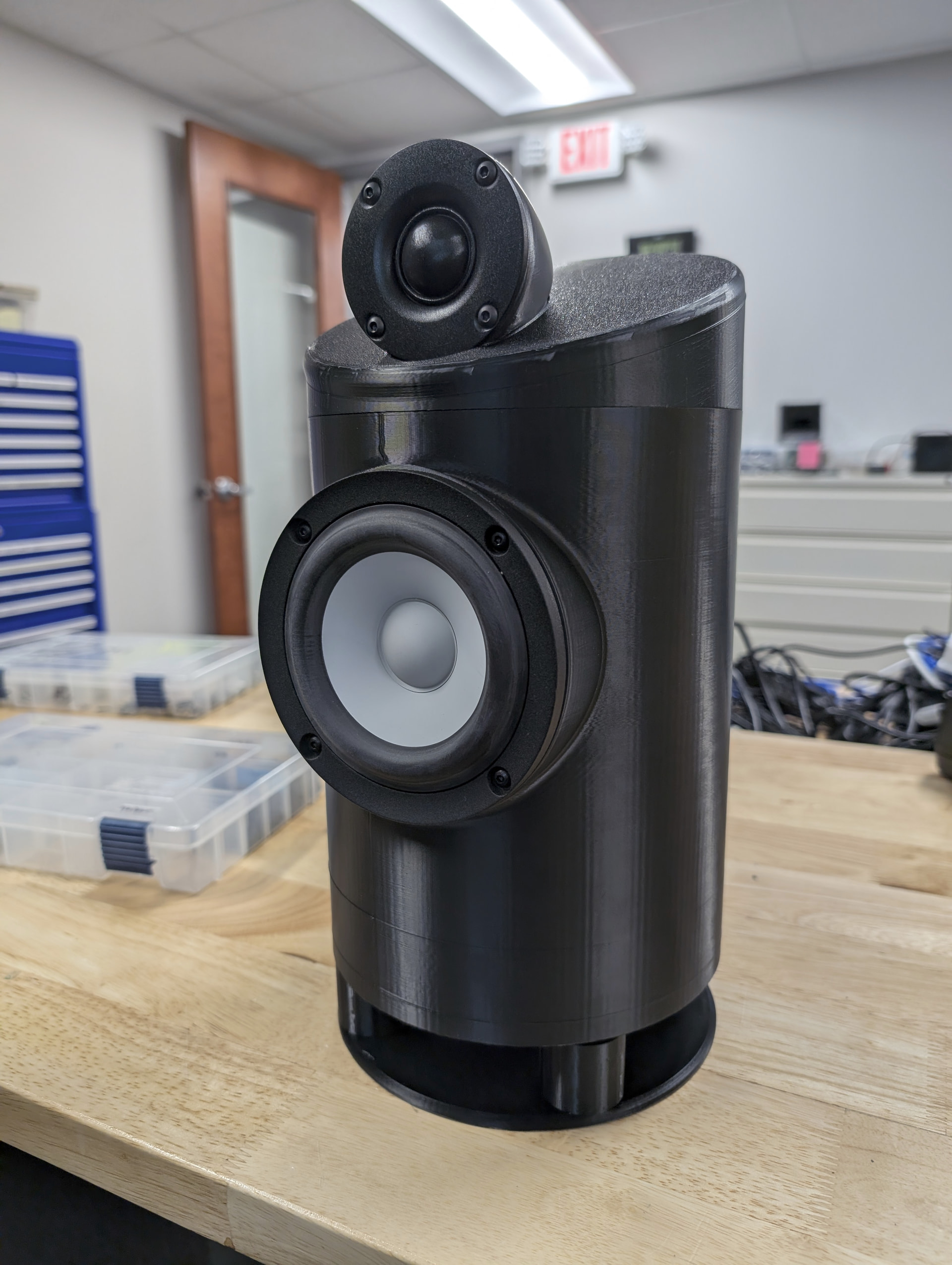
I know I know, I’m still finishing up my previous speaker! These were being designed and printed at the same time. Larger speakers, for my friends computer/gaming set up. With SB Acoustics drivers.
I went through a few design iterations and printed prototypes. Due to their large size, and because I wanted to (foolishly) print them out of ABS, I settled on a round design with a downward firing port. This helps prevent any corner lift off from the build plate; because well, there are no corners! And yes, I do know that it kinda looks like a trash can. Sigh.
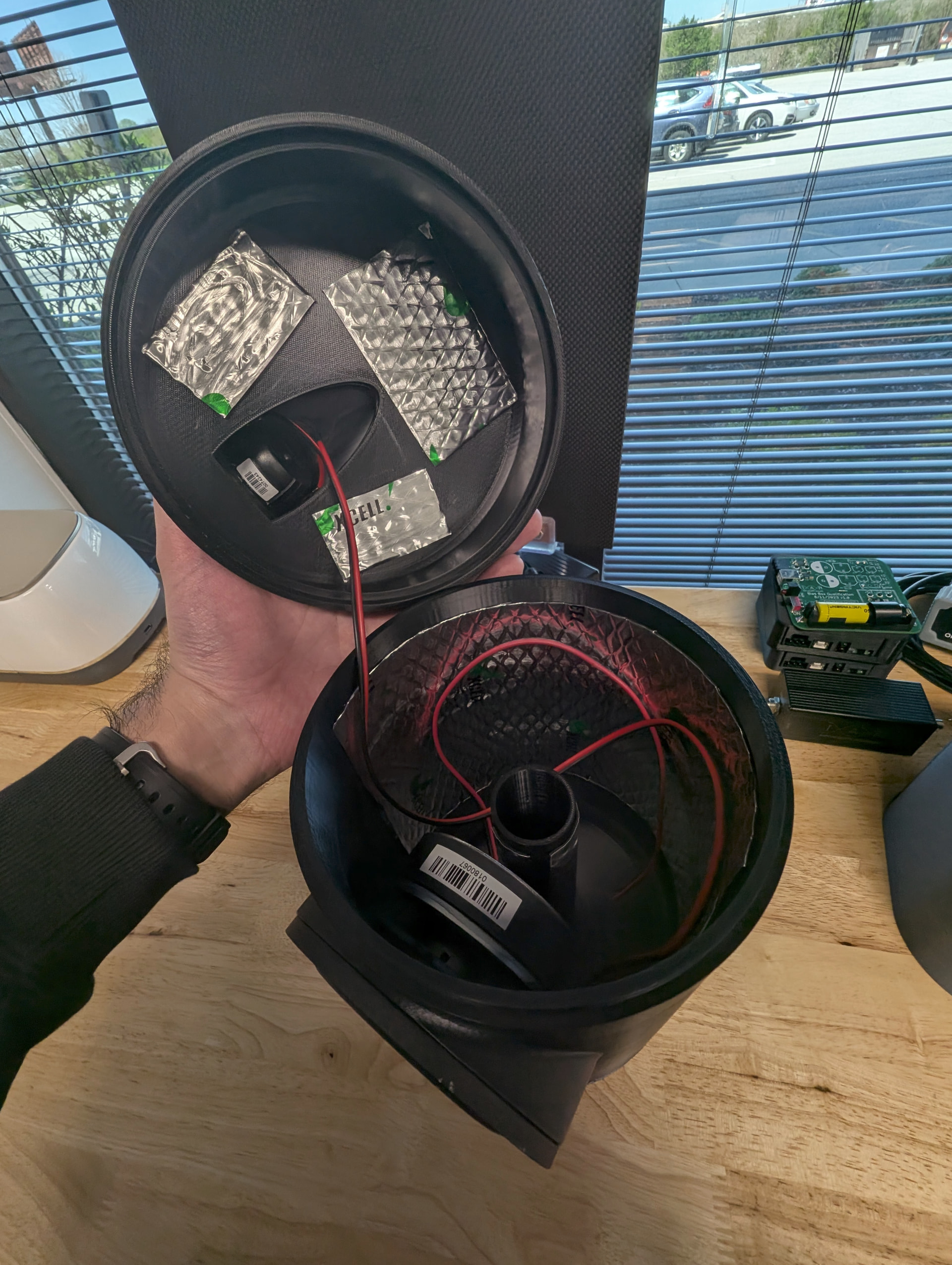
Aside from that, they were lined with MLV (car dampening material), and lightly stuffed. Printed in 4 parts’ the base; bottom/woofer enclosure, top, and tweeter housing. Assembled with epoxy.
Removable for now. Keeping the top off until I design and mount the crossover. After, I’ll close/seal it with epoxy too.
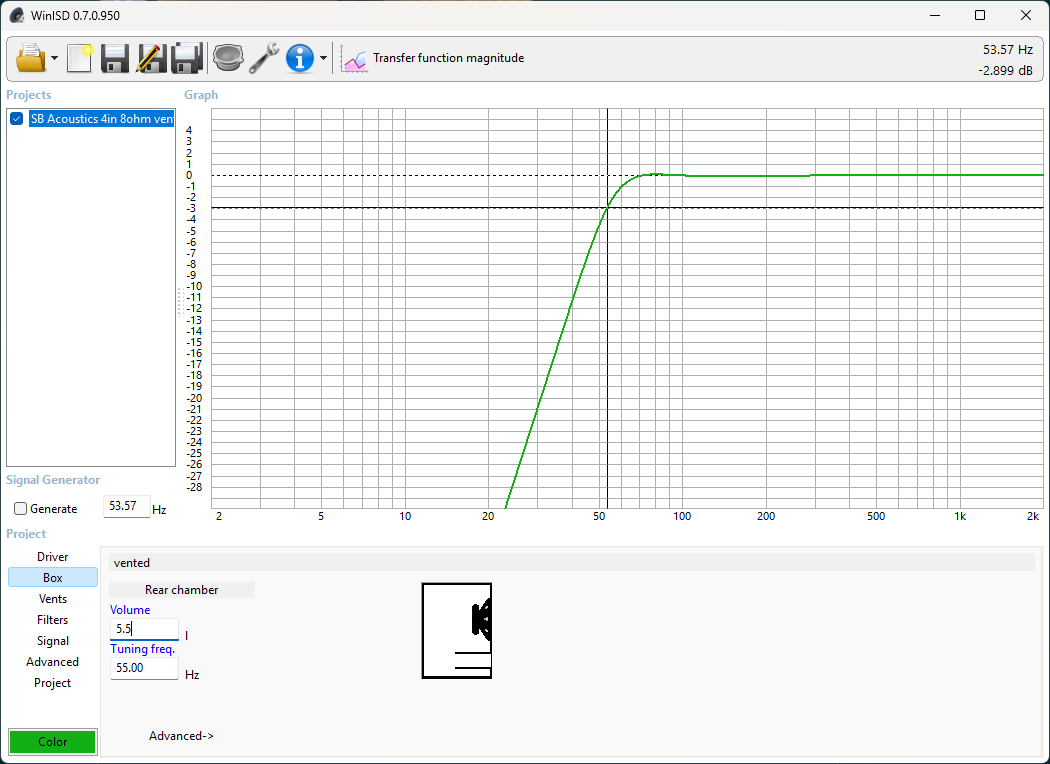
Yup! The 8ohm SB ceramic. SB12CACS25-04. About 5.5 liters internal vol, with a 55hz tuning. F3 is 53hz, and F10 around 42hz. Am curious as to how much “boundary
I built my desktop speakers for work with a bottom firing port (ND90’s). 3 dB of BSC ended up sounding quite balanced. They are right up next to my 21" monitors so that helps but they are about 18" away from the wall behind them.
The -4 designation for the driver means it is a 4 ohm woofer and not 8 ohms. I think the plateau in front of the tweeter will likely need a strip of wool felt applied to help the diffraction from the front.
I applaud the cylindrical cross section, because internal forces will distribute evenly, but I do think you’ll need a handful of stuffing for good measure to reduce internal resonances.
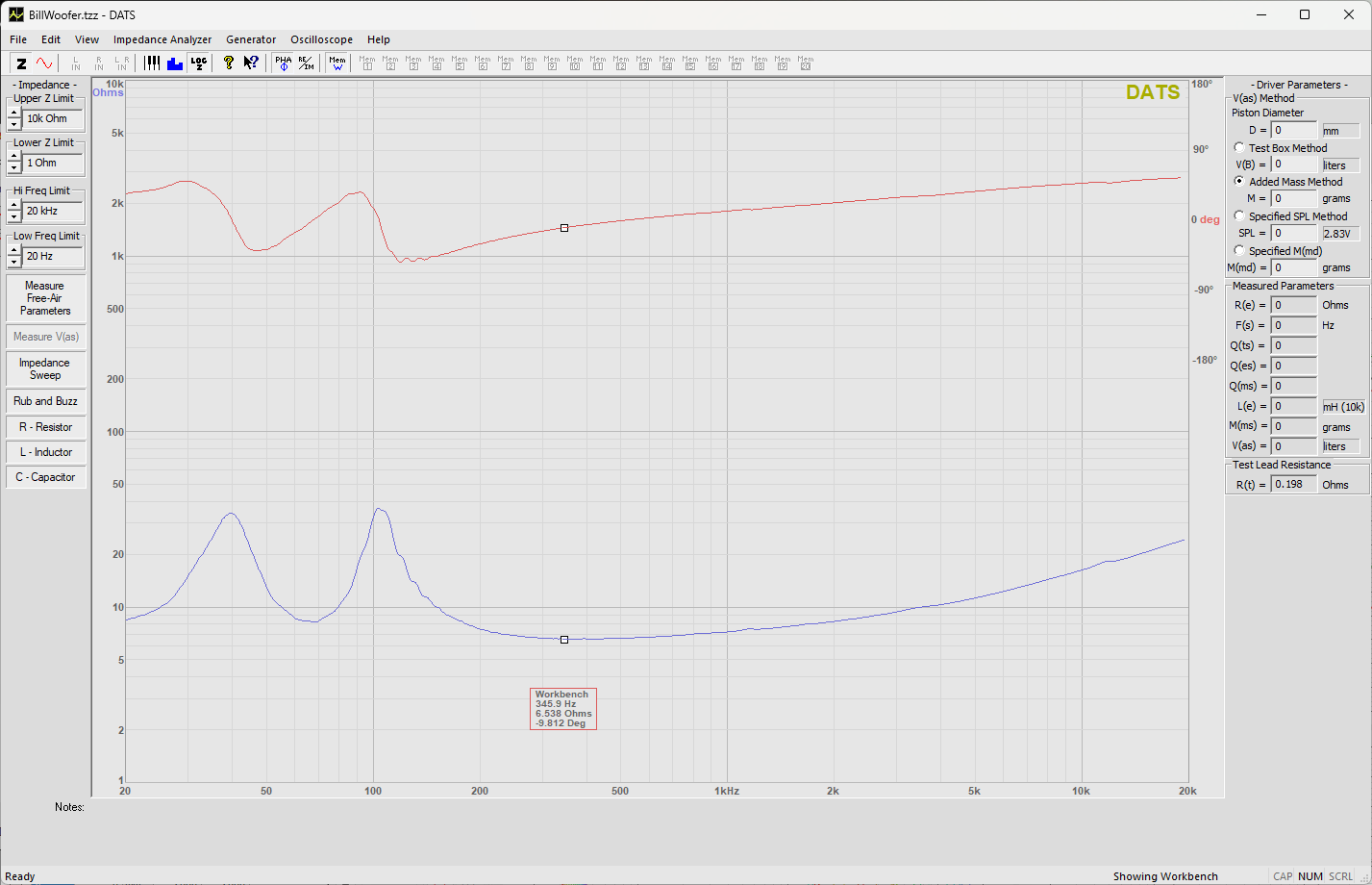
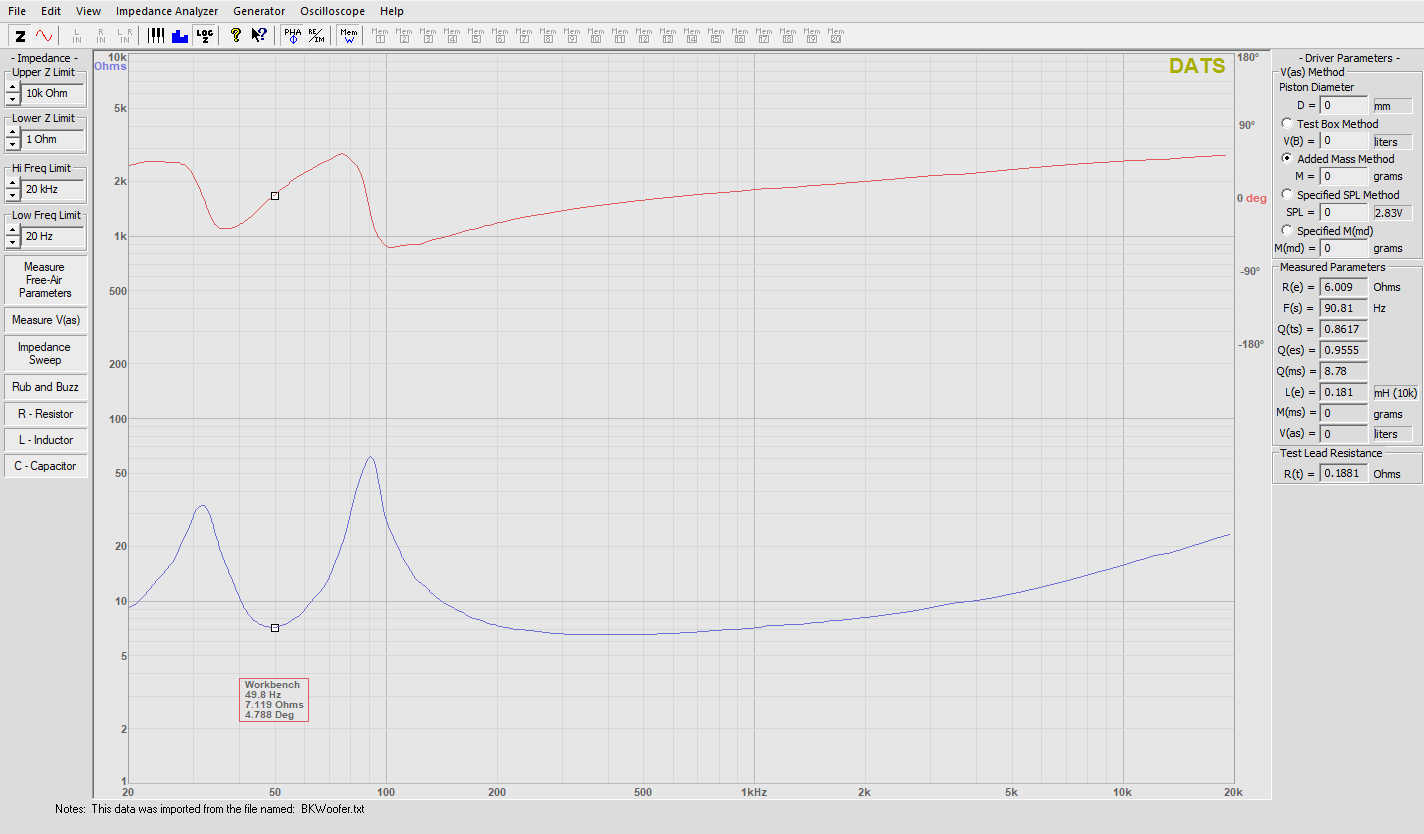
Thanks for the suggestions Wolf, I’ll play around with the stuffing. Does the above impedance sweep show any obvious resonances to you? Wondering if I should increase the stuffing and remeasure.
I like the design. Super new to speakers design myself. Just a question i have. From reading isn’t It more beneficial to have the tweeter closer to the larger driver? Or because they are for near field listening it doesn’t matter?
Yes, it usually is. Helps the two drivers have a more coherent and “together” sound. Meaning the sound frequencies from each driver come together well essentially. But this also depends on the crossover point (as lower frequencies have a larger wavelength) and slope. Usually if the drivers are further apart, you’ll need a greater listening distance for their sources to become one.
In the case of my speaker, it was about the closest I could get with the design/mechanically. I needed enough filament and area for strength, and so I could attach them. If I cross them over a bit lower, maybe 2k ish, it should be good!