I don’t watch much TV or movies and I’m not into multichannel. So I’m not willing to spend a lot of money just to make Bobby Flay sound better. I found this 2 channel amp with HDMI that is cheap. I’m going to buy it as soon as my purchasing agent approves, or if someone finds me a better alternative and convinces me otherwise. Here is the cheapo amp
1 Like
I have not heard that amp. Does it come with the power supply brick?
We use a 50 wpc Fosi desktop amp for our living room TV and it powers my Gormacho’s as loud as we could ever want. It’s only downside it that it doesn’t have a remote. I make my teenage Son get up to change the volume LOL.
I use this one. It doesn’t have a hdmi in, but does has optical which most TVs have. seems decent enough. Aiyima A80
May be a bit out of your budget, but the WiiM Amp is also an excellent choice.
The Arylic B50 is good too. My friend bought one. It has an app for some basic EQ, and high/low pass for subwoofer integration.
1 Like
I picked up an Arylic B50 for my father. HDMI ARC seems to work well so the TV remote still controls the amp volume. Just need to use the Arylic remote to switch inputs, which it has a ton of (including phono)
The Inwa may work well too, IDK. I wonder if it is basically another variant of the same amp.
The cheapo amp uses the TPA3221 amp chip. I while back, I tested a TinySine bluetooth amp board using the same chip. It had very similar performance to TPA3116 amps I had tested, but can operate at higher voltage for more overall output. I will share some test results from that amp board (it was previously posted on the old forum).
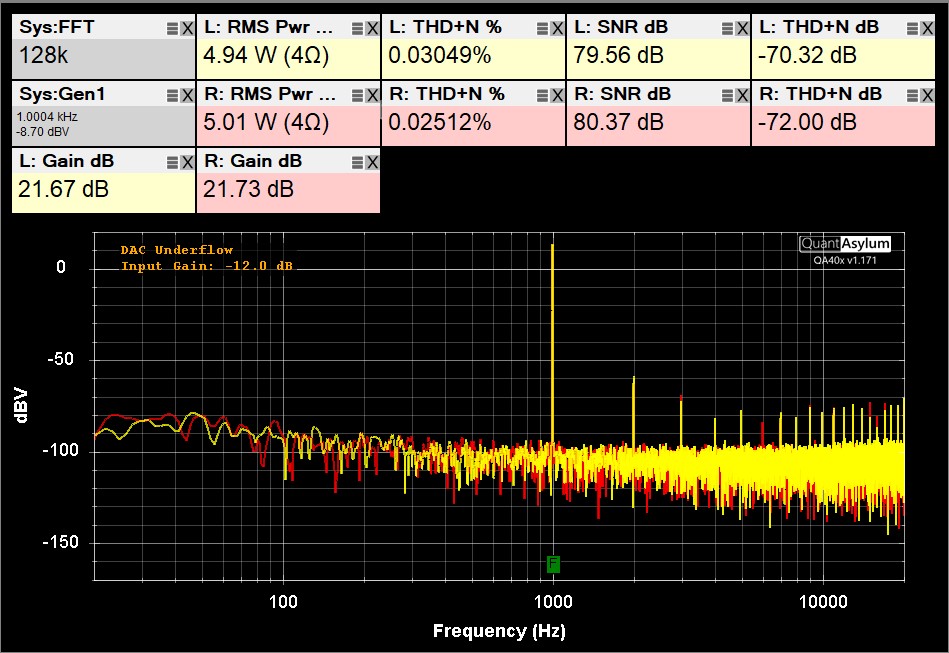
These are the standard Audio Science review conditions to determine SINAD, etc. with a 30V power supply. Not amazing, but decent.
I think the THD+N vs. power output at 1 kHz will also be at least somewhat comparable. The advertised 100W x 2 is not way out of line with a 4 ohm load. There is a step up in distortion between 10 and 20 WPC into 4 ohms or 5 to 10 WPC into 8 ohms. I’m not sure whether or not that will show up in the cheap amp. Also, some cheap amps make a lot more noise when bluetooth is on. The amp board I tested here didn’t have that problem.
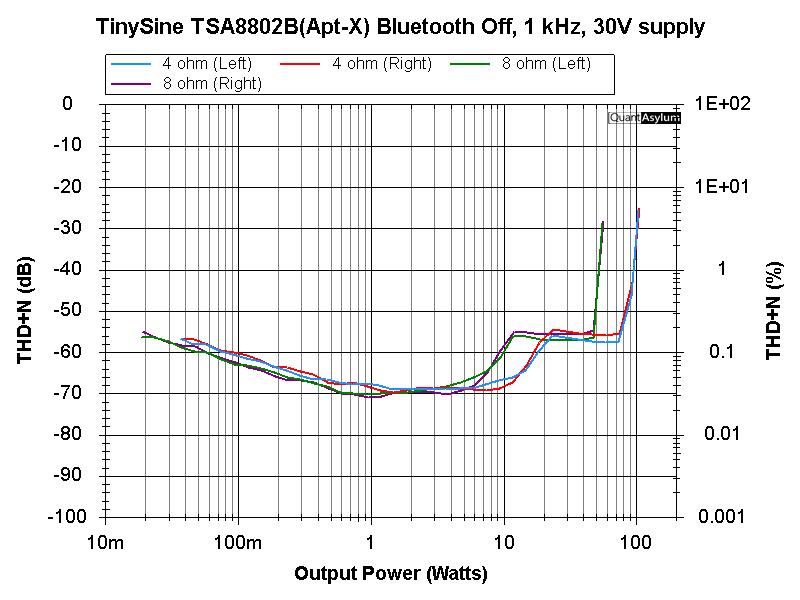
In my experience, something with the TPA3255 dhip (like the suggested Aiyima or O-Noorus amps) will be a significant improvement, but will cost about double. This is likely a reasonable option for the price.
1 Like
Thanks. I read the reviews and one person stated that there was clipping at low volume, which made no sense. He was probably talking about the bluetooth noise.
We build so many speakers over the years I damn near have stuff in every room of the house. I justify in my head that if I have the speakers and I have the tv playing music or movies then I’m getting more bang for my buck.
I’ve been able to overdrive Bluetooth and Chromecast streaming from my phone. It creates very audible distortion.
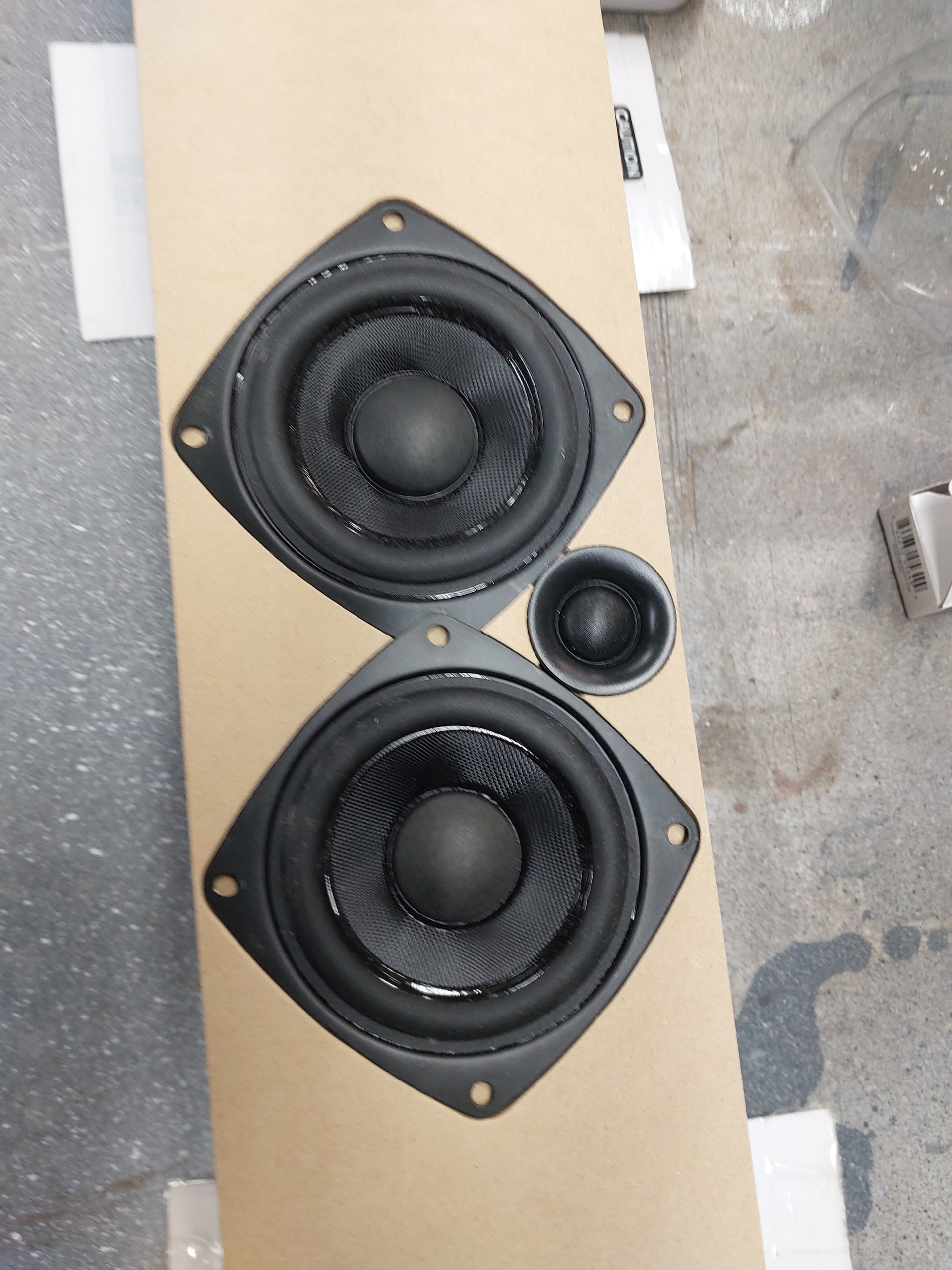
Sunday is speaker day. Baffles are cut and I don’t think I could have gotten them any tighter. This is half inch plum creek double refined MDF.
7 Likes
This looks fun 
mmmm that sounds delicious, pairs well with the chicken cacciatore
1 Like
Fricken Cickasee
1 Like
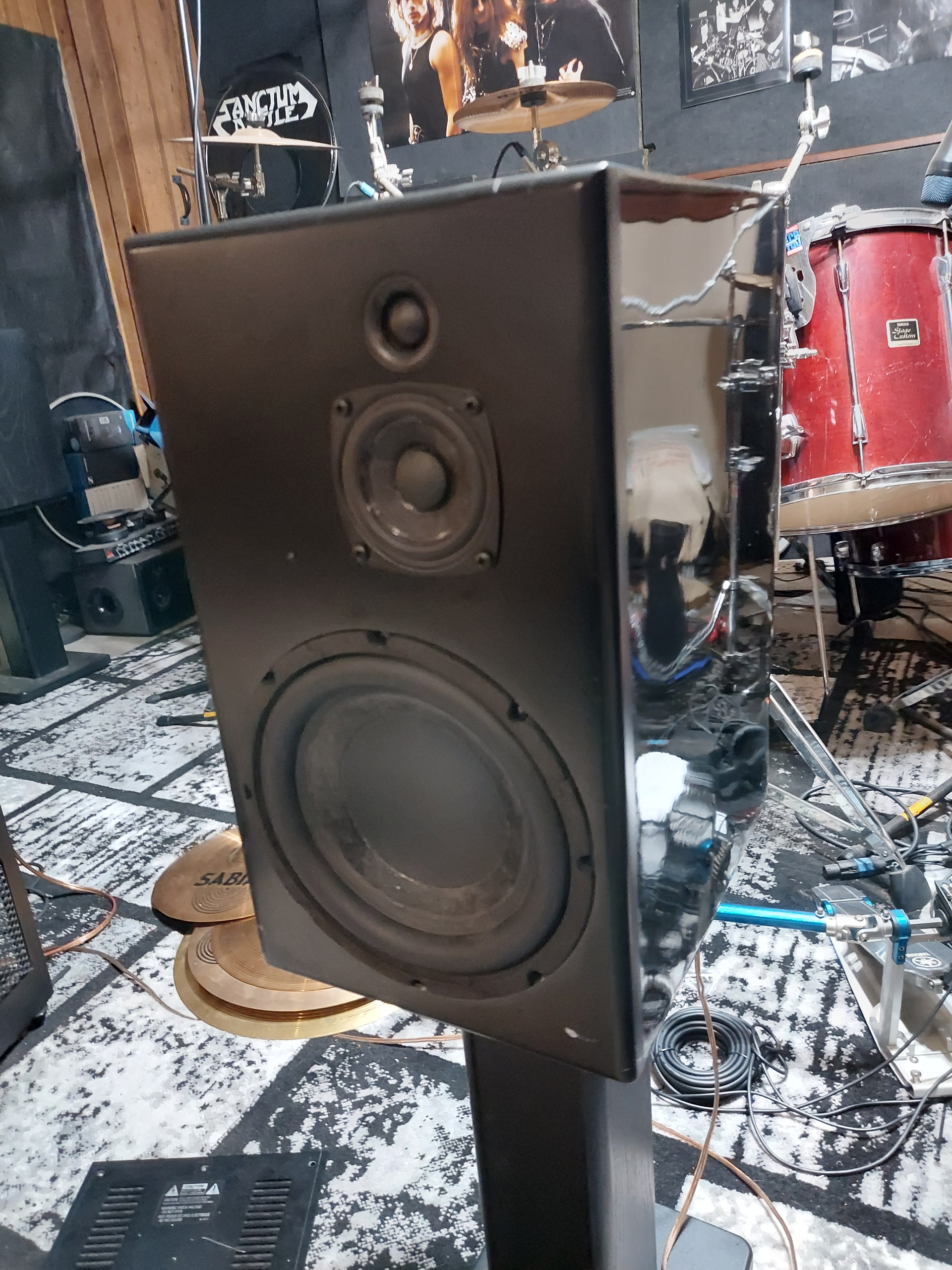
Are those the PC83s? I have that combo ( with the ND20FB) in a bookshelf/stand mount speaker with a GRS 8” sub, .5 cubic foot closed box. Sounds great.
3 Likes
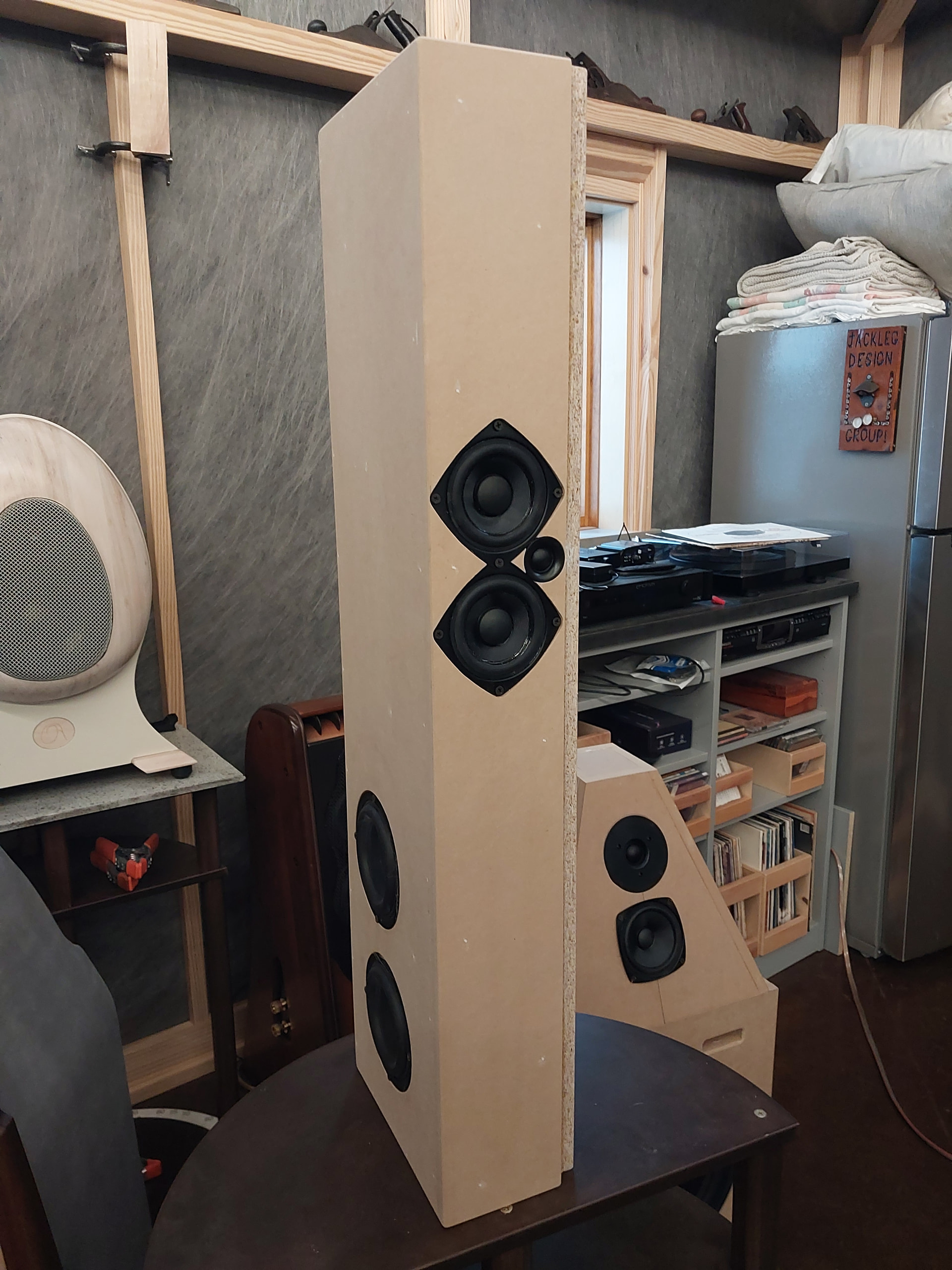
I really wish I was able to build cabinets this time of year! This looks like a fun, practical project.
1 Like
I am thinking about posting my FRD polars and ZMA files, and then you or anyone else could help me with the crossovers. How should I do the side firing woofer polars?
How heavy is the speaker box? If not too heavy and relatively stable, I would probably hoist the entire speaker up in the air so that the woofers are at least 4 feet off the floor. Then set the microphone up one meter on axis to the tweeter, hook amp to woofers, and take the first woofer measurement. Label this measurement “W hor 0” Then spin, taking measurements in 15 degree increments, until the woofer side panel is facing you. Label the final measurement, with the side panel facing you, “W hor 90”
Rotate the speaker back to 1 meter on-axis with the tweeter. Hook the amp to the tweeter. Then, without touching the amplifier volume setting or microphone placement, take a measurement and label it “T hor 0” Then spin, taking measurements in 15 degree increments, until the speaker side is facing you. Label the final measurement, with the side panel facing you, “T hor 90”
Rotate the speaker back to 1 meter on-axis with the tweeter. Hook the amp to the midrange drivers. Then, without touching the amplifier volume setting or microphone placement, take a measurement and label it “M hor 0” Then spin, taking measurements in 15 degree increments, until the speaker side is facing you. Label the final measurement, with the side panel facing you, “M hor 90”
Rotate the speaker back to 1 meter on-axis with the tweeter. Hook the amp to the midrange drivers and the tweeter, in parallel. Then, without touching the amplifier volume setting or microphone placement, take a measurement and label it “T+M hor 0”
Hook the amp to the midrange drivers and the woofer, in parallel. Then, without touching the amplifier volume setting or microphone placement, take a measurement and label it “M+W hor 0”
I assume you are using OmniMic, so you can’t do the full 180 degree spin. The model therefore will contain a certain amout of rotational phase error when you get done. Also, the slopes of the power response curves will be much less than a full spin.
You are probably connecting the PC83-8 mids in parallel, so measure the in-box ZMA with them wired in parallel. Let me know if your two woofers will be wired in series or parallel. Then zip up the measurements and attach. I’ll load them into VCAD and play along. I will also need a drawing of the cabinet showing exact driver locations and dimensions.
Oh, I almost forgot. We will also need near field measurements for the woofers and midrange drivers, to create the diffraction and merger models.