Seems like several folks have used the stuff. Doing research on water based contact adhesives lead me to believe the technique is more critical than regular solvent based stuff (which is pretty forgiving IMO). It seems letting the stuff dry to a light tack, like you would the solvent based stuff, is a no-go. Guessing needs multiple coats and to only let it dry enough to not be watery before attempting to bond? Any tips?
I’ll be using it on MDF or particle board, applying countertop type laminate.
Used a lot of it. And grew up using the solvent type in my Dad’s Cabinetmaking shop. So, roller is the best applicator. and you need them dry to the touch. Takes a warm place, room temperature. All clear and you are good to go. Two light coats on the wood surface is a good idea. I use foam rollers. And I have used those fuzzy microfibre rollers too. I get the ones that are 4 inches wide. Dollar store even has them sometimes. Sticks as well as the solvent based. And is better with heat than the solvent based.
Here is one example of issues with water based stuff:
Weldwood green can, not Wilsonart in this case. I’d be surprised if there is a big difference. Seems an example of “what not to do” but what do you think you would do differently? Additional coat?
Can you please put down some clear instructions and steps for wilson art water based contact cement? Going through the thread I think I get it, but may be missing some big step.
This is a terrible example of testing. Contact cement has a few variables. First issue is point contact. If you have a smooth finish on both sides you will have good contact over a large area. His poor adhesion demonstrated very poor contact. The test pucks have very little adhesion over their surface. That’s glue application error more than anything else. Bumpy surfaces will cause this every time. If you dry out the water borne you will also run into the same issues. Tacky on the waterborne and you are good. Just wait until you have most of the water borne clear. Roller, thin even coats.
So why do I type this? From 10 to 20 years of age I used and applied solvent based contact cement for multitudes of counter tops and complete commercial lamination work. Complete lamination means all cabinet surfaces were laminated. From 1990 to now I have used both. Work in my shop I use water borne, and when I worked in commercial shops I used solvent borne cement. Just one 3 month job I made over 400 commercial counter tops. Commercial reception desks, up to 30 feet long. Restaurant work, you name it. When I was Cabinetmaking I did a lot of commercial work. I can use either glues, and have zero problems. It’s all up to application and proper pressing. For the highest quality work I actually use PVA glue and a vacuum press. It gives a tiny glue line and very strong bonding. Contact cement bonding is awesome at 300PSI. You rarely achieve that in the real world. PVA glue and vacuum lamination will get you over 1600 PSI adhesion.
I have a gallon of Liongrip water based contact cement and seems identical to what I remember about the wilsonart. It states that the temperature of the product and the substrate should be 65F min. for best results. Let dry for up to one hour before bonding. Apply an extra coat to porous edges. So I would first make sure everything is warmed up, coat any porous edges with a chip brush, after dry coat flat area. let dry of force dry. Coat laminate and the cabinet. Waterbased glue must change to clear before bonding, It should not transfer to your finger. It should not have any areas of blush, milky, or opaque. Pick a word.
I’m just trying to crash course myself on it so I can at least get an adequate enough result the first time, probably learning some things along the way to improve in the process. With the solvent based stuff I J-roller laminate and use a plastic carpet tuck tool to scrape over veneer.
Cool, so sounds like similar to solvent based. But extra attention needs to be paid for thick enough coat on the surface. I just need to get used to the difference in dry time and get a feel for it. Thanks for your input too Clay!
Thin even coats with foam roller, two coats on the MDF side since it is so porous. Wait only until the surface clears up and still tacky to make contact, not longer so it doesn’t fully dry out.
Do I wait until the first coat clears up on the MDF before applying the second coat? If so I suppose I should just start with coating the MDF only, and wait to do the laminate until the second coat on the MDF. So both sides are ready at the same time.
On the MDF, you certainly wait until it is clear. Basically it’s good painting. I roll one coat in one direction, and the second coat perpendicular to the other. Avoids building up similar ridges.
I remember a job I did with gloss black laminate. The tiniest spec would show as a pimple. It explains my enormous head of hair. I removed the top of one counter 4 times before I got it good enough. The counter was 9 feet long. Used quite a few words from the short word dictionary.
I’ve only used it during summer months. I used a 4" foam roller and let it dry to no tack, had a fan blowing on it. Two coats on each, plywood and paper backed veneer. Then used a J roller to apply. This was done two years ago on my current DYG’s build.
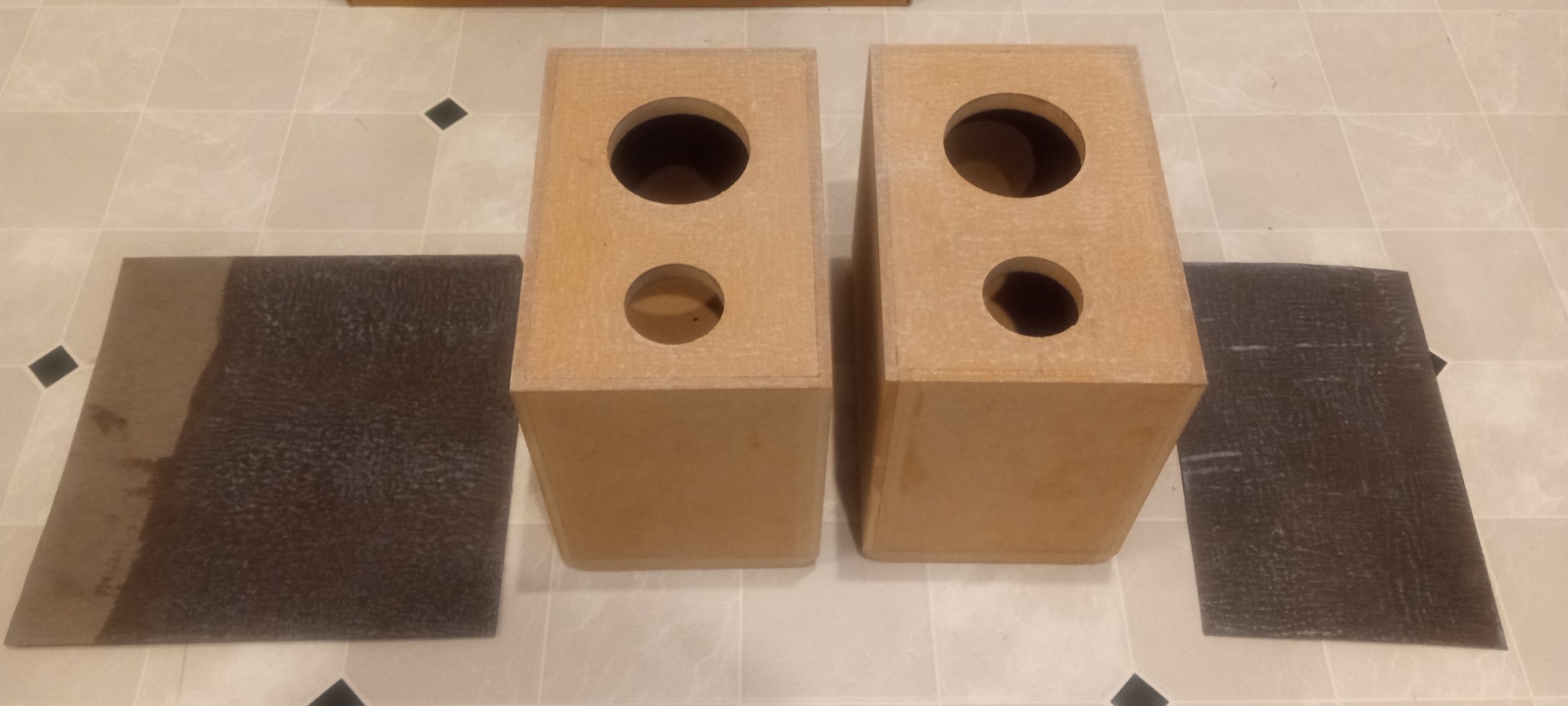
My first attempt was the back of a speaker. I ended up putting two coats on the laminate and the MDF. I wanted to be sure I had complete coverage. It was still tacky when I attached the pieces, but would not transfer to my finger. If that was too soon, then hopefully letting it dry overnight before trimming helps. Humidity in the house is very low right now.
Used the DollarTree $1.50 paint applicator set in case the tray got all gummed up. Worked fine. I just wish it came with a 3rd roller instead of the foam brushes. But you do get a pair of lunch lady gloves