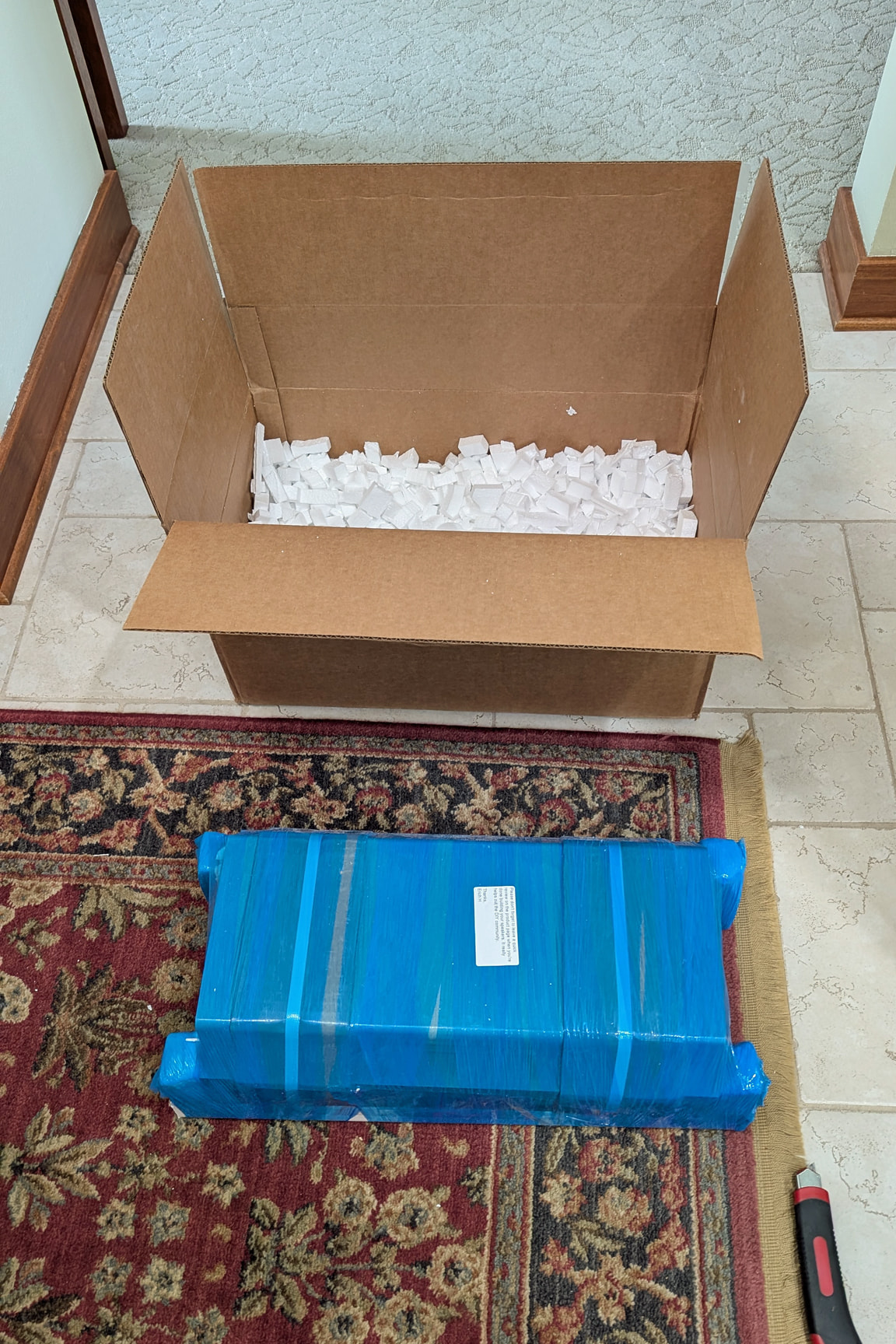
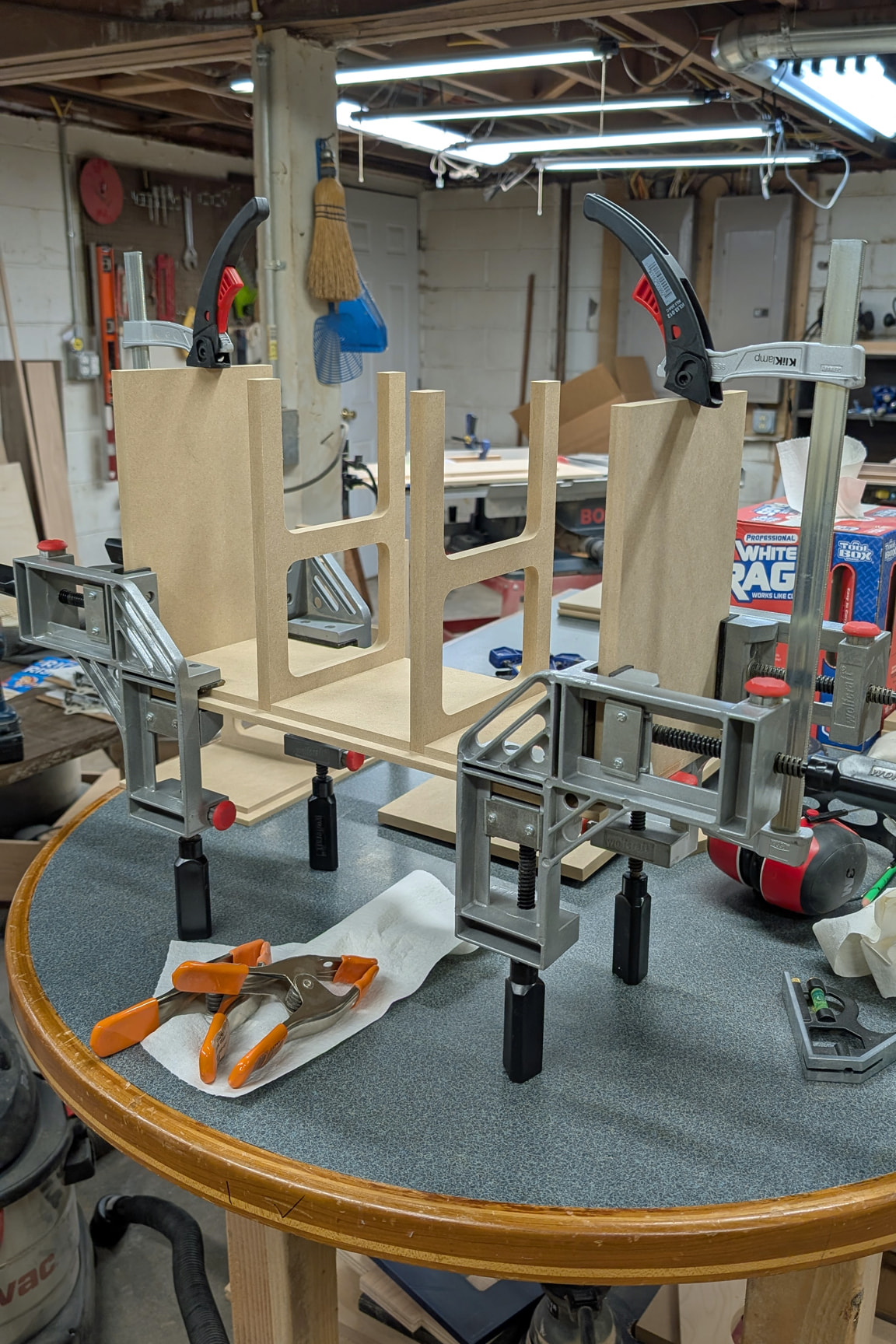
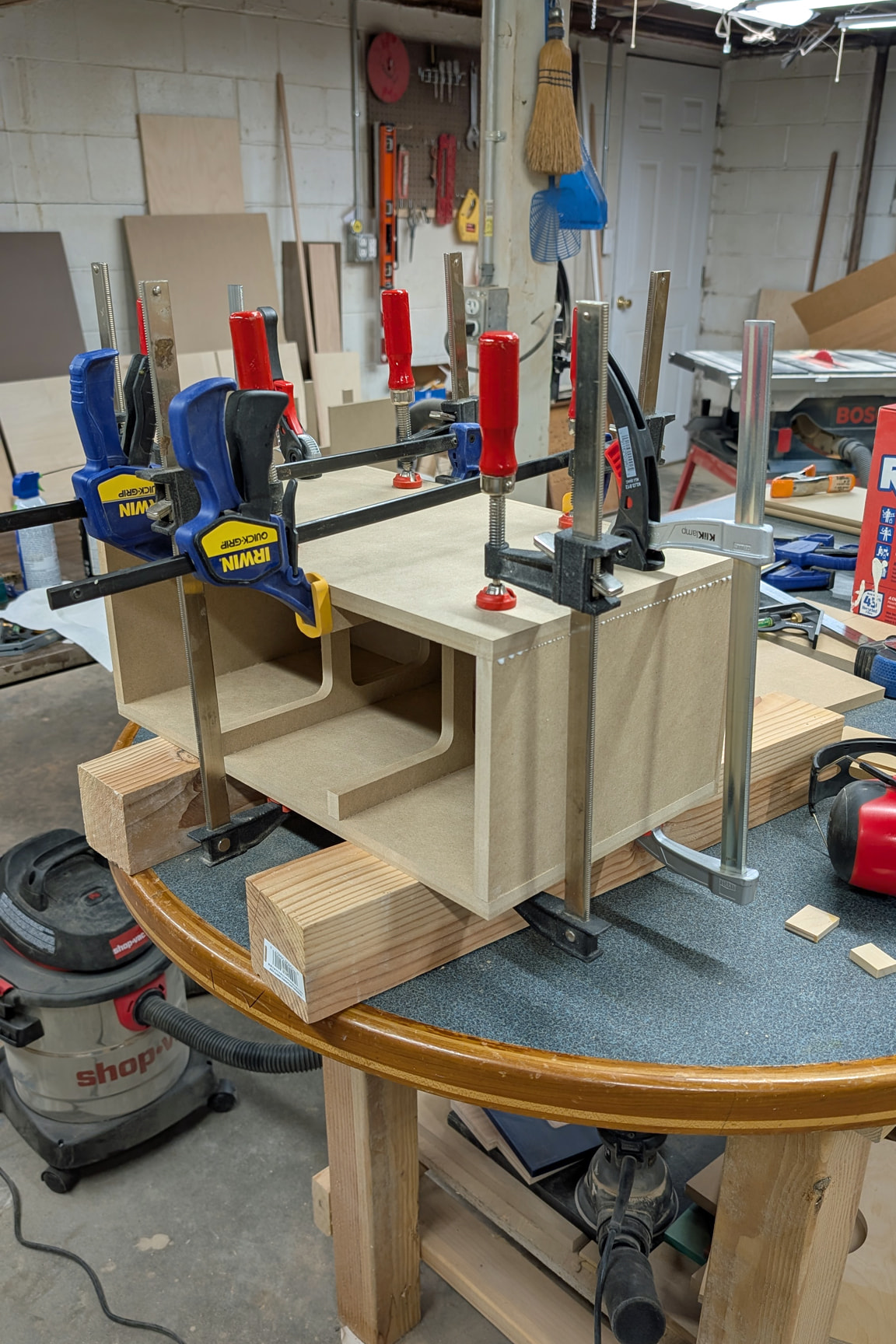
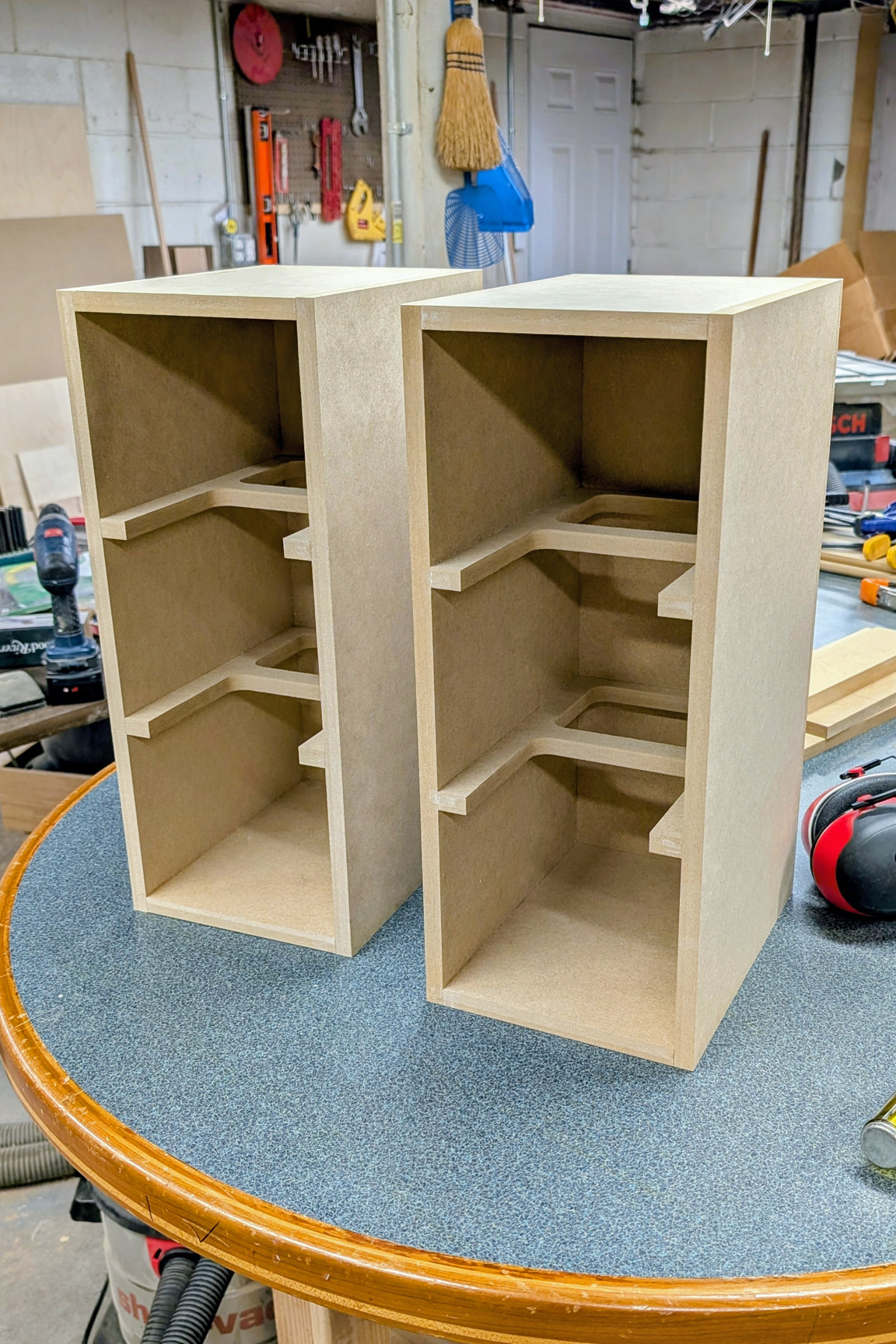
A friend from California visited recently and heard the Dactives and wanted a pair for his shop. The woofer I used was NLA and the cost of shipping speakers to California is prohibitive so we came up with a plan.
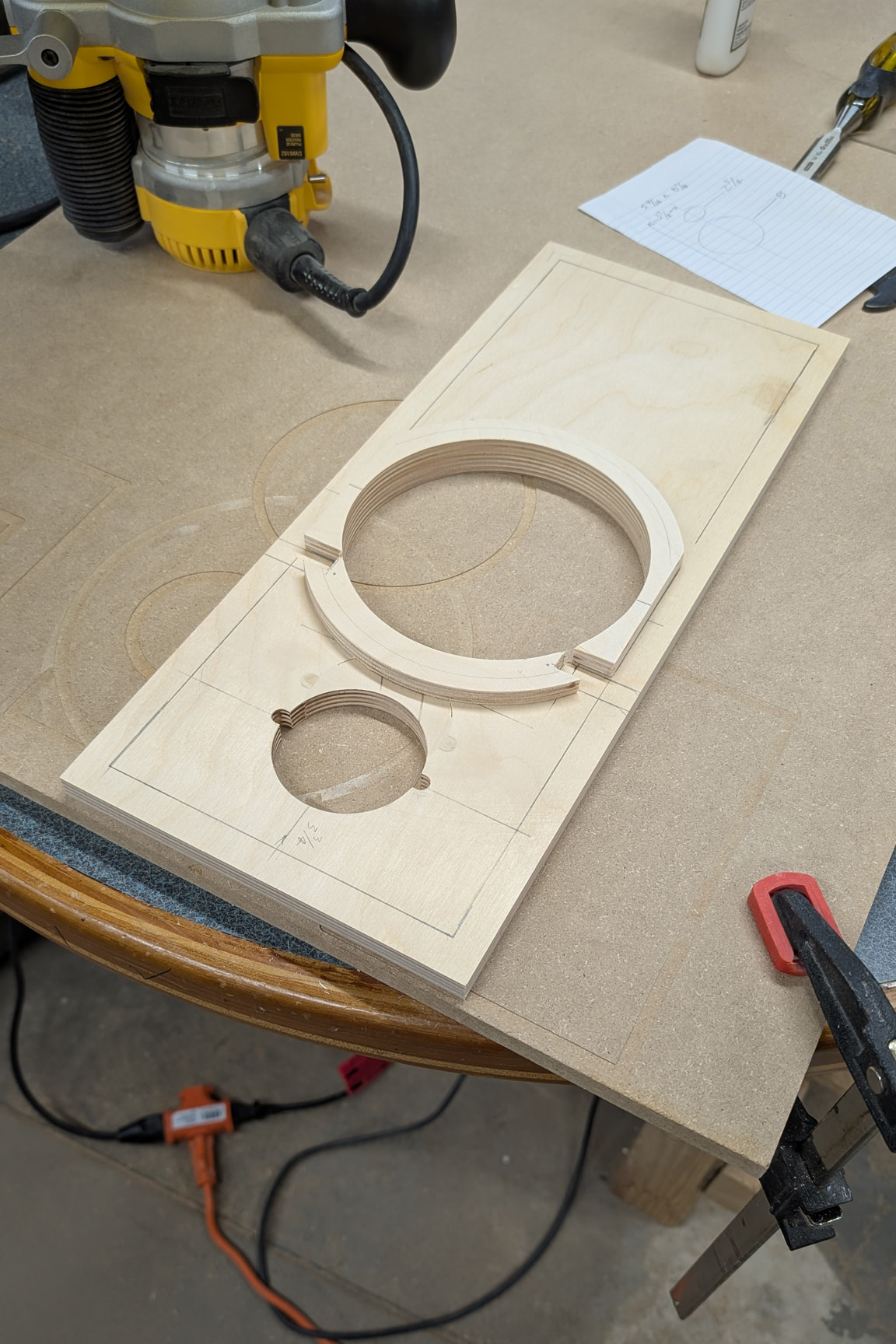
We would use the same tweeter and use the Dayton Audio DC160-4 woofer (which I already had) and both buy the same knock down cabinet. He lacks test equipment and a wood shop so I will cut the driver cutouts from my cabinets front baffles, measure the drivers in box and program the KADB board. Then I will ship him the front baffles and configuration file for the amp. I will make myself another set of front baffles.
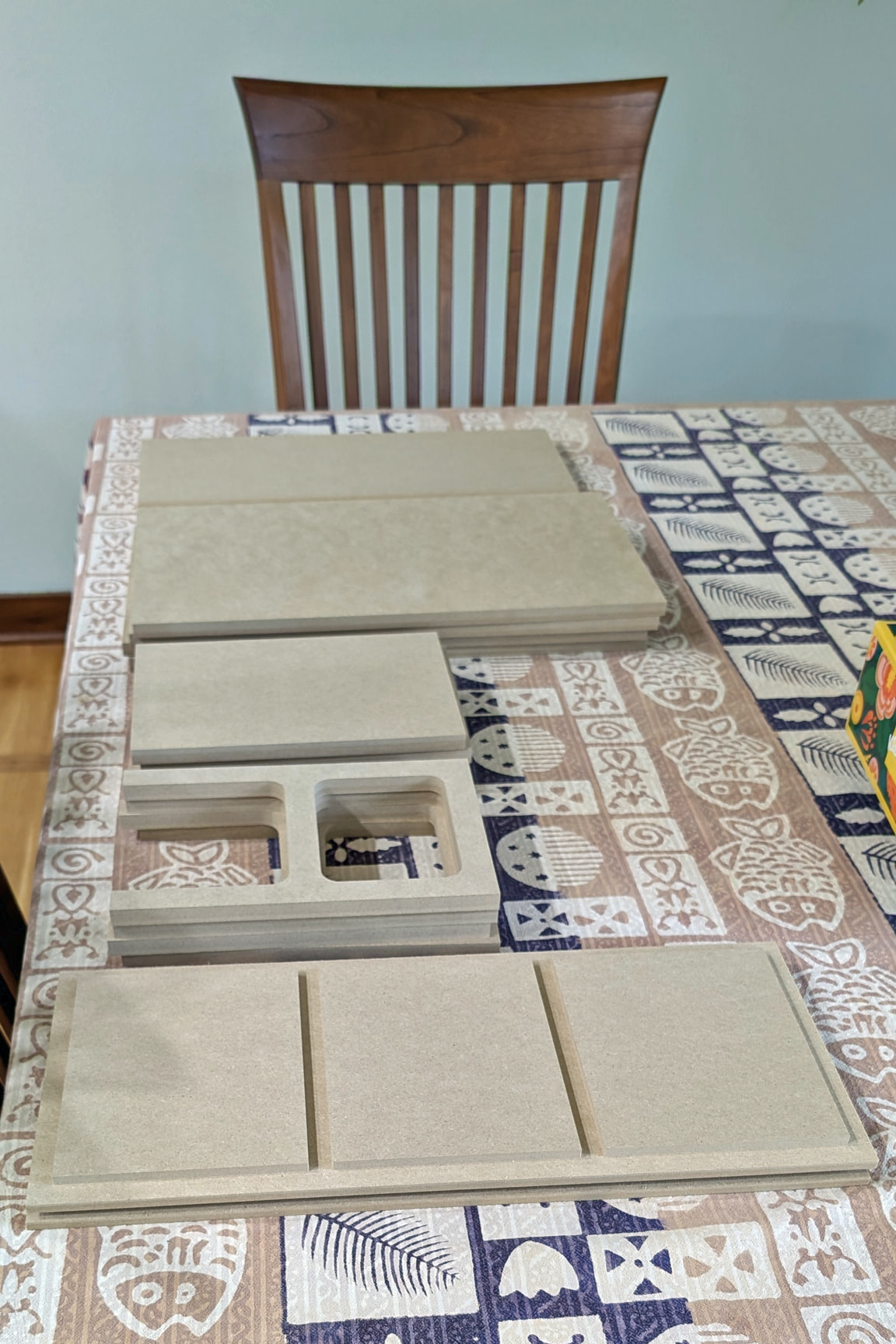
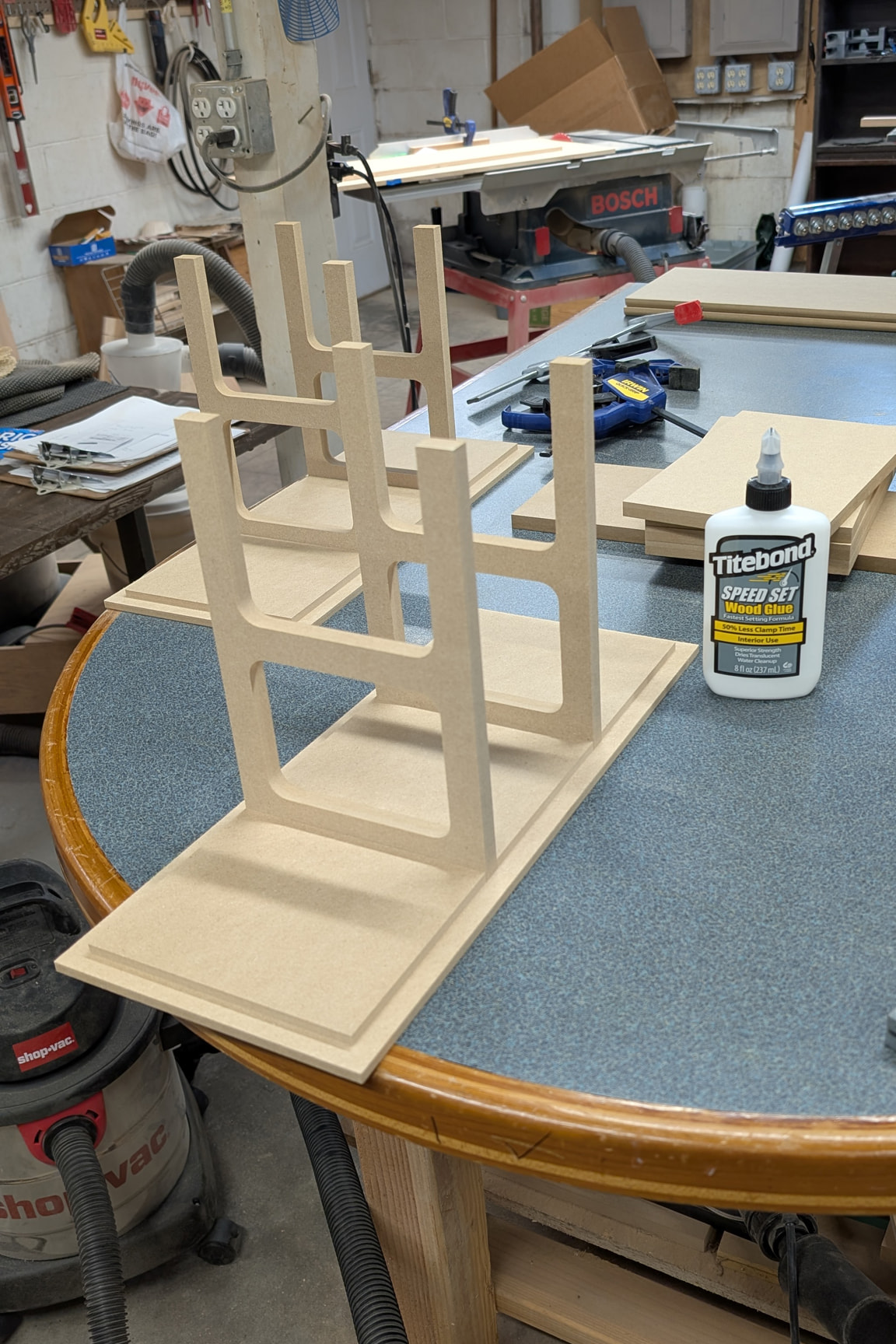
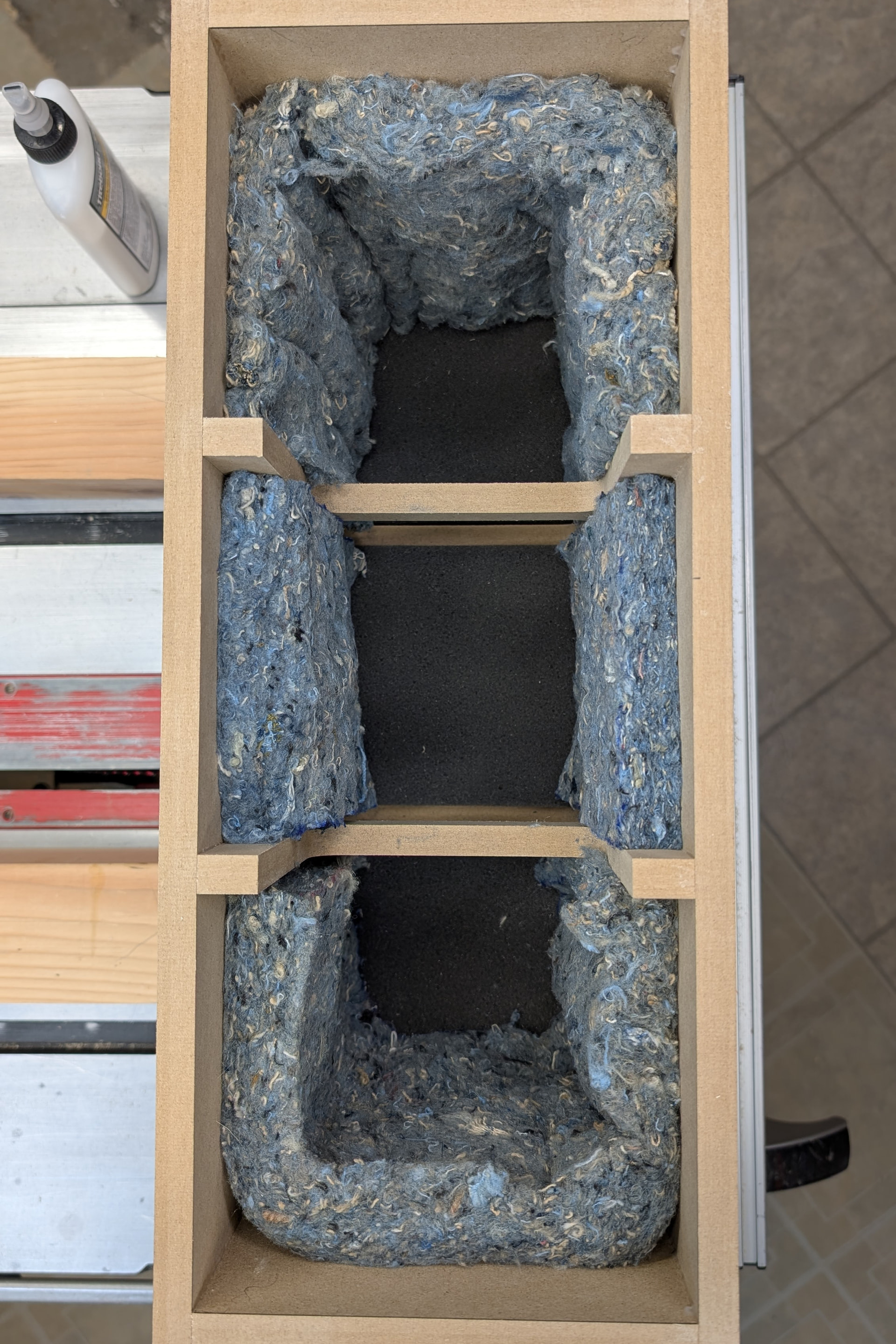
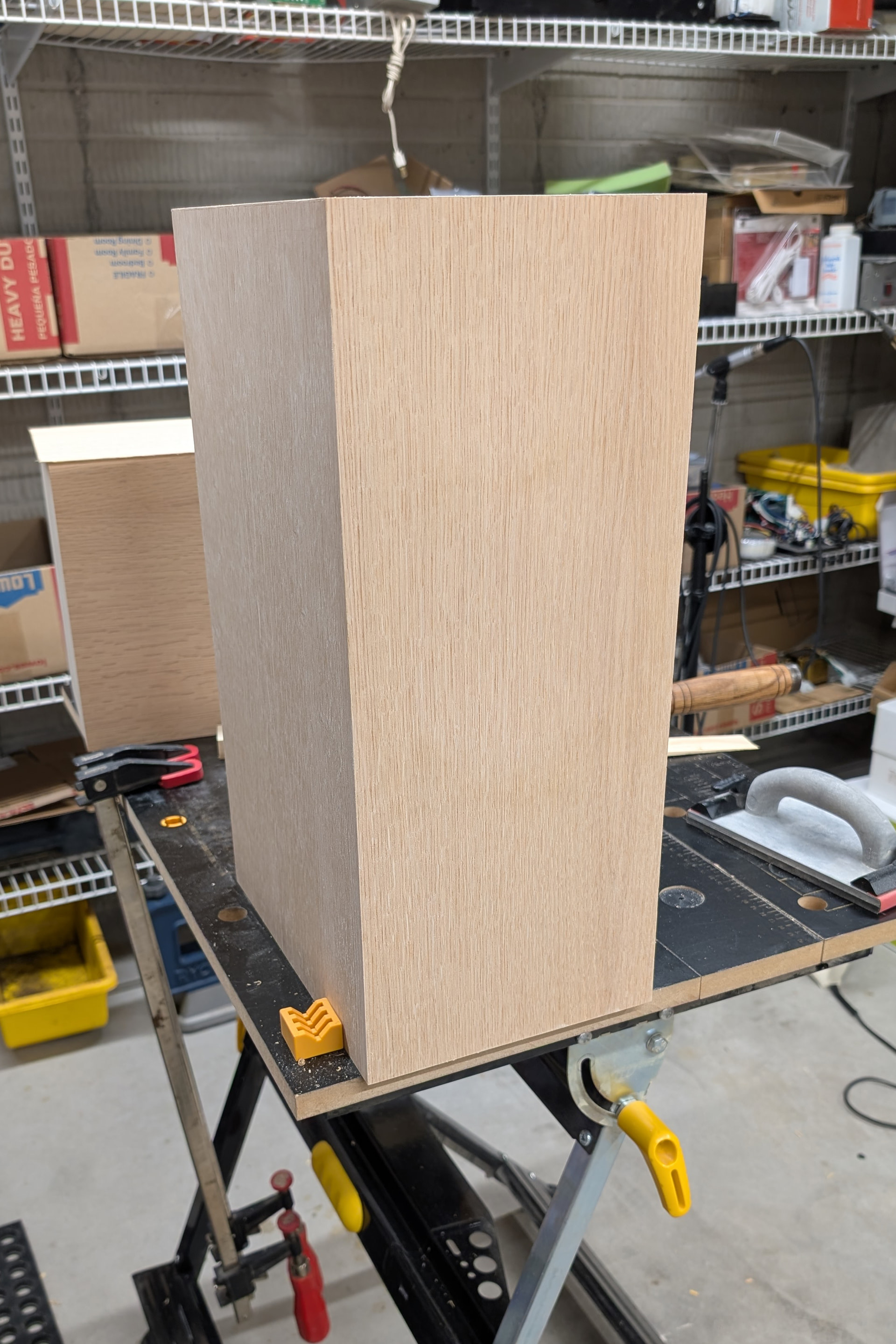
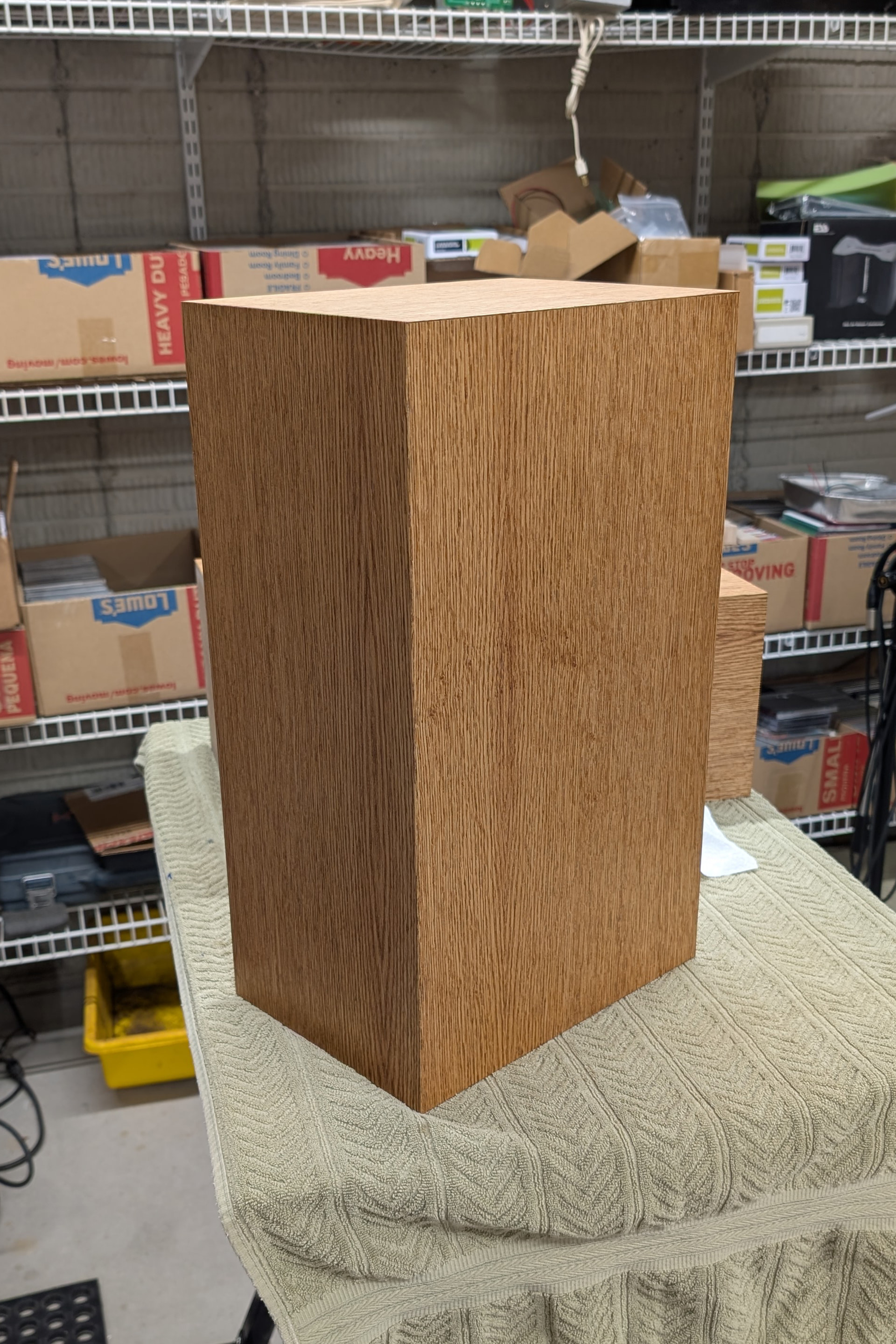
The cabinets came with all the dado’s cut in the back panel and everything fit. The panels even have a slight overhang so it will be easy to do a little sanding to get the clean corner joints. I used Titebond Speed Set glue and really like it. They claim 15 minute clamp time and once it was dry the glue squeeze out came off the MDF easily with a chisel.
Interesting that the 3/4" SB19 has a much lower Fs than the BC25TG which was used in the Classix II. Paul now uses a different tweeter in that design (a Dayton, I think) but I thought the Vifa version sounded fine, as should the SB19.
The four ohm DC160 is supposed to be 2dB more efficient than the eight so it will be nice to get a bit more output from that design.
We can’t get knock down cabinets like those Denovos here, which a real obstacle to people doing DIY speakers. Shipping (even by ship rather than air freight) from the US is prohibitive.
What’s the working time for the glue? Is it too tight. Usually it takes a bit of wiggling to get 5 sides squared and glued, braces also need some pulling and pushing.
Titebond says 2-4 minutes open time. This is the first time I’ve used it on a big project and since everything fit so well I really didn’t have to worry about open time. I discovered this glue in a video where they were putting down short strips of wood by just putting them in place side by side without clamps. One of the things I liked was that it’s thinner than standard Titebond. It comes out of the bottle easily and is easier to spread out.
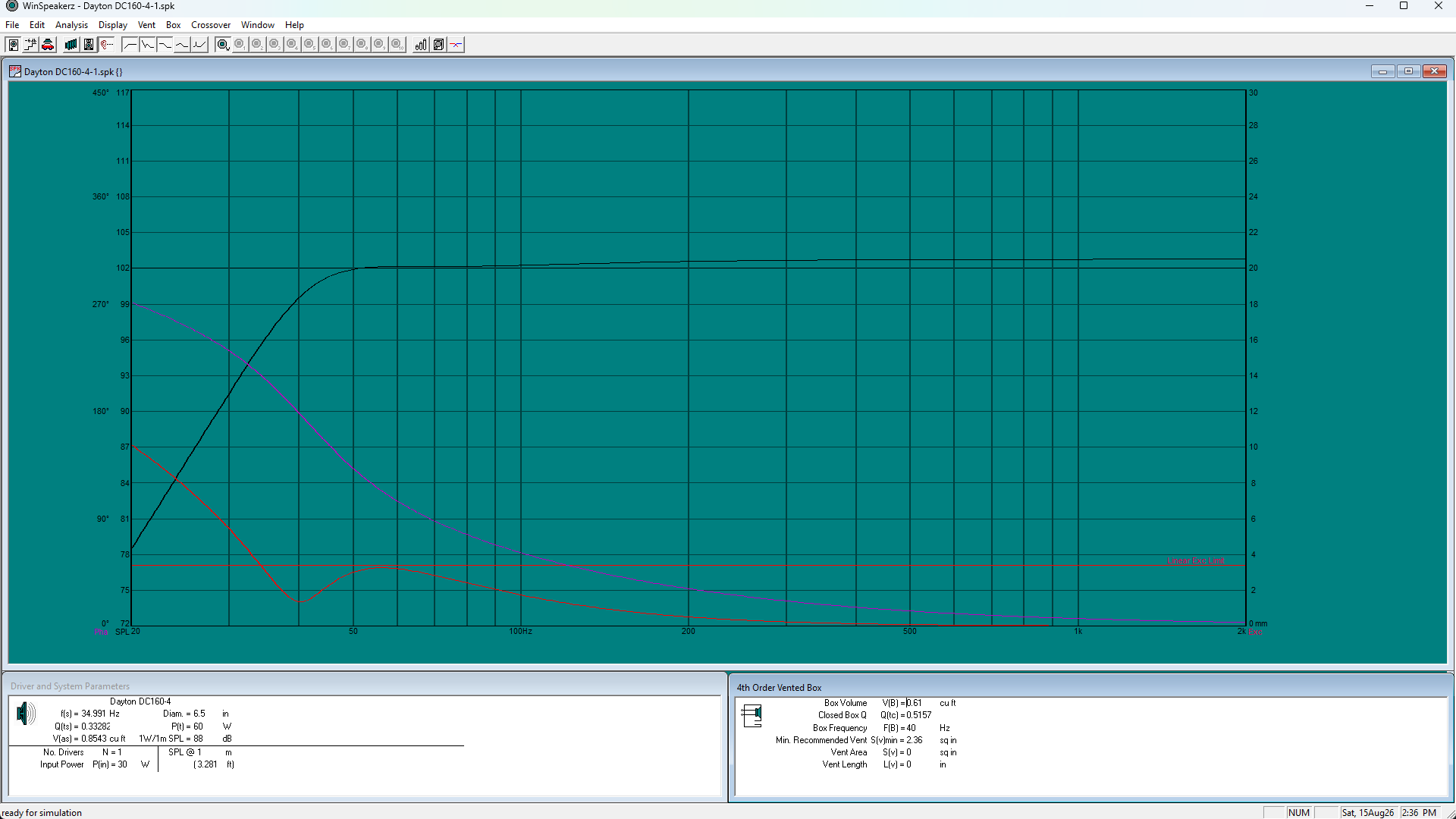
My DATS derived sim measurements came up with 88db 1w/1m. The amp board is rated 30W but since it’s a chip amp 15W is closer to what it can do cleanly. The sim predicts 99db at 1 meter which is identical to the Dactives and they play loud enough.
As many builders have noted, apart from the bass, a key attribute of the Classix is their smooth, slightly ‘laid back’ sound, much of which, I guess, is down to the characteristics of the DC160. It worked particularly well with my 60s and 70s music and older classical recordings and didn’t need a sub.
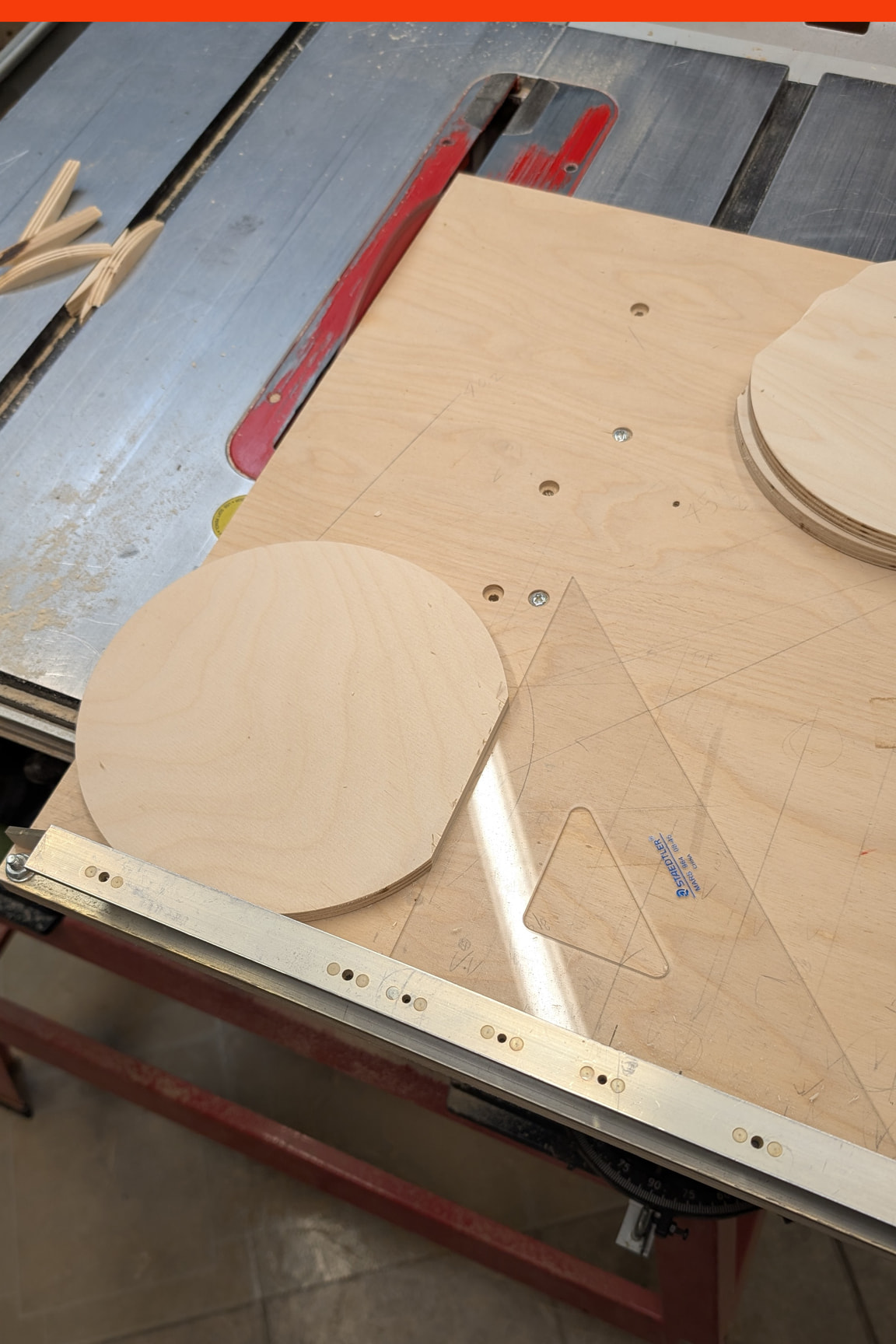
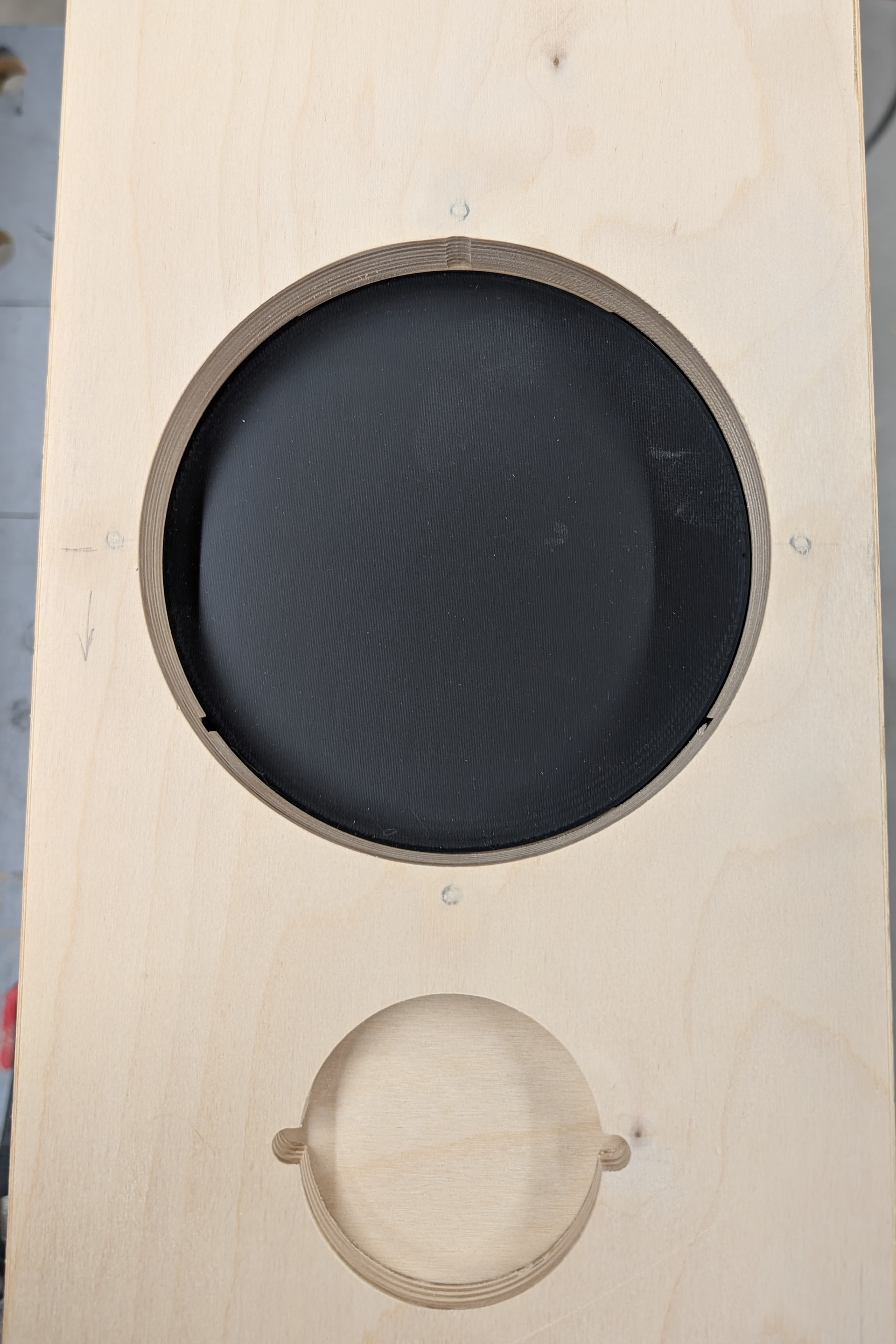
With the thickness of the speaker flange and a 3D printed trim ring there would only be 1/4 inch left from the 1/2 inch baffle for the screws. I set about making the baffle thicker with some 3/8 inch Baltic birch.
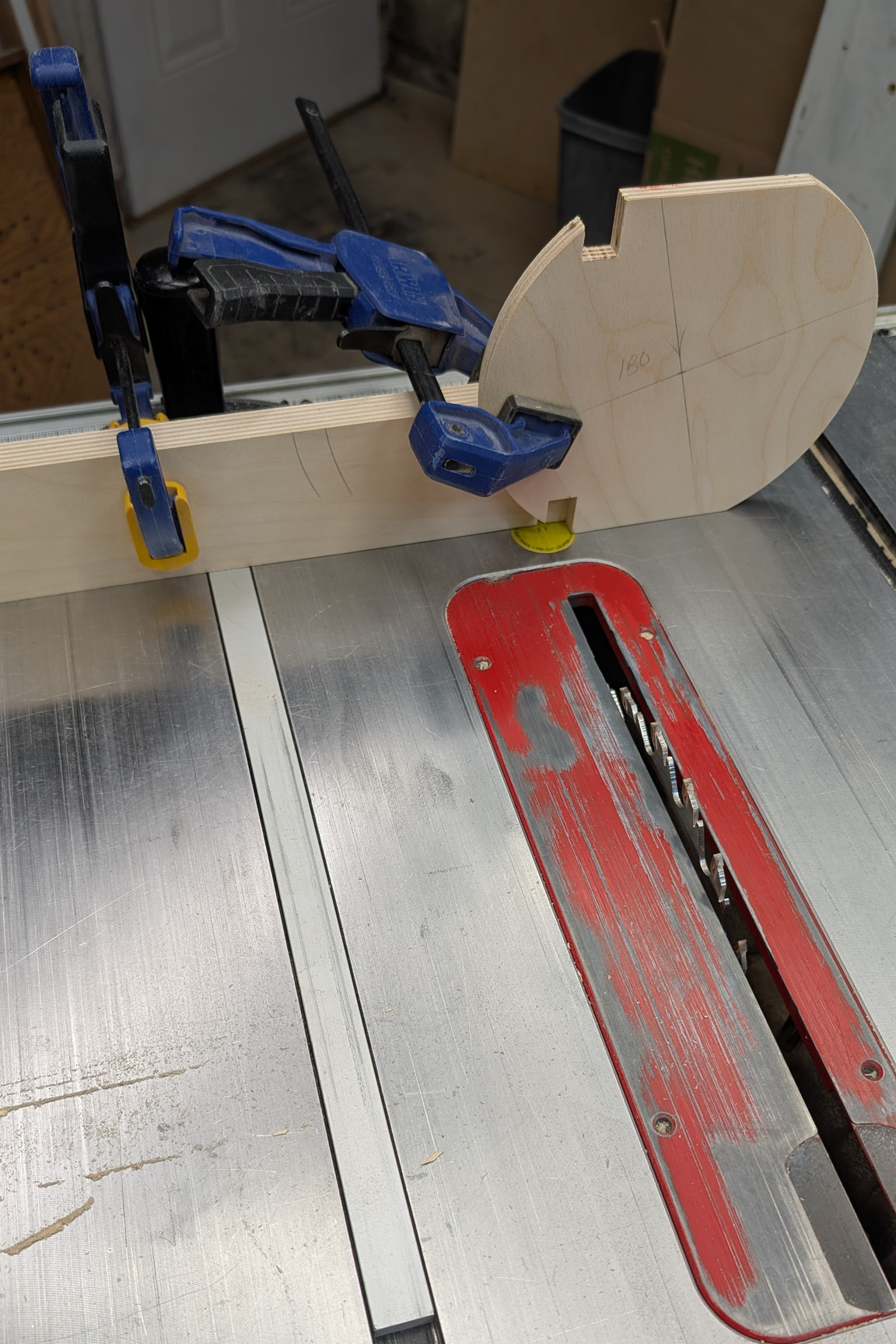
The first tweeter hole I cut was an inch off. The centerline of the cabinet and the distance to the top of the baffle were different by an inch. I cut a disk that was friction fit with a little help for a big c-clamp and a hammer and filled the cutouts where the tweeter terminals fit with wood filler.
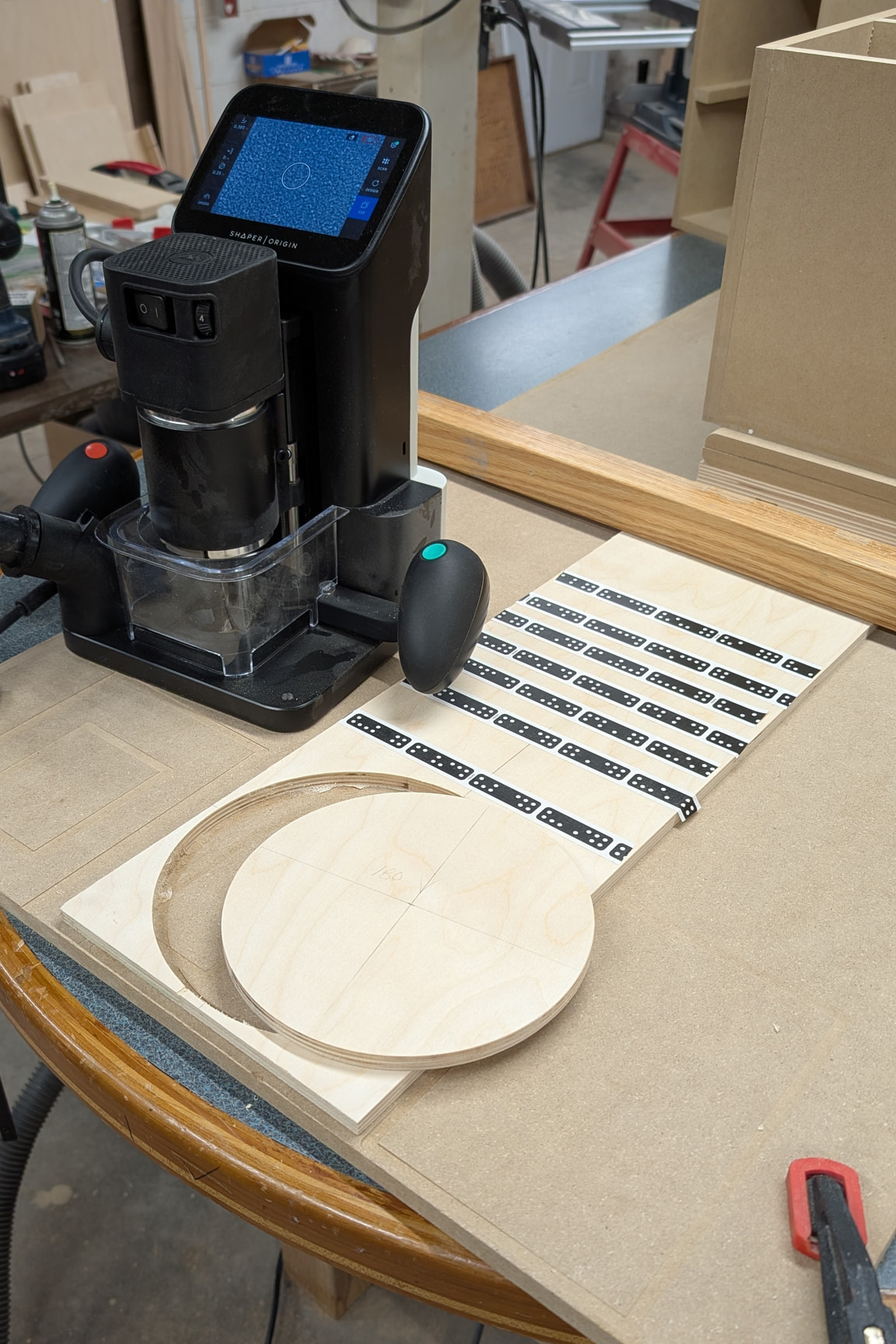
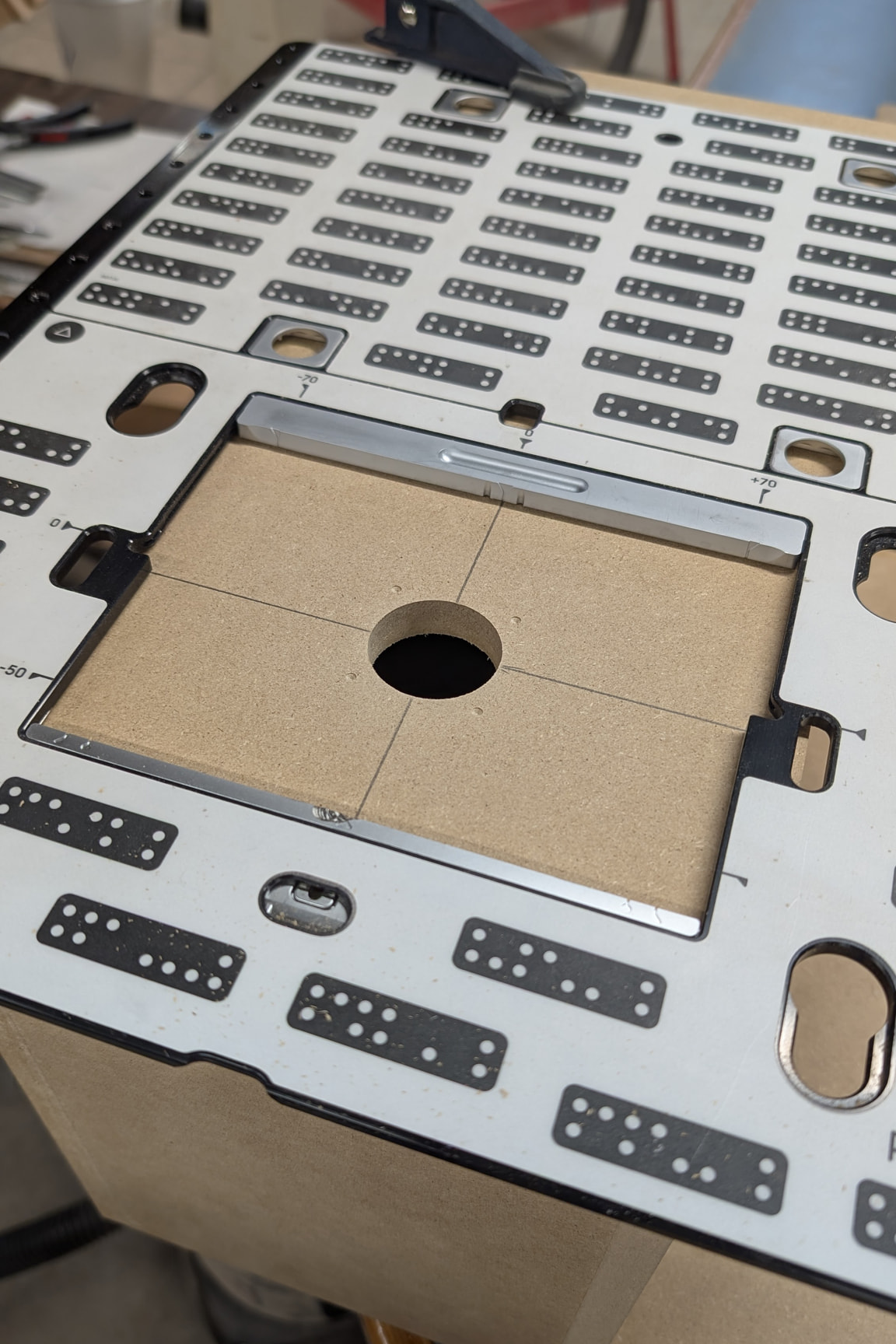
A few brief words about the Shaper Origin I used for a few of the cuts above. The router has a front facing camera that uses the domino tape to calculate where the router is in 2D space. The domino pattern has to be there and it has to be on the same plane as the router. When I cut out the disks I cut several same size rectangular pieces of wood that I put in front of another piece of wood that had the domino’s applied. I could then cut a disk, swap in another piece of wood and repeat until I had 5 disks.
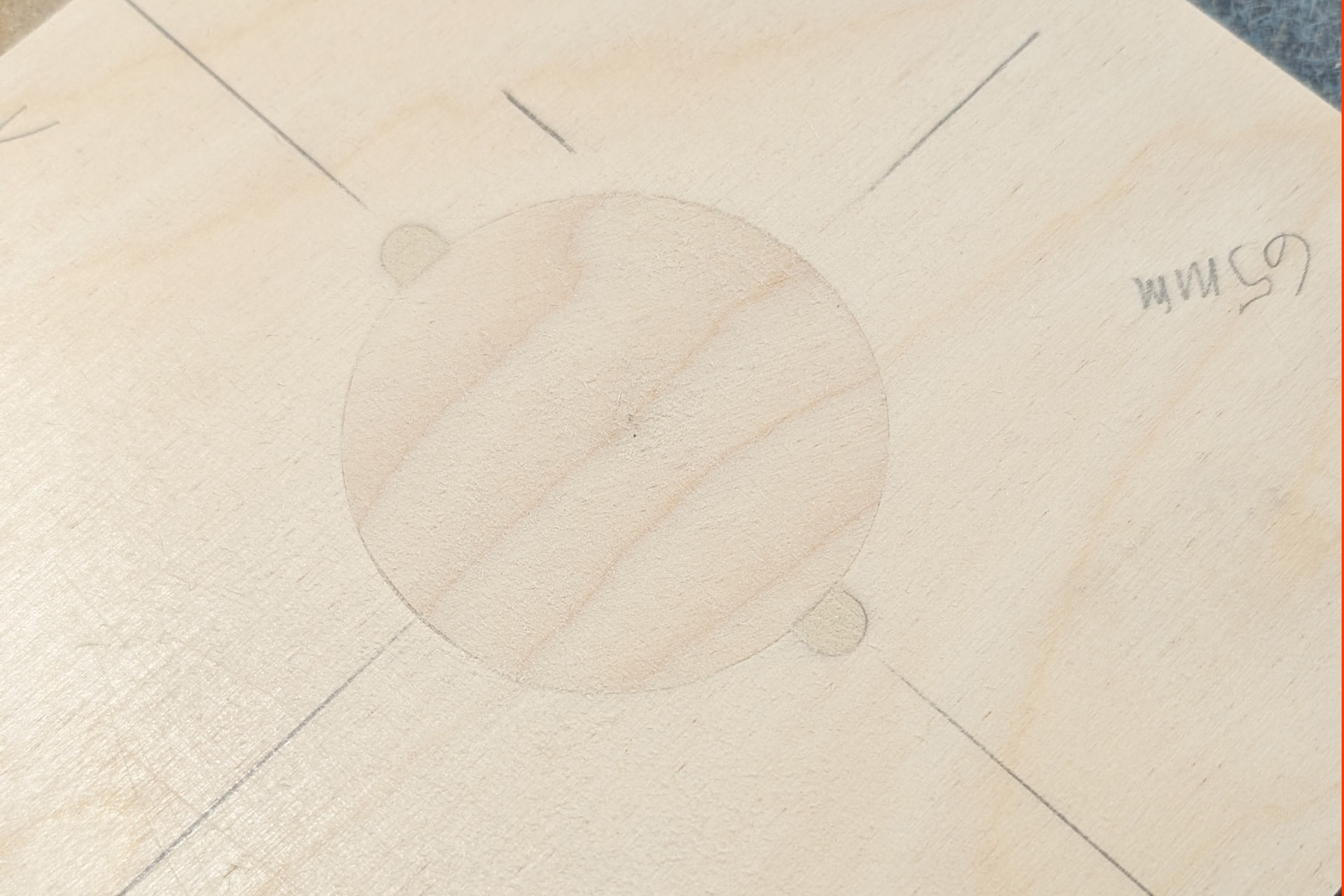
I used the SO with an optional accessory called the Shaper Plate. It’s set up so that you can easily register the plate to several different points on your work piece. Once the plate has been scanned anything that will fit in the cutout in the plate can easily be replicated repeatedly. So once I have designed a tweeter cutout all I need to do is put centerlines on the work piece, align the plate to the center lines and cut the hole. The same thing is true for the port hole in the example shown. If you look closely at the port hole you can see 4 dimples where the screw holes go.
If you have questions about the SO I’d prefer to start another thread. I’d prefer not to highjack this one.
I normally cut my driver rebates after I finish the cabinets. I put a block of wood behind the tweeter hole with double stick tape and 3D printed a disk to seal the woofer hole so I don’t fill the cabinet with sawdust.