That would be quite the eclectic build! And interesting setup.
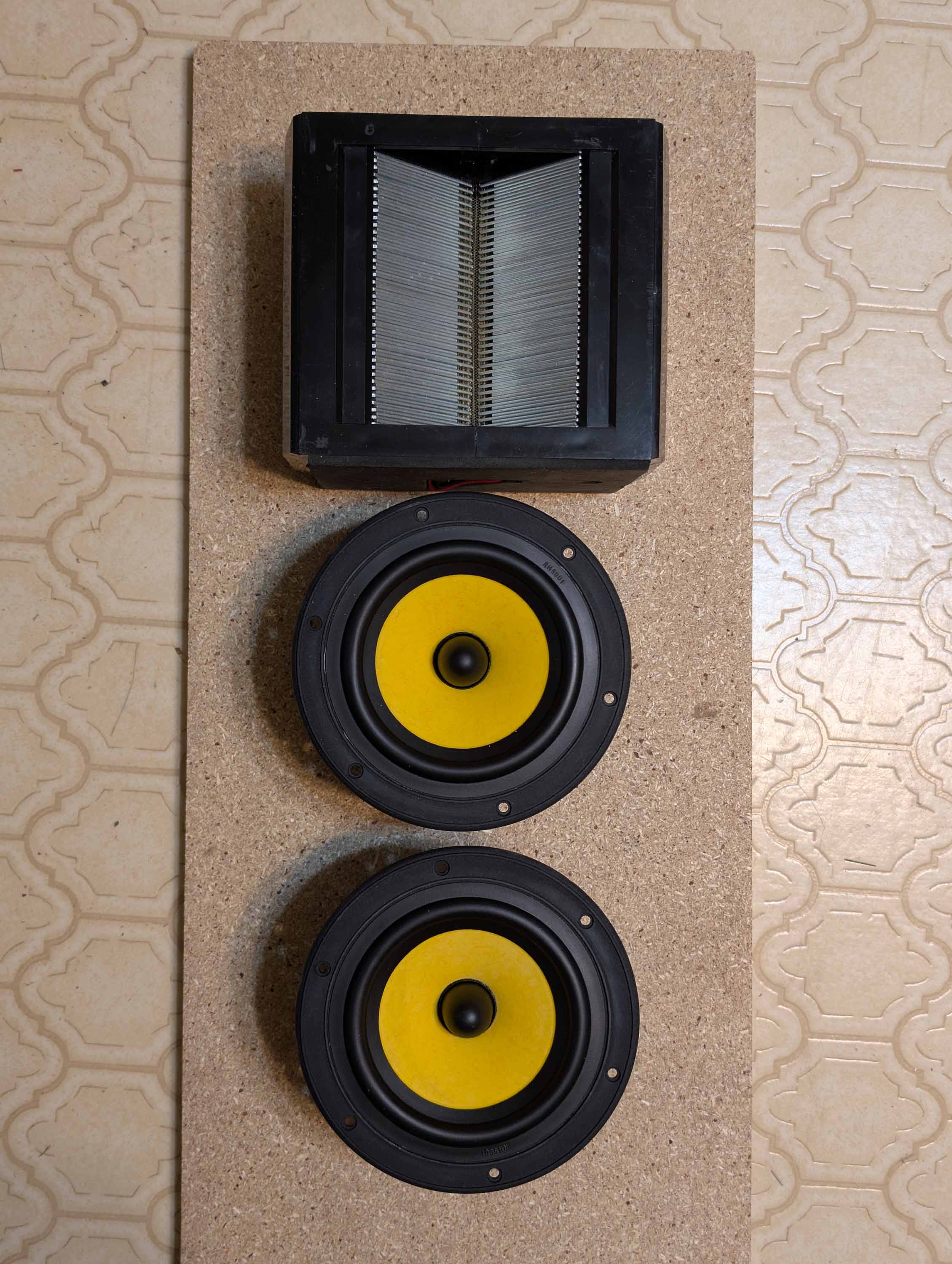
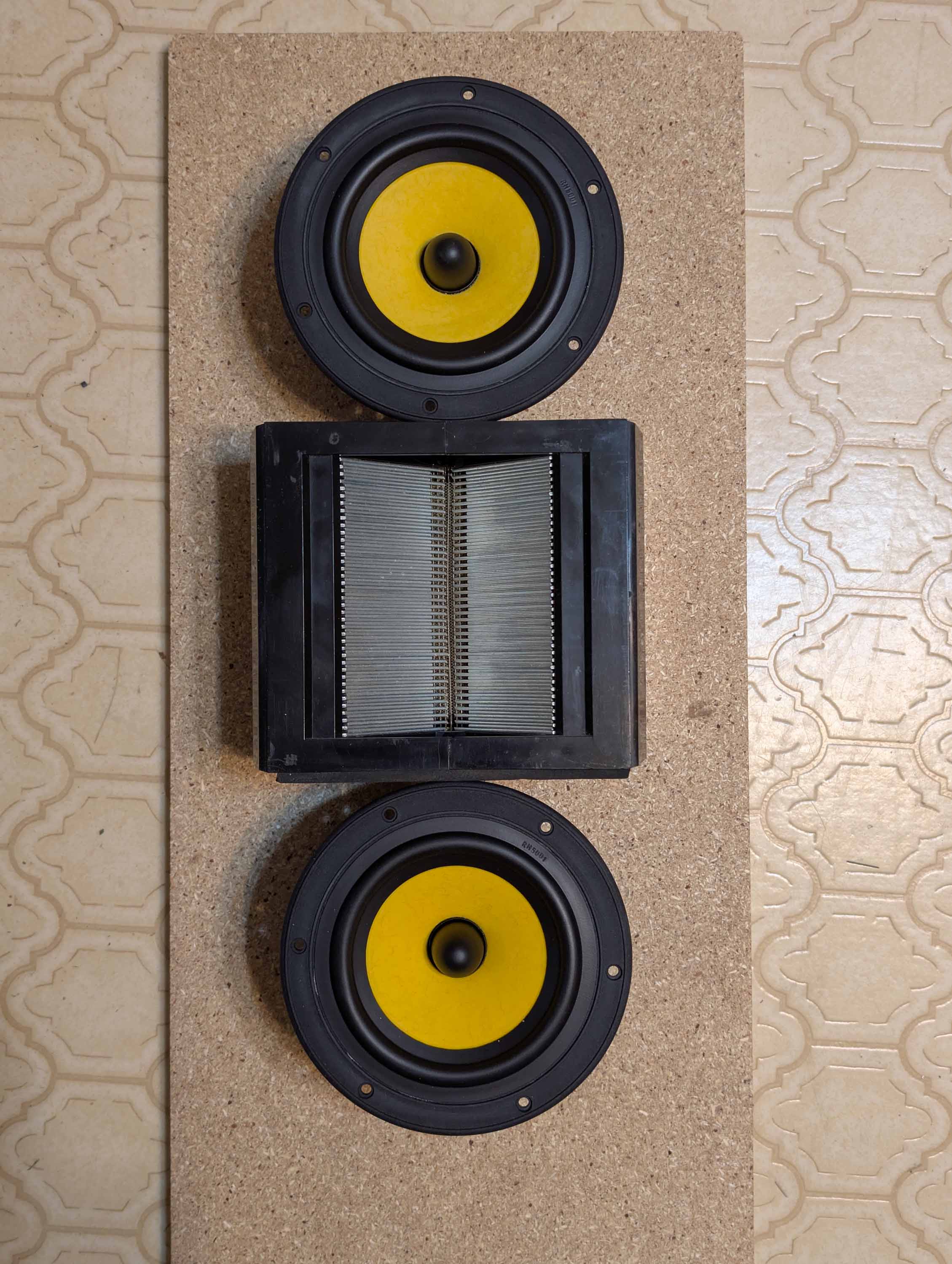
Original great Heil from @Life_of_Brian mated with a pair of HiVi F5’s that I got from @jr-mac . Either TMM or MTM config. Target xover 800 to 1k. Will cross F5’s to sub at 80 to 100Hz. The F5’s are 8 ohm, so they will be wired in parallel.
2 Likes
A speaker level network that also supplies input to the sub amps? Hot resistors. Anything else?
I’m not one of the smart guys, but I’ll take a crack at this. Hopefully I will not completely misinterpret what you are asking. The 10 ohm dummy resistor would be to properly load down the passive crossover network so the main amplifier would see a nice load. Then you would tap this junction with a voltage divider and send the signal to your class d amplifer board.
I’m basically doing almost the same thing with my Micro Grand Utopia build. Except that the voltage divider is built into the Dayton SPA-250 plate amps. I don’t use a 10 ohm dummy resistor, however. I just let the high pass section of the passive network impedance go high at the lower crossover point. This does not hurt the main amplifier because the low pass section of the lower crossover is built into the plate amplifer.
But it sounds like you want to do both high pass and low pass sections passively. So then you need the 10 ohm dummy resistor for proper termination of the audio signal. That makes sense. Give it a try. It should work. But you will still need to buy big inductors and capacitors. I avoided some of this cost. If you have RCA audio preamplifier outs on your main amp, you could try building a passive subwoofer xover between your main amp and the class d amp. But I don’t know if you want to go that route.
Thanks Bill. I guess I am trying to create a speaker with traditional binding posts and a cord that plugs in the wall. Maybe a potentiometer on the back for sub level.
I would also like the ability to use elliptical filters to subdue breakups. And to keep it analog.
I am an analog guy in a digital world.
1 Like
I had a nice looking pair of KG4s that I picked up cheap at a church rummage sale. Only had them for a few days. Just not my cup of tea. I know whatever you come up with will sound better than those.
Clay, I think I’ll start a new thread to discuss analog active crossovers, as opposed to digital types. We don’t want to keep hi-jacking this thread.
Been having some fun every once in a while browsing for a super budget build out of all PE Buyout drivers. I’d call it the “Trash Cannons”, maybe “Bargain Bins” but I like trash cannons better 
I already had the $5 rectangle flange fabric dome tweeters. Then picked up these 8" DVC Woofers when they went for $7ea. The specs tune similarly sealed to the GRS poly cone sub (~50hz F3 in 1cf).
I got a couple different under $5 sealed back midranges to try. Here is one below, The other no longer has a page, but was a 5"er.
The “woofer” might be more of a sub. If so, it may not realistically reach up to a sealed back. I threw on a couple of these $1.50 3.5"ers on the order in case they could do the job better.
If I ever find myself bored I’ll cut some holes in scrap panels for test baffle measurements. I still have distain for designing 3-ways, but maybe the absurdity can get me to take it less seriously. 
3 Likes
Received a $100 gift card from my company, so am going to buy a couple cheap drivers. I figure the new GRS poly 4” “Surface mount” 4 ohm woofer and the Dayton ND28 will make for a stellar ultra budget mini-speaker. I’ll might surface mount both drivers, not sure yet.
This will be my token small speaker for 2026 unless I get a miracle spell of warm weather and I can make sawdust before then lol.
1 Like
Both of my ND28F measured around 1400Hz Fs as opposed to advertised of around 1000Hz. I’ll try a break-in on them and see what happens, but if they do not go to where they are advertised at it will change my plans and I may use the Dayton waveguide tweeter instead.
I could probably design and print a waveguide for the ND28F if you would like to be the test subject.
1 Like
That’s not a bad idea, to be honest.
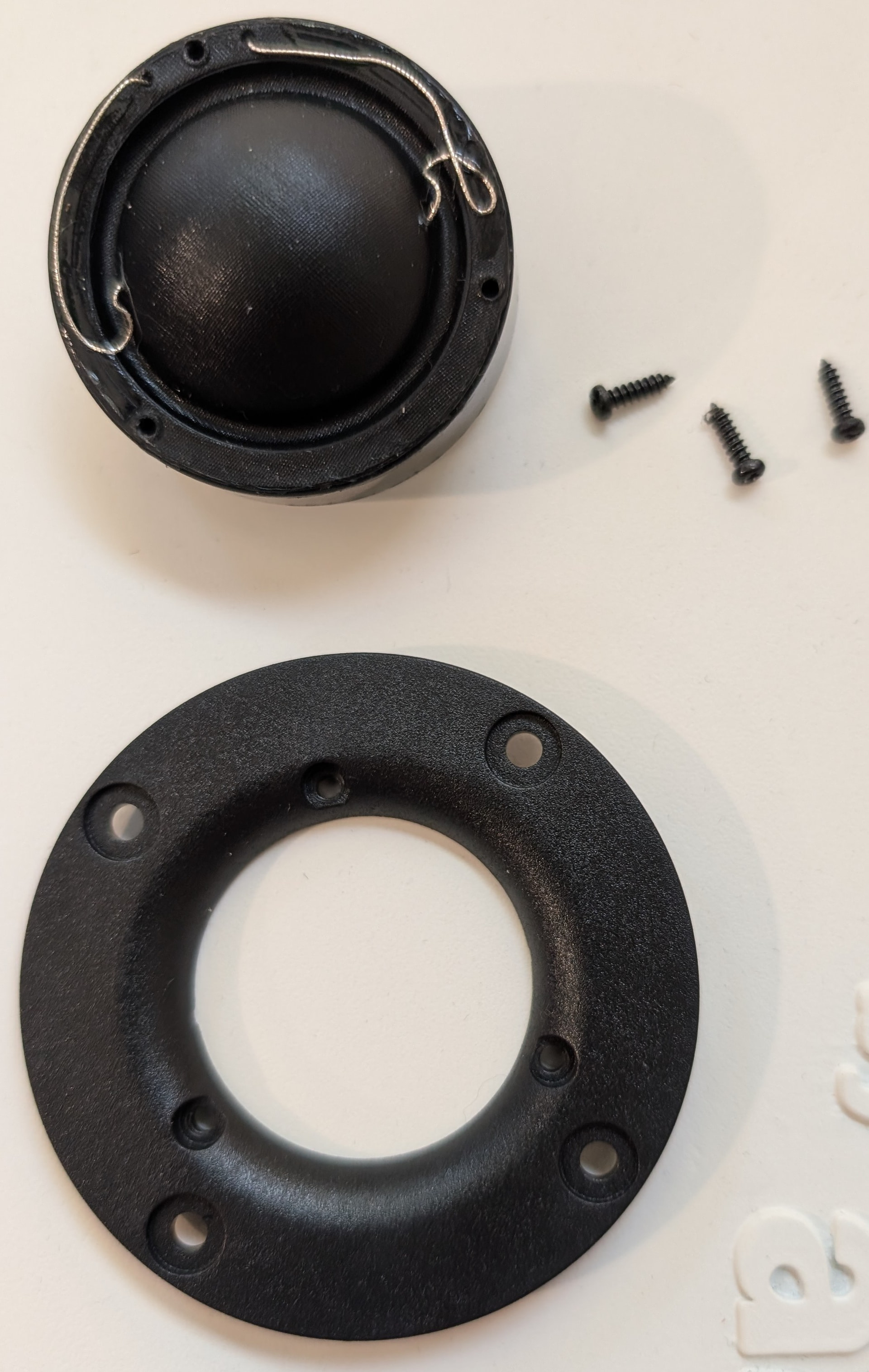
Wow! I have never used the ND28F but have some in my storage room. I had always assumed the faceplate of the ND28F was permanently glued on. Seeing your comment I went and looked…I had never noticed the small screws before. This would likely be a great $16 tweeter for a WG. It has an inverted surround and searching the long thread on 3D printed WGs at diyaudio this doesn’t seem to be a problem and may be an advantage.
1 Like
Can you get me some dimensions off the faceplate?
I need the dimensions of the 3 holes and their CTC spacing so I can add them to the WG. I will also need the center through hole dimension.
Thanks
I can send you one of mine if that will make it easier for you?
If David can’t get me dimensions, could you scan the faceplate flat side down and save as a PDF?
I could see if I can get close enough dimensions off the ND28Fs in my coaxial project. They are glued in place but I should be able to get pretty close with my calipers.
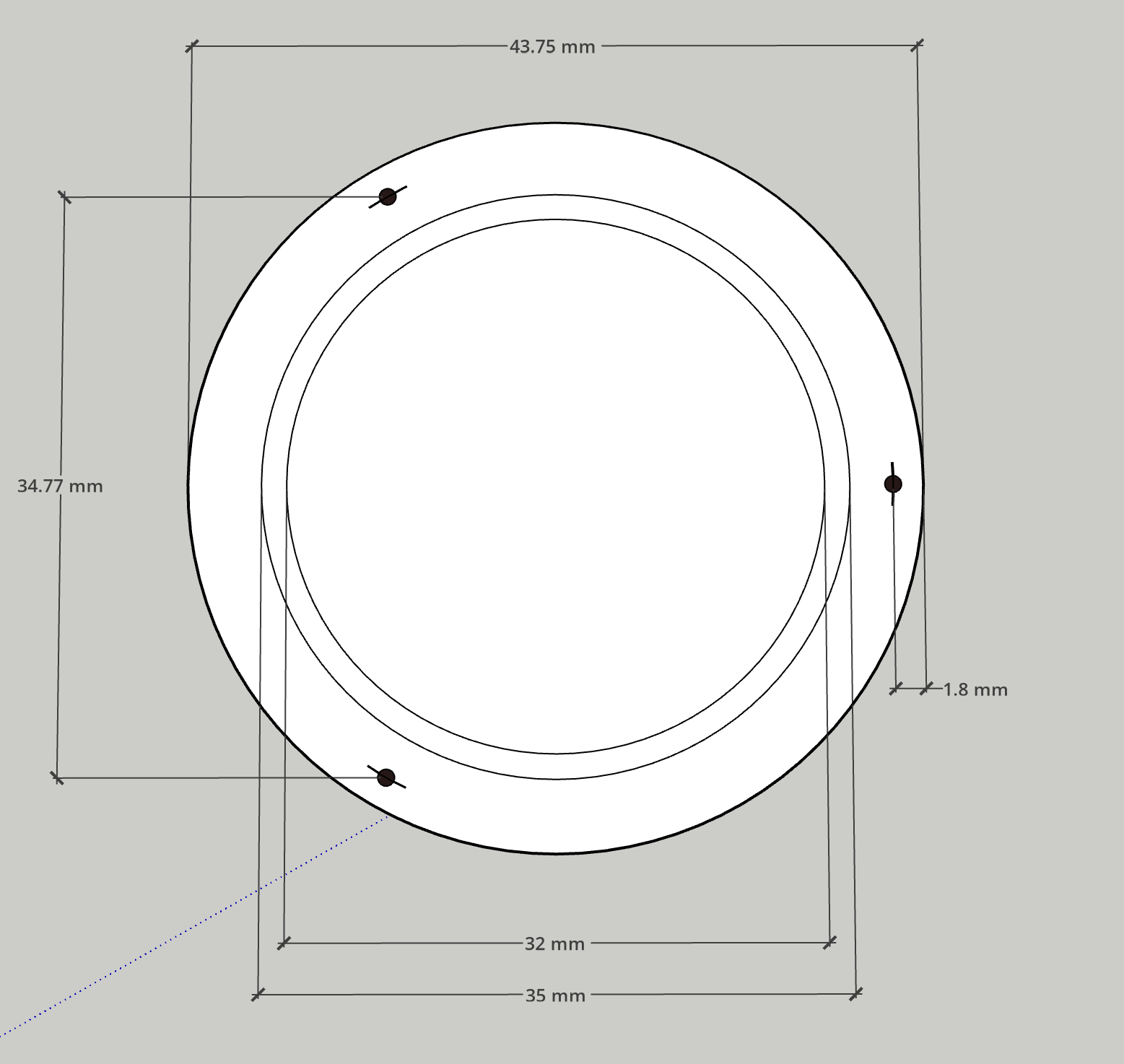
I’m not able to get the calipers perfectly down there but I estimate 34mm to screw centers in equilateral triangle. The flat recess for the screw head appears to be just under 5mm. The screws are tiny. Probably 1.5mm hole would work. The diameter of the opening for the dome is maybe 33.5mm
Here is the best I can do with my calibers and my 1.5x reading glasses  .
.
@jr-mac - I’m sure shipping isn’t much on these small tweeters, but Ken and I are both in GR. @KenRhodes - If you want to borrow the pair I have, just let me know.
The 35mm is the outside of the inverted surround. The 32mm is edge-to-edge of the dome.
Edit: rather than measuring the surround and dome, the through-hole of the faceplate is 33.5mm.
3 Likes