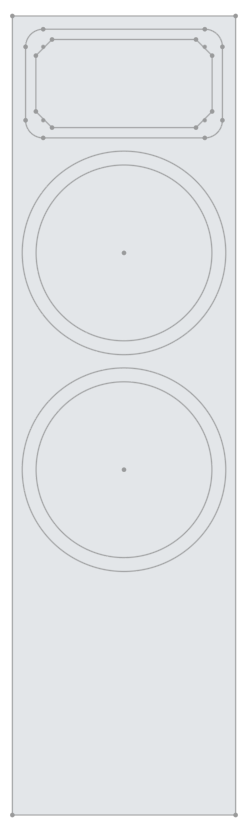
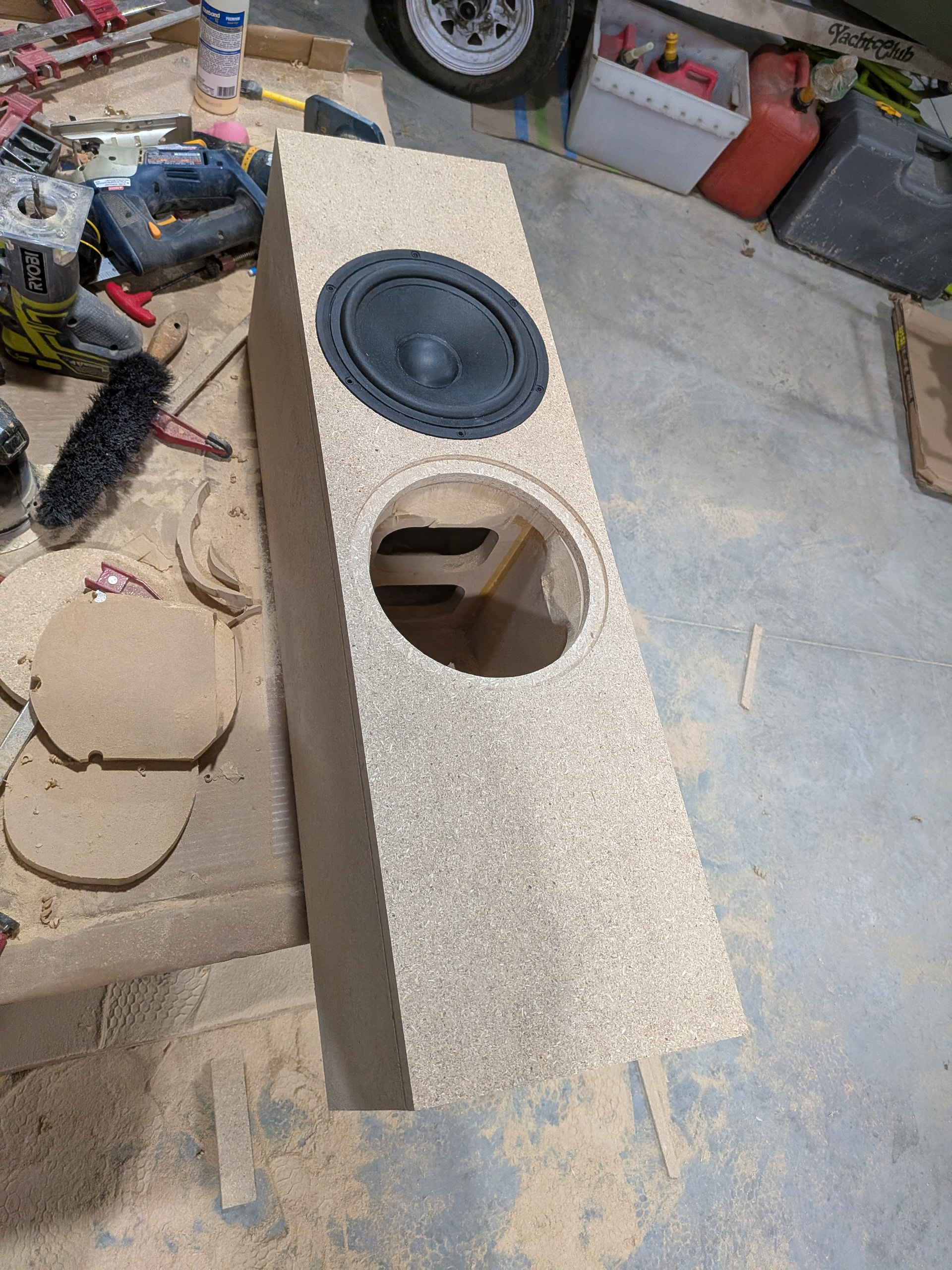
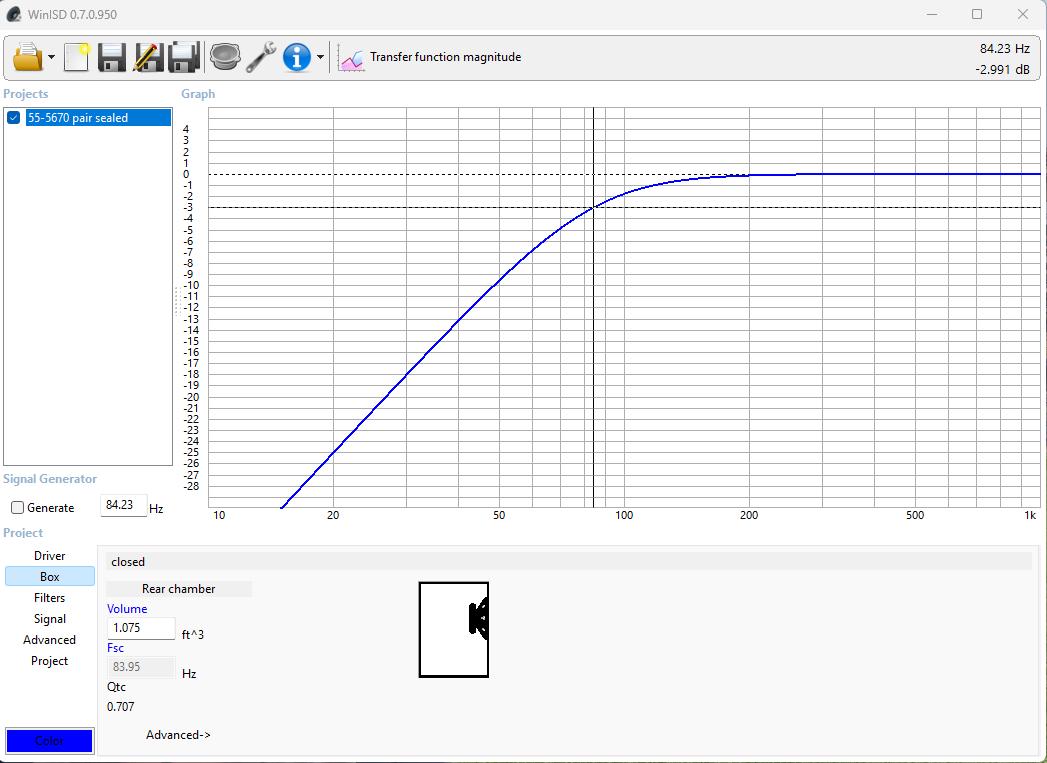
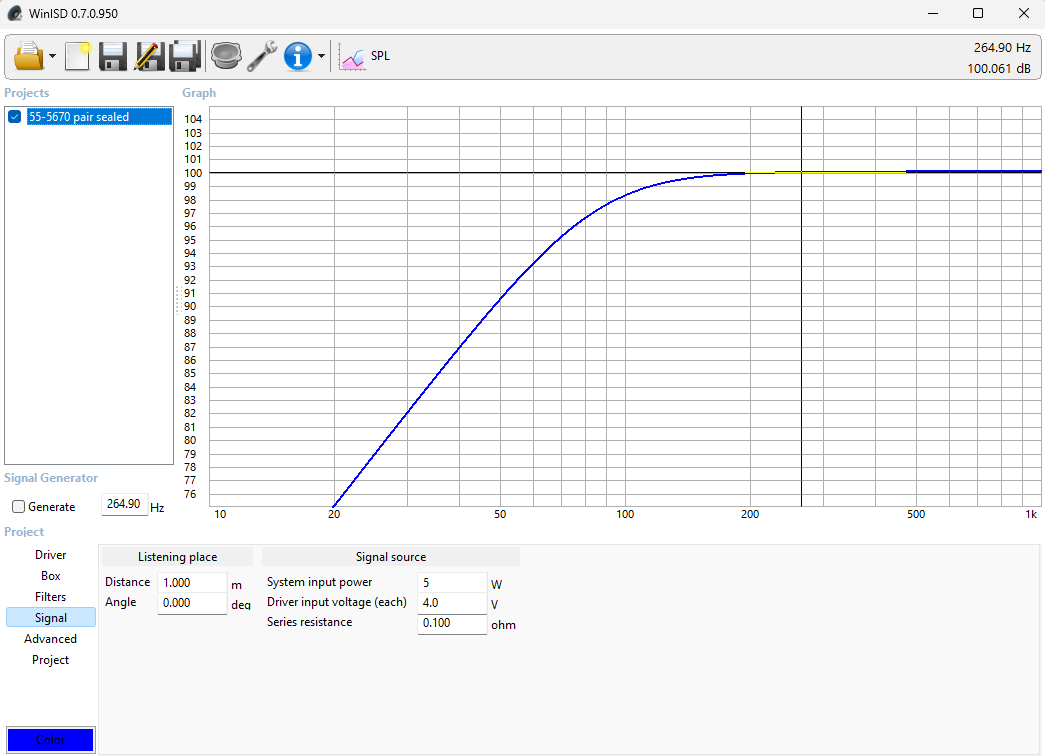
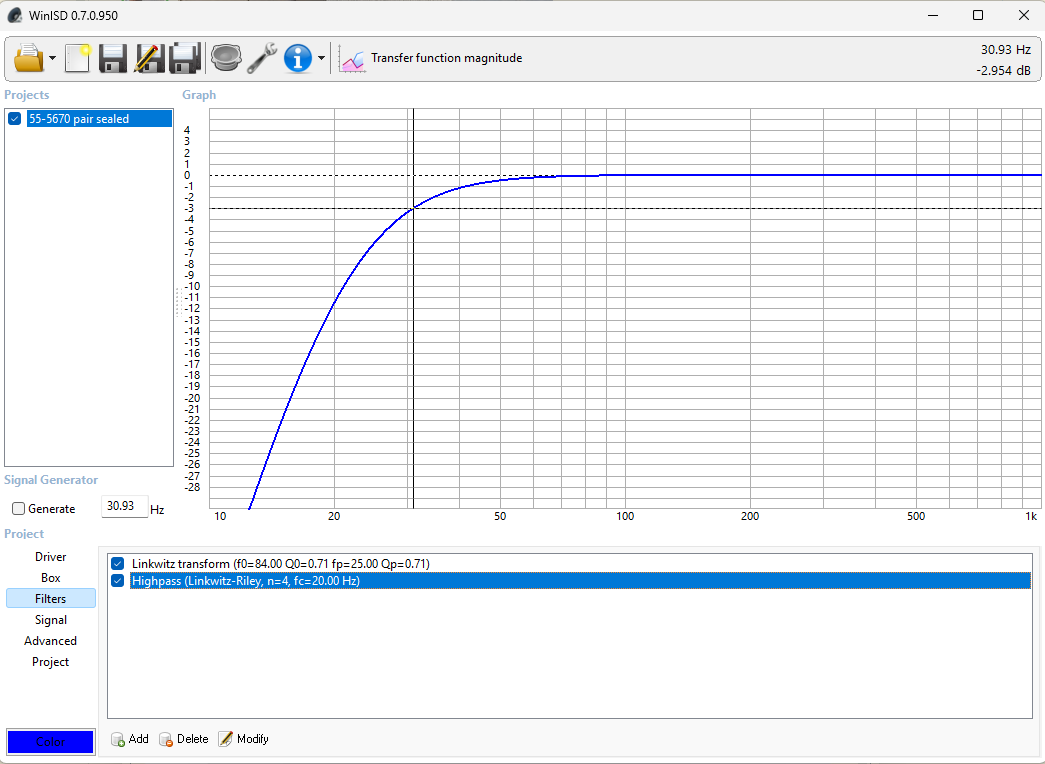
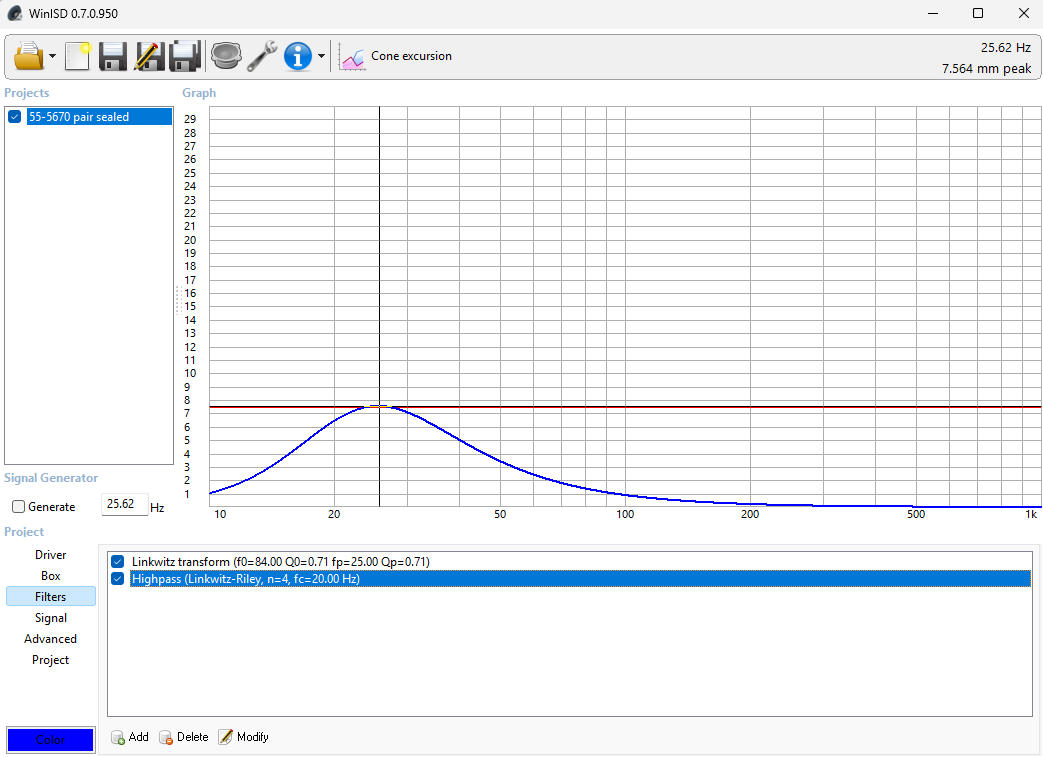
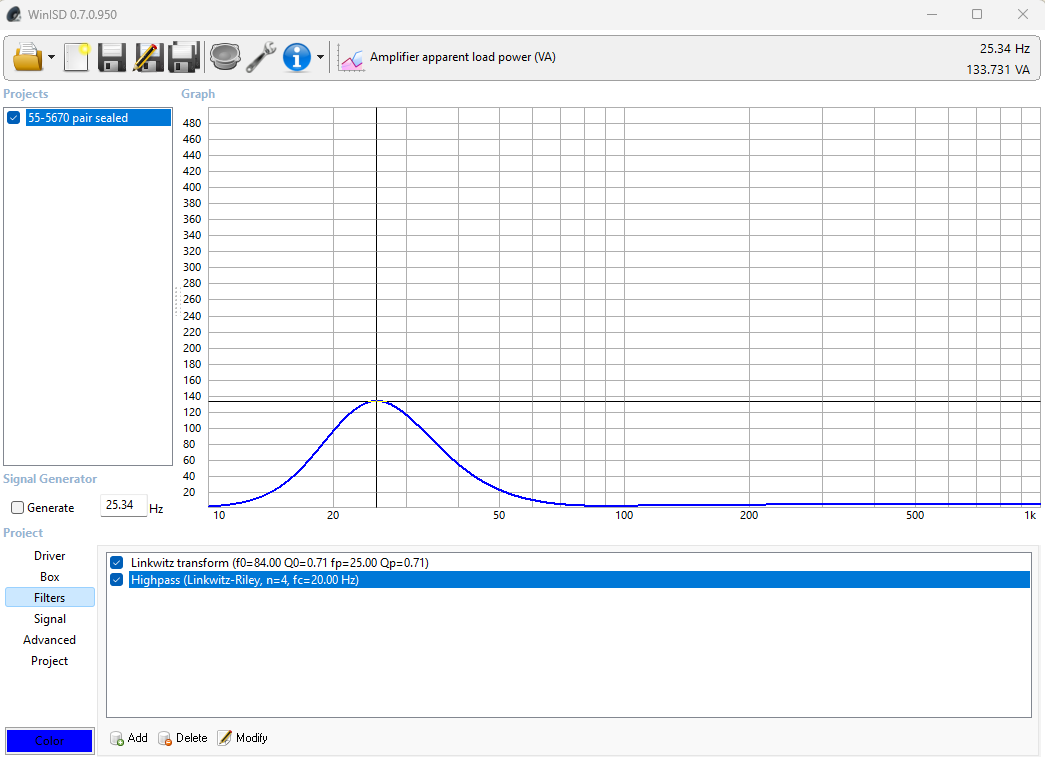
My dual 55-5670 project was originally going to be paired with RS28A in SEOS waveguides, but I decided to start them off as base bin stands. The baffles are removable so I can CNC the SEOS rebates later. We’ll see how they sound paired with my Barium speakers in a pseudo 3-way. I was lazy and glued some menards shelving boards to the sides of the 1.16 ft^3 knock down cabs to get the needed width for the 8” wooders. They will be sealed with a linkwitz transform.
I may have had an epiphany about what to do with my PM180s.
I figured I’d do a modern small baffle speaker with em. But something had me dragging my feet about it. I got this pair of LAB12s from last year’s SDC. How about a righteous monkey coffin? If I do get medieval on the PM180s (cone slicing, etc.).. I could cover up the “mess” with a grill panel and would still look period correct. The LAB12s aren’t exactly lookers either
I got TW030WA11s for the pm180s, but these DX25BG60 on SEOS WGs should work too.. (Save the wavecors for another build, that I may or may not have in mind already)
Well, we have Tony Gee’s writeup and a SB tech note.
I tried some of those calculations a couple of years ago and somehow the measurements didn’t match the calculations.
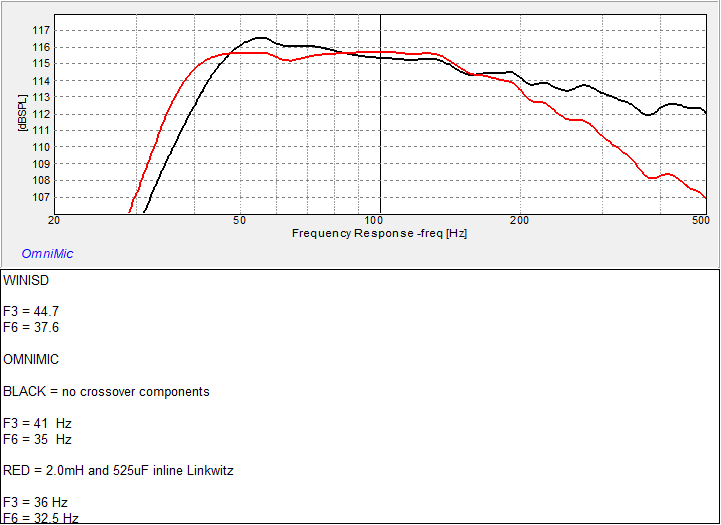
A few days ago, I fired up Ominimc for nearfield woofer measurements, and in about 15 minutes had the perfect value.
First, your box must be small (Qt about 1.0) - that will produce a bump as you see here in black.
A bit interesting, too high or tool low cap values produce bumps. for me, 525uF (in RED) was the flattest.
As stated, didn’t take more than a few OM sweeps.
This is typical cap assist results of one build (and this test). F3 decreased 5Hz, F6 a bit less
One of the really great side effects that it protects your Xmax limits, even for deep bass
Thanks Don. Do you already have the box built for 1 QTS and then using diff caps to get the red response or trying the sim in winisd. Sims usually do not have the wiggles
Trying to connect the screenshot to what your process is. I am starting from scratch as in start with box design, usually box q is 7 or nearby, but I can undersize for 1. The cap selection is then based empirically? I’ll try a sim tomorrow and see if I can add a cap to get a response in the sim.
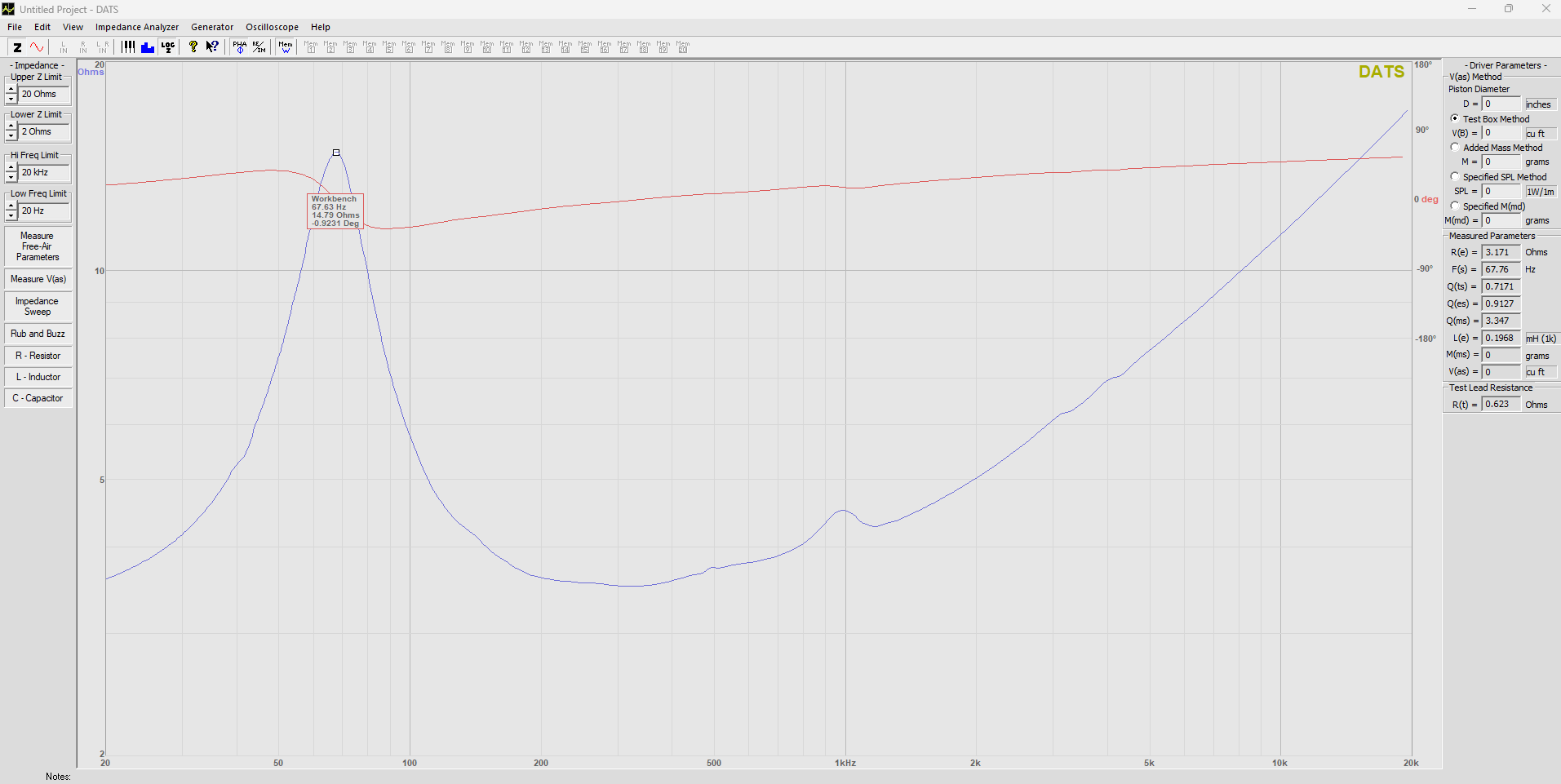
Sorry, poorly documented. Used WinISD closed box with the P830845 - kept reducing box size until the Qt was about 1.0, then found I had a 38 liter test box. Mounted the woofer and ran some sweeps with varying capacitance 350-600uF. Have not tried playing with the filters in WinISD for similar results, and I don’t think those formulas give you a capacitance value.
It would be interesting if you could use another sim.
Update, Xsim does not indicate any change with a large cap in series with the woofer.
Passive Assist for best results should have a high xmax and Pe driver, 7<Qms<10, and a Qtc for box of 1.0-1.1, and the larger the cap the lower the cutoff. I used it a long time ago in my PC design with the Aura NS3.
C = 10^6 x (0.234/(Re x Fc)); where C is cap value in uF, Re is the Re/dcr of the driver, and
Fc is the cutoff frequency.
Out of curiosity I modeled the GRS 4SMP-8 speaker in 0.5ft^3 (14L) tuned to 40 Hz, with F3 of 34 Hz, and the response is quite flat within +/-1dB. The Qts of .65 enables big low-tuned boxes that are tuned below Fs. But the speaker is driven beyond Xmax with only about 10W in that enclosure, which limits SPL to around 92-93 dB.
In half that volume, 0.25ft^3 (7L), tuned to 55 Hz, it gives F3 of 46 Hz and a big wide bump from roughly 55 to 200 Hz, peaking around +3dB at 85 Hz, so that would be an exciting sounding speaker, and Xmax is reached around 15W. But the speaker still thermally handles double that power continuously. 3.5L tuned to 55 Hz is possible but F3 is 60, so it’s overdamped, and the mechanical power handling rises to 20W, and there’s a bump of +3dB at 115 Hz.
With a sealed box volume of 0.25ft^3, F3 is 72 Hz, but Xmax is reached around 10W. In 0.125 ft^3 (3.5L) the F3 rises to 77L and Xmax is reached around 12W but 15W is probably fine, and Xmax doesn’t go off to the races below a tuning frequency. So that might be the best configuration for a satellite speaker using this driver - sealed with box volume between 3.5L and 7L. Or ported, and accept the bump.
Yeah I was wondering about an MTM with those. Should boost the safe zone up a bit. I can’t imagine they need anything particularly special for tweeters so tons of options.
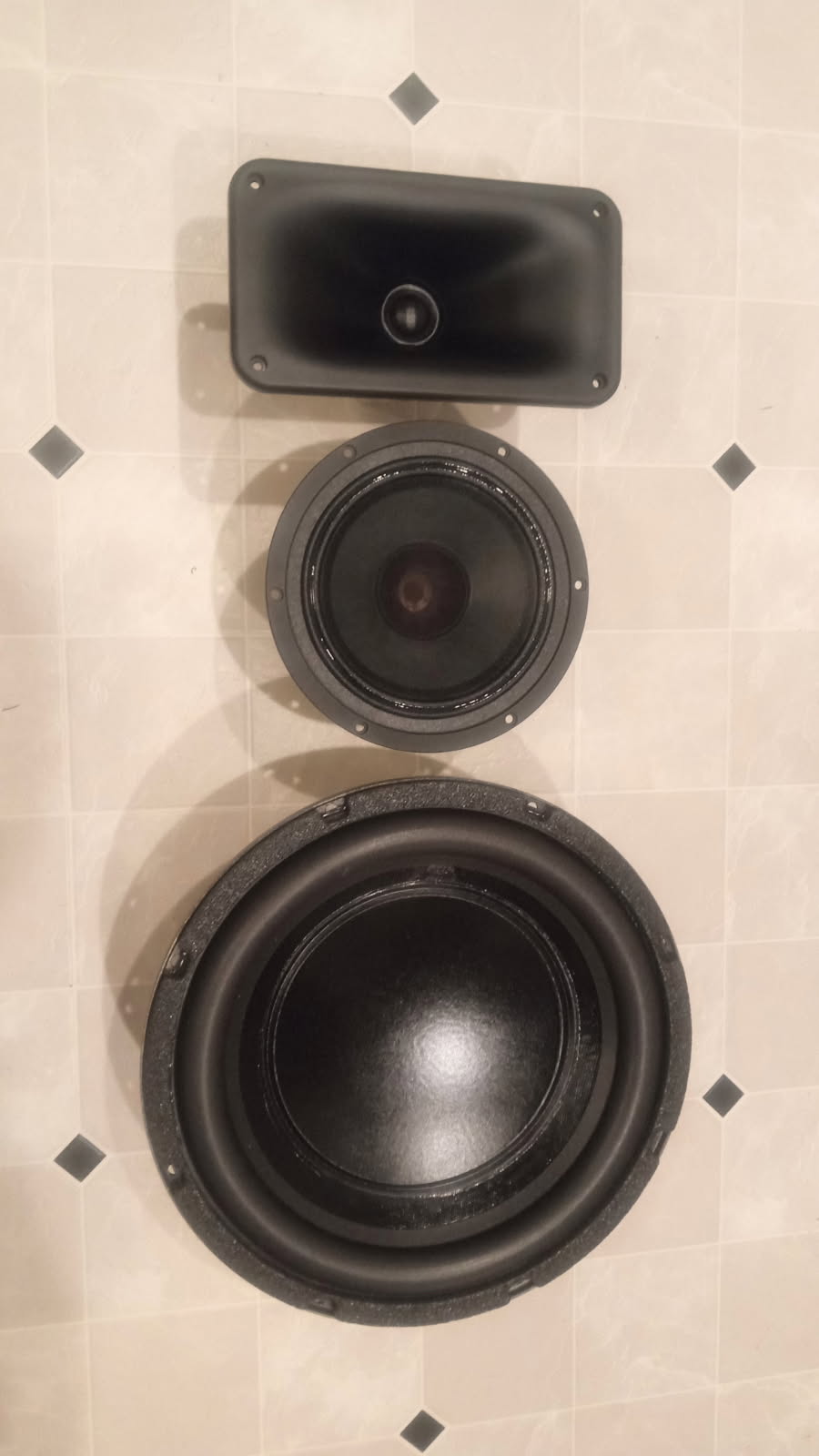
Got talking about the woofer last night on chat a bit. That got me interested to get a visual on the combo. The crossover points should end up plenty low to get a good couple inches between the drivers and fill up a big baffle. A couple ports would take up some space under the woofer also.
I was doing a bit of searching on the PM180. Looks like JeffB at one point was thinking of pairing with SEOS WGs and Eminence woofers too.
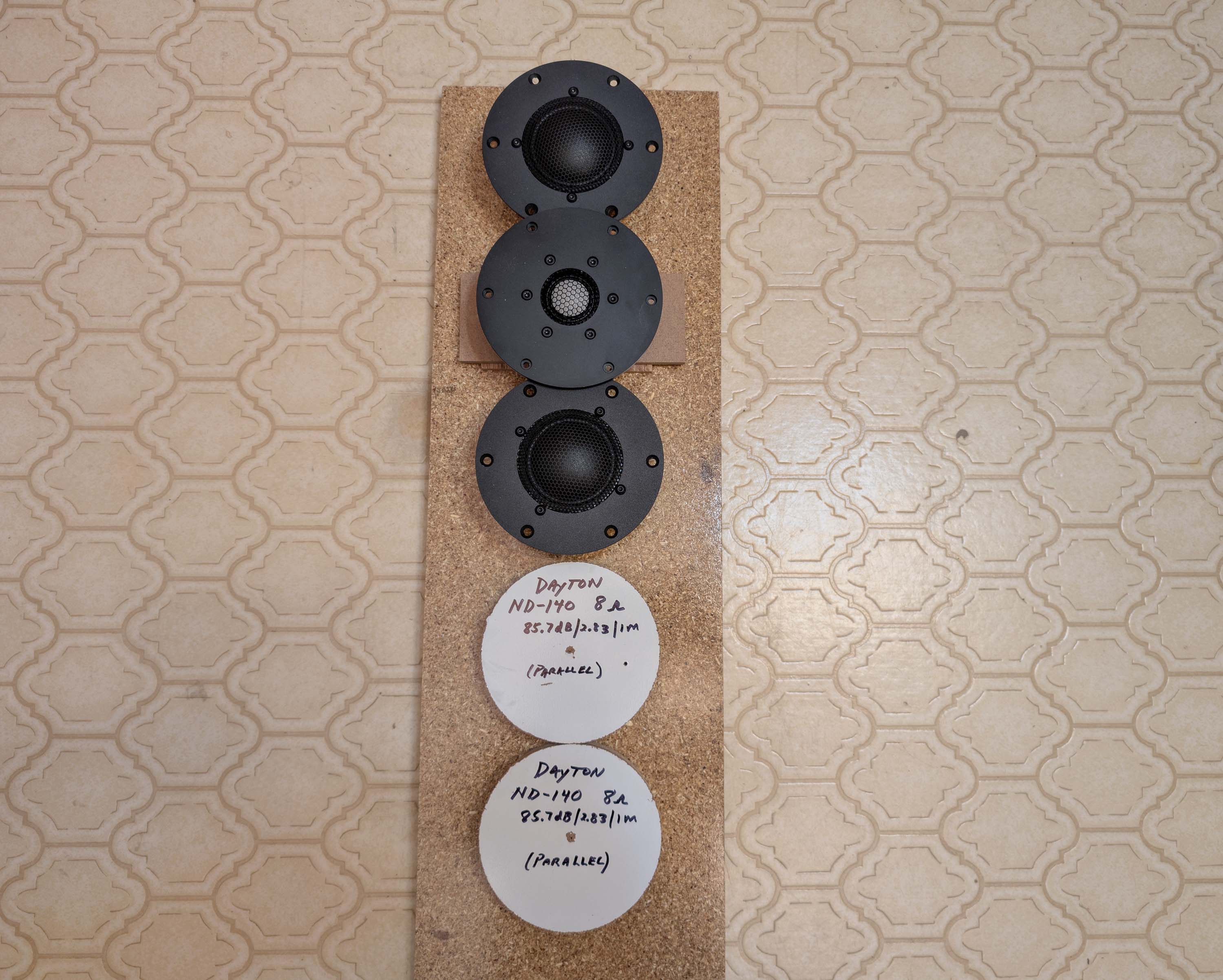
The two woofers should be around 92dB in parallel, then drop down to about 87dB after baffle step compensation. Scott used these in his Matrix Revolutions and they sounded very good in that system ( about 1.5 cu. ft. cabs). The mids will be around 96dB in parallel and maybe 92dB after baffle step. The tweeter is listed as 92dB sensitivity. So this should work out OK and give me something around 87dB/2.83/1M when I get done. Based on the mfg’s FR graphs, the tweeter and mids should be a very good directivity match in the horizontal domain. Initial target xovers will be 650 and 2500Hz. I know that alot of builders do not like the Dayton 2" mids for some reason. But I would like to give this a try. Figure a 42" high tower cabinet with an 8" wide baffle and big 1.5" radius roundovers. Thoughts.
Not sure I will do this. Just throwing it out for discussion. I have 3 of the RS52FN-8’s in stock, so I would only have to pick up one addtional driver to do this. Using an MTM would allow me to burn up some of the excess sensitivity to achieve a slightly lower xover point, maybe 600Hz or so instead of 700-800Hz for a TM arrangement. On the negative side, the MTM will have poor vertical directivity compared to a TM. So maybe just a TMWW would be better.