In this case, no. What I’m hearing is the harshness of the HD2 and sibilance combination. Since 9-10 is not distorted, not emphasized in level over nominal, and is not as sensitive a frequency range to the ear as say the 2-3k or 6-7k; I doubt that I’m hearing that range emphasis.
1 Like
Thought maybe I could hear the dynamics suffered, so I increased to 8 ohms, but that wasn’t enough suppression. Now listening with 7.5 ohms until further notice.
1 Like
Just spent a few hours with the 7.5 ohm in play. I’m really liking what I’m hearing. This is definitely the type of fix that was required. I will likely try a 6.8/7 ohm just to make sure on the value. If that hurts dynamics, I’ll try a 7+0.22 to further verify.
I am now splitting frog hairs…
Edit: Just kicked off Norah Jones’ “Not Too Late” redbook album. (I have the Analogue Productions version too, but not spinning that one at the moment.) The subtleties and details this pair of speakers can resolve is just impressive to me.
2 Likes
Well, according to Google…in case you were wondering 
Frogs do not have true hair made of keratin. However, the male Hairy Frog (Trichobatrachus robustus) grows hair-like strands of skin called dermal papillae during the breeding season.These are not actual hairs; they are fleshy extensions packed with blood vessels that help the male absorb extra oxygen while guarding his eggs underwater.
Kinda like muff diving with flexi-straws up you nostrils . . .
1 Like
Maybe this is a regional thing…
P1: How are you feeling?
P2: Fine as frog hair.
P1: Frogs don’t have hair.
P2: Pretty fine then.
3 Likes
As someone from the same region I’ve literally never heard this before in my life 
Red C hair.
1 Like
It’s amazing Brad and I didn’t know each other until 4-5 years ago…
We grew up with less than a mile separating our childhood homes. Had he lived on the other side of the road, we’d likely have ridden the same bus and gone to the same school. We also had the same horrible Calculus professor in college.
Just a very small world sometimes…
2 Likes
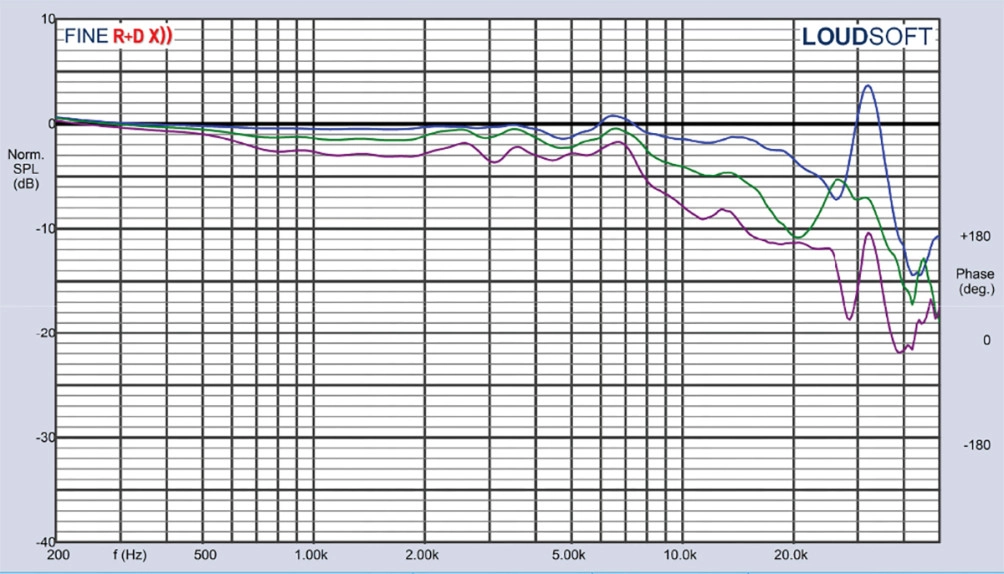
I will also add that the directivity according the Test Bench for the tweeter shows a peak in the same range I’ve been combating. I would say I’m hitting 2 birds with one stone.
2 Likes
Is L4 shorted? Or is that a left over wire behind the inductor?
No, it’s not shorted. A lot of times cored inductors have a bar through them in the symbol, so I added a bar.
1 Like
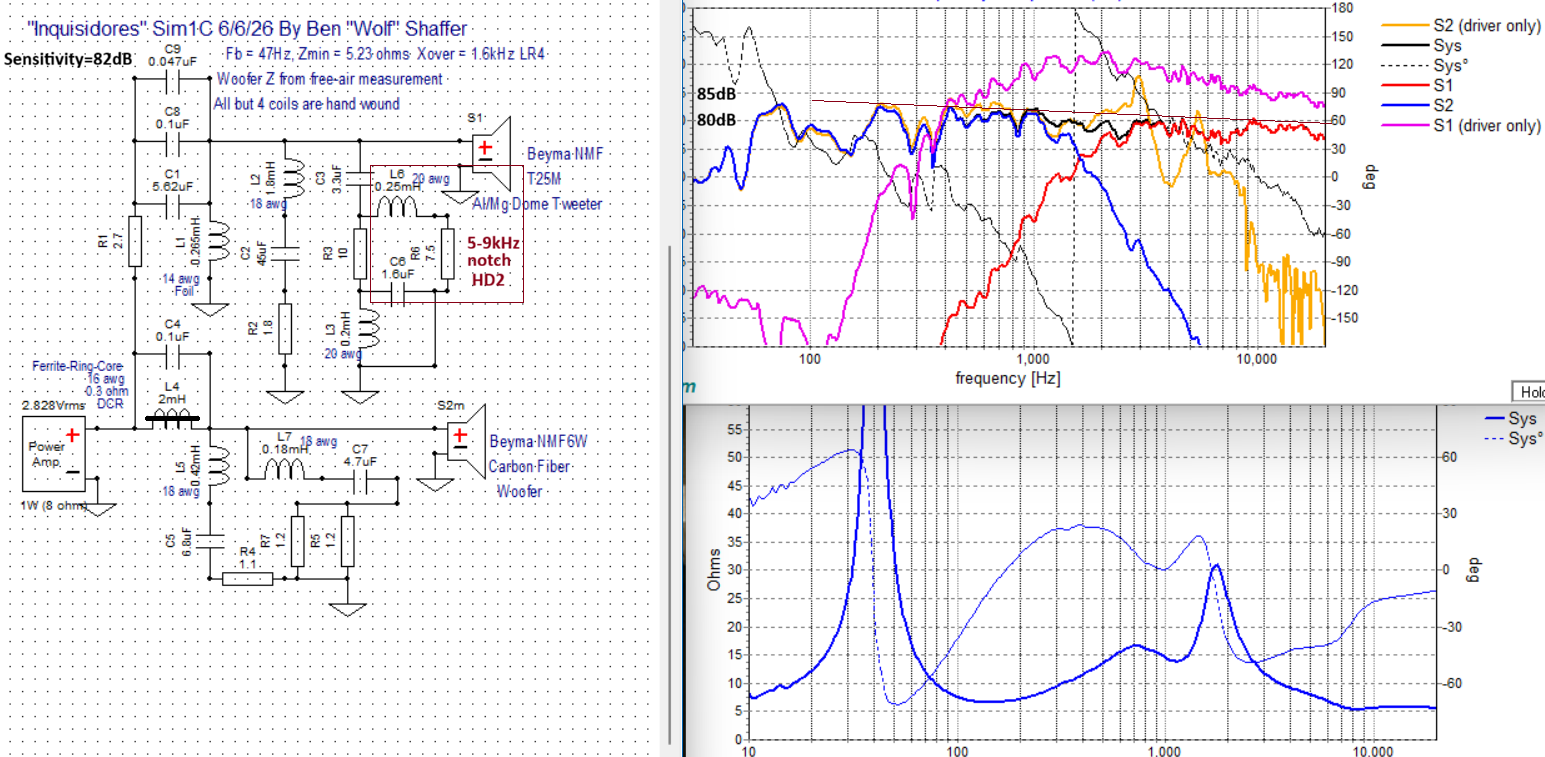
Here is a graphic showing the changes made and the level difference of 3 resistors for R6. It appears that this method did indeed reduce the HD2 spike the tweeters had- by using a shunt-series notch.
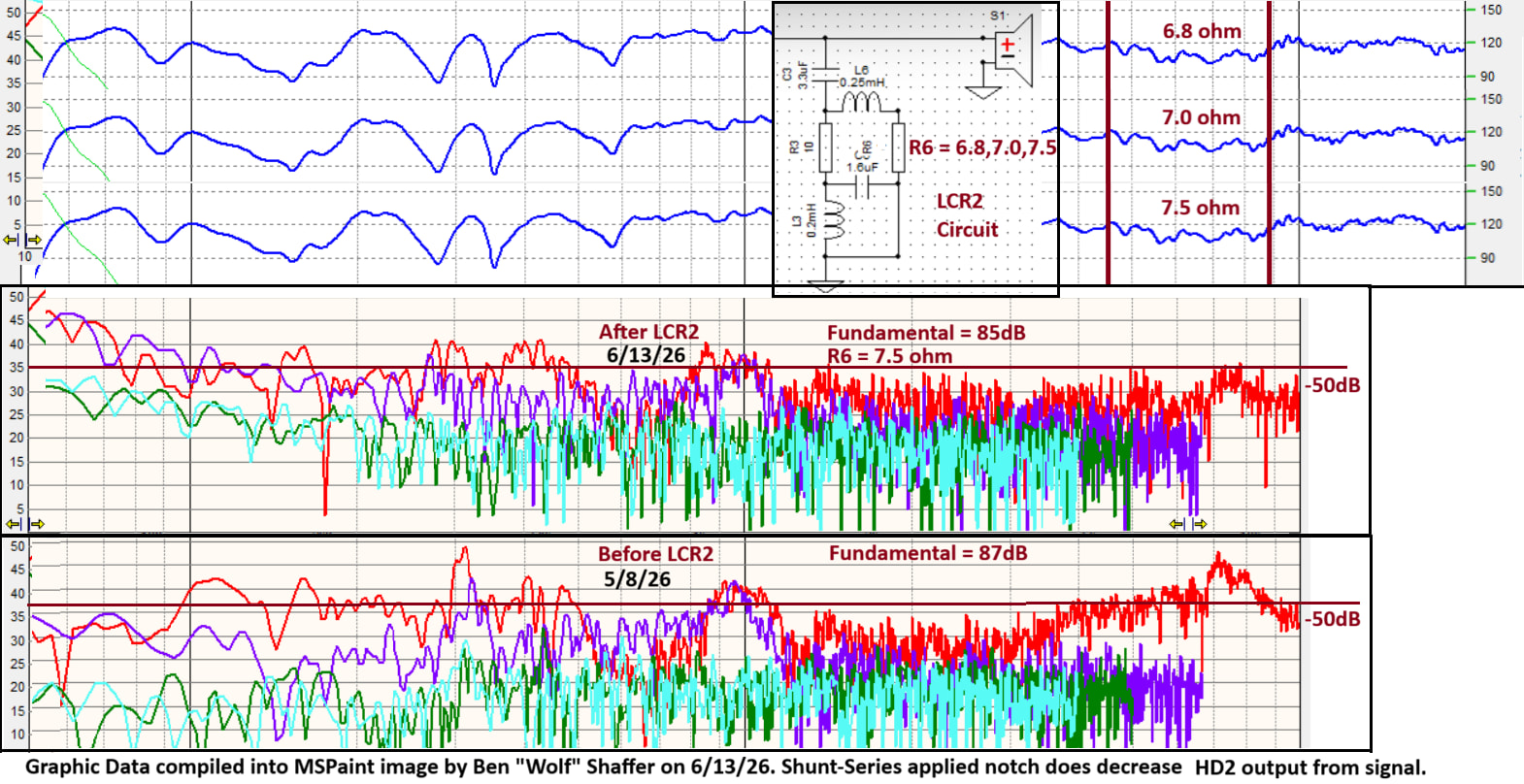
The 7.5 ohm is the highest of the 3 output levels being this is a shunting circuit. Now that I have measured that it indeed does the job, and has made them much more listenable, I have to pick my favorite ohm value. I’ve had the 7.5 ohm resistor in place for about a week, and it is much better than before sonically. Visually, the difference in levels is not that much. As stated prior, 6 ohms was dulling the dynamics and 8 ohms wasn’t enough suppression.
5 Likes
The proof is in the measurements
I typed your “notch within a notch” filter into a blank Vituixcad model and tweaked around on the values to see how if affected the filter response curves. This topology appears to give the designer quite a bit of flexibility. Thanks for sharing. Have to add this to my bag of tricks. 
3 Likes
Both notches have the same Fc. The added 3 components target the Fc more closely, making the slope of the filter approach 12dB theoretical slopes, with 6dB slopes further away from Fc. This is why I called it an elliptical notch. Adding the shunt leg or changing the R6 position can adjust things as well. Just so happens the shunt broadened the targeted area in my case.
If you wanted to do this in a parallel style notch, the circuit would look like an insect’s 6 leg arrangement. The first and second notch would again target the same Fc, but one would be broad Q and one narrow. This would add more resistance at Fc than if the single was alone.
Other ways involve;
-switching between types like a tank and a shunt LC. I do this a lot to better the impedance and steepen the correction.
-using combination of topologies like making the notch true second order arrangements. This involves a double shunt component after the parallel notch components.
I can draw these out later if you like.
2 Likes