Iron Driver 2027

:fire: The GReat DIY Get Together — Iron Driver Competition :fire:

It’s official! For the next GReat DIY Get Together, we’re adding an Iron Driver Competition.

The idea is simple: everyone starts with the same driver, and then let’s see what you can do with it. Beyond that, you’re free to get creative (with a few rules).

:speaker_high_volume: The Iron Driver

The driver family for this competition is the SB Acoustics SB13PFC-XXX series, including:

  • SB13PFCR25-04

  • SB13PFCR25-08

  • SB13PFCR25-4 COAX

You can choose whichever of these three versions you want to build around.

:money_bag: Driver Budget — $200 Maximum

The $200 limit applies to drivers only!

There is no budget limit on the rest of the build. Spend as much or as little as you want on:

  • Cabinet materials

  • Crossover components

  • Ports

  • Damping

  • Hardware

  • Electronics

  • Amplification

  • DSP

  • Finish

  • Anything else you can dream up

The idea is to put the emphasis on design and execution, not on forcing everyone into the same budget.

:package: Cabinet Size — 2 ft³ Maximum

The maximum EXTERNAL cabinet volume is 2 cubic feet.

That’s the limit on the outside dimensions of the completed speaker. How you use that space is completely up to you.

Sealed, ported, passive radiator, transmission line, unusual geometry, CNC wizardry, beautiful woodworking, ugly-but-effective engineering… get creative!

Just keep the finished enclosure under the 2 ft³ external volume limit.

:high_voltage: Active Systems Are Allowed

I believe this may be a first for Iron Driver, so let’s have some fun with it.

Active designs are allowed.

If you choose to build an active speaker, the system must use one of the following inputs:

  • Analog RCA

  • Analog XLR

  • Digital coaxial S/PDIF

For AC power, use a standard 3-pin IEC inlet.

:prohibited: No USB

:prohibited: No optical/TOSLINK

The goal is to keep the active systems reasonably standardized and easy to connect during the event.

If you use DSP, active crossovers, amplification, or other electronics, that’s completely fair game. Just make sure your speaker can accept one of the approved inputs and be connected to the event’s playback system. Everything must be contained in the speaker.

:trophy: 1st & 2nd Place — Blind Bracket Competition

This is where things get interesting.

The 1st and 2nd place speakers will be determined through bracket-style elimination.

Speakers will be played behind a curtain, so the listeners won’t know which speaker they’re hearing.

No peeking at the cabinets. No identifying the builder. No judging based on the finish.

We’re judging what comes out of the speaker.

I’ll also do my best to get the levels matched as accurately as practical before the listening sessions. The goal is to make this a fun competition while taking the listening comparisons a little more seriously than our normal listening sessions.

The exact bracket format will depend on the number of entries, but the goal is for the speakers to compete head-to-head until we have our 1st and 2nd place winners.

:3rd_place_medal: 3rd Place — Community Choice

Third place is going to be a little different.

The community gets to choose it.

After everyone has had a chance to see the entries, each person will be asked to select their three favorite designs.

You can vote for any three speakers based on whatever matters to you:

  • Creativity

  • Engineering

  • Appearance

  • Craftsmanship

  • Clever use of the driver

  • Innovation

  • Overall design

  • Or simply, “I really want to build one of these.”

The speaker receiving the most votes and did not win 1st or second will determine the community-choice result.

One important rule:

The 1st- and 2nd-place winners from the blind listening competition are not eligible to win 3rd place.

This gives another builder a chance to take home some bragging rights and recognizes a design that the community really likes, even if it didn’t win the blind listening bracket.

:hammer_and_wrench: The Point

This isn’t about building the most expensive speaker.

It’s not about who has the fanciest CNC machine, the most expensive crossover components, or the prettiest finish.

It’s about taking the same basic building block and seeing how differently a bunch of DIY speaker builders can approach the problem.

Same driver. Different ideas. Different solutions.

And, hopefully, a lot of really cool speakers to listen to.

So start thinking, start modeling, start designing—and most importantly…
Let’s see what you can do with the Iron Driver! :fire::speaker_high_volume:

4 Likes

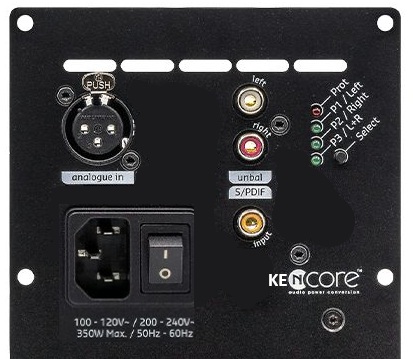
Here is an example of an acceptable active hook up:

1 Like

I wanted to get this information out there so that people could build something that would work for InDIYana, PE SDC, and GReat DIY Get Together Iron Driver.

The Mac06 was my second choice but worried that it would limit the compitition. That being said it would make a great driver to use for a 3-way. Also Brad has been so great to work with I hope we all give him some love.

Please feel free to ask questions!

I guess that makes a reasonable choice. Count me as whelmed.

It looks like a pretty easy driver to work with, even has built-in bsc.. So, something to see how it goes, for a first try event challenge, and reflect on after. My guess would be a “sea of same” with maybe a few outliers.

I guess I’m dissapointed to miss out on the MAC opportunity for this. As I suspect it is a “once their gone, their gone” situation. We may never get to have them as an Iron driver.

For active how are you planning on level match? Digital attenuation at source? Not all sources does it, analog is volume control, but digital is usually full send.

One of my hopes with this driver selection is that it will be flexible enough to work with almost any design.

I hope someone does a 3 way with the MAC06​:smiling_face_with_sunglasses:

I can controll the volume from the source or the preamp. This is the reason I limited how many inputs will be allowed.

I’ll probably build a pico bassed coax distribution hub with “volume” knob. Simple and clean.

I would have done TMWW with the MAC-06, but it leaves me $3.20 for the tweeter. :rofl:

2 Likes

Piezo to the rescue

5 Likes

Ani, with my Hypex plate amps, the S/PDIF signal is sent from my Sony CD player as a 0.5Vp-p digital signal, which, if viewed on an analog oscilloscope, would look like a poor quality square wave at an RF frequency somewhere in the 5 to 25MHz region. Ie., it has a clock frequency, but not an analog type audio frequency voltage level. Since it is an RF signal, the cable impedance must be 75 ohms to ensure maximum signal transfer. When the digital signal gets to the S/PDIF inputs on my Hypex amp, the DAC inside the Hypex then converts this to a low level analog signal, which, in turn, is sent to the power amplfier channels. Volume is controllec by the DAC/preamp section in the Hypex amp only, so I must use the Hypex remote control to set levels.

Ya, I see that KenCore photoshopping operation! :grinning_face:

1 Like

No point in my trying it as I’m in Oz, but U$200 is A$280, which would exactly get me the SB13pfc co-ax plus SB20pfc, could be a nice three way build?

Cabinet size would work too, but I don’t have measuring equipment or XO design skills; however, I just checked US prices on these and the project would be over budget, unless you allow an ‘Oz equivalent’ exemption. I think I know the answer to that…

I vote that if you build it in 'Oz and bring it to the US to compete, you get to use the budget in your local currency. A quick search suggest round trip to Grand Rapids is A$2,000 to A$3,000.

3 Likes

Not even Easter but you found the Easter egg.

It would surpriseme if the Hypex couldnt be volume controlled through the digital signal. You may need to find a master slave option for it to work though.

These drivers might go on sale again. I have recently seen them as low as $25. That would open up a little more budget for a tweeter, might be able to afford a nice peizo.:rofl:

So, do “sale prices” count? This could make a sizeable difference on the tweeter or a woofer in a 3-way assuming PE has 15-20% off on Black Friday/Cyber Monday.

Clarification on pricing, for any driver price must match todays pricing or any discounted pricing between now and the event. NLA drivers are a no go unless they are available from a retailer (not ebay/facbool ect.) today. If you use a foreign vendor you must include shipping and all import charges.

Waiting untill holiday sales might be a good idea, but I’ll allow you to use sale pricing for drivers you might already own.

Also, lets be self accountable to be honnest and fair.

1 Like

Yes, you care correct. My prevous post was partially in error. Let me clarify. On my current setup, the Hypex plate amp volume level can be controlled through a digital USB cable connection from my laptop computer, but only when the computer is running AND linked to the Hypex amps using the Hpex Filter Design program (HFD).

I currently have my two speakers set up in a master/slave configuration with the digital audio transferred from one speaker to the other via a 15 foot long S/PDIF cable. Then I have another 15 foot long S/PDIF cable running from my CD player’s S/PDIF output to the master Hypex plate amp’s S/PDIF input. So I can control volume in two ways: 1) using the Hypex remote control, or 2) using my laptop to mouse click the volume slider in the HFD software package while it is running and linked via USB cable.

But I only use my laptop, HFD program, and USB connection to program the dsp. Once programmed, I would probably leave my laptop at home and just bring the speakers (with plate amps installed), S/PDIF cables, AC power cables, and Hypex remote control.

If I can’t controll though the SPDIF then you would need to use the analog in.

All volume must be controlled through the front end.

Got it. I will plan on an “Analog RCA” or “Analog XLR” type connection. For my setup, volume control cannot be passed from your front end to my Hypex plate amps via S/PDIF.