Haven’t decided what to call them yet. Cain & Abel, Jekyll & Hyde, PB&J, Duality & Dichotomy. For now (and maybe forever) they’re Duality A and Duality B, which is also the naming convention of binary star systems (hence why it may just stick)
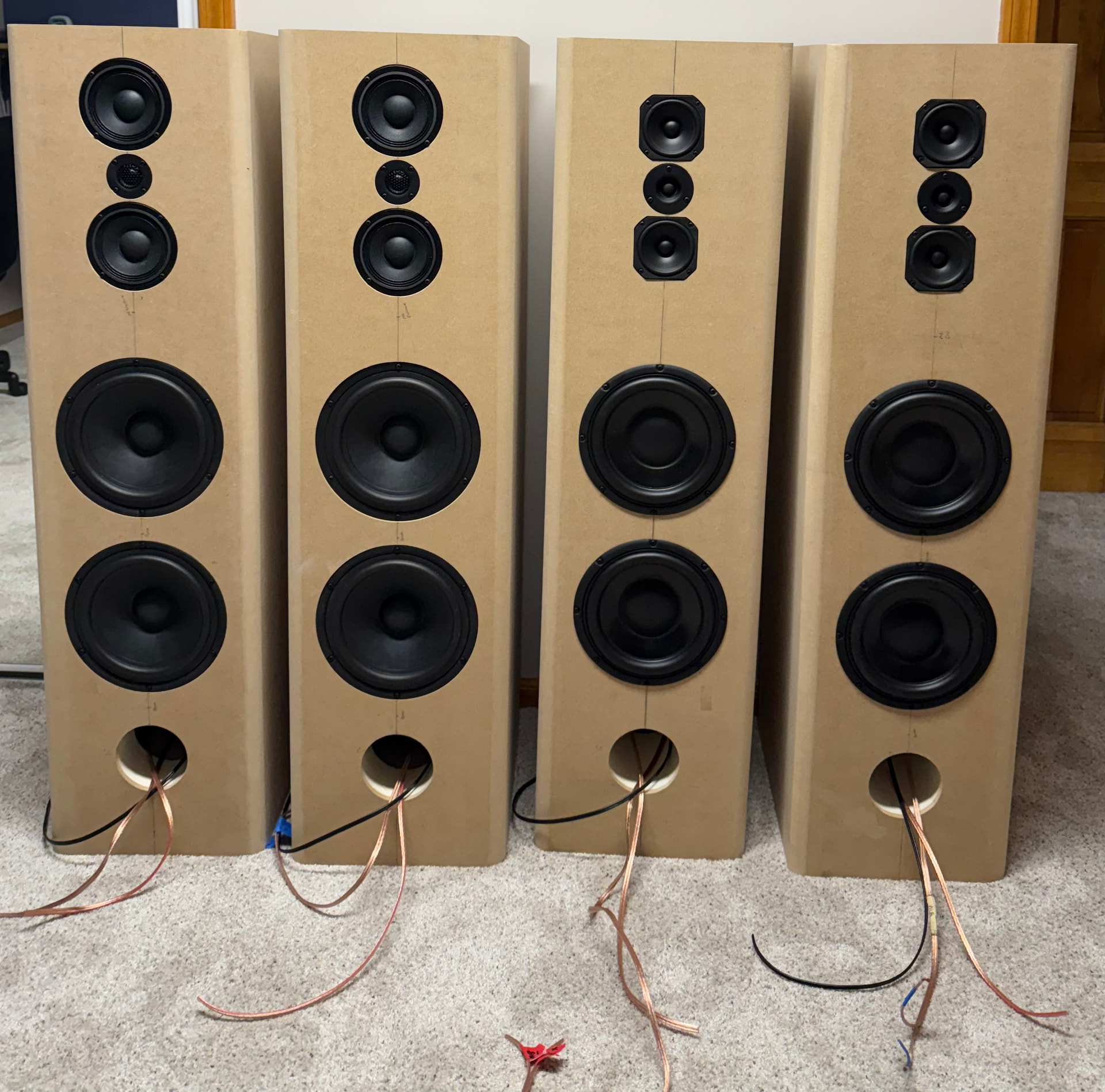
The parts for Duality B have seen sitting in my basement for 3 years patiently waiting to be built. Duality A just sort of fell together over the past year. I got some Alpha4 drivers from Chuck and then the MCM 5670 went on sale for $15. So I decided to put those two together, add a 3/4” tweeter and simultaneously build two matching pair of WWMTM speakers for fun and production efficiency.
Duality A will have the Dayton Carbon 3/4” tweeter, (2) Eminence Alpha4-8 and (2) MCM 55-5670
Duality B will have the Peerless DX20 tweeter, (2) Peerless TC9 and (2) Peerless 830667 SLS 8”
So both speakers are 3/4” tweeter, 3.5” - 4” midrange and 8” midbass. The midbass both worked reasonably well in the same sized enclosure, so both cabinets are about 83L. The Peerless will be tuned to 30hz and the MCM to 35hz
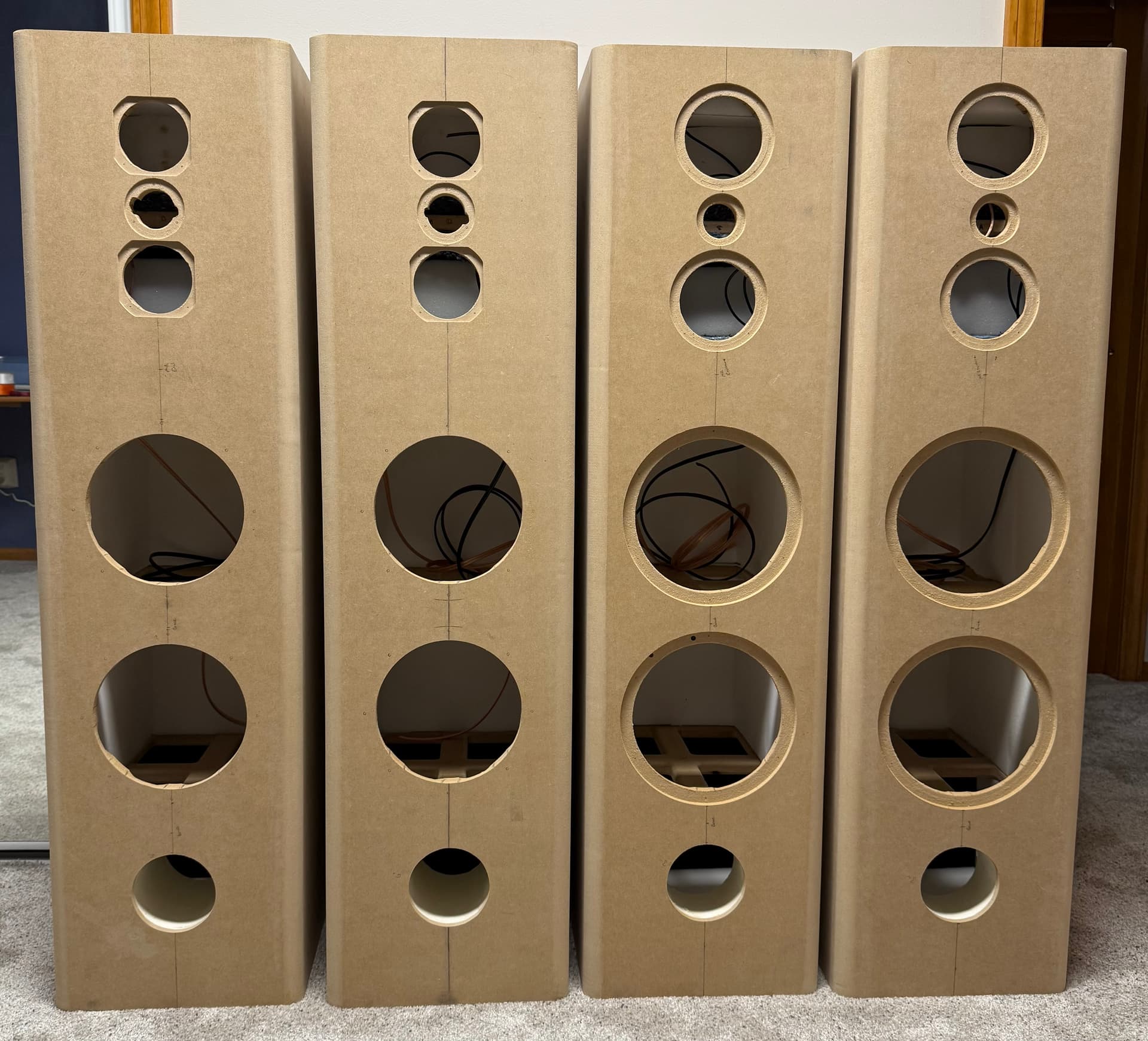
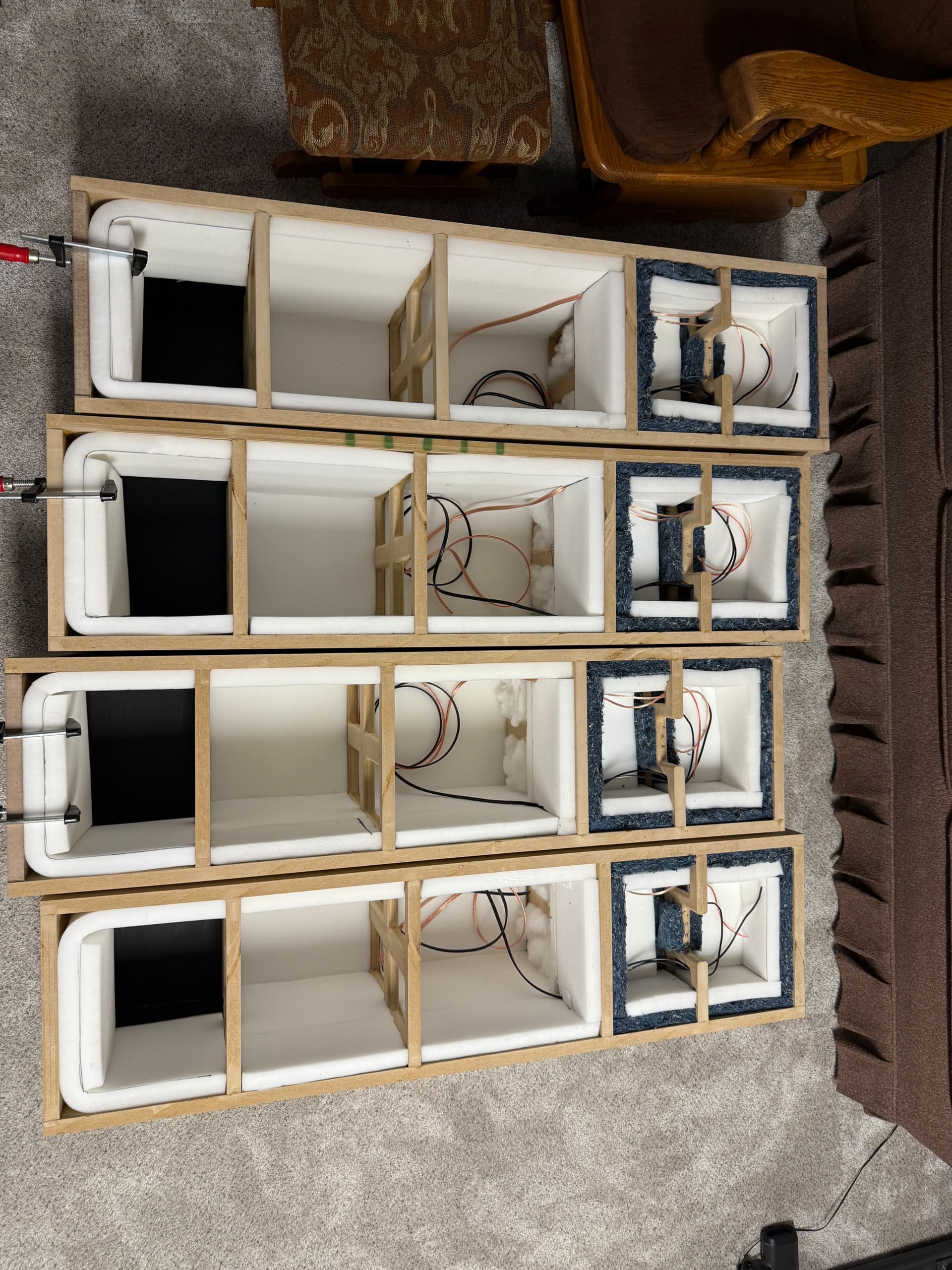
This is where they sit as of now. Ensured I got far enough before the weather turned nasty that I can get measurements and spend the winter tinkering. Should keep me busy!
Like Ben said, it’s just open cell upholstery foam. The clamps aren’t really applying much pressure, just enough to hold it in place while the glue dried which didn’t take much
I built 4 pair of 4” bookshelves simultaneously a few years ago, purely as an exercise in testing various drivers from AliExpress. It was fun and kept me busy for quite some time. Turned out at least one tweeter and one midwoofer were worth the money.
It always kills me how long the most mundane activities take in this hobby. I spent 5 hours today just getting these things from empty cabinets to measurement ready.
Finally getting the first set of measurements is always the part of the process where I feel like I’m actually getting somewhere productive. Probably my second favorite part of the hobby, behind hearing them actually play music for the first time.
yeah. For me the same thing happens building and installing the crossovers. I always start the evening thinking “Ill be listening to these tonight”.. Fast forward to midnight as the final screws go in.
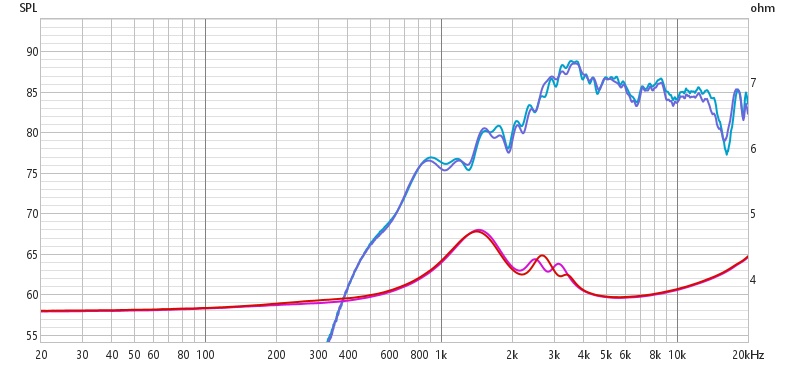
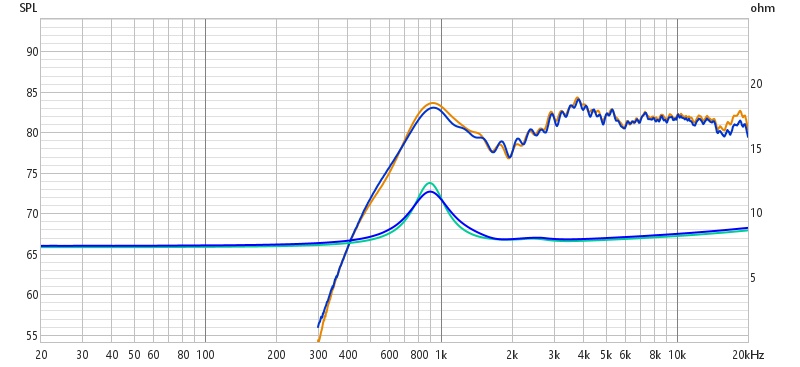
The Dayton CF18 tweeters are the “matched pair”. The Peerless DX20 are just $12 tweeters randomly off the shelf from Digikey. Sure, the FR is relatively matched between the Carbons, but the Peerless is as equally matched if not more so. The impedance has better consistency on the Carbon but I don’t think they match impedance between units on the matched pair, just the FR. Moral of the story I don’t think “matched pairing” is anything but a sales tactic if you have good unit to unit consistency in your production process.
Also note the scale for the impedance on the Dayton, these things have virtually no impedance peak, I had to really zoom in to show it. I’m presuming this is due to the ferrofluid.
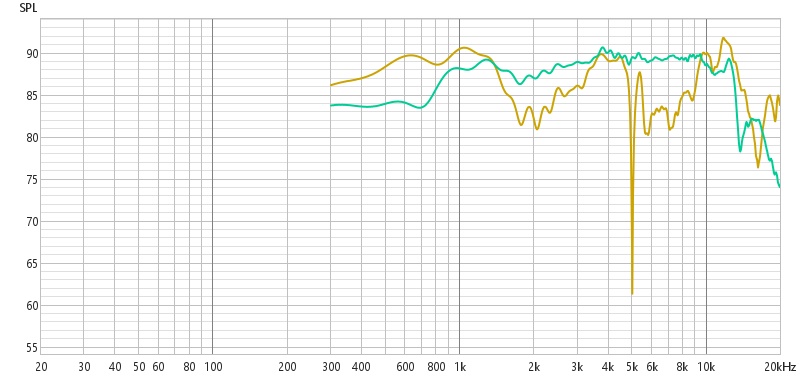
Second measurement I found interesting is that I don’t really have any peaks or dips on the Tweeter + Midrange measurement used for acoustic offset on the Peerless set? I’ve never had one of these measurements look this flat. Peerless DX20 + TC9s are teal, Dayton Carbon + Eminence Alphas are yellow for comparison
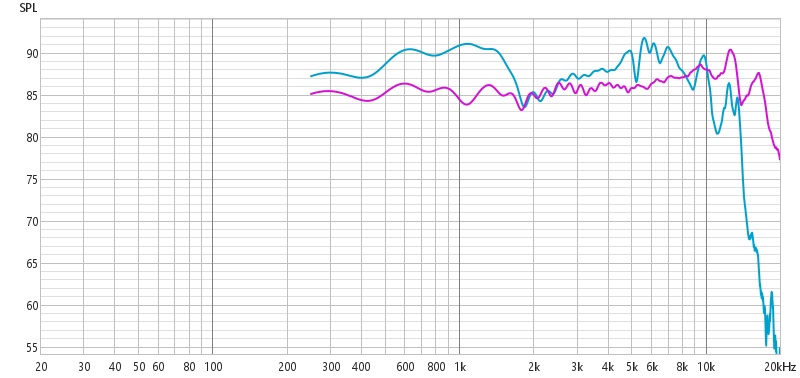
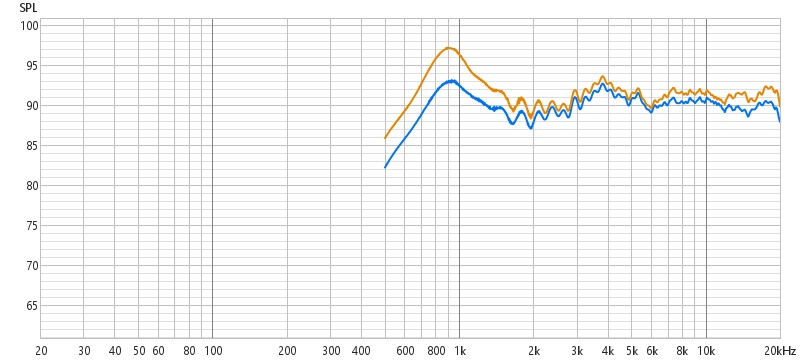
Last, measurements don’t really show baffle step on the TC9s? This is with 4ms gate. TC9s are purple. Alphas are teal for comparison, which show baffle step at the expected frequency. Enclosures are identical; same width, same roundover, same driver locations.
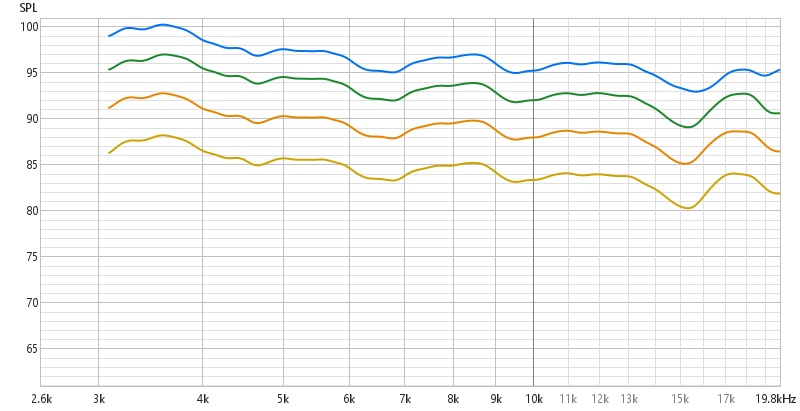
Day 2 of interesting results. I realized my initial measurements were a little lower in level than I generally do (I set the level for all measurements to 90db on the Eminence, which are the most sensitive drivers so as a result the output level for all of the other speakers were on the low side. Hindsight is 20/20). So today I went back and remeasured at 90db and 95db for all speakers to get an idea of distortion performance.
The Peerless DX20 seem to exhibit some pretty dramatic power compression over a majority of their bandwidth. You can see at 900hz the output is around 5db higher, but by 2khz they are only ~1db’ish apart and remains that way over the remainder of the frequency spectrum. This isn’t compression anywhere in my measurement setup as this is the only driver to experience it, and I repeated the measurement to ensure it was correct. I would imagine this power compression will really affect the spectral balance of the speaker as you twist the volume knob. Thinking about it while I type this….it actually may not be bad? It could take some of the edge or fatigue off as the output levels increase?
I think you’re seeing what happens when you drive a small diameter tweeter near it’s Fs. I’d try the same test with a crossover in place. For example, if you cross at 3K, LR12 you’ll be at least -20 dB down where you see the problem. Go LR24 and it will be -40 dB down.
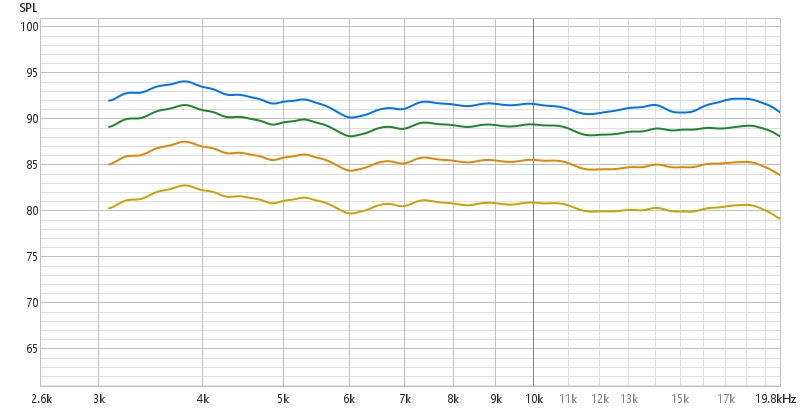
Just for giggles since I already had everything out to remeasure one of the speakers where the phase was wrong (not sure if it was a REW issue or mine), based on Ed’s comment I reran the test. This is with the signal starting at 3khz, each measurement is 5db apart based on the signal generation in REW. This is also zoomed in and 1/12 octave smoothing just so it’s easier to read. Both were level matched to 86db @ 1m
You can see the Peerless does experience about 1db more power compression than the Dayton tweeter at these drive levels.
This was all news to me, by the way. I’ve known about power compression for 20 years and how it will affect subs and woofers but honestly in all that time I never even considered the effect on tweeters. Because their power and excursion are generally so low the thought of them experiencing the same type of power compression never occurred to me.
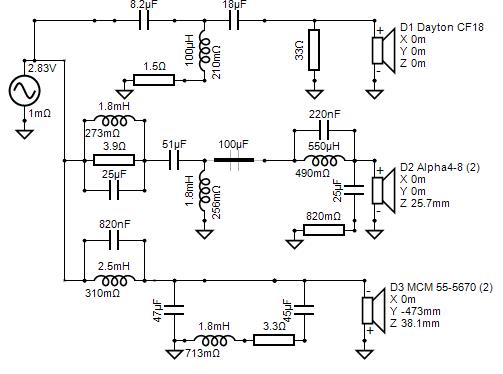
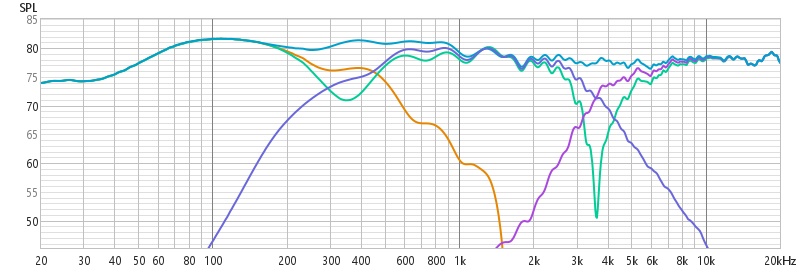
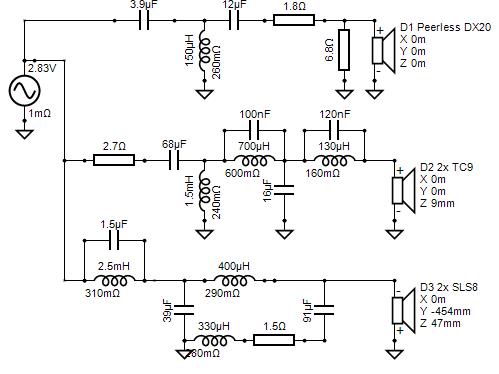
Now that the holidays are over and I have my Batmobile built, I’ve finally gotten serious about getting a working crossover for these speakers. I think I have my first trial crossovers. Both cross between the midbass and midrange around 450hz LR2. The Alpha cross MR to tweeter around 3.2khz and the Peerless around 3.6khz LR4. The Alphas are going to be significantly more sensitive than the Peerless.
Next step is ordering parts. Hopefully I’ll have everything here in about a week and can start working on real world test. My favorite part of this hobby is firing speakers up for the first time and giving them a listen.
Alright fam - what in my Peerless filter (as posted above) is causing a HUGE increase in odd-order harmonics in the midrange? Could it be the orientation of the inductors? I have the two air core inductors at 90* and rotated, but the iron core is fairly close to the .7mH aircore. I thought that wasn’t much of an issue with the ironcores but I could very well be wrong. The FR measures fine, but the odd order harmonics are significantly higher with the filter in place.
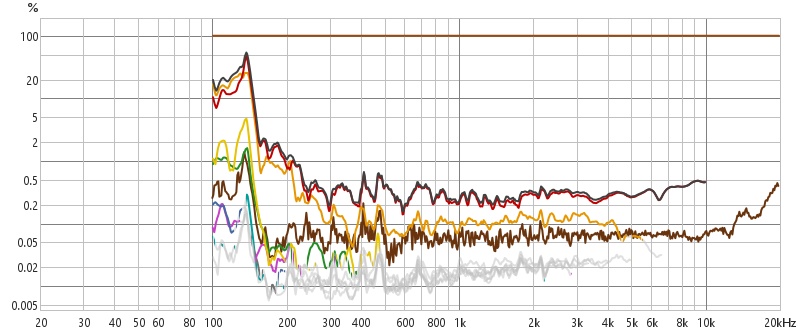
This is the raw midrange driver (TC9), no filter, 90db @ 1m @ 1khz. You can see the level of any harmonic distortion is basically non-existent
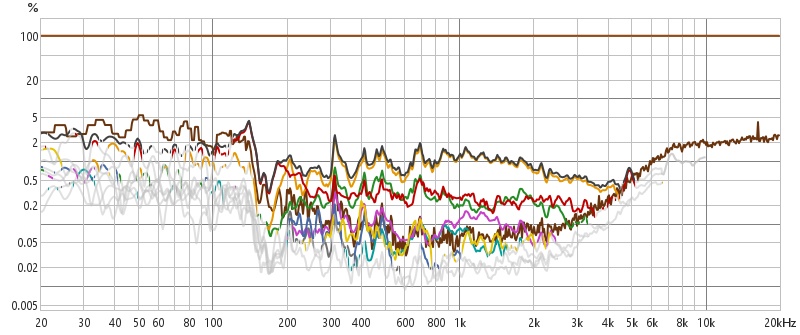
This is the midrange with the filter in place, about 90db @ 1m @ 1khz. You can see even order harmonics are still low but 3rd order and 5th order have increased substantially with 3rd order tickling or exceed 2% at the peaks between 300hz and 3khz and 5th order equal in level to the 2nd order.
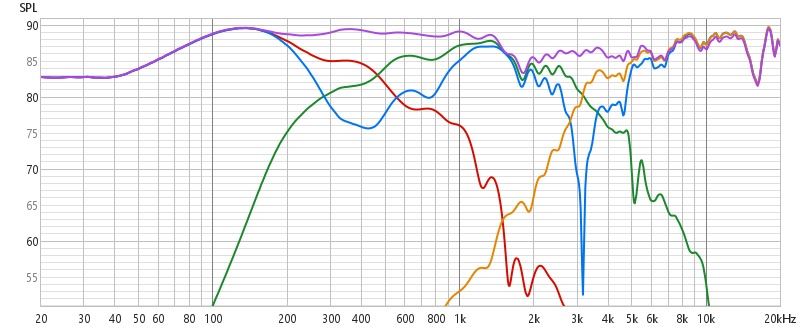
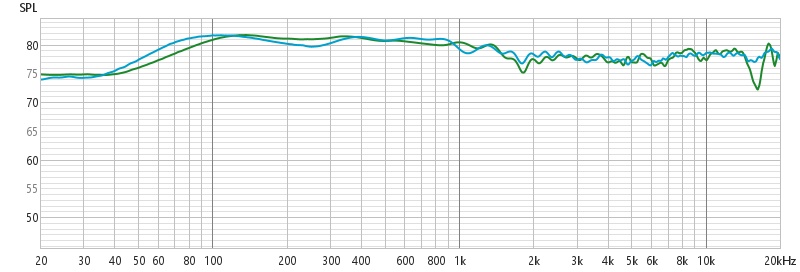
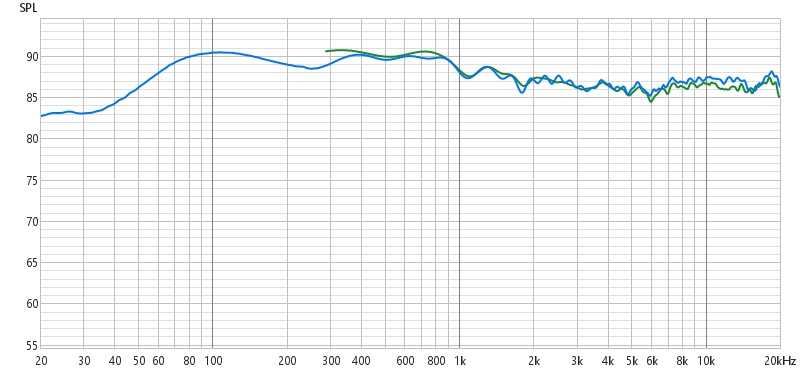
This is just to show the FR is well behaved. Blue is the sim, green is the measured. Slight deviation in the tweeter but the midrange driver matches the sim extremely well in FR

 yeah. For me the same thing happens building and installing the crossovers. I always start the evening thinking “Ill be listening to these tonight”.. Fast forward to midnight as the final screws go in.