Augerpro designed two six inch versions in THIS POST. I don’t know what the difference between his v3 and v4 are. He has NOT measured them, so they may not be good, but he has made a LOT over the last 6 to 7 years, so he probably has a good idea for a starting point.
He likes elliptical waveguides, so it is wider than tall, which allows closer center to center spacing. I don’t know if that is good or bad for your current plans. An STL file is a “Stereolithography” which basically maps out your object into 100s or 1000s of triangles for a 3D printer or CNC machine. The problem is that if you want to “tweak” his waveguide it may not be that easy. I use the free version of Sketchup, so I have a pretty limited choice of file formats that I can upload and download.
If I were you, I’d try these to start. If they don’t measure well, you could even post your results on diyAudio (or have me post them if you don’t have an account) and Augerpro would likely modify his design.
If you want a round version, rather than elliptical, I could probably take his throat profile and turn it into a round WG and post the STL file for you.
That’s what I was thinking and I like the way it looks. I think I will try something like a 5x7 instead of a 6 inch round. I think I can select it Vcarve CAD and set the size to what I want. I plan to play with it while on vacation next week
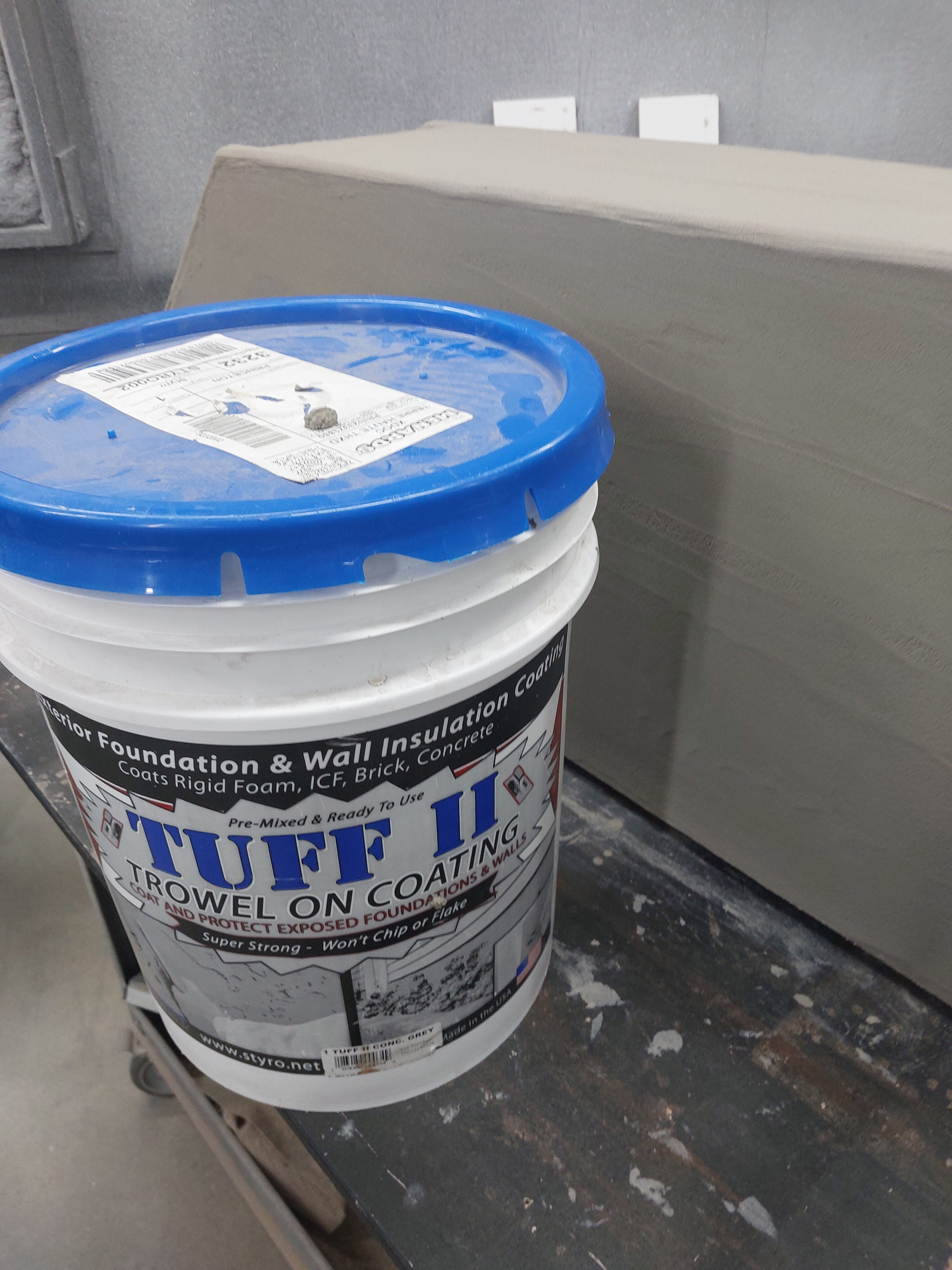
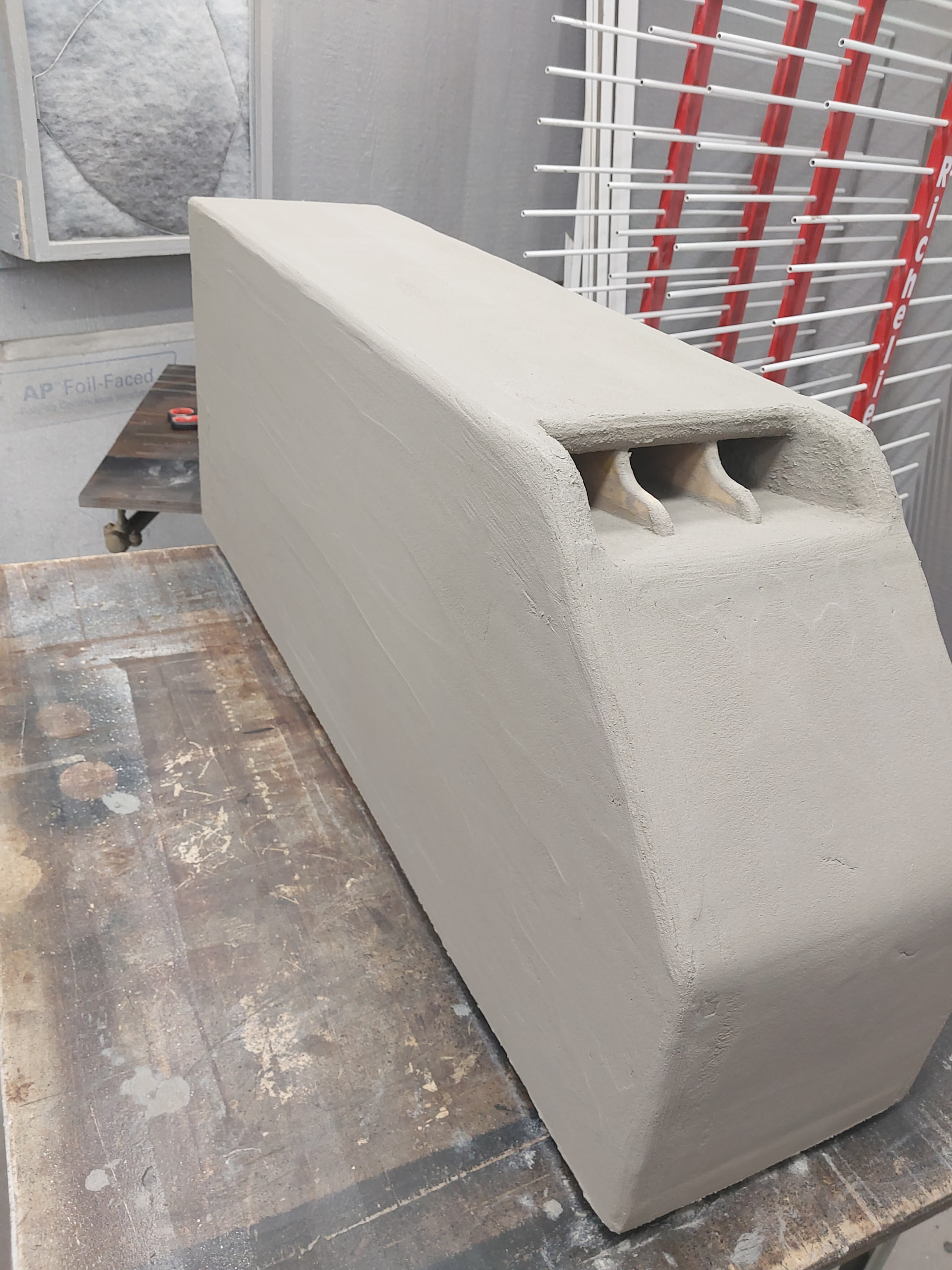
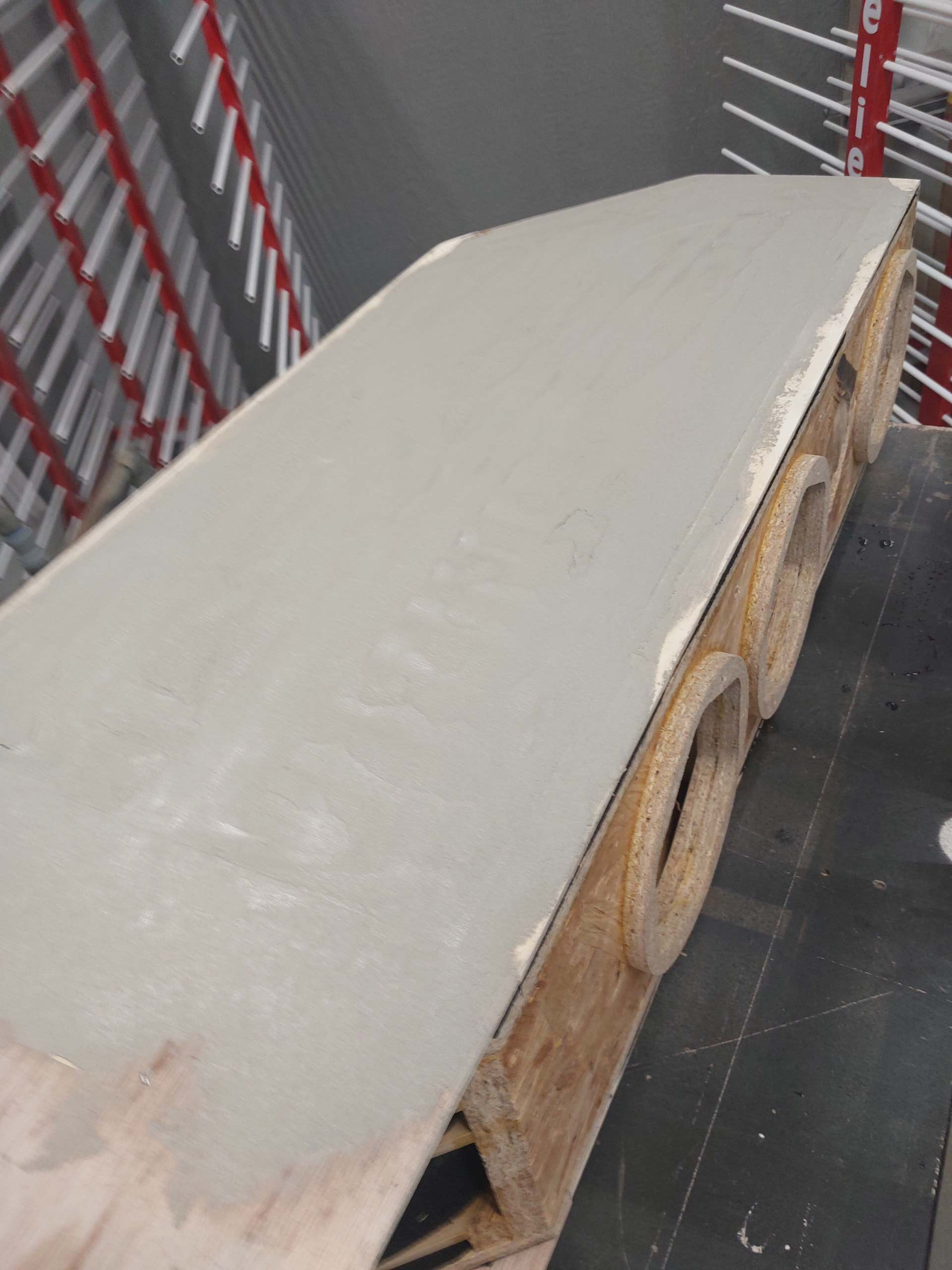
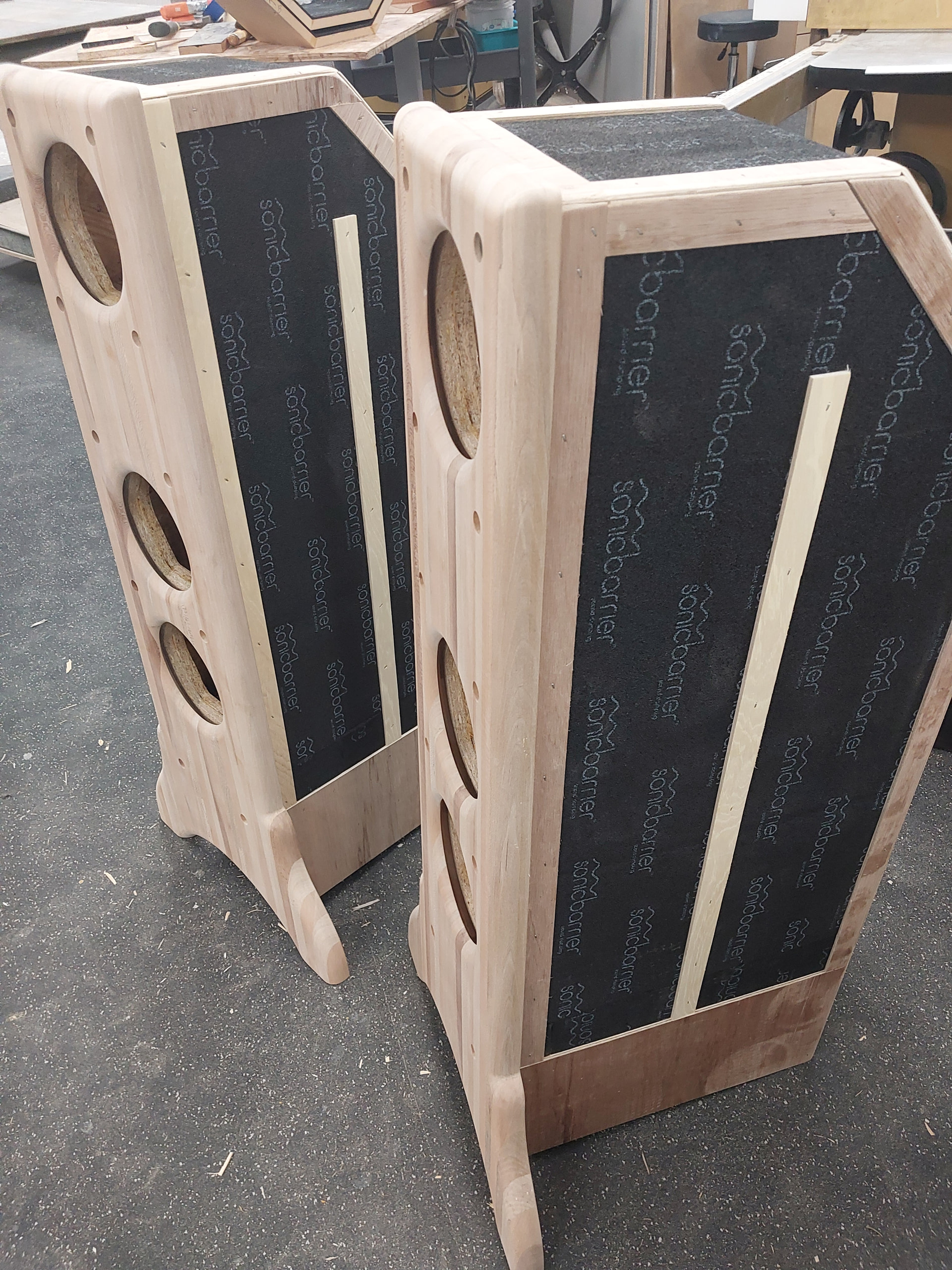
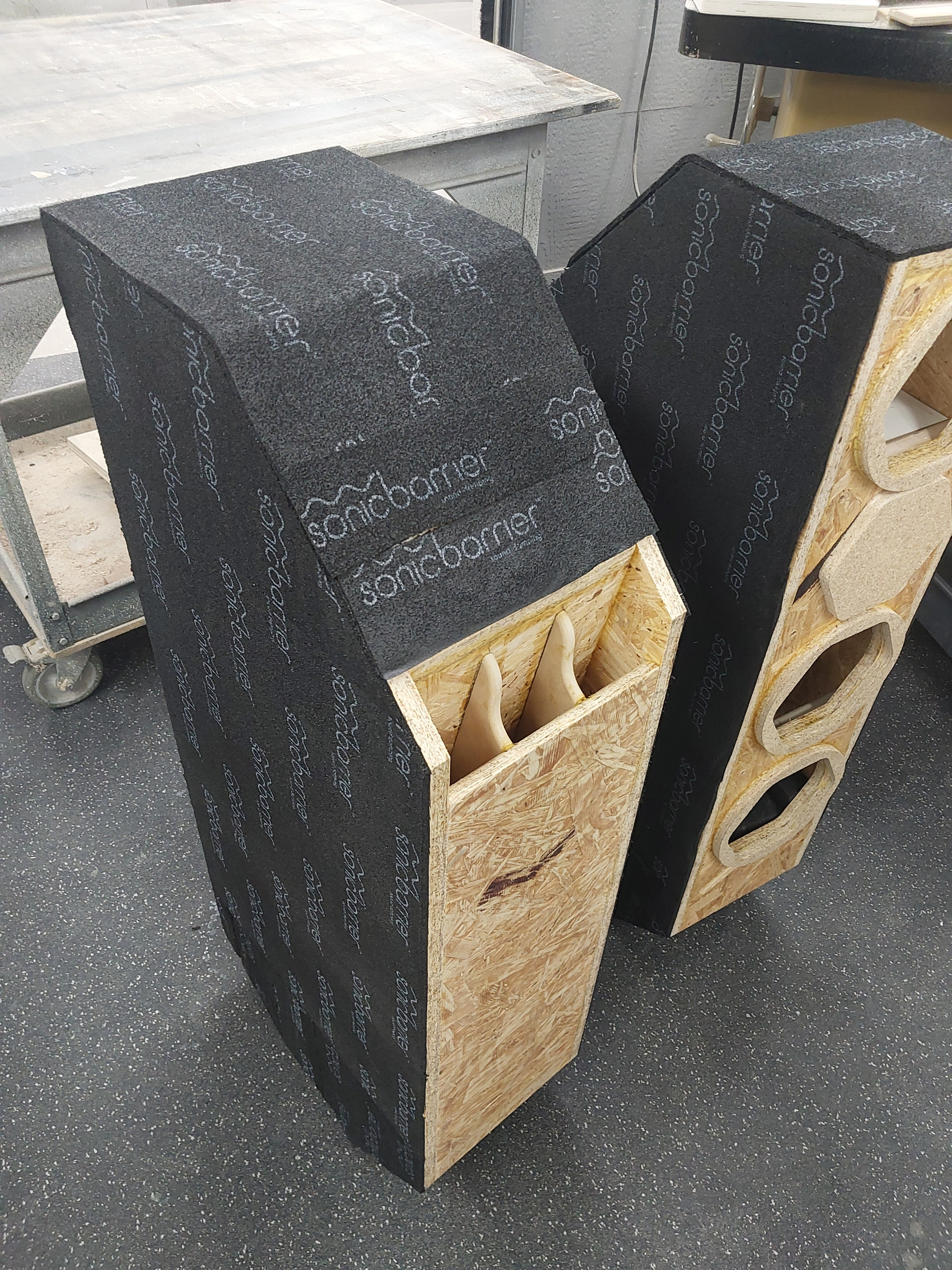
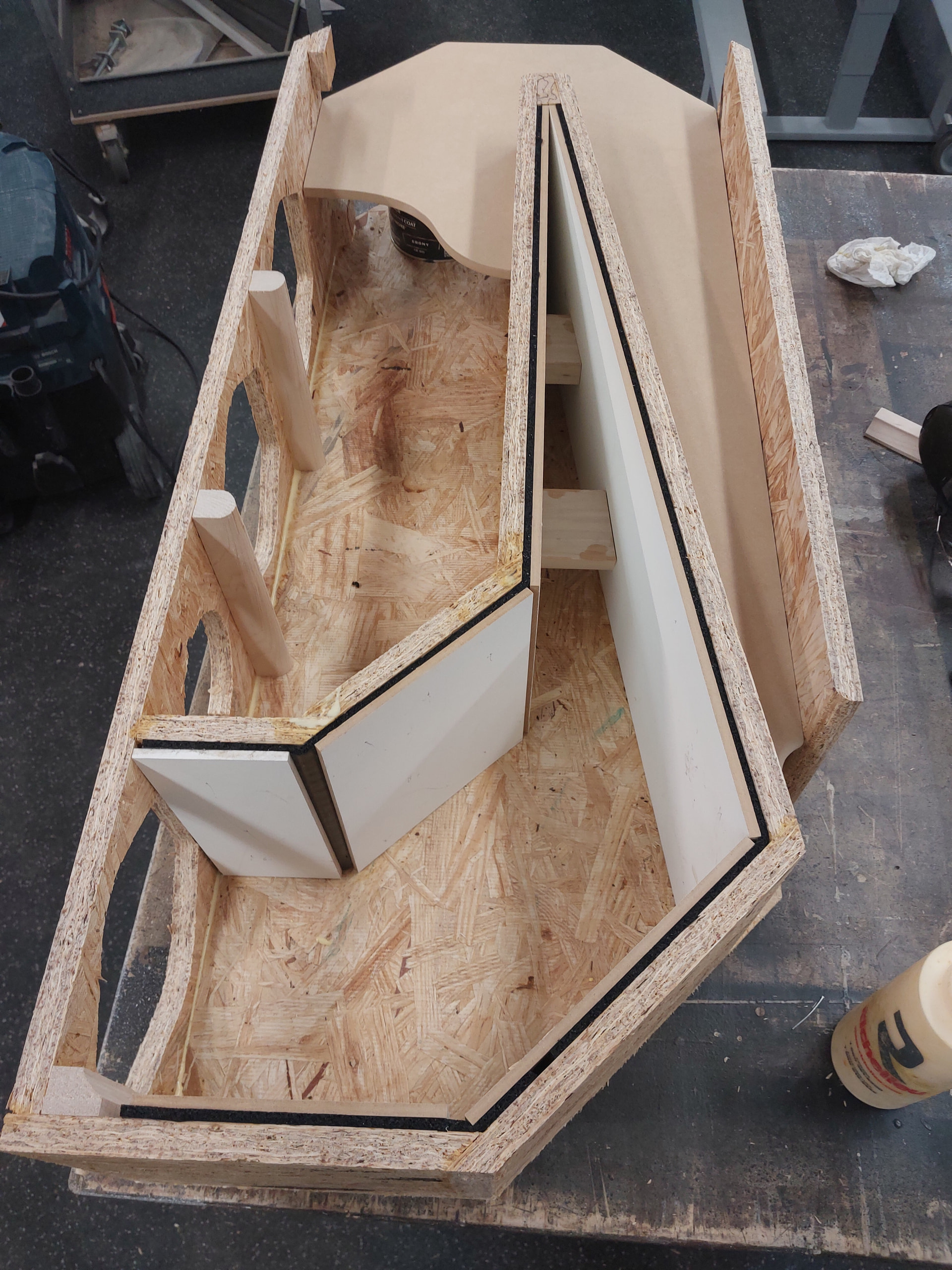
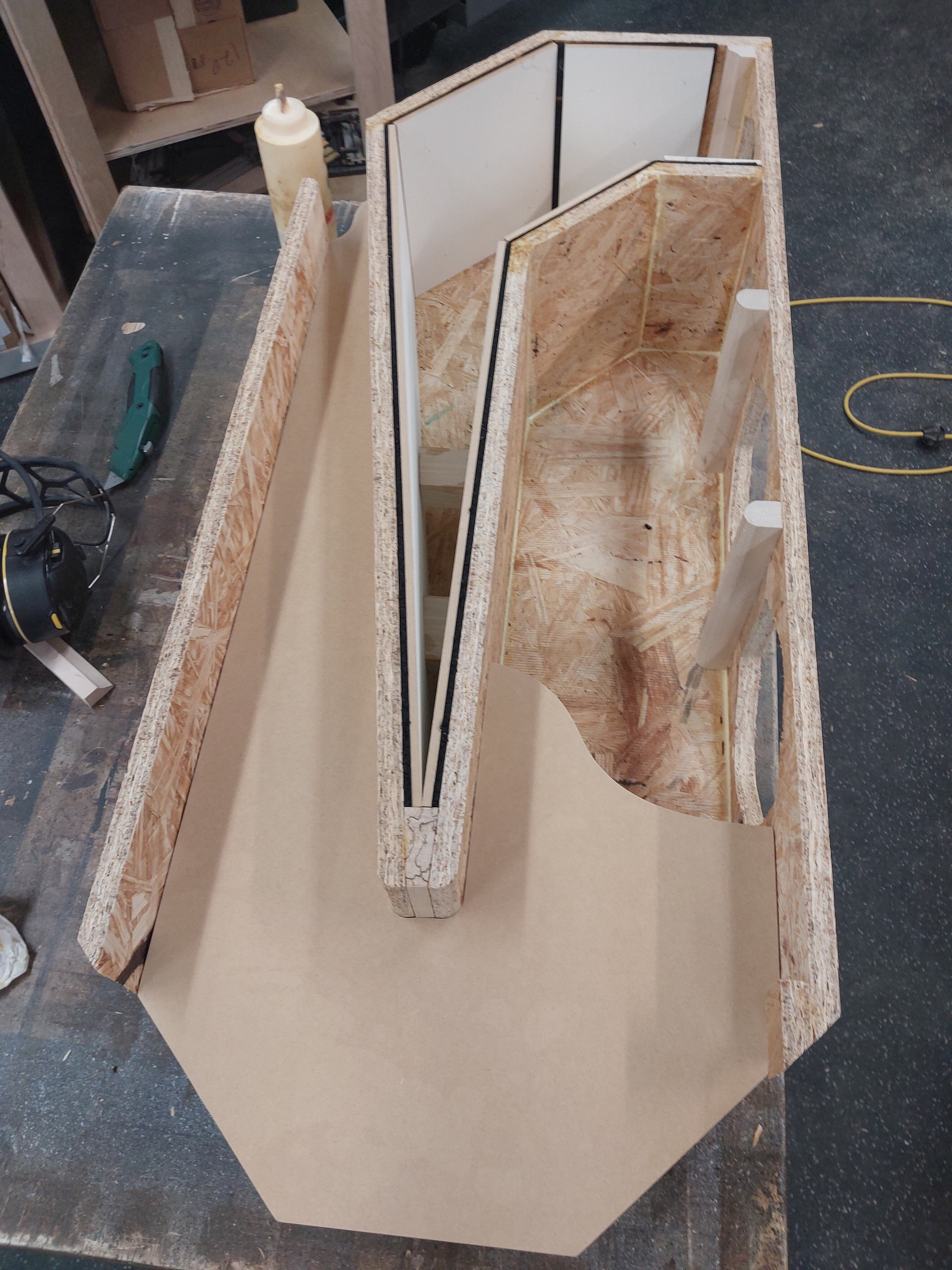
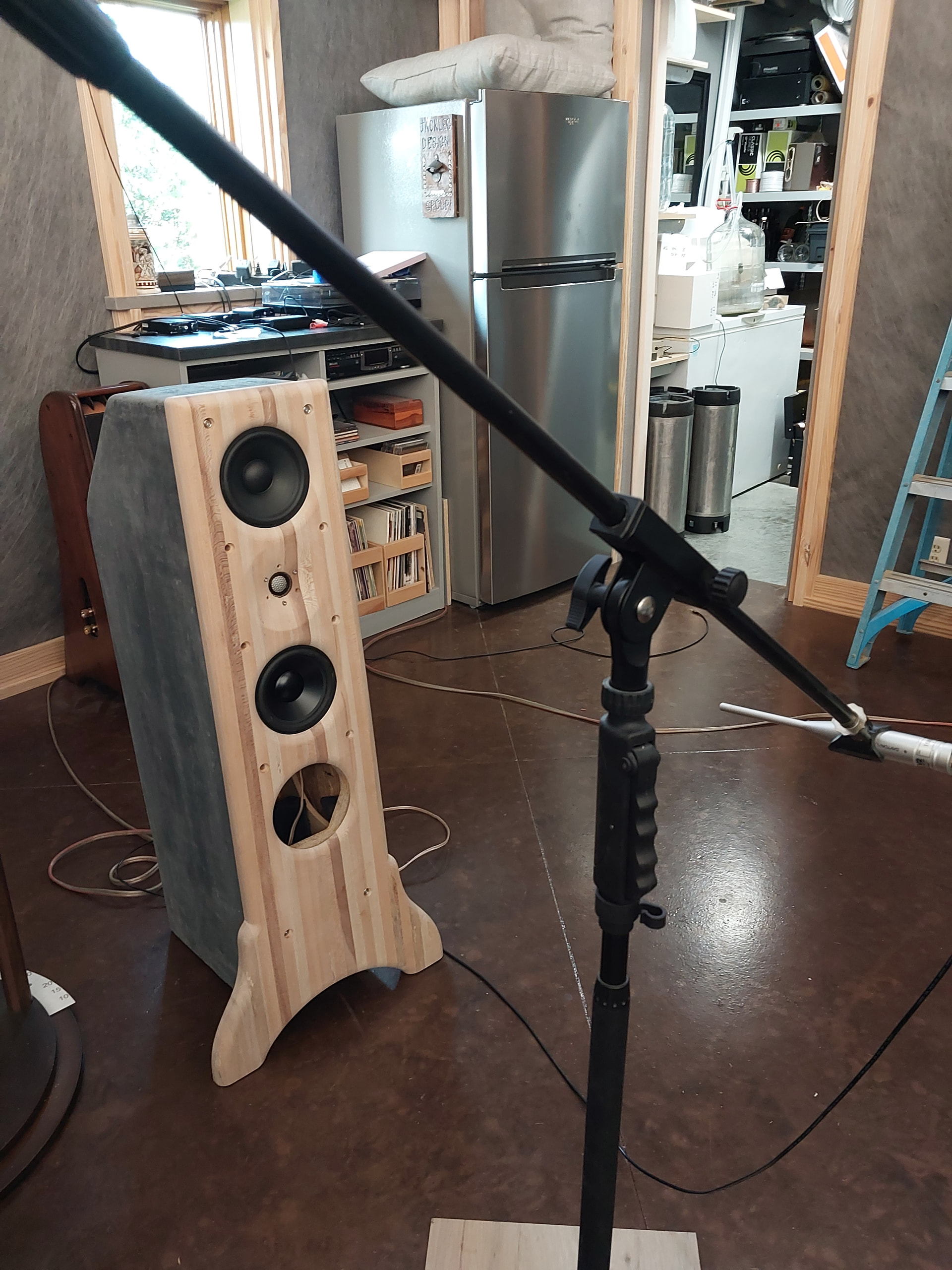
It’s a difficult thing, changing modes. I had a good start on these before the PE SDC and my brain was stuck in speaker mode, so I decided to construct the boxes. The 5/8 OSB is leftover from my daughters roof decking, so free stuff. I am almost out of Sonic barrier AB-4 and PE no longer sells it so I will need to find a substitute if I do this again. It is my constrained layer idea. I intend to darken the color of the foundation coating with paint after I am happy with the texture. Two coats so far and it will need at least one more.
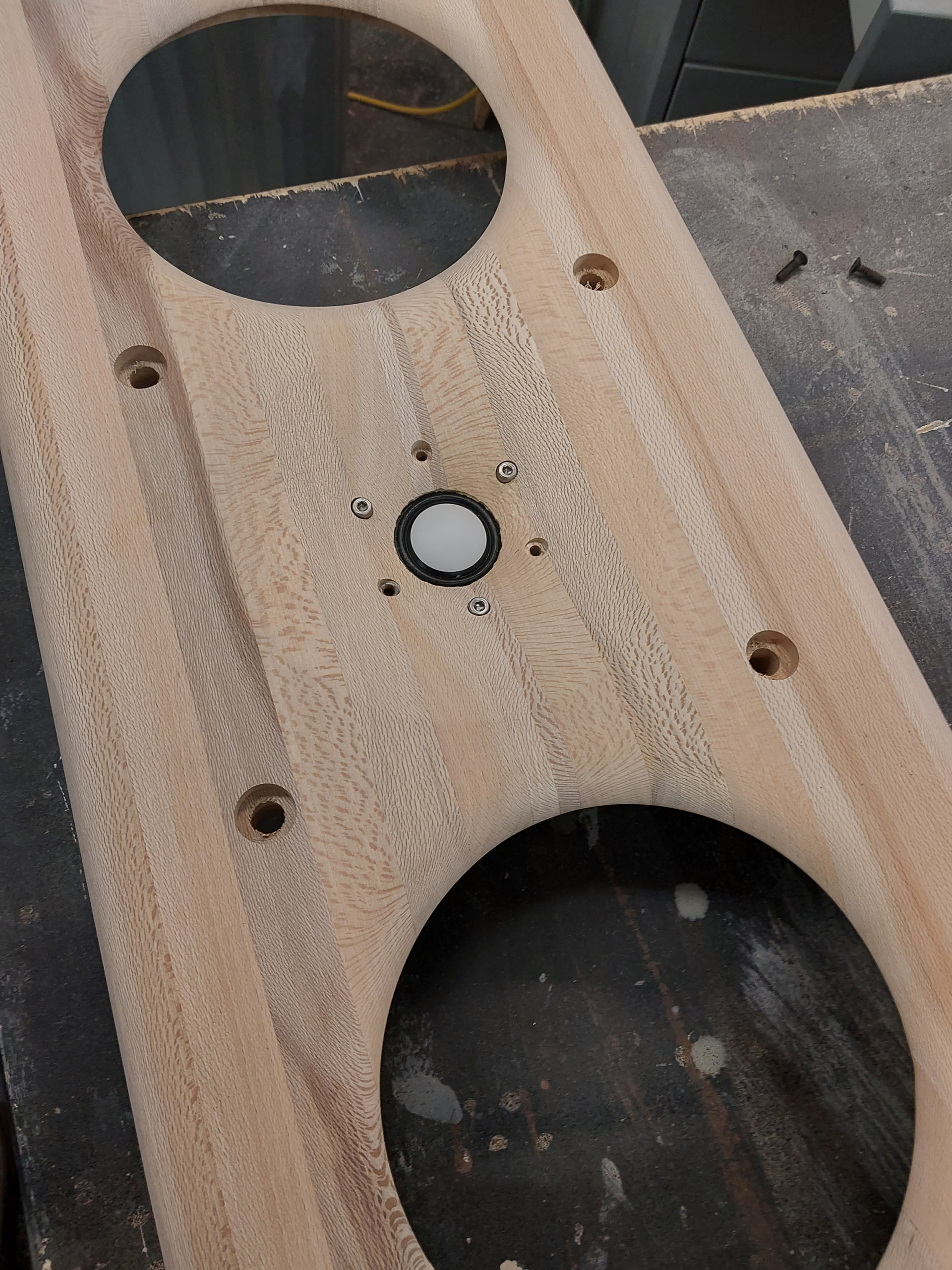
My EC-30 tweeters arrived today one day after I ordered them along with some other goodies. I think I will try a more shallow waveguide because I am having issues. It is a shallow dome profile and some guy named Santorine said my styrofoam prototype looked kinda deep so I can make a spacer ring behind the tweet. I am thinking I’ll make a waveguide out of foam board tomorrow 36x150x19 mm deep. Another nice thing about using foam board is that you can feel it vibrate when it is making contact with the surround during the woop woops.
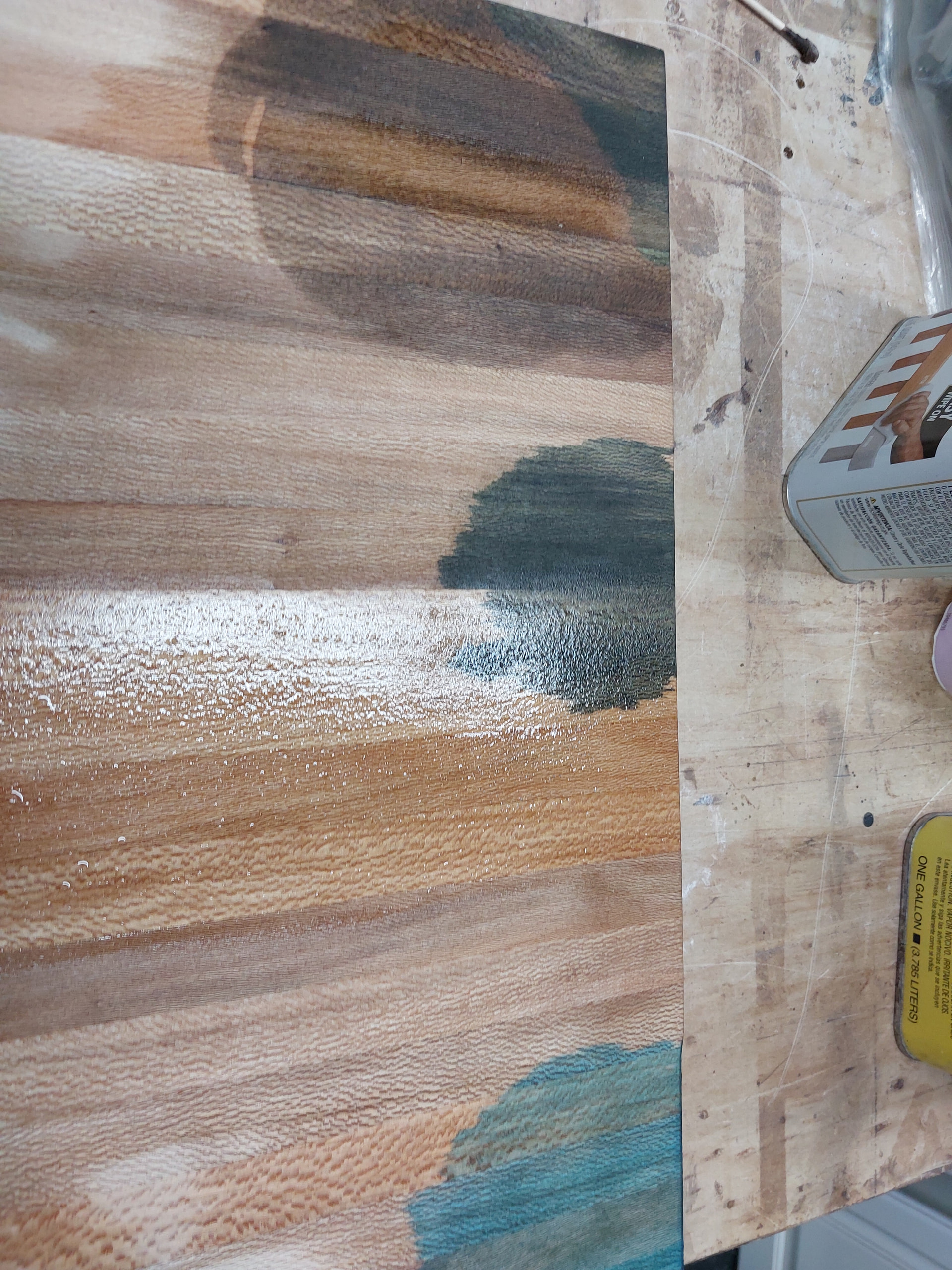
Waveguides are tricky but not impossible. I have come the conclusion that my waveguide measurement jig needs to be reworked a bit because the baffle is too symmetrical. I do enjoy symmetry. I am a man and therefore I am a simple creature, visually stimulated. Now imagine looking at a beautiful woman with one ear missing. It is something that is easily ignored. My speakers should look good, so in addition to waveguide stuff I have been trying a vinegar and steel wool solution that I believe is called Iron Acetate. It reacts with the tannins in the wood to make it look old. I think I first heard about this from DaveFred. I plan to introduce more tannins on a sample piece by flooding it with coffee or tea, letting that raise the grain and sand it lightly after it dries 320 grit or 220. I have also been playing with water soluble dyes, and the blue dye mixed with the Iron acetate stimulates my visual receptors.
While you are thinking of the shape of a woman’s’ allures, shape your cabinet like one in the form that pleases you and put the tweeter in her navel, the mid between her ample yet gently sloping outwards and away breasts using that form as a wave guide and the midbass, you know where brother and, keep her wide in that spot yet subtly rounded-off like the real thing.
transposing a 36, 24, 38 bod to metric (mm) as guide for width should get you egg-sactly to a starting point for your next creation.
Different slabs of the same wood species would react differently to the vinegar iron solution, the exact process is called ebonizing. It can turn anywhere from black to all shades or deep dark brown. I usually use shellac or a water based finish on mine, usually on oak, can be sanded as they react with the tannins in the oak and goes deep, but not too deep. So there is a chance your baffles look slightly different in shade. I try to get both baffles but from the same board, but even then the grain can make the reaction vary. Green tea bath makes it the color darker, but not very controllable.
Yes. That is what I like about it. I do not want it too dark so I plan to do more tests. I might pre raise the grain with just water and also add water to the iron acetate and dye mixture
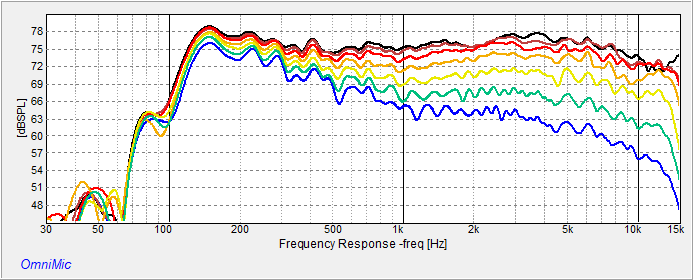
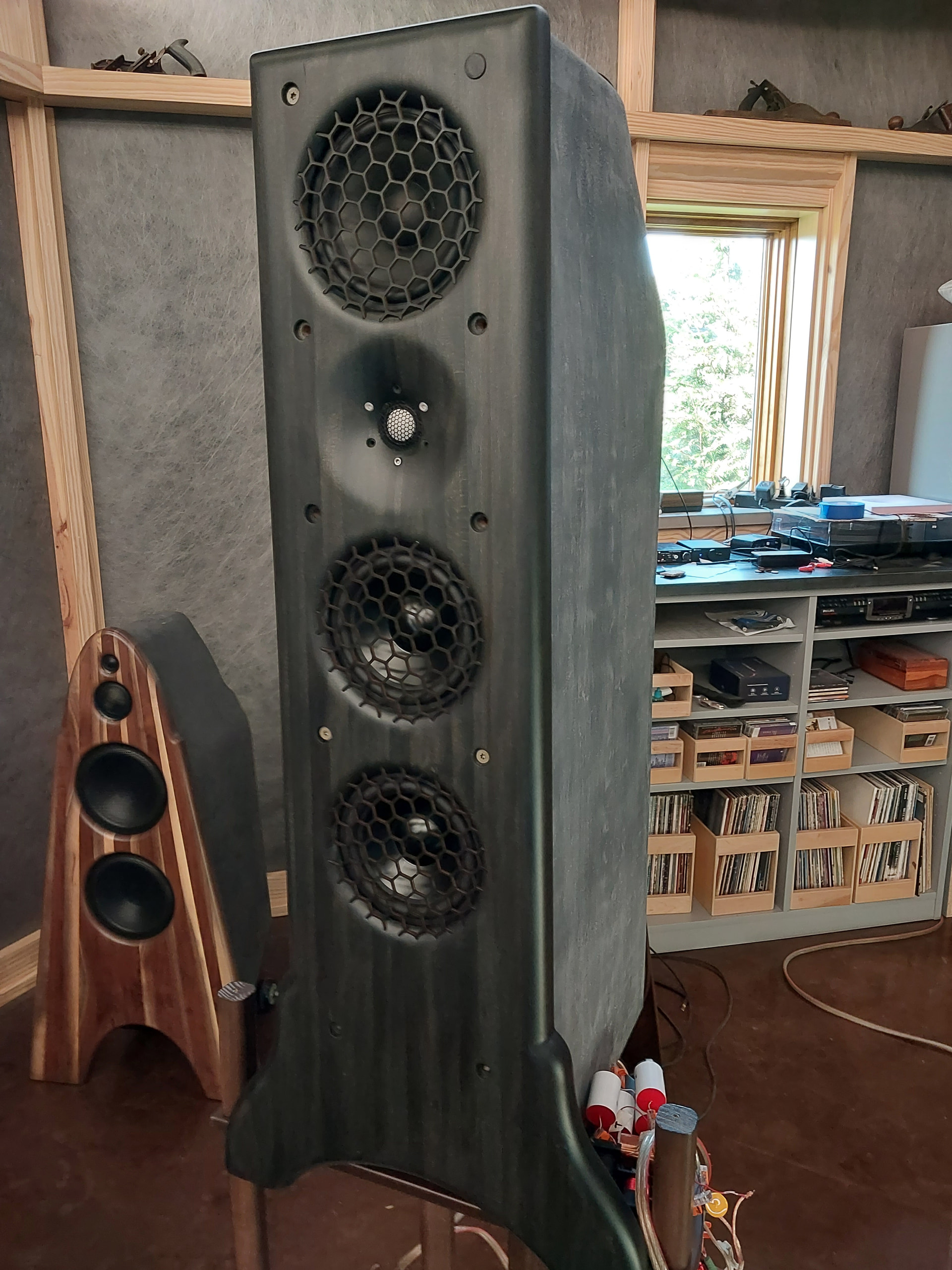
Disregard what I said about me wanting to keep the baffles “not too dark”. Here is first attempt XO. I have noticed that VCad simulations work better when the baffle has less diffraction. I have not yet made a diffraction model in Vcad, but I have noticed that I can determine offsets with more certainty when the baffle has better proportions and softer
I could not have done it before I was forced to rebuild my shop almost six years ago. I had a fire. I messed up. It’s the story of my life. I receive things that I do not deserve. A CNC router and my wife with her laser. But mostly my wife.